Find details about every creative writing competition—including poetry contests, short story competitions, essay contests, awards for novels, grants for translators, and more—that we’ve published in the Grants & Awards section of Poets & Writers Magazine during the past year. We carefully review the practices and policies of each contest before including it in the Writing Contests database, the most trusted resource for legitimate writing contests available anywhere.
Find a home for your poems, stories, essays, and reviews by researching the publications vetted by our editorial staff. In the Literary Magazines database you’ll find editorial policies, submission guidelines, contact information—everything you need to know before submitting your work to the publications that share your vision for your work.
Whether you’re pursuing the publication of your first book or your fifth, use the Small Presses database to research potential publishers, including submission guidelines, tips from the editors, contact information, and more.
Research more than one hundred agents who represent poets, fiction writers, and creative nonfiction writers, plus details about the kinds of books they’re interested in representing, their clients, and the best way to contact them.
Find publishers ready to read your work now with our Open Reading Periods page, a continually updated resource listing all the literary magazines and small presses currently open for submissions.
Since our founding in 1970, Poets & Writers has served as an information clearinghouse of all matters related to writing. While the range of inquiries has been broad, common themes have emerged over time. Our Top Topics for Writers addresses the most popular and pressing issues, including literary agents, copyright, MFA programs, and self-publishing.
Our series of subject-based handbooks (PDF format; $4.99 each) provide information and advice from authors, literary agents, editors, and publishers. Now available: The Poets & Writers Guide to Publicity and Promotion, The Poets & Writers Guide to the Book Deal, The Poets & Writers Guide to Literary Agents, The Poets & Writers Guide to MFA Programs, and The Poets & Writers Guide to Writing Contests.
Poets & Writers lists readings and other literary events held online and in person. Whether you are an author on a book tour or the curator of a reading series, the Literary Events Calendar can help you find your audience.
Research newspapers, magazines, websites, and other publications that consistently publish book reviews using the Review Outlets database, which includes information about publishing schedules, submission guidelines, fees, and more.
Well over ten thousand poets and writers maintain listings in this essential resource for writers interested in connecting with their peers, as well as editors, agents, and reading series coordinators looking for authors. Apply today to join the growing community of writers who stay in touch and informed using the Poets & Writers Directory.
Since our founding in 1970, Poets & Writers has served as an information clearinghouse of all matters related to writing. While the range of inquiries has been broad, common themes have emerged over time. Our Top Topics for Writers addresses the most popular and pressing issues, including literary agents, copyright, MFA programs, and self-publishing.
Find a writers group to join or create your own with Poets & Writers Groups. Everything you need to connect, communicate, and collaborate with other poets and writers—all in one place.
Well over ten thousand poets and writers maintain listings in this essential resource for writers interested in connecting with their peers, as well as editors, agents, and reading series coordinators looking for authors. Apply today to join the growing community of writers who stay in touch and informed using the Poets & Writers Directory.
Find information about more than two hundred full- and low-residency programs in creative writing in our MFA Programs database, which includes details about deadlines, funding, class size, core faculty, and more. Also included is information about more than fifty MA and PhD programs.
Whether you are looking to meet up with fellow writers, agents, and editors, or trying to find the perfect environment to fuel your writing practice, the Conferences & Residencies is the essential resource for information about well over three hundred writing conferences, writers residencies, and literary festivals around the world.
Poets & Writers lists readings and other literary events held online and in person. Whether you are an author on a book tour or the curator of a reading series, the Literary Events Calendar can help you find your audience.
Discover historical sites, independent bookstores, literary archives, writing centers, and writers spaces in cities across the country using the Literary Places database—the best starting point for any literary journey, whether it’s for research or inspiration.
Establish new connections and enjoy the company of your peers using our searchable databases of MFA programs and writers retreats, apply to be included in our directory of writers, and more.
Each year the Readings & Workshops program provides support to hundreds of writers participating in literary readings and conducting writing workshops. Learn more about this program, our special events, projects, and supporters, and how to contact us.
The Maureen Egen Writers Exchange Award introduces emerging writers to the New York City literary community, providing them with a network for professional advancement.
Find information about how Poets & Writers provides support to hundreds of writers participating in literary readings and conducting writing workshops.
Bring the literary world to your door—at half the newsstand price. Available in print and digital editions, Poets & Writers Magazine is a must-have for writers who are serious about their craft.
View the covers and contents of every issue of Poets & Writers Magazine, from the current edition all the way back to the first black-and-white issue in 1987.
Find details about every creative writing competition—including poetry contests, short story competitions, essay contests, awards for novels, grants for translators, and more—that we’ve published in the Grants & Awards section of Poets & Writers Magazine during the past year. We carefully review the practices and policies of each contest before including it in the Writing Contests database, the most trusted resource for legitimate writing contests available anywhere.
Every day the editors of Poets & Writers Magazine scan the headlines—publishing reports, literary dispatches, academic announcements, and more—for all the news that creative writers need to know.
In our weekly series of craft essays, some of the best and brightest minds in contemporary literature explore their craft in compact form, articulating their thoughts about creative obsessions and curiosities in a working notebook of lessons about the art of writing.
The Time Is Now offers weekly writing prompts in poetry, fiction, and creative nonfiction to help you stay committed to your writing practice throughout the year. Sign up to get The Time Is Now, as well as a weekly book recommendation for guidance and inspiration, delivered to your inbox.
Ads in Poets & Writers Magazine and on pw.org are the best ways to reach a readership of serious poets and literary prose writers. Our audience trusts our editorial content and looks to it, and to relevant advertising, for information and guidance.
Start, renew, or give a subscription to Poets & Writers Magazine; change your address; check your account; pay your bill;
report a missed issue; contact us.
Poets & Writers is pleased to provide free subscriptions to Poets & Writers Magazine to award-winning young writers and to high school creative writing teachers for use in their classrooms.
Read select articles from the award-winning magazine and consult the most comprehensive listing of literary grants and awards, deadlines, and prizewinners available in print.
Poet Kelle Groom's memoir, I Wore the Ocean in the Shape of a Girl, about her recovery from alcoholism following the death of her fourteen-month-old son, is published this month by Free Press. Check out this and other new and noteworthy books in the July/August issue's Page One section.
Last night in Brooklyn the Moby Awards, sponsored by indie press Melville House, celebrated the best, worst, and weirdest of last year's book trailers. A panel of critics, editors, and other lit types representing the Huffington Post, McNally Jackson Books, the Millions, GoodReads, and more selected the following to receive the honorary golden sperm whale.
"Just because it happened doesn't make it interesting." Author and teacher Marion Roach Smith offers this and other priceless nuggets of advice for anyone thinking of writing a memoir in The Memoir Project: A Thoroughly Non-Standardized Text for Writing & Life, forthcoming from Grand Central Publishing on June 9.
The twenty-third annual Lambda Literary Awards were announced last night in New York City. Coinciding with this year's Book Expo America, the awards event brought out over four hundred attendees in celebration of LGBT literature.
Adam Haslett was honored for his novel, Union Atlantic (Nan A. Talese), the follow-up to his story collection, You Are Not a Stranger Here (Doubleday, 2002), a finalist for both the National Book Award and the Pulitzer Prize. Eileen Myles, author of more than a dozen books and chapbooks of poetry, fiction, and nonfiction, won the award in lesbian fiction for Inferno (A Poet's Novel) (OR Books).
Anna Swanson and Brian Teare took the prizes in poetry, Swanson for her debut collection, The Nights Also (Tightrope Books), and Teare for Pleasure (Ahsahta Press). Two novelists won in debut fiction, Amber Dawn for Sub Rosa (Arsenal Pulp Press) and David Pratt for Bob the Book (Chelsea Station Editions). The Lunatic, the Lover and the Poet (Harper Perennial) by Myrlin Hermes won in bisexual fiction, and Holding Still For as Long as Possible (House of Anansi Press) by Zoe Whittall received the transgender fiction prize.
Barbara Hammer and Julie Marie Wade were also recognized for their memoirs, Hammer! Making Movies Out of Sex and Life (Feminist Press) and Wishbone: A Memoir in Fractures (Colgate University Press), respectively. A complete list of winners, including honorees in drama, anthology, and young adult literature, is posted on the Lambda Literary website.
In the video below, fiction winner Haslett presents a dramatic reading of passages from Union Atlantic.
Looking for a distinctive cover for your homemade chapbook or writing journal? Check out book artist Pam Deluco's process of using recycled denim to make paper in this video, which was produced by Shape What's to Come, an online community of women sponsored by—who else?—Levi's. When your cover is ready, have a look at DIY: How to Make and Bind Chapbooks.
We've all seen movie trailers and book trailers, but here's a new one: a trailer for an undergraduate lecture course that was offered last fall at the University of Michigan. "Comparative Literature 382: Literature and the Other Arts: Dividing Time: Art House Animation and Poetics" used animated films, poems, short stories, aesthetic theory, and film criticism to examine "how the timing, technique, technology, attention to audience, and intertextual relations of a given work condition our experience of it."
Quiddity, a literary journal out of Benedictine University in Springfield, Illinois, has launched its inaugural contest for a prose book trailer. The biennial competition is open to short films based on both unpublished manuscripts and published books of fiction or creative nonfiction, offering a five-hundred-dollar prize in each category.
Aside from the cash prize, Quiddity will also arrange to promote the winning trailers in the journal and on National Public Radio member station WUIS Springfield, as well as on the Web sites of both. The journal's prose editor David Logan and emerging novelist A. D. Carson will judge.
Authors should submit films of no longer than three minutes in the
manuscript category, and publishers or presses should submit entries for
published books; entry is free. Complete guidelines and entry forms are available on the Quiddity website.
Entries aren't due until December 10, but a look at Carson's sample trailer below might leave some writers wanting to carve out substantial time to get production just right, or assemble a crew—friends and colleagues are permitted to assist in the trailer's creation. Videos simply featuring authors reading do not qualify for this competition.
Next month Harper will publish Nom de Plume: A (Secret) History of Pseudonyms, in which Carmela Ciuraru tells the stories of more than a dozen pseudonymous authors, including Mark Twain, Isak Dinesen, Lewis Carroll, and George Eliot, and explores the creative process and "the darker, often crippling aspects of fame."
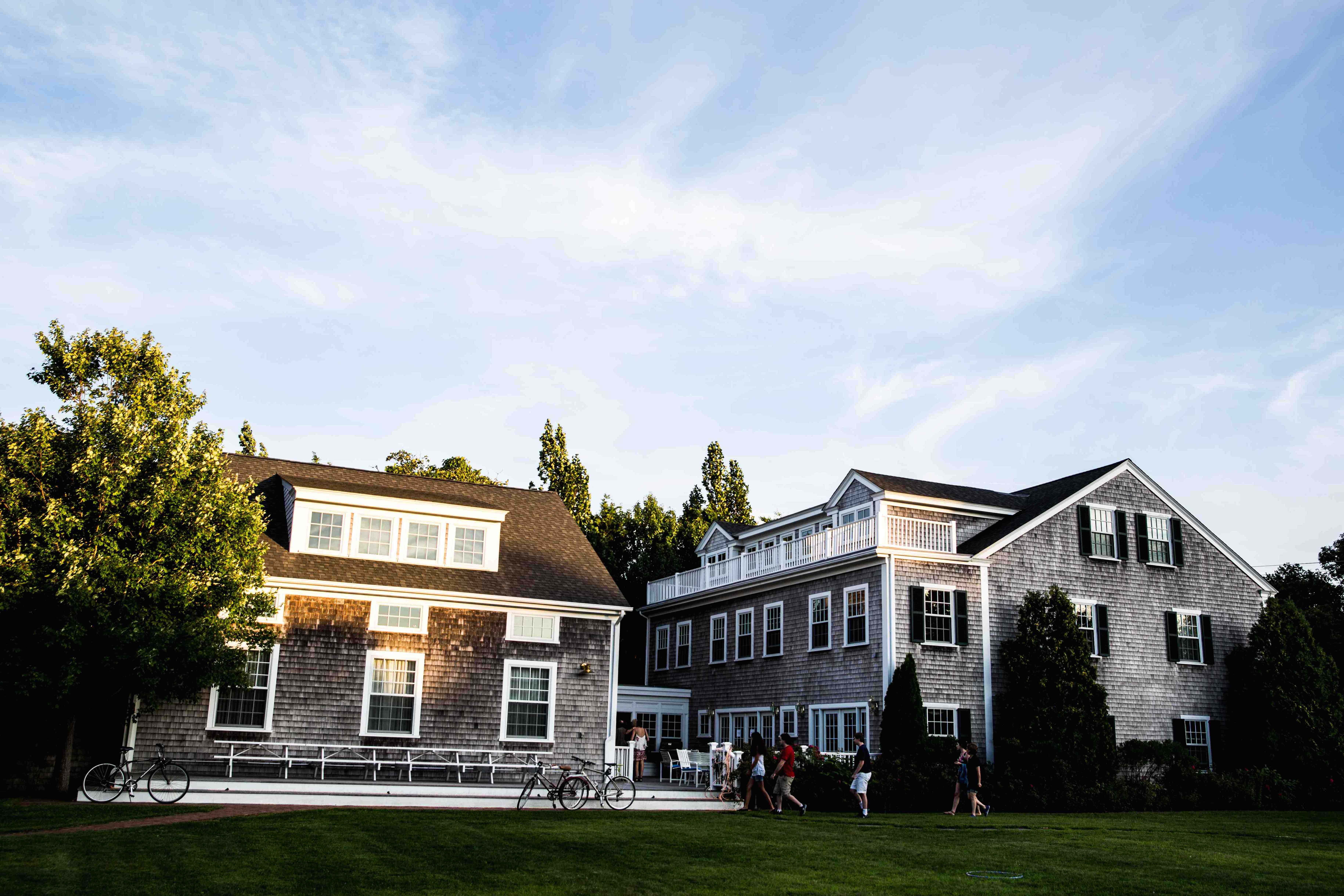
The 2021 Martha’s Vineyard Institute of Creative Writing Summer Writers’ Conference was held from June 6 to June 12 and from June 13 to June 19 at the Vineyard Arts Project (VAP) campus in downtown Edgartown on the island of Martha’s Vineyard, Massachusetts. The conference featured weeklong seminars with daily workshops in poetry and fiction, as well as manuscript consultations, panel discussions, and readings. The faculty included poets Amelia Martens, Adrian Matejka, Elizabeth Schmuhl, Britton Shurley, and Keith Taylor; and fiction writers Tia Clark, John T.
Type:
CONFERENCE
Ignore Event Date Field?:
yes
Event Date:
June 12, 2026
Rolling Admissions:
ignore
Application Deadline:
June 12, 2026
Financial Aid?:
no
Financial Aid Application Deadline:
June 12, 2026
Free Admission:
no
Contact Information:
Martha’s Vineyard Institute of Creative Writing Summer Writers’ Conference, 7 East Pasture Road, Aquinnah, MA 02535. (954) 242-2903. Alexander Weinstein, Director.