Our ninth annual look at the authors of some of the year’s best debut nonfiction features insightful stories of innovative, bold, and capacious memoirs, essay collections, and hybrid works. Nita Noveno describes finding her context as a writer, teacher, and daughter of immigrants. Phill Branch details his journey from writing as an escape to writing as a form of honoring one’s most authentic self. Megan O’Grady reflects on the open-ended inquiries that led to her debut, and the foggy road that is the writing process. Joseph Trinidad speaks to the meaning-making work of writing essays and the luck and labor inherent to the writing process. Elena Dudum candidly reveals the costs of writing the book you’re meant to write, and all the naps, reading, and thrills along the way. The New Nonfiction 2026 includes five debut journeys that show the professional, intellectual, emotional, and sometimes even physical work that goes into telling your story. Dudum’s wish for other writers: “At the very least I hope you feel a small, curling sensation in your chest every so often—a moment where you read something you’ve written and recognize it as true and clear.”
Mud on the Moon (Red Hen Press, August) by Nita Noveno
The Double Dutch Fuss (Amistad, June) by Phill Branch
How It Feels to Be Alive: Encounters With Art and Our Selves (Farrar, Straus and Giroux, April) by Megan O’Grady
Lucky Creatures (Sarabande Books, June) by Joseph Trinidad
They Told Me Back Home Would Be Beautiful: A Palestinian Memoir (Atria/One Signal Publishers, October) by Elena Dudum
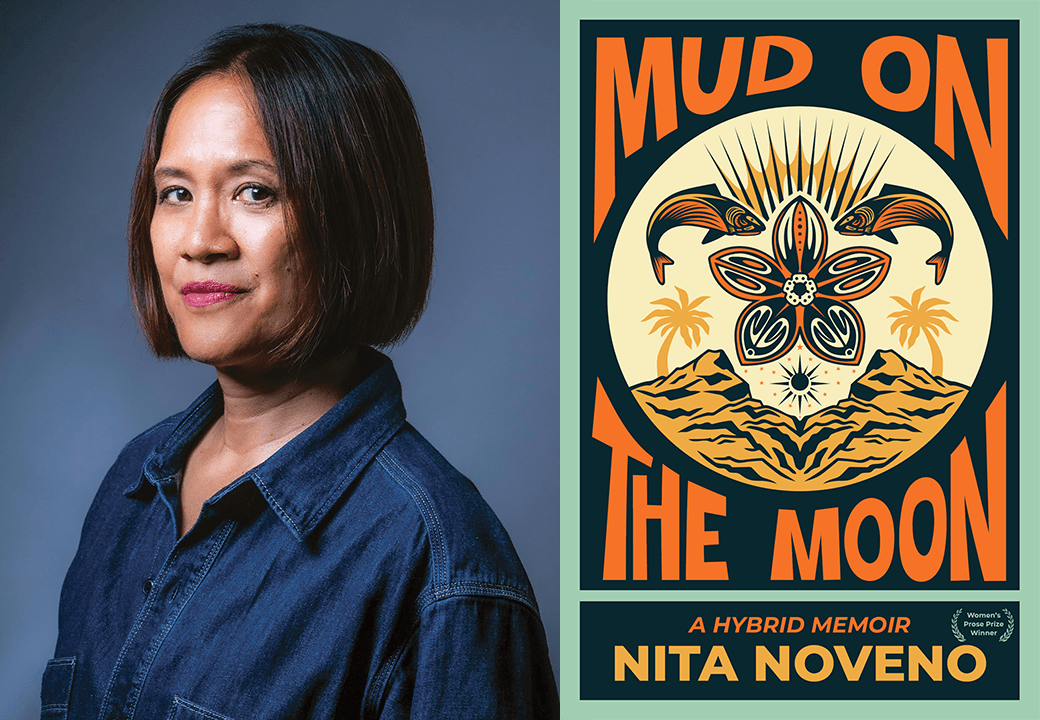
Mud on the Moon (Red Hen Press, August) by Nita Noveno, an innovative memoir that blends history, images, research, imagination, and letters to the reader—direct and forthcoming asides—to tell the tale of Filipino immigrants, coming of age in Alaska, and what it means to break open and carry forth a father’s legacy, to write into the void of familial silence. Agent: None. Editor: Piper Gourley. First Lines: “April heralded the end of the dry season. Off the coast of northwestern Luzon, small fishing boats swayed in the agitated China Sea. The Young Man returned north to the city of San Fernando in La Union, to the familiar life of his province after the disquiet of Manila.” (Author photo: Calibre Photography)

Lucy Grealy looked around the table at us, her eager MFA students at the New School, and said something I have never forgotten: “We write to put ourselves in context.” At that moment I could see myself on the page—a small cartoon version of me standing on a landscape of scribbles, intrigued.
I had started the creative writing program at the New School in 2000, commuting on the 1 train to 14th Street, tracing the skyline of lower Manhattan, the Twin Towers always in view as I crossed Fifth Avenue on my way to class. This community of writers was a new and exciting world for me, defined by insights, beauty, and sorrow on the page and then, the next September, marked by a catastrophic event.
I spent the next twenty years figuring out my context. Creative nonfiction became the genre wide enough to include the stories and poetry I was already writing. The context I was putting myself in was that of my father: a Filipino immigrant who arrived in America in 1928 as part of the Manong Generation, whose stories remained unspoken, whose silence became the architecture of my family. I was writing to honor him and to rescue his story from obscurity. I began with memory, poetry, and facts. Imagination carried me the rest of the way.
A reading series I started the summer after completing my MFA became a continual wellspring of inspiration and a place to witness process and publication as both emerging and published writers shared their work at the mic. It still is today.
Two years after the program I left my nine-and-a-half-year teaching career—I taught ESL at a high school in the Bronx—and started living in a new context: I wanted to focus on writing. I worked temp jobs, accrued credit card debt to pay rent and buy food, took writing workshops, and joined a writing group with three other women writers, daughters of immigrants penning their own family stories. They sustained and supported my writing life for the next several years. Community has been and will always be vital. I shared in their ups and downs, their award-winning publications and challenges of family caregiving.
The well-worn refrain over the years: rejection. It came in envelopes (when they still mailed them) and then via e-mail, or frequently as no word at all. After a few years I returned to teaching. This time at the college level, a homecoming with different challenges and deep rewards. I was an adjunct for several years at various CUNY colleges until I wasn’t. In the summer of 2014, I landed a full-time gig, which is like saying I won the lottery. My students, their stories, the teaching itself—all a gift.
In this two-decade stretch I was learning, too, about the history of the Philippines, Alaska, immigrant laborers in the United States, film noir, Filipino songs, hybrid forms of writing, and the luminous Filipino American community of writers and artists who eventually became my friends and teachers.
I was querying agents, sending out work, entering manuscript contests. Twenty-four years after starting at the New School, I received an e-mail from Red Hen Press stating that I had won the Women’s Prose Prize. I thought I was already finished with the manuscript, but Piper Gourley, my thoughtful and sharp-eyed editor at Red Hen, asked question after question that shed new light on the story and its history. Over the following summer I turned to the manuscript again. I was reluctant at first—wasn’t I already done?—but excavating made the book richer. I loved seeing my story through a new pair of eyes.
When I got that initial e-mail, I was visiting the American Museum of Natural History, walking through time, centuries and millennia of bones and creatures, preserved exhibits. Testaments to time’s melt. In this context, my writing life was a pin drop. And here it is.
An excerpt from Mud on the Moon
Dear Reader,
My father voyaged to the U.S. on a boat, not as a stowaway, but his story and this story pay homage to a passage of endless longings.
One of my ninangs claimed that my father had been a stowaway on a ship to the U.S. I sensed she was joking. I was young and more interested in playing games than listening to family lore. What compelled her to share this information? I don’t know, but of the many conversations and stories shared in those many gatherings in the back room of the Diaz Café, where the adults played cards, the children watched television, and everyone ate chicken adobo and steamed white rice, her unsolicited words stuck like a shadow.
Decades later, as I started writing about my father’s journey, I wondered how one becomes a stowaway. I Googled transpacific ship routes from the Philippines to the U.S. before 1930. I studied photos of ships of the era. What were the risks? How did he not get caught? Mostly, I pictured my father hiding in a small dark room on the ship and wrote a version of his journey to America as a stowaway and then another version and another version, details changing as I imagined and reimagined my father’s passage to the U.S. Each writing and rewriting of the story became an exercise in something intangible. A proxy for truth.
In subsequent years, with the rise of find-your-ancestry services online, my sister discovered a ship’s manifest published on Ancestry.com. Our father’s name was on it. An immigrant in transit. It was as if he’d risen from the dead.
Also listed was the name of a cousin who’d made the journey with him. Like a sudden quake, unexpected, but welcome in this case, my sister’s finding had cracked open a wall of silence, shedding light on previously obscure information, after years of imagining his journey. However, this meant that my original fictional account, based on a joke conceived as potential fact, was fiction. I was simultaneously elated and crushed.
Between fact and fiction, a shadow receded, and the map of my father’s journey emerged. Knowing his specific date of arrival (a little earlier than I had guesstimated) to the U.S., I could then place my father on the timeline of American immigration history. He arrived in the country at a moment when angry white mobs threatened and chased off Filipinos from California and Washington farms, and just before the nation plunged into the Great Depression and painful desperation.
The history of immigration in this era is head-spinning and outrageous. Follow this history of immigration laws in the U.S. in the first quarter of the twentieth century and one learns how the Philippines, a colony of the U.S. after the Spanish-American War, was directly impacted by this policy to keep America’s populace homogenous and of predominantly Western European descent while supplying its fields with non-European workers.
This is when my father arrives.
Excerpted from Mud on the Moon by Nita Noveno (Red Hen Press, 2026). Used with permission from the publisher.