What makes for a great thriller? In a word, suspense. Thriller writers know that readers expect high stakes, compelling characters, and a twisting plot to keep the pages turning. Top crime writers use a variety of techniques to ramp up the tension and ensure readers stay glued to their seats. But these strategies can be used by writers specializing in virtually any genre.
Narrative structure and plot are paramount in a thriller. Think of narrative structure as the overall framework of your book: the macro-structure. It is the larger formation that organizes how the plot will unfold—the shape of the plot. Plot is your story’s series of events and how they are arranged within the larger narrative structure: the micro-structure. Writers have a variety of narrative arrangements available to them, ranging from a standard three-act linear structure to more experimental nonlinear structures, including the wheel, spiral, and symbolic juxtaposition. Generally mystery and suspense novels use standard, causal plot structures, although there are notable exceptions.
For those seeking to maximize tension, I recommend the standard three-act structure, because it is well suited to maintaining suspense through plot points. The three-act structure is typically defined as containing a setup, a conflict or confrontation, and a resolution. This arrangement works well for thrillers, as the genre requires ever-increasing threats to the protagonist as the stakes continue to rise. Literary scholars have elaborated on the three-act structure since Aristotle; most writers are familiar with Freytag’s Pyramid, a diagram that represents the sequence of events in a plot: the exposition, rising action, climax, falling action, and resolution. But the Fichtean Curve, described by John Gardner in his book The Art of Fiction: Notes on Craft for Young Writers (Knopf, 1984) is, in my opinion, an even better representation of how plot functions in thrillers and other genre work. In this model the protagonist experiences multiple obstacles or conflicts of increasing intensity during their journey. This narrative structure highlights escalation, action, and crises for the main character. In other words the hero is tested over and over, which is the hallmark of a thriller novel—but it is also a great strategy to employ for building movement and rising tension in any narrative.
What are those obstacles? Naturally most plot points will arise from the causal actions and reactions of the characters, but there are certain elements that are frequently used in thrillers and other crime fiction. A ticking clock is a well-known device used to increase suspense. Whether it’s an actual bomb timed to explode, a blackmail threat, or an important deadline, the ticking clock is often used to raise the pressure on the protagonist and heighten the tension. You can impose a metaphorical or literal clock on your characters’ needs and desires, whether in the form of a presentation at a 4-H show just days away, an impending wedding date, or a nine o’clock phone call with a boss. All of these are forms of the ticking clock—a way to force your characters to take action immediately or face the consequences.
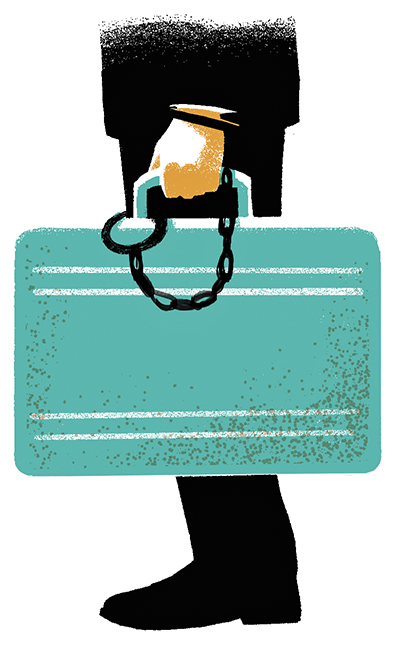
Yet another frequently used plot strategy is to introduce a MacGuffin in the story. A MacGuffin is an object, event, or goal that can help to propel the plot forward, although it may not be ultimately essential to the story itself. The use of a MacGuffin can serve as a motivating force for the characters as they seek the object or device. The most famous MacGuffin in literature is the falcon statuette in the novel The Maltese Falcon (Knopf, 1930) by Dashiell Hammett, but there are many others. My personal favorite is the mysterious briefcase in the film Pulp Fiction, which is also an excellent example of a screenplay that uses an alternative narrative structure. Bringing a MacGuffin into a novel allows for heightened tension and suspense as well as character development, as it can provide insight into those characters’ motivations and impulses. Stated another way, what are your characters seeking? A MacGuffin can sharpen this aspect of your character development in that the device can help to externalize the motivations of your protagonists, antagonists, and even minor characters.
Another classic device in the thriller is the plot twist. At its best a plot twist is not merely an unexpected turn of events, but rather an unexpected solution to a dilemma or conundrum faced by the protagonist. Plot twists can take many forms—revelations about one’s identity, say, or sudden reversals of fortune. In literary fiction plot twists can be used to increase emotional stakes or reframe a narrative, adding meaning and depth to a story. In thrillers the plot twist is frequently used at the end of the story, as the protagonist discovers that their belief about the nature of the conflict is wrong. More simply, the hero learns that they were mistaken about the villain—perhaps the actual antagonist is revealed to be someone unexpected, or perhaps the motivations of the villain are different than they had believed. This new information ratchets up the stakes and increases the suspense even more. But using a plot twist in this fashion requires careful planning. There need to be enough clues earlier in the manuscript so that the reader can understand the unexpected turn and feel that it was earned. To use an old trope, the plot twist should feel inevitable but surprising. Using red herrings—misleading clues—and strategic foreshadowing can help achieve this effect.
One way to facilitate an effective plot twist is through the careful construction of antagonists. In my teaching I’ve found that emerging writers often spend enormous amounts of time creating the protagonist(s) but rarely put the same effort into the villain. An antagonist should have their own motivations and quirks and not just be purely evil or demented. They must have their own reasons for doing the things they do—their own backstory, goals, motivations, and secrets. It’s frequently said that villains should be a dark mirror of the hero, and it’s helpful to consider your protagonist’s characteristics and invert those for your antagonist. In short, make your bad guy just as compelling and flawed as your hero, and the plot events can flow from the resulting conflicts. The well-developed antagonist can challenge the hero’s values and morality, forcing them to face their own weaknesses and potential for evil. In this way the protagonist can undergo a profound change as they complete their character arc.
Finally, many thriller writers use a false ending in their plots. That is, there’s a final scene in which the protagonist—supposedly—defeats the antagonist, but the villain, or someone else, reappears to challenge the hero again. This strategy is used extensively in action films, as cinema audiences enjoy the whiplash created by these endings. The second confrontation is the chance for the writer to bring in an overlooked detail or clue that sets up the clash. Of course, the stakes for the hero should be raised even higher in this conflict as the protagonist is propelled to the final resolution. The false ending can be used in other genres to reframe the narrative and make the reader view previous events in a different light. Although similar to a plot twist, this form of the false ending can evoke a powerful response from the reader, given the belief that the story is over before more is revealed.
These are just some of the techniques used by mystery and suspense writers. I’ll also suggest that writers consider the strategic use of setting to enhance their stories and also how symbols and image patterns can subtly reinforce the themes of the work. For a much deeper understanding of these strategies and others, I strongly recommend reading the craft book Thrill Me: Essays on Fiction (Graywolf, 2016) by Benjamin Percy. I’ve assigned this collection of craft essays, a number of which first appeared in the pages of this magazine, in various MFA and undergraduate creative writing courses, and I have yet to find a student who wasn’t delighted by it. It’s not only a collection of writing tips, but also a celebration of genre literature and the joy of reading—one might even say, of reading’s thrills.

Venture Further: Consider what a moment of life-changing weakness would look like for the narrator of your work. What would tempt them to act in a way that they believe themselves incapable of? What would happen if they behaved this way? And what would it take to pull them back from the brink?
David Heska Wanbli Weiden is professor of English and Native American and Indigenous Studies at Stony Brook University, and the author of the forthcoming novel Wisdom Corner (Ecco, 2026).
Illustration credit: Matt Stevens; thumbnail: Aslan Chalom