As a genre, science fiction is notoriously difficult to describe. The first attempt at doing so might be publisher Hugo Gernsback’s 1926 definition of what he called scientifiction, “the Jules Verne, H. G. Wells and Edgar Allan Poe type of story—a charming romance intermingled with scientific fact and prophetic vision,” a clear description that nonetheless left out plenty of what would come next in the genre. Many writers have tried to narrow or expand sci-fi’s definition, with similarly illuminating but limiting results. But one commonality among many definitions is some version of what Darko Suvin termed the novum, which science fiction scholar Istvan Csicsery-Ronay Jr. defines as “the central imaginary novelty in a [science fiction] text, the source of the most important distinctions between the world of the tale and the world of the reader.” For many writers and readers, it’s this focus on newness’s interruption of the expected that gets closest to the heart of the power and pleasure of science fiction—but what is this “newness,” and how does it manifest?
In science fiction, newness is generally of technological, social, or alien origin, and its appearance in the story world sets the stage for the tale to come; it’s the not-yet-real hyperdrive in the spaceship, the world order inverted by AI, the presence of a life-form that challenges our place in the cosmos. But there’s more that this newness can accomplish, as Ursula K. Le Guin wrote:
All fiction is metaphor. Science fiction is metaphor. What sets it apart from older forms of fiction seems to be its use of new metaphors. … Space travel is one of these metaphors; so is an alternative society, an alternative biology; the future is another. The future, in fiction, is a metaphor.
The new metaphors that arise from science fiction’s novums have many uses. They can help us conduct thought experiments, like the “What if gender was mutable?” question at the heart of Le Guin’s The Left Hand of Darkness (Ace Books, 1969), explored through the metaphor of the ambisexual Gethenians. They can delve into philosophical ideas, asking “What is a human being?” or “What rights do humans owe beings we create?” as with Mary Shelley’s abandoned monster in Frankenstein (1818) or the replicants in Ridley Scott’s Blade Runner. They can explore contemporary issues through defamiliarizing creations, like N. K. Jemisin’s orogenes and the Fulcrum that oppresses them in The Fifth Season (Orbit, 2015), or Margaret Atwood’s red-robed Handmaids in The Handmaid’s Tale (Houghton Mifflin, 1986). Famously, some new metaphors also help us see worlds that don’t yet exist. Think of William Gibson’s invention of the term cyberspace in his 1981 story “Burning Chrome,” eventually used to describe the internet once scientists brought it into existence.
Perhaps these metaphors’ most persistent use is to allow us to think about our own world through the destabilizing presence of unusual, strange, and often astounding literary inventions. Why is this so important? In part because the world we live in is constantly changing, sometimes faster than we’re capable of reckoning with the impact of those changes. Often written in response to such developments—technologies that blur the line between the human and the cyborg, say, or that grant us power to radically alter life on this planet—the new metaphors of science fiction help us to decipher and decode our present and to imagine and design and produce our future. As Samuel R. Delany said in his 2011 Paris Review interview, “Science fiction isn’t just thinking about the world out there. It’s also thinking about how that world might be.” Importantly, some speculative stories show us how alternative societies and futures might come to be, while others portray what it might be like to live in those circumstances, making it easier to imagine transforming our own reality for the better.
Of course science fiction’s new metaphors are also a source of much of the play and pleasure inherent in the genre. Most often they are made literal or concrete inside the space of the story itself, which allows them to become the engine of the plot. The menacing Terminator might be a metaphor for technological advances gone amok, but he’s also a physical antagonist that the characters have to somehow learn to defeat, while the light and dark sides of the Force in the Star Wars franchise are both metaphors for good and evil and a literal power source that characters draw upon to solve, or create, problems.
So how can you produce your own novums and new metaphors, along the lines of the classics cited above? Here are some suggestions for places to begin a science fiction or speculative fiction tale:
Formulate a generative what-if question. Many science fiction stories contain a single novum, whose injection of newness generates the changed reality of the setting. Many thought experiments and alternative histories begin this way: “What if the first aliens humans encountered chose to land their ship in Lagos, Nigeria?” launches Nnedi Okorafor’s Lagoon (S&S/Saga Press, 2015), while the question “What if the Allies had lost World War II?” has powered many a novel, including Philip K. Dick’s The Man in High Castle (Putnam, 1962) and Peter Tieryas’s United States of Japan (Angry Robot, 2016). In the best what-if stories, writers follow the consequences of their premise to its furthest ends, unpacking the implications of a world changed by a single new event.
Extrapolate story from current technologies or trends. In the twenty-first century, perhaps the only constant is change—and the rate of change seems to be ever increasing. One way to produce story-generating newness is to take a current trend and imagine what it might look like in the future. In Infomocracy (Tor, 2016), Malka Older imagines a world in which a super-powerful search engine company (N. K. Jemisin called it “Google on meth”) remakes the global order by creating a perpetually informed citizenry, leading people to vote not for the leaders of permanent nation-states but for ever-shifting micro-democracies called centenals. It might not be the most likely future, but its believability comes from plausibly extending trends found in our present, where tech companies seem to wield ever more power.
Begin your world-building from theoretical science or proposed social theories. Countless science fiction stories have been created around the fictional realization of currently theoretical technologies, including things like sentient AI, light-speed travel, human cloning, and Dyson spheres. Others imagine worlds in which possible social movements take hold, as in The Great Transition (Atria Books, 2023) by Nick Fuller Googins, which aims to realistically depict a global transition away from fossil fuels at the height of the climate crisis, as well as what happens afterward, creating two consecutive speculative futures, either of which could potentially resemble ours, if our world made similar choices.
No matter how you begin, pay attention as you write to the consequences of whatever newness you’ve introduced to the world of your story: How will life on Earth, or elsewhere, change because of this novel invention? What are the ripple effects this change might produce in other areas of life, including work, family, and romance? How might our desires, morals, and beliefs be remade? What about our own world does this new idea reveal or clarify?
As writer Karin Tidbeck once said: “World-building to me is taking the consequences of an idea. All my stories and worlds spring from the basic principle of being [completely committed] to the premise, following the consequences wherever they may lead without taking any easy or comfortable ways out.” By doing so we not only write better fictions—we also use the metaphors we’ve invented to make possible the imagining of new and perhaps better ways of living.

Venture Further: Identify an emotional burden your main character is carrying—an anger, a grief, a regret. Now imagine for them an altered world in which a new technology or alien intervention allows them another chance at navigating the moment that caused them this pain. What can be changed—and what cannot—for this character?
Matt Bell is the author most recently of the novel Appleseed (Custom House, 2021), a New York Times Notable Book, and the craft book Refuse to Be Done: How to Write and Rewrite a Novel in Three Drafts (Soho Press, 2022), a guide to novel writing, rewriting, and revision. A native of Michigan, he teaches creative writing at Arizona State University, where he directs the ASU Worldbuilding Initiative.
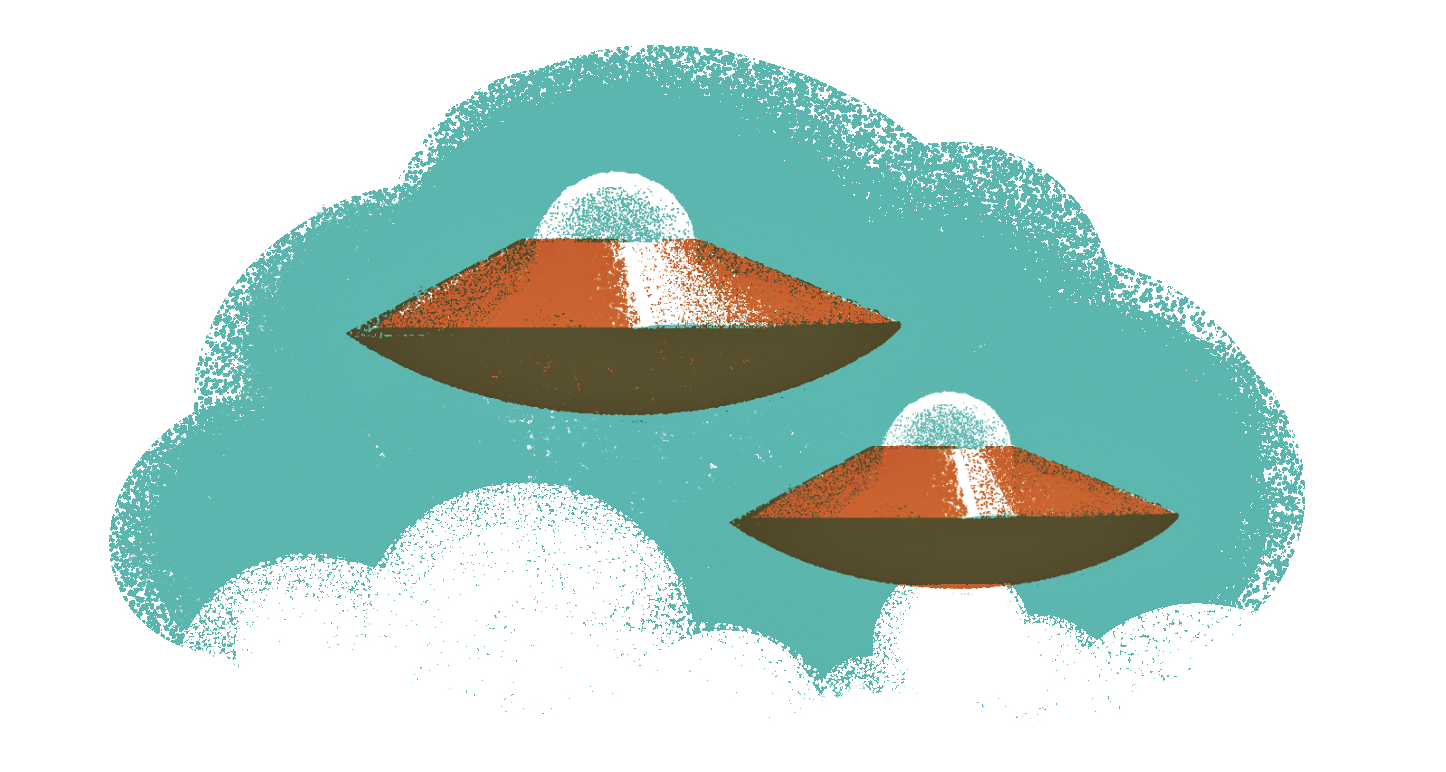
Illustration credit: Matt Stevens