Six German Novels to Watch

The Association of German Publishers and Booksellers Foundation (Börsenverein des Deutschen Buchhandels Stiftung) has announced the five finalists for its 2011 German Book Prize. The winning novelist will receive twenty-five thousand euros (approximately thirty-four thousand dollars).

The shortlisted books are Against the World by Jan Brandt, Das Wunderhorn by Michael Buselmeier, The Girl by Angelika Klüssendorf, Blumenberg by Sibylle Lewitscharoff, In Times of Fading Light by Eugen Ruge, and The Hurtress by Marlene Streeruwitz. None of the shortlisted books have yet to be translated in the United States—after all, the art of translation takes time—but given the track record of German Book Prize honorees, perhaps these authors will appear on this side of the Atlantic in the near future.

It may have taken a few years, but 2007 winner Julia Franck saw her winning novel, Die Mittagsfrau (Lady Midday), published in English last year as The Blindness of the Heart (Grove Press). And 2006 winner Katharina Hacker's novel Die Habenichtse was published as The Have-Nots two years after her award by Europa Editions. Just this past April, inaugural 2005 prizewinner Arno Geiger saw his novel Es geht uns gut appear in English as We Are Doing Fine (Ariadne Press).

The 2011 winner will receive the award in mid-October at the Frankfurt Book Fair, where finalists will also receive prizes. The five remaining authors will take home twenty-five hundred euros (roughly thirty-four hundred dollars) each.

Poetry Contest Seeks Real and Imagined Landscapes

Zócalo Public Square, a Los Angeles–based web forum for ideas and literature, began accepting entries last week for a poetry contest sprung from Zócalo's mission to further understanding of citizenship and community.

The "living magazine," which combines online journalism with lectures and other real-world events, will consider poems that evoke a sense of place for a one-thousand-dollar prize and publication on the Zócalo website.

“'Place' may be interpreted by the poet as a place of historical, cultural, political or personal importance," say the guidelines on the contest page. "It may be a literal, imaginary or metaphorical landscape. We are looking for one poem that offers our readers a fresh, original, and meaningful take on the topic."

Poets may send up to three poems via e-mail by November 5. There is no entry fee.

The winner will be announced next March in conjunction with the recipient of Zócalo's second annual book prize, a five-thousand-dollar award recognizing a work on the topic of community published in the United States. (There is no submission process for the book award.)

Patricia Roth Schwartz Mines the Terwilliger Museum

Writer Patricia Roth Schwartz blogs about facilitating a P&W-supported workshop series at the Terwilliger Museum in Waterloo, New York.

A graceful Queen Anne structure, the Waterloo Library & Historical Society, which opened in 1880, is the first building in New York State built as a library. In 1960 a local businessman donated funds to open an attached museum of Waterloo history, which bears his name: Terwilliger. The Terwilliger Museum’s a spooky place. It is low-ceilinged, dim, and its two floors are partitioned into several areas filled with antique dolls, guns, china, vintage fire-fighting equipment, musical instruments, Native American artifacts, and the replicated interiors of both a pioneer cabin and a country store.

I’d written a grant proposal to Poets & Writers for a three-week workshop: Writing Your Way Through History, the first program ever held in the museum. I showed up at the appointed time, fully expecting no one to be there. In semi-rural areas, the hardest aspect of putting on an event is publicizing it, and we hadn’t done much. Even so, right on the dot, several people climbed the stairs to meet me. A short while later a few others arrived. In all, seven people attended at least part of the program, including a fourth-grader, granddaughter of a Terwilliger Museum member. Armed with a sheet of writing prompts I’d given them, participants explored the museum, searching for characters and stories amongst the museum’s holdings. After an hour, we retired to a cozy nook with tables and chairs in the library adjacent to the museum, an ideal writing space.

Everyone was busy except Mary Alice, a feisty, intelligent woman in her 70s who used to write a column for a local paper but stopped. She’d been suffering from writer’s block, she told me, but arrived to the workshop with a brand new baby blue journal. Now she sat frozen before a blank page. I walked up to her and asked quietly, "Who's your character?" "Grandma," she said. "Okay–What's happening? Tell the story," I eagerly replied. A heartbeat passed. Her pen rose to the page. "It's Midge." And out the story poured. Inspired by the exhibit of a 1920s dressed mannequin doing laundry on a washboard in a galvanized tub, Mary Alice told the story of tomboy "Midge" (herself), getting her clothes dirty and "Grandma," instead of getting mad, simply offering, "I'll teach you how to wash them."

Everyone else in the group (as if by some alchemical change that affected them all simultaneously) wrote astonishingly excellent stories, each set in an historical context. Eagerly they read aloud to each other. By the end of our sessions, a writers’s group of five of the attendees had formed and continues to meet, planning a blog and a chapbook to showcase their work. Best of all, Mary Alice called to tell me she’d resumed writing her column and even received a raise in pay for it!

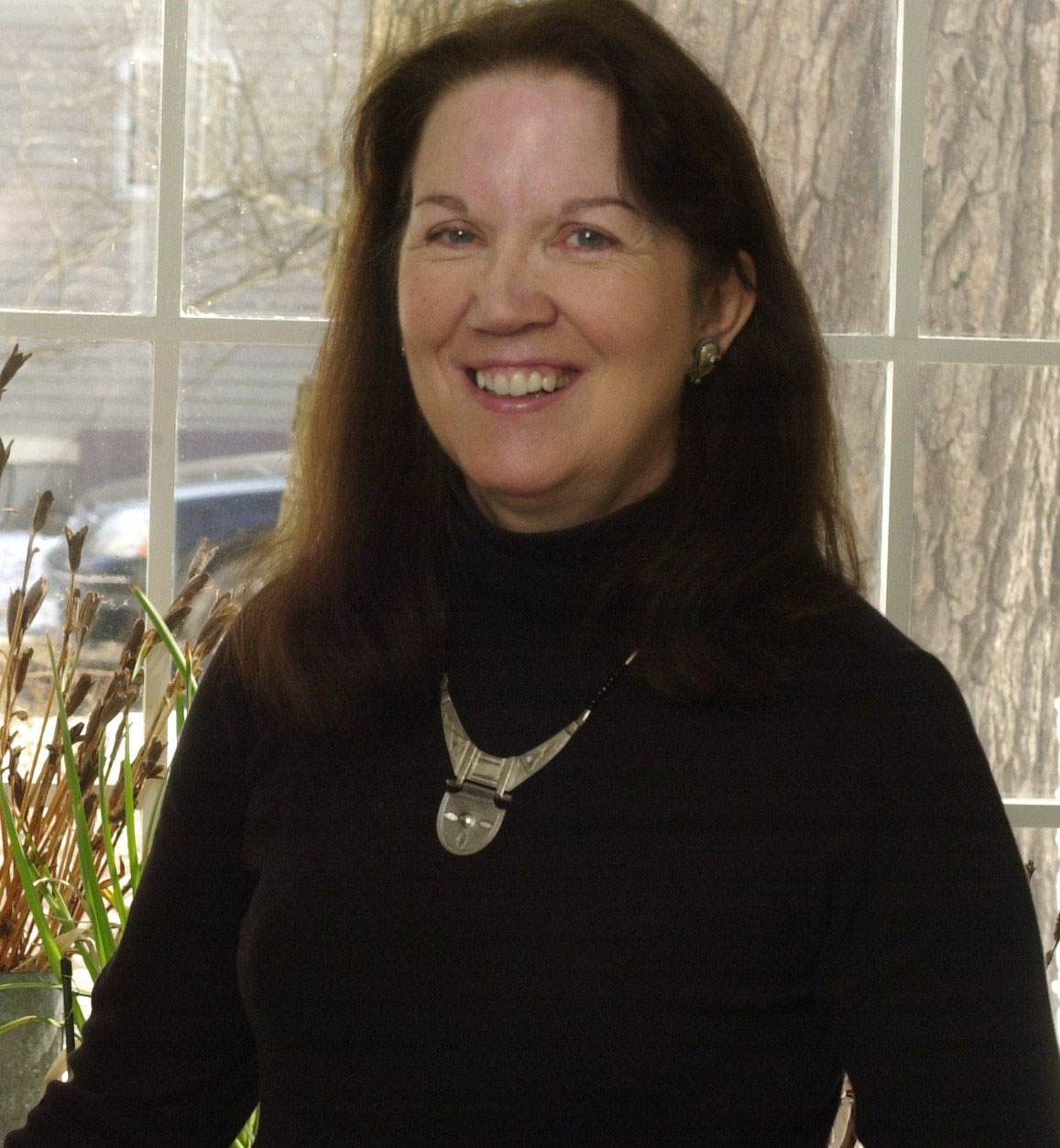
Photo: Patricia Roth Schwartz. Credit: Sandy Zohari.

Support for the Reading/Workshops in New York is provided, in part, by public funds from the New York State Council on the Arts, with additional support from the Friends of Poets & Writers.


Susannah Risley's Different Kind of Workshop

Fiction writer Susannah Risley blogs about her experience conducting workshops with diverse populations at Schenectady County Public Library in upstate New York. 

I've taught in minimum security prisons, homeless shelters, rural libraries, and senior centers across New York State. Each group requires a slightly different approach to teaching. People in homeless shelters don't often write about their pasts, but respond positively to learning to observe the present. Prisoners need to feel great respect for their stories. They are hungry for knowledge and drink up the examples from literature that I bring to inspire their writing. Seniors need to be urged past their internal critics that say their lives have been unimportant.  They feel a renewed sense of purpose in life as their stories pour forth. It is a joy to see people from all walks of life get excited about writing. It changes lives. It changed mine.

Recently, I wanted to try my hand at a different kind of writing workshop. I'd reread Jack Kerouac's On The Road to see if it held up for me. It did. I began to read some of the vast history of travel writing, and was delighted to envision solo travelers in distant times making their way across China, Afghanistan, Greece, or Persia. They recorded vital, specific details, just as a modern traveler must, to bring the world to life on paper. Wanting to share what I learned, I approached the Schenectady County Public Library about facilitating a travel writing workshop.

Twenty participants signed up for the five-session Travel Writing Workshop: Writing Your Own Road.  People had traveled to, or were leaving for, Tanzania, Guatemala, Brazil, Italy, Scotland, India, and Paris. They had much to say, and, like many new writers, needed direction about how to begin and keep going.

An Indian scientist was overjoyed to break out of the strictures of science writing to describe her experience in Italy as colorfully as she wished. A college student did a performance poem about Times Square. A shy woman wrote about her first journey away from Guatemala as she watched houses and volcanoes appear toy-sized from her plane window. A German immigrant described her sister's spacious home in Albany from the perspective of someone who escaped great difficulties. A teen described going to see The Rocky Horror Picture Show in the Adirondacks with her family. An East Indian man, visiting his daughter, took us on a tour of Walden Pond and we learn of Gandhi's connection to Thoreau through civil disobedience. We see the old copy of the Bhagavad-Gita in Thoreau's reconstructed cabin and are astonished. The group was charged with new energy and decided to keep meeting. I was thrilled to have taught this class. Everybody won! 

Photo:  Susannah Risley and workshop participants.  Credit:  Karen Bradley.

Support for Readings/Workshops in New York is provided, in part, by public funds from the New York State Council on the Arts, with additional support from the Friends of Poets & Writers.

Novels by DeWitt, Edugyan Up for Another Major Fiction Prize

The recently-released longlist for Canada's Scotiabank Giller Prize, worth fifty thousand dollars Canadian, has echoes of the Man Booker Prize shortlist. The two Canadian novelists, Patrick deWitt (The Sisters Brothers) and Esi Edugyan (Half Blood Blues), up for Britain's major book prize are also in the running for one of their home country's top literary honors.

Also longlisted for the Giller are:
The Free World by David Bezmozgis (HarperCollins)
The Meagre Tarmac by Clarke Blaise (Biblioasis)
The Antagonist by Lynn Coady (House of Anansi)
The Beggar's Garden by Michael Christie (HarperCollins)
Extensions by Myrna Dey (Nunatak First Fiction)
The Little Shadows by Marina Endicott (Doubleday)
Better Living Through Plastic Explosives by Zsuzsi Gartner (Hamish Hamilton)
Solitaria by Genni Gunn (Signature Editions)
Into the Heart of the Country by Pauline Holdstock (HarperCollins)
A World Elsewhere by Wayne Johnston (Knopf)
The Return by Dany Laferrière (translated from the French by David Homel) (Douglas & McIntyre)
Monoceros by Suzette Mayr (Coach House Books)
The Cat's Table by Michael Ondaatje (McClelland & Stewart)
A Good Man by Guy Vanderhaeghe (McClelland & Stewart)
Touch by Alexi Zentner (Knopf)

Dey's Extensions has already received a Giller honor of sorts, being nominated via public vote for a spot on the longlist. The debut novel had the most nominations out of the roughly four thousand received last month by the Canadian Broadcasting Company (CBC), a sponsor of the Giller. (The CBC is now inviting Canadian residents to select their own shortlists from the semifinalists, for a chance at taking home some literary booty: a Kobo e-reader, a gift certificate to Canadian bookseller Chapters Indigo, and a set of the finalists' books.)

The shortlist will be announced later this fall, followed by the winner ceremony, broadcast by the CBC on November 8.

The video below is a trailer for deWitt's novel, set across the border in the American West of the 1850s.

September 8

Using one of your own stories or one by another author, rewrite the story from the perspective of one of the minor characters.

September 5

Choose a page from a book, a magazine, or a newspaper and make a list of the nouns mentioned. Using free association, jot down a new noun for each noun in your first list. Using the second list of nouns, write a poem.

Debuts Up for Man Booker Prize

The shortlist for the 2011 Man Booker Prize was announced today, including first-time novelists Stephen Kelman and A. D. Miller. The two, along with four other authors, are in contention for a prize of fifty thousand pounds (approximately eighty thousand dollars).

The shortlisted titles, chosen from thirteen semifinalists, are The Sense of an Ending by Julian Barnes (Jonathan Cape), Jamrach’s Menagerie by Carol Birch (Canongate Books), The Sisters Brothers by Patrick deWitt (Granta), Half Blood Blues by Esi Edugyan  (Serpent’s Tail), Pigeon English by Kelman (Bloomsbury), and Snowdrops by Miller (Atlantic). DeWitt and Edugyan both hail from Canada, and the other four authors are British.

On October 18 the winner will be announced at London's Guildhall. The five runners-up won't leave the ceremony empty-handed; each will receive an award of twenty five hundred pounds (about four thousand dollars).

Patricia Roth Schwartz Owes Ovid

For the month of September, longtime P&W-suported writer Patricia Roth Schwartz blogs about her experience in Seneca County, New York.

October in the Finger Lakes flares out in a profusion of color: scarlet maples, golden beech, burgundy sumac. Deer leap across country roads. I drive to the tiny village of Ovid where history has left its imprint, especially in the form of a charming set of Greek Revival county courthouse buildings (now a museum) in descending sizes known as The Three Bears.

I eat my picnic lunch at a table outside the adorable structures (Baby Bear is as big as a child’s playhouse) savoring sunshine and drifting leaves. Spotting a tiny thrift shop across the street, I'm there in a flash. It’s full of almost all new clothes, each item a dollar! Soon, clutching five items, I approach a sweet-faced lady in her 80s who serves as volunteer cashier. Suddenly I realize I've left home with no cash! The thrift shop does not accept credit cards or checks. The cashier tells me I can come back later to pay. "We close at one.” I say, "But I'm doing a poetry reading at the Edith B. Ford Memorial Library." I point to the flyer in the store window.

Behind me another shopper speaks up. "Here—" she pushes a five dollar bill toward me. "I'll send you a check," I say and thank her profusely. She says, "No need." "I'll come over to the library," offers the cashier, Anna, who'd been telling me earlier about growing up nearby on a farm. "You said a friend of yours was coming." "Yes, I can borrow five dollars from her," I say. So it's settled; I go next door to a small supermarket. I need a Reese's Peanut Butter Cup. (It's been that kind of day.) I have a little change; I'm sure it’s enough. But at the cash register I’m counting out pennies. Behind me, another Ovid angel appears. A young man plunks down coins, insists on paying for me. I walk across the street to the library in a pleasant daze, convinced I‘ve entered another plane of existence, one that is utterly charmed.

A small group gathers for my reading. I sit in a comfy rocker in the children's reading nook, encouraging everyone to sit in a semicircle around me. Halfway through the reading, Anna, the thrift shop cashier, enters. She's brought her lunch, a large submarine sandwich. Sitting discreetly at the back table, she eats it, crumples up the wrapper, then moves up to the semicircle. I read poems about my family, my childhood in West Virginia—memories, stories. Afterward we talk. "When I was married," the widowed Anna says, "I had a notebook I used to write in. My husband thought I was pretty good." I don't think Anna has ever been to a poetry reading before. We encouraged her to get another notebook and start up again.

Photo: Patricia Roth Schwartz. Credit: Sandy Zohari.

Support for the Reading/Workshops in New York is provided, in part, by public funds from the New York State Council on the Arts, with additional support from the Friends of Poets & Writers.

Pages

Subscribe to RSS - blogs