Pillar of the Community

3.30.17

Photographer Akasha Rabut has documented the Caramel Curves—New Orleans’s first all-female motorcycle club—in a series of portraits over several years. The club has become a unique pillar of their local community, with some seeing the women as role models. Write an essay meditating on a group or a person from your past who unexpectedly made an impact on your community. Were you personally affected by their actions? 

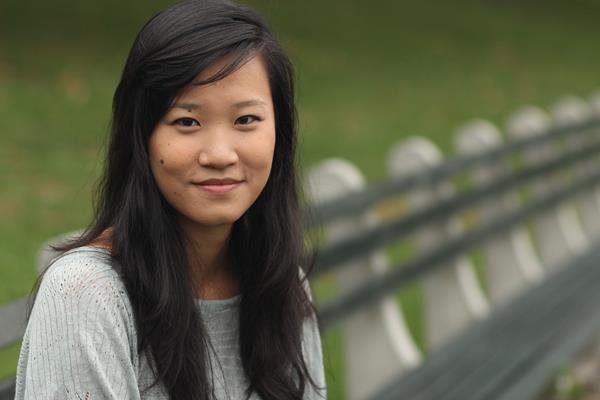
Jenny Xie Wins Walt Whitman Award

Poet Jenny Xie has won the Academy of American Poets’ Walt Whitman Award, the nation’s largest prize for a debut poetry collection. Xie’s manuscript, Eye Level, will be published by Graywolf Press in 2018.

In addition to publication, Xie will receive $5,000 and a six-week residency at the Civitella Ranierei Center in Umbria, Italy, and will also be featured on the Academy’s website, poets.org, and in its print periodical, American Poets.

United States Poet Laureate Juan Felipe Herrera selected Xie as this year’s winner. About Eye Level, Herrara writes: “‘Between Hanoi and Sapa’ this collection begins and continues with its ‘frugal mouth’ that ‘spends the only foreign words it owns.’ This knowing ‘travels’ in a spiral-shaped wisdom. We go places; we enter multiple terrains of seeing; we cross cultural borders of time, voices, locations—of consciousness. Then—we notice we are in a trembling stillness with all beings and all things. Jenny Xie’s Eye Level is a timely collection of beauty, clarity, and expansive humanity.”

Jenny Xie holds degrees from Princeton University and New York University’s Creative Writing Program, and has received fellowships from Kundiman, the Fine Arts Work Center in Provincetown, the Elizabeth George Foundation, and Poets & Writers. She is the author of the chapbook Nowhere to Arrive, which won the 2016 Drinking Gourd Chapbook Prize, and her poems are published or forthcoming in the New Republic, Tin House, Narrative, and elsewhere. Born in Hefei, China, and raised in New Jersey, Xie lives in Brooklyn, New York and teaches at New York University.

Established in 1975, the Walt Whitman Award is designed to encourage the work of emerging poets. Previous recipients include Suji Kwock Kim, Eric Pankey, Matt Rasmussen, Alberto Ríos, and Mai Der Vang, whose book, Afterland, will be published by Graywolf next month.

Quick Riff

3.29.17

NPR’s Tiny Desk Contest had over six thousand entries this year, and was unanimously won by hip-hop and R&B band Tank and the Bangas. One of the techniques the band incorporates is a kind of lyric dialogue between Tarriona “Tank” Ball and Anjelika “Jelly” Joseph who share singing roles, much like two best friends finishing each other’s sentences. Work on a piece of dialogue between two characters who interrupt each other, or riff off of a stream of consciousness flow in conversation. How might you use this technique to build tension in a story?

Ode to Dinner

3.28.17

In his book Dear Darkness (Knopf, 2008), poet Kevin Young has a series of odes to particular foods that meditate on memories of the speaker’s father and other family members, such as “Ode to Okra.” Using Young’s poem as inspiration, write an ode to one of your favorite foods that personifies and addresses the dish as “you.” Explore the senses—flavors, smells, sounds, textures, colors—that are stirred from these memories of meals. 

Upcoming Deadline: Whiting Creative Nonfiction Grant

Applications are currently open for the Whiting Foundation’s second annual Creative Nonfiction Grant. Individual awards of $40,000 are given to up to six writers in the process of completing a book of creative nonfiction.

Creative nonfiction writers currently under contract with a U.S. publisher and at least two years into their contract are eligible to apply. Using the online submission system, submit up to three chapters of a manuscript-in-progress, a signed and dated contract, a progress statement, a letter of reference from the publisher, and two additional letters of reference by May 1. A panel of five anonymous judges will select the winners; the grantees will be announced in the fall. For complete guidelines and eligibility requirements, visit the website or e-mail [email protected].

Established in 2015, the Whiting Foundation Creative Nonfiction Grant provides support for multiyear book projects that require large amounts of research. The grant’s chief objective is to “foster original, ambitious projects that bring writing to the highest possible standard.” The inaugural grantees were Deborah Baker, Sarah M. Broom, Timothy N. Golden, Joshua Roebke, Sarah Elizabeth Ruden, and John Jeremiah Sullivan.

Poet Laureate Work: Connecting People to Poetry

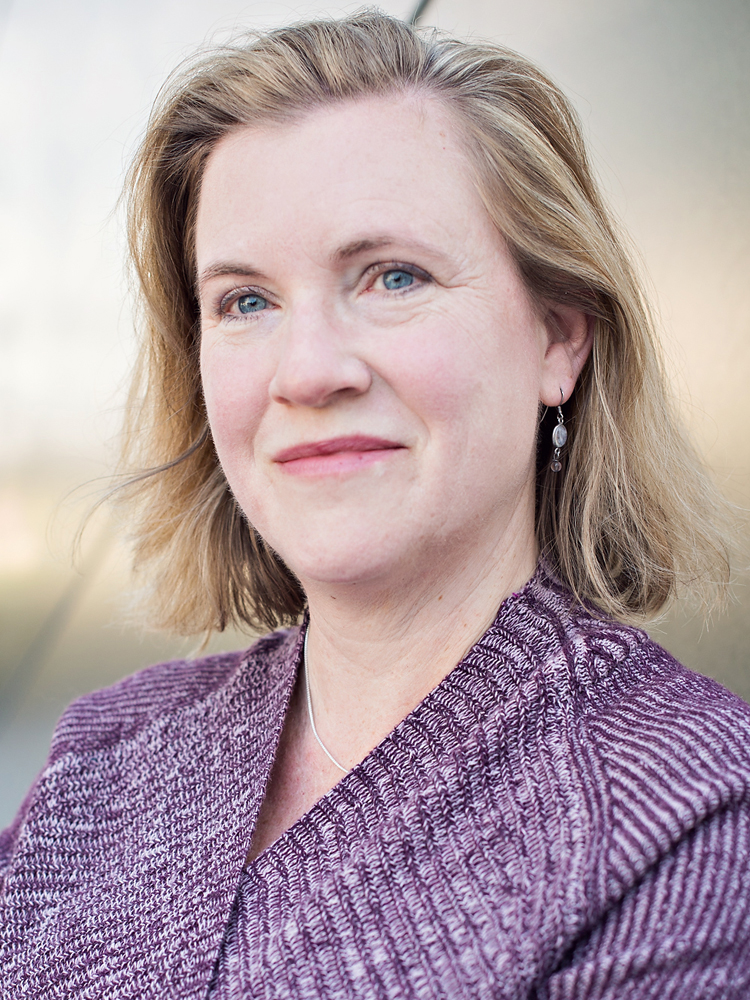
Elline Lipkin is the author of The Errant Thread, chosen by Eavan Boland for the Kore Press First Book Award, and Girls’ Studies (Seal Press, 2009). She is the current poet laureate of Altadena, a research affiliate with UCLA’s Center for the Study of Women, and teaches poetry for Writing Workshops Los Angeles. She blogs about a recent P&W–supported writing workshop with Suzanne Lummis at the Altadena Public Library in Altadena, California.
New to Altadena, and still new as its poet laureate, this past fall I tried to think about what programming would best serve this community—an unincorporated area in Los Angeles County, nestled in the San Gabriel foothills and blending into the borders of Pasadena. I decided a poetry workshop in February would be just the thing to build community and generate interest in poetry in advance of National Poetry Month and other planned literary events. Who might come in to teach enthusiastic poets who write for the joy of expression, the desire to play with words, and the chance to connect with community, I wondered.

Then, as a volunteer with WriteGirl, a Los Angeles-based organization that teaches creative writing to teenage girls, I had the pleasure of witnessing Suzanne Lummis lead a poetry workshop. She was brash, funny, direct, and engaging—all the components that make a great teacher. I knew she would be the perfect person to teach a community workshop at the Altadena Public Library.

The workshop was set up in the Altadena Library community room, which they assured me would be large enough. When I arrived at 12:15 PM to set up for the workshop’s 1:00 PM start, there were already people sitting at the tables. By 12:40 PM someone suggested we look for more chairs and ideally, more tables. By the time the workshop started at 1:05 PM, people were standing in the doorway as I scrambled to make more handouts and the staff set up rows of folding chairs. Close to seventy people crammed into the room.

As I’d hoped, Suzanne again was brash, funny, direct, and engaging. She wedged her way between the closely positioned tables and made certain to talk to people at every corner, all while keeping a current of excitement in the air as she called on participants to respond.

Suzanne’s first exercise was to copy down the phrase, “The judge ran down my list of offenses....” The crowd fell silent, and after a scant eight minutes was ready to share.  Suzanne offered on-the-spot critique: “Always stay a step ahead of the reader—don’t go where you think the reader wants you to go.” She emphasized making lines vivid and rich with specificity and moving away from the prosaic.

For another writing exercise, she asked for suggestions she recorded on a whiteboard—names of flavors, fragrances, flowers, and movie stars. The whiteboard was covered with sensory suggestions—chaparral, night-blooming angel’s trumpet, ginger, sassafras, peppermint, and licorice. Helen Mirren, Idris Elba, Barbara Stanwyck, and Marlon Brando mixed in their own column. The assignment was to pick something from each category and “let the words lead you.” “Don’t be literal” was another key piece of advice, alongside, “Keep your writing connected to the sensory and palpable.”

There was barely time to share before the hour and a half was up. A crowd surrounded Suzanne as the event ended. I watched them pour out of the room, buzzing with ideas for their poems, sharing lines and thoughts about the exercises, clearly hungry for the connection poetry brings. I knew I had found the right person for this community, and I was thrilled.

Major support for Readings & Workshops in California is provided by the James Irvine Foundation and the Hearst Foundations. Additional support comes from the Friends of Poets & Writers.

Photo: Elline Lipkin (Credit: Sylvia Gunde).

Winners of Anisfield-Wolf Book Awards Announced

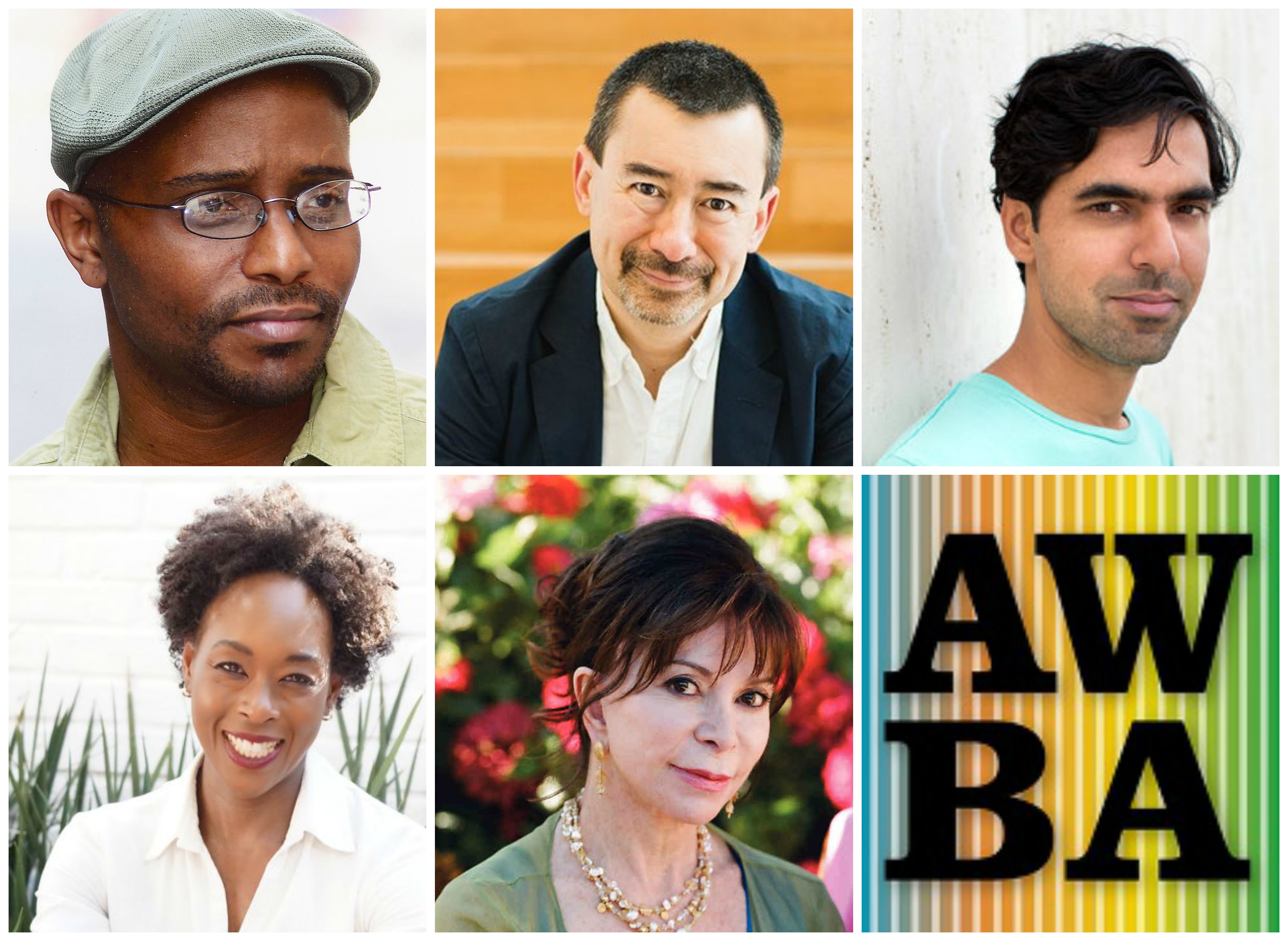
The Cleveland Foundation has announced the winners of the 82nd annual Anisfield-Wolf Awards, given annually for books of poetry, fiction, and nonfiction published in the previous year that “confront racism and examine diversity.” The winners will be honored at a ceremony in Cleveland on September 7.

The winners are Tyehimba Jess in poetry for Olio (Wave Books), Margot Lee Shetterly in nonfiction for Hidden Figures: The American Dream and the Untold Story of the Black Women Mathematicians Who Helped Win the Space Race (William Morrow), and Peter Ho Davies and Karan Mahajan in fiction for The Fortunes (Houghton Mifflin Harcourt) and The Association of Small Bombs (Penguin), respectively. Isabel Allende received the Lifetime Achievement Award. Jess, Shetterly, and Allende will each receive $10,000; Davies and Mahajan will split the $10,000 fiction prize.

“The new Anisfield-Wolf winners broaden our insights on race and diversity,” said Henry Louis Gates Jr., who chairs the jury. “This year, we honor a breakthrough history of black women mathematicians powering NASA, a riveting novel of the Asian American experience, a mesmerizing, poetic exploration of forgotten black musical performance and a spellbinding story of violence and its consequences. All is capped by the lifetime achievement of Isabel Allende, an unparalleled writer and philanthropist.” Gates, along with Rita Dove, Joyce Carol Oates, Steven Pinker, and Simon Schama, judged the prize.

Established in 1935, the Anisfield-Wolf Book Awards have honored 236 writers, including Nobel laureates Gunnar Myrdal, Nadine Gordimer, Martin Luther King Jr., Toni Morrison, and Derek Walcott.

140 Words

3.23.17

In a 2010 panel discussion at the Paley Center, Chinese activist and artist Ai Weiwei spoke about his extensive use of Twitter to share about his art and activism. Pressuring Twitter cofounder Jack Dorsey to make Twitter’s web interface available in Chinese, Ai stated how well suited it is to the Chinese language, in which each character constitutes an entire word: “With 140 characters in Chinese you really can write a novel.” Taking inspiration from this discussion, write a series of flash creative nonfiction pieces about art, human rights, or the use of social media, each 140 words long. Later, you may want to decide whether the essays function as standalone pieces or a connected series.

Water Bear

3.22.17

Earth’s “most tenacious creatures,” according to National Geographic’s website, are small aquatic invertebrates called tardigrades—also commonly known as water bears. Among their amazing feats are the fact that they can dry out completely and survive without water, they were launched into outer space and survived, and they roamed the earth and seas long before humans and will likely outlast us. Write a short story that incorporates a water bear, perhaps finding sci-fi, fantasy, or horror inspiration in its physical attributes, or writing a narrative that philosophizes about the range of its adaptations.

Whiting Award Winners Announced

Tonight at a ceremony in New York City, the Whiting Foundation announced the winners of the 2017 Whiting Awards. Among the largest monetary prizes given to emerging writers, the annual awards are given in poetry, fiction, nonfiction, and drama. Each winner receives $50,000.

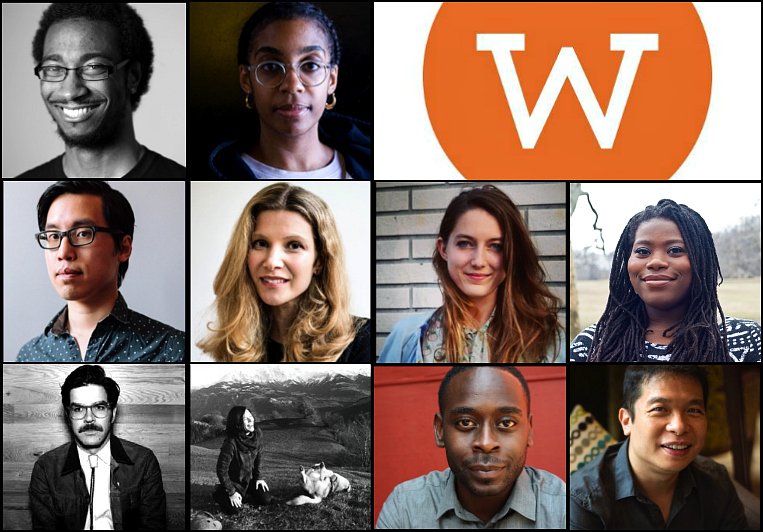
This year’s winners are Simone White and Phillip B. Williams in poetry; Kaitlyn Greenidge, Tony Tulathimutte, Jen Beagin, and Lisa Halliday in fiction; Francisco Cantú in nonfiction; and Clare Barron, Clarence Coo, and James Ijames in drama.

Visit the Whiting Foundation website to read more about the awardees. Excerpts from the latest work of each winner are available at the Paris Review.

Established in 1985, the Whiting Awards aim to “identify exceptional new writers who have yet to make their mark in the literary culture.” More than $7 million has been awarded to 320 emerging writers since the award’s inception. “The prize offers the gift of radical freedom to writers with the talent and imagination to match it,” said Courtney Hodell, the foundation’s director of writers’ programs.

Previous winners have included Tracy K. Smith, Jeffrey Eugenides, Jorie Graham, Elif Batuman, Alice Sola Kim, and Ocean Vuong.

The award is not open to submissions; an anonymous group of writers, editors, agents, critics, professors, booksellers, and other literary professionals are selected by the Whiting Foundation each year to nominate writers and serve as judges for the awards. Visit the Whiting Foundation website for more information.

Top row, from left: Phillip B. Williams, Simone White. Middle row: Tony Tulathimutte, Lisa Halliday, Clare Barron, Kaitlyn Greenidge. Bottom row: Francisco Cantú, Jen Beagin, James Ijames, Clarence Coo. 

Pages

Subscribe to RSS - blogs