Dream With a Glass Chamber

Michigan has implemented social distancing for just over a week now, meaning many of us are doing our best to self-isolate. What better to do with this time than blow the dust off of the bookshelf and dive in? For today’s post I’d like to do a quick reflection on a poetry collection by one of my favorite writers, and a past mentor of mine, Aricka Foreman.

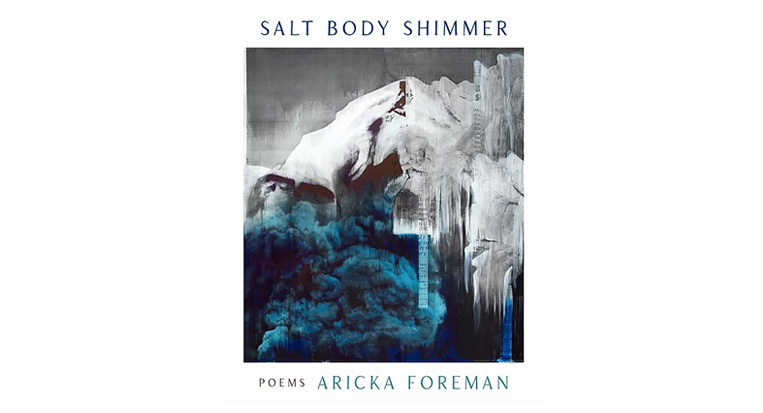
Dream With a Glass Chamber is Aricka’s chapbook published by YesYes Books in 2016. Her imagery is prominent and haunting throughout, allowing the reader to grasp dreams, memories, and grief with lines like:

“...find us making promise, find us clutching the static / of a wormhole where we settled into disappointment”

Place and time play a role in these poems moving us from Detroit in the eighties to the month of September in New York and back again, evaluating different losses along the way. Emotional complexities that shift from platonic to romantic flow seamlessly throughout, introducing close and distant characters that carry the collection from beginning to end. One of my favorite lines in the entire book is:

“Numb, I’ve run out of wicks and / your songs pour thick in my ears, love.”

It seems as if every word written is a part of Aricka’s many nuanced ways of grieving while her reality acts as the glass chamber, where both she and the reader watch these concepts unfold. I think this is best captured in her poem “dream in which you survive and in the morning things are back to normal,” a very fitting title for a poem that questions reality after waking from a dream. Throughout the entire collection, we are reminded to continue evaluating the fine line between dream and reality, and how grief exists on each side of that line.

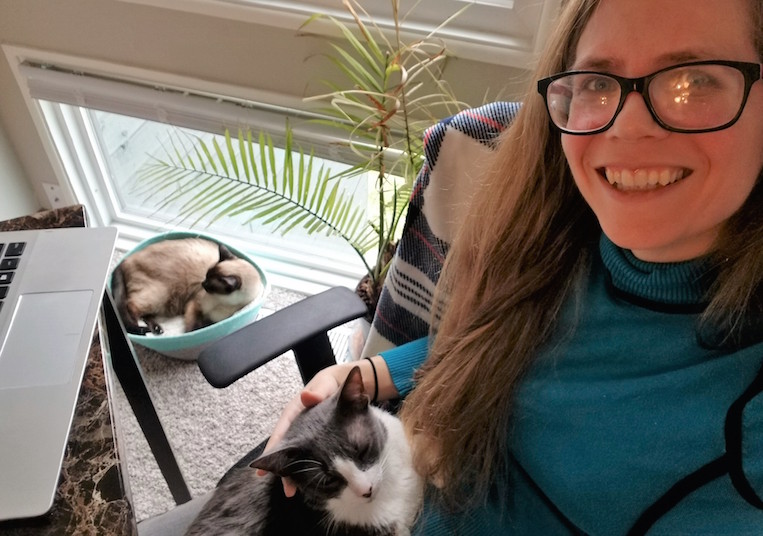
Aricka Foreman, author of Dream With a Glass Chamber.
 
Justin Rogers is the literary outreach coordinator for Poets & Writers in Detroit. Contact him at Detroit@pw.org or on Twitter, @Detroitpworg.

Authors League Fund Open for Applications

To help writers impacted by the COVID-19 pandemic, we will be highlighting emergency funds available to writers. For more sources of support, read our running list of resources for writers in the time of coronavirus.

The Authors League Fund assists poets, writers, dramatists, and journalists who are “experiencing unexpected hardship.” Writers with an established record of publication that live in the United States or who are American writers abroad are eligible to apply for a no-strings-attached, interest-free loan. The loan amount is based on the fund’s budget as well as the writer’s professional background and financial need; the fund requests the writer pay back the loan “when and as one is able.”

Writers with a demonstrated record of success are eligible. Eligible writers include authors who have published at least one book with a traditional publisher, dramatists whose full-length plays have been produced in mid-size or large theaters or published by an established press, and poets, fiction writers, nonfiction writers, and journalists who have published “a substantial body of work in periodicals with a national or broad circulation.”

The fund typically disburses funds to writers who are ill or supporting someone who is in poor health; writers facing overwhelming medical or dental expenses; writers struggling after a natural disaster; and writers suffering financial crises unrelated to health, such as unexpected loss of income or temporary unemployment.

Using only the online application system, fill out the required entry form. Writers are asked to describe the nature of their emergency, detail their publication record and writing projects, and provide personal information regarding income, employment, rent, assets, and health insurance. Writing samples are not required. Visit the website for complete guidelines and eligibility requirements.

Applications are reviewed on a rolling basis and are typically processed in ten to fourteen days.

Novelist Ellis Parker Butler established the Authors League Fund in 1917; the fund has since disbursed millions of dollars to writers in need. Major donors to the fund include Suzanne Collins, James A. Michener, Kenneth Patchen, the Haven Foundation, and the Amazon Literary Partnership.

Winners of the 2020 Windham-Campbell Prizes Announced

Eight writers have been named winners of the 2020 Windham-Campbell Prizes. The unrestricted grants of $165,000 are awarded annually to poets, fiction writers, nonfiction writers, and playwrights, and are intended to provide their recipients a life-changing opportunity “to focus on their work independent of financial concerns.”

This year’s winners are poets Bhanu Kapil and Jonah Mixon-Webster, fiction writers Yiyun Li and Namwali Serpell, nonfiction writers Anne Boyer and Maria Tumarkin, and playwrights Julia Cho and Aleshea Harris.

The winners were announced via a livestream video hosted by fiction writer and journalist Damian Barr. Mike Kelleher, director of the Windham-Campbell Prizes, has remarked on the ambition and prescience of their collective work, which “digs deeply into everything from the poisoned water crisis in present-day Flint, Michigan, to the vicissitudes of the surveillance state in an Afro-Futurist Zambia.”

The Windham-Campbell Prizes were established at Yale University in 2013 by novelist and memoirist Donald Windham. The prizes honor Windham’s lifelong partner, Sandy M. Campbell, and their shared wish to provide others with the kind of security that allowed Windham’s writing to flourish. Previous recipients of the award include poets Kwame Dawes and Cathy Park Hong, fiction writer John Keene, and essayist Rebecca Solnit. Winners are selected through a confidential nomination process; there are no applications for the award.

Photos (clockwise from upper left): Bhanu Kapil, Julia Cho, Yiyun Li, Maria Tumarkin, Anne Boyer, Namwali Serpell, Aleshea Harris, and Jonah Mixon-Webster

Art as Tool

3.19.20

“I sometimes find talking about a piece of visual art can help illuminate certain abstract ideas,” says Jessi Jezewska Stevens, author of the debut novel, The Exhibition of Persephone Q (Farrar, Straus and Giroux, 2020), in a BOMB magazine interview by Kristina Tate. “I am drawn to visual art as a tool of writing about perception and the fragility of perception.” Take a cue from Stevens’s way of connecting writing and visual art, and write a lyric essay inspired by a particular painting or work of art that you find resonant. What kind of inferences can you make about the artist’s ways of perception from looking at the work? How can you connect this with the ways you perceive the world?

What’s Changing in New Orleans

As I type these words the case count of residents in Louisiana who have tested positive for coronavirus is 196. The total number of cases in Orleans Parish in New Orleans is 136.

On Sunday, New Orleans mayor LaToya Cantrell announced that the city enforced a ban on large gatherings and the Tennessee Williams Festival, the New Orleans Book Festival, and the New Orleans Poetry Festival have been canceled.

I will do my best to share resources and ways to support local authors and bookstores through my Twitter feed, @NOLApworg.

The coronavirus will be a blow to our city in many ways. New Orleans is a city that heavily depends on tourism. We are a port city and a large event destination city. We are the city of Mardi Gras and Jazz Fest. Many local writers have had readings canceled or postponed. Local bookstores are impacted, too. While I’m sure this narrative is nationwide, the uncertainty and rising deaths in our state underscore the trauma experienced from a lack of federal response during Hurricane Katrina fifteen years ago.

In some ways we are prepared and know how to hunker down. We know how to find small moments of joy. So to everyone near and far, I say to you, we will get through this because one of the things New Orleans has taught the world is how to survive.

Kelly Harris is the literary outreach coordinator for Poets & Writers in New Orleans. Contact her at NOLA@pw.org or on Twitter, @NOLApworg.

Every Story Ever Told

3.18.20

“This is how you tell a story,” says narrator Tilda Swinton in a short film written and directed by Andrew Ondrejcak, which goes through six steps of a writer’s process paired with a dance choreographed by Kyle Abraham. “There is a problem. It is an obstacle so monumental that it seems unlikely our tiny protagonist will be able to overcome something so impressive. It’s a mountain pressing down, it’s a witch, a curse, a giant.” Think of the motions associated with loneliness and heartbreak, and write a scene of a short story that foregrounds your protagonist’s movements as they experience one of these invisible obstacles.

Plant Horror

3.17.20

“The carnation had possessed me,” is a sentence from Amparo Dávila’s short story “The Breakfast,” illustrated in a New York Times piece by Tamara Shopsin. Through her illustrations, Shopsin presents quotes from Dávila’s story collection The Houseguest (New Directions, 2018), translated from the Spanish by Audrey Harris and Matthew Gleeson, that imbue mundane plants with a sense of strange terror. Another sample is from the short story “The Cell”: “She was like ivy attached to a giant tree, submissive and trusting.” Select one of the lines—or jot down your own menacing plant simile or metaphor—and use it as a starting point for a poem.

Party Time: Fade to Black

As I mentioned last week, many of us were not able to attend the AWP conference earlier this month, but it did create some special moments, not only in San Antonio but in other cities and online. Although we are in a time when many events are being canceled or postponed due to the coronavirus pandemic, I wanted to continue to highlight some great literary festivals and conferences we can look forward to that take place in Houston. So far, I have already covered Sin Muros: A Latinx Theater Festival and Comicpalooza, and today I want to feature Fade to Black.

Fade to Black is Houston’s first national play festival to showcase the new works of African American playwrights. It’s a brilliant lineup of national, regional, and local playwrights displaying their craft. The summer festival is jam-pack with play readings and performances read and produced by African American writers and actors, many of which are from here in Houston.

This past year’s festival celebrated their seventh season and was held last June at the Midtown Arts and Theater Center Houston (MATCH). Festival goers come in from all over the state of Texas and the country. The plays of ten finalists from a national competition are produced and performed, and there are writing workshops and playwright panels that are all part of the three-day festival. If you are a writer thinking about how to step out from behind the desk or want to engage in something performative, then this is just the ticket. In addition, the organizers have added in a Fade to Black reading series with live readings of even more plays. There is so much inspiration from this playwriting community!

Lupe Mendez is the literary outreach coordinator for Poets & Writers in Houston. Contact him at Houston@pw.org or on Twitter, @houstonpworg.

How Detroit Is Coping

Michigan saw its first coronavirus (COVID-19) case early last week. In an effort to be preventative, Michigan governor Gretchen Whitmer declared a state of emergency last Tuesday. Organizations across Detroit have closed offices and asked team members to work from home. Detroit Public Schools Community District and surrounding districts have been ordered to close their buildings to students through April 6. Whitmer also ordered an official ban that prohibits gatherings of over 250 people, and recommended gatherings of over 100 people to be canceled or postponed, and reminded the public to wash hands frequently, stay home if sick, and to check in on family and friends.

I find it important to look at each of the ways we are responding to best understand the enormous circumstance that has been placed upon those who don’t have the resources to simply stay home and be safe. Students being out of school doesn’t mean that their parents have the same luxury of staying home, and lack of food security could put many families in crisis. Several literary events have been cancelled thus drying up the main source of income for many full-time artists. These are just a few ways that the coronavirus outbreak puts people at risk beyond just exposure to illness, and it will get worse before it gets better.

With that said, resources are popping up left and right within the community to help get us through the next few weeks. For parents looking to make sure their young ones are able to keep up academically, a Google Doc has been created that lists free educational resources. In addition, Kekere Emergency Childcare Collective is forming mutual aid childcare for families with an online sign-up sheet for those who can help with childcare, transportation, supplies, and food. I am keeping an eye out for resources for artists who are losing funds due to canceled readings or their own canceled event series. Many writers are taking to Twitter for ways to support working artists by buying books, merch, or making other financial contributions. Keep up with my findings on Twitter, @Detroitpworg, and stay safe! 

Justin Rogers is the literary outreach coordinator for Poets & Writers in Detroit. Contact him at Detroit@pw.org or on Twitter, @Detroitpworg.


Upcoming Contest Deadlines

The first contest deadlines of spring are upon us. These poetry, fiction, nonfiction, and translation awards include a prize for fiction by a first-generation immigrant and opportunities to give readings in Ireland and New York City. All offer a cash prize of $1,000 or more, and all have deadlines of either March 30 or March 31.

Arts & Letters Prizes: Three prizes of $1,000 each and publication in Arts & Letters are given annually for a group of poems, a short story, and an essay. Cate Marvin will judge in poetry, Devi S. Laskar will judge in fiction, and Jason Allen will judge in nonfiction. All entries are considered for publication. Deadline: March 31. Entry fee: $20.

Saif Ghobash Banipal Prize for Arabic Literary Translation: A prize of £3,000 (approximately $3,945) is given annually for a book of poetry or fiction translated from Arabic into English and published for the first time in English during the previous year. Translations of Arabic works of poetry or fiction originally published in 1967 or later are eligible. Deadline: March 31. Entry fee: none.

Black Lawrence Press Hudson Prize: A prize of $1,000, publication by Black Lawrence Press, and 10 author copies is given annually for a collection of poems or short stories. The editors will judge. All entries are considered for publication. Deadline: March 31. Entry fee: $25.

Chautauqua Institution Janus Prize: A prize of $5,000 and publication in Chautauqua will be given annually to an emerging prose writer. The winner will also receive lodging and travel expenses to give a lecture during the Summer 2020 season of the Chautauqua Institution in Chautauqua, New York. Writers who have not published a book of up to 15,000 words totaling no more than 100 pages in any prose genre are eligible. Hilary Plum will judge. Deadline: March 31. Entry fee: $20.

Cleveland State University Poetry Center Lighthouse Poetry Series: A prize of $1,000 and publication by the Cleveland State University Poetry Center is given annually for a poetry collection. Randall Mann will judge. Deadline: March 31. Entry fee: $28 (includes a recent book from the poetry center’s catalogue).

Elixir Press Antivenom Poetry Award: A prize of $1,000 and publication by Elixir Press is given annually for a first or second poetry collection. All entries are considered for publication. Deadline: March 31. Entry fee: $30.

Fish Publishing Poetry Prize: A prize of €1,000 (approximately $1,100) and publication in the 2020 Fish Publishing anthology is given annually for a single poem. The winner is also invited to read at the anthology launch event at the West Cork Literary Festival in July. Billy Collins will judge. All entries are considered for publication. Deadline: March 31. Entry fee: €14 (approximately $15).

Four Way Books Levis Prize in Poetry: A prize of $1,000 and publication by Four Way Books is given annually to a U.S. poet for a poetry collection. The winner will also be invited to participate in a reading in New York City. Diane Seuss will judge. Deadline: March 31. Entry fee: $30.

Gemini Magazine Short Story Contest: A prize of $1,000 and publication in Gemini Magazine is given annually for a short story. The editors will judge. Deadline: March 31. Entry fee: $8.

Indiana Review Poetry and Fiction Prizes: Two prizes of $1,000 each and publication in Indiana Review are given annually for a group of poems and a story. Javier Zamora will judge in poetry and Angela Flournoy will judge in fiction. Deadline: March 31. Entry fee: $20 (includes subscription).

Narrative Winter Story Contest: A prize of $2,500 and publication in Narrative is given annually for a short story, a short short story, an essay, or an excerpt from a longer work of fiction or creative nonfiction. A second-place prize of $1,000 is also awarded. The editors will judge. All entries are considered for publication. Deadline: March 31. Entry fee: $27.

Press 53 Prime Number Magazine Awards: Two prizes of $1,000 each and publication in Prime Number Magazine are given annually for a poem and a short story. Adrian Rice will judge in poetry and Wendy J. Fox will judge in fiction. Deadline: March 31. Entry fee: $15.

Red Hen Press Nonfiction Award: A prize of $1,000 and publication by Red Hen Press is given annually for an essay collection, memoir, or book of narrative nonfiction. Kristen Millares Young will judge. Deadline: March 31. Entry fee: $25.

Restless Books Prize for New Immigrant Writing: A prize of $10,000 and publication by Restless Books is given in alternating years for a debut book of fiction or nonfiction by a first-generation immigrant. The 2020 prize will be given in fiction. Writers who have not published a book of fiction in English are eligible. Dinaw Mengestu, Achy Obejas, and Ilan Stavans will judge. Deadline: March 31. Entry Fee: none.

Frost Farm Prize: A prize of $1,000 is given annually for a poem written in metrical verse. The winner also receives a scholarship and a $400 honorarium to give a reading at the Frost Farm Poetry Conference in Derry, New Hampshire, in June. Rachel Hadas will judge. Deadline: March 30. Entry Fee: $6 per poem.

Visit the contest websites for complete guidelines, and check out the Grants & Awards database and Submission Calendar for more contests in poetry, fiction, and creative nonfiction.


Pages

Subscribe to RSS - blogs