A Noiseless Patient Spider
Caption:
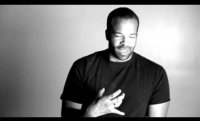
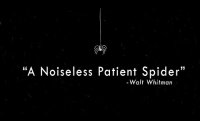
In this TED-Ed “poetic experiment,” three different animators interpret Walt Whitman's poem “A Noiseless Patient Spider” read by poets Mahogany Browne, Joanna Hoffman, and Rives.
Genre:
Jump to navigation Skip to content
In this TED-Ed “poetic experiment,” three different animators interpret Walt Whitman's poem “A Noiseless Patient Spider” read by poets Mahogany Browne, Joanna Hoffman, and Rives.
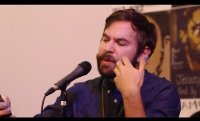
“There’s a theory that says you don’t exist unless someone calls and you respond.” In this video from SlamFind, sam sax, author of the chapbook All the Rage (Sibling Rivalry Press, 2016), reads his poem “Hydrophobia.”
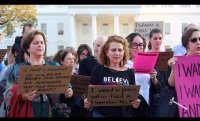
At the culminating event for Creative Time Summit DC: Occupy the Future, a conference on art and social change, participants convened in front of the White House for a collective reading of artist Zoe Leonard’s 1992 text piece, “I want a president....” Organized by Natalie Campbell and Saisha Grayson, an adaptation of the piece, which focused on current concerns created through community writing workshops and online discussions, was also recited.
“By existing in a cinematic space, Shakespeare can feel alive and present,” says Ross Williams, founder of the nonprofit New York Shakespeare Exchange, whose film project Maya C. Popa writes about in “The Shakespeare Sonnet Project” in the November/December issue of Poets & Writers Magazine. The project aims to collect videos of each of Shakespeare’s 154 sonnets performed by actors in different locations in New York City, with a future series to be filmed in locations in the rest of the country and abroad. Browse through some of Shakespeare’s sonnets, and choose one that reminds you of a place you know, or which evokes a site-specific memory. Write your own sonnet in response, bringing phrases and ideas used almost half a millennium ago into the present by incorporating cinematic imagery of a contemporary locale.
In this P.O.P. series video, Douglas Kearney reads and discusses “Sound—Part 3 (Ostinato): All the World's Wars Commence in the Head” by Yona Harvey, and reads from “Tuesday Morning at Work.” The P.O.P. series was shot and edited by Rachel Eliza Griffiths in partnership with the Academy of American Poets.
“We harness a wildness in the ‘I’ of our poems.” In this 2013 video at the Library of Congress, Dorothea Lasky delivers the Bagley Wright Lecture on Poetry and explores how poetry makes us human. Lasky interviews the late Max Ritvo about his poetry and process in “The World Beyond: A Last Interview With Max Ritvo” in the November/December issue of Poets & Writers Magazine.
Día de los Muertos, or Day of the Dead, is a Mexican holiday celebrated during the first two days of November in which family and friends commemorate the dead: gathering to tidy up tombs in the cemetery, presenting offerings on altars, eating and drinking, playing music, and telling stories. Write a poem that joyfully honors a loved one who has passed away—or that confronts death and mortality in a more general way—with a tone of both respect and celebration. How does imbuing the gravity of mortality with liveliness and vitality inspire you to think about imagery, rhythm, and diction in new ways?
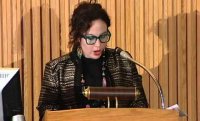
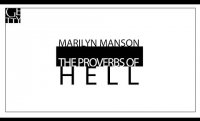
“Expect poison from the standing water.” Musician and poet Marilyn Manson reads “The Proverbs of Hell” by William Blake at Dark Blushing, an evening of poetry, music, and art presented in collaboration with Write Now Poetry Society, at the J. Paul Getty Museum in Los Angeles.
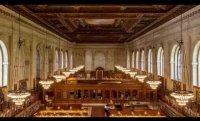
After undergoing more than two years of renovation at the New York Public Library’s main branch, this time-lapse video captures over fifty thousand books reshelved in two minutes. The reopening of the historic Rose Main Reading Room and the Bill Blass Public Catalog Room was celebrated in October 2016.
Edward Gorey wrote and illustrated more than one hundred books, including several alphabet-driven works such as The Gashlycrumb Tinies (“A is for Amy who fell down the stairs”), The Glorious Nosebleed (“She wandered among the trees Aimlessly”), and The Just Dessert (“Apologize”). In the spirit of Gorey’s dark humor unexpectedly combined with a children’s alphabet primer, write a macabre poem similarly derived from the first ten letters of the alphabet, or any ten letters of your choosing.