Find details about every creative writing competition—including poetry contests, short story competitions, essay contests, awards for novels, grants for translators, and more—that we’ve published in the Grants & Awards section of Poets & Writers Magazine during the past year. We carefully review the practices and policies of each contest before including it in the Writing Contests database, the most trusted resource for legitimate writing contests available anywhere.
Find a home for your poems, stories, essays, and reviews by researching the publications vetted by our editorial staff. In the Literary Magazines database you’ll find editorial policies, submission guidelines, contact information—everything you need to know before submitting your work to the publications that share your vision for your work.
Whether you’re pursuing the publication of your first book or your fifth, use the Small Presses database to research potential publishers, including submission guidelines, tips from the editors, contact information, and more.
Research more than one hundred agents who represent poets, fiction writers, and creative nonfiction writers, plus details about the kinds of books they’re interested in representing, their clients, and the best way to contact them.
Find publishers ready to read your work now with our Open Reading Periods page, a continually updated resource listing all the literary magazines and small presses currently open for submissions.
Since our founding in 1970, Poets & Writers has served as an information clearinghouse of all matters related to writing. While the range of inquiries has been broad, common themes have emerged over time. Our Top Topics for Writers addresses the most popular and pressing issues, including literary agents, copyright, MFA programs, and self-publishing.
Our series of subject-based handbooks (PDF format; $4.99 each) provide information and advice from authors, literary agents, editors, and publishers. Now available: The Poets & Writers Guide to Publicity and Promotion, The Poets & Writers Guide to the Book Deal, The Poets & Writers Guide to Literary Agents, The Poets & Writers Guide to MFA Programs, and The Poets & Writers Guide to Writing Contests.
Poets & Writers lists readings and other literary events held online and in person. Whether you are an author on a book tour or the curator of a reading series, the Literary Events Calendar can help you find your audience.
Research newspapers, magazines, websites, and other publications that consistently publish book reviews using the Review Outlets database, which includes information about publishing schedules, submission guidelines, fees, and more.
Well over ten thousand poets and writers maintain listings in this essential resource for writers interested in connecting with their peers, as well as editors, agents, and reading series coordinators looking for authors. Apply today to join the growing community of writers who stay in touch and informed using the Poets & Writers Directory.
Since our founding in 1970, Poets & Writers has served as an information clearinghouse of all matters related to writing. While the range of inquiries has been broad, common themes have emerged over time. Our Top Topics for Writers addresses the most popular and pressing issues, including literary agents, copyright, MFA programs, and self-publishing.
Find a writers group to join or create your own with Poets & Writers Groups. Everything you need to connect, communicate, and collaborate with other poets and writers—all in one place.
Well over ten thousand poets and writers maintain listings in this essential resource for writers interested in connecting with their peers, as well as editors, agents, and reading series coordinators looking for authors. Apply today to join the growing community of writers who stay in touch and informed using the Poets & Writers Directory.
Find information about more than two hundred full- and low-residency programs in creative writing in our MFA Programs database, which includes details about deadlines, funding, class size, core faculty, and more. Also included is information about more than fifty MA and PhD programs.
Whether you are looking to meet up with fellow writers, agents, and editors, or trying to find the perfect environment to fuel your writing practice, the Conferences & Residencies is the essential resource for information about well over three hundred writing conferences, writers residencies, and literary festivals around the world.
Poets & Writers lists readings and other literary events held online and in person. Whether you are an author on a book tour or the curator of a reading series, the Literary Events Calendar can help you find your audience.
Discover historical sites, independent bookstores, literary archives, writing centers, and writers spaces in cities across the country using the Literary Places database—the best starting point for any literary journey, whether it’s for research or inspiration.
From in-person events held in cities across the country to virtual events available to all, Poets & Writers Live offers a more tangible connection to the community of writers through celebrations of authors featured in the pages of Poets & Writers Magazine, including readings and conversations with the debut authors in our annual debut poets roundup, First Fiction, The New Nonfiction, and 5 Over 50 and acclaimed authors such as Garth Greenwell, Douglas Kearney, Karen Russell, and Clint Smith.
Establish new connections and enjoy the company of your peers using our searchable databases of MFA programs and writers retreats, apply to be included in our directory of writers, and more.
Each year the Readings & Workshops program provides support to hundreds of writers participating in literary readings and conducting writing workshops. Learn more about this program, our special events, projects, and supporters, and how to contact us.
The Maureen Egen Writers Exchange Award introduces emerging writers to the New York City literary community, providing them with a network for professional advancement.
Find information about how Poets & Writers provides support to hundreds of writers participating in literary readings and conducting writing workshops.
Bring the literary world to your door—at half the newsstand price. Available in print and digital editions, Poets & Writers Magazine is a must-have for writers who are serious about their craft.
View the covers and contents of every issue of Poets & Writers Magazine, from the current edition all the way back to the first black-and-white issue in 1987.
Find details about every creative writing competition—including poetry contests, short story competitions, essay contests, awards for novels, grants for translators, and more—that we’ve published in the Grants & Awards section of Poets & Writers Magazine during the past year. We carefully review the practices and policies of each contest before including it in the Writing Contests database, the most trusted resource for legitimate writing contests available anywhere.
Every day the editors of Poets & Writers Magazine scan the headlines—publishing reports, literary dispatches, academic announcements, and more—for all the news that creative writers need to know.
In our weekly series of craft essays, some of the best and brightest minds in contemporary literature explore their craft in compact form, articulating their thoughts about creative obsessions and curiosities in a working notebook of lessons about the art of writing.
The Time Is Now offers weekly writing prompts in poetry, fiction, and creative nonfiction to help you stay committed to your writing practice throughout the year. Sign up to get The Time Is Now, as well as a weekly book recommendation for guidance and inspiration, delivered to your inbox.
Ads in Poets & Writers Magazine and on pw.org are the best ways to reach a readership of serious poets and literary prose writers. Our audience trusts our editorial content and looks to it, and to relevant advertising, for information and guidance.
Start, renew, or give a subscription to Poets & Writers Magazine; change your address; check your account; pay your bill;
report a missed issue; contact us.
Poets & Writers is pleased to provide free subscriptions to Poets & Writers Magazine to award-winning young writers and to high school creative writing teachers for use in their classrooms.
Read select articles from the award-winning magazine and consult the most comprehensive listing of literary grants and awards, deadlines, and prizewinners available in print.
The telecommunications company Orange announced yesterday that the final six authors in the running for the Orange Broadband Prize for Fiction are Ellen Feldman for Scottsboro (Norton), Samantha Harvey for The Wildnerness (Cape), Samantha Hunt for The Invention of Everything Else (Houghton Mifflin), Deidre Madden for Molly Fox's Birthday (Faber), Marilynne Robinson for Home (Farrar, Straus and Giroux), and Kamila Shamsie for Burnt Shadows (Bloomsbury).
Toni Morrison is among the fourteen women novelists and story writers who didn't make the shortlist. Other longlisted authors who didn't make the cut include Allegra Goodman (Intuition, Dial Press), Gina Ochsner (The Russian Dreambook of Colour and Flight, Portobello), Preeta Samarasan (Evening Is the Whole Day, Houghton Mifflin), Curtis Sittenfeld (American Wife, Random House), Miriam Toews (The Flying Troutmans, Counterpoint), and Ann Weisgarber, an Ohio native who is still in the running for the Orange Award for New Writers.
The winners of both awards will be announced on June 3 at a ceremony in London.
The deadline for the 2009 Cave Canem Poetry Prize, an annual award given for a first book of poems by an African American poet, is next Friday. To get a sense of the manuscripts that have been successful in recent years, let's take a look at the last two winners, Ronaldo V. Wilson and Dawn Lundy Martin, both of whom were included in Poets & Writers Magazine's annual roundup of debut poets.
Wilson was thirty-eight when he won last year's prize for Narrative of the Life of the Brown Boy and the White Man, which was published by the University of Pittsburgh Press (the presses that publish the winners rotate; this year's participating press is Graywolf). He spent seven years writing the book and submitted to only three or four contests over a period of three years.
Martin was similarly selective in her submissions. She submitted A Gathering of Matter/A Matter of Gathering, which took her five years to write, to around seven contests before she won the 2007 Cave Canem Poetry Prize and it was subsequently published by the University of Georgia Press. When asked why she chose this particular contest, she replied, "First, because the publishers that make Cave Canem prizewinning work produce really beautiful books. Second, I entered because Carl Phillips was the judge." Martin's right, the books are beautiful. And Graywolf is known for publishing not only top-notch poetry collections but ones that look great, too. Yusef Komunyakaa is this year's judge.
Here's a sample from Narrative of the Life of the Brown Boy and the White Man:
When he thinks of the connection between his sad sisters and his turned-on old men strangers caught sucking and being sucked, and covered, he feels that his mind is one confused object that pulses about unknowing, wound up, a note toward itself with no answers but the need to cut, suspend, look. Paste, cover, and tape.
And from A Gathering of Matter/A Mattter of Gathering:
When the wax dries, finally, alongside the grass,
what rises when the dead are buried?
It's arguable that the blurbs on the back of a book indicate anything about the aesthetic of the poet or the quality of her book, but just to "cover" all the bases: David Rivard called Wilson's book "scary in an exhalted sort of way," while Nathaniel Mackey called Martin's collection "staccato, braket studded, gruff, brusque."
And finally, whether you're thinking of submitting to this year's contest or not, the video below, of Martin reading her poem "Religion Song" at Fence magazine's tenth anniversary reading at the AWP conference in Chicago earlier this year, is worth watching:
Last week Chicago mayor Richard Daley proclaimed April 23, the 445th
birthday of William Shakespeare, to be Talk Like Shakespeare Day
throughout the city. On Thursday residents of Chicago are encouraged
to incorporate phrases such as "prithee," "thou," "fie!" and "knave"
into their everyday conversations as a way to celebrate the lasting
influence of the Bard and his work.
PEN Slovakia, a division of International PEN, has denounced "from an
ethical and moral point of view" a Slovakian literary journal for
publishing poems by indicted war criminal Radovan Karadzic.
The ninety-third-annual Pulitzer Prizes were announced earlier this afternoon at Columbia University in New York City. The winner in poetry is W. S. Merwin for his twenty-sixth poetry collection, The Shadow of Sirius (Copper Canyon Press), and the winner in fiction is Elizabeth Strout for her third book, the story collection Olive Kitteridge (Random House).
They will each receive ten thousand dollars.
The finalists in poetry were Frank Bidart for Watching the Spring Festival
(Farrar, Straus and Giroux) and Ruth Stone for What Love Comes To: New and Selected Poems
(Copper Canyon Press). The jurors were poets Anne Winters, Carl Dennis, and James Baker Hall.
The finalists in fiction were Louise Erdrich for her novel The Plague of Doves(HarperCollins) and Christine Schutt for her novel All Souls (Harcourt). The jurors were editor Susan Larson, professor R. H. W. Dillard, and author Nancy Pearl.
Below is a list of the other twenty-first-century Pulitzer Prize-winning authors. And if you have some extra time, consider clicking around the new and improved Pulitzer Prize Web site. There are good images and text about past winners in poetry and fiction, but if you really want to be blown away, haunted even, check out the photo galleries of the various photography categories, especially Feature Photography and the work of Preston Gannaway (2008) and Renée C. Byer (2007), in particular. (Click on the "Works" tab.)
2008 Poetry: Robert Hass for Time and Materials (Ecco) and Philip Schultz for Failure (Harcourt)
2008 Fiction: Junot Díaz for The Brief Wondrous Life of Oscar Wao (Riverhead Books)
2007 Poetry: Natasha Trethewey for Native Guard (Houghton Mifflin)
2007 Fiction: Cormac McCarthy for The Road (Knopf)
2006 Poetry: Claudia Emerson for Late Wife (Lousiana State University Press)
2006 Fiction: Geraldine Brooks for March (Viking)
2005 Poetry: Ted Kooser for Delights & Shadows (Copper Cayon Press)
2005 Fiction:
Marilynne Robinson
for Gilead (Farrar, Straus and Giroux)
2004 Poetry:
Franz Wright for Walking to Martha's Vineyard (Knopf)
2004 Fiction: Edward P. Jones for The Known World (Amistad)
2003 Poetry: Paul Muldoon for Moy Sand and Gravel (Farrar, Straus and Giroux)
2003 Fiction:
Jeffrey Eugenides for Middlesex (Farrar, Straus and Giroux)
2002 Poetry:
Carl Dennis for Practical Gods (Penguin)
2002 Fiction:
Richard Russo for Empire Falls (Knopf)
2001 Poetry:
Stephen Dunn for Different Hours (Norton)
2001 Fiction:
Michael Chabon for The Amazing Adventures of Kavalier & Clay (Random House)
2000 Poetry:
C.K. Williams for Repair (Farrar, Straus and Giroux)
2000 Fiction:
Jhumpa Lahiri for Interpreter of Maladies (Mariner Books)
On G&A: The Contest Blog we'll occasionally offer more information about some of the sponsors of these new contests. First up, Emergency Press.
A nonprofit, independent publisher located in New York City, Emergency Press was founded about eight years ago by the Emergency Collective, a group of writers who wanted to bridge what they considered "counterproductive divides in contemporary literature." From their Web site: "We engage in sustained artistic explorations of issues that
we each individually believe are on the verge of emerging from the
unconscious commonplace into collective emergencies. We publish poetry,
fiction, essays, drama, new media, or hybrids of these. More often than
not, the work is investigative, research-intensive, or engaged with the
language of facts."
The only problem is that you have to be a member of the collective to get a book published by Emergency Press. Well, that's not really a problem anymore. The winner of the press's new book contest, which will be given annually for a book of poetry, fiction, creative nonfiction, or hybrid of genres that explores a single topic, automatically gains membership—and a thousand dollars and publication of the winning book.
Emergency titles include Chad Faries's The Border Will Be Soon: Meditations on the Other Side and Brian Tomasovich's Ouisconsin: The Dead in Our Clouds.
The deadline for the inaugural contest is June 1, and there's a twenty-dollar entry fee. Jayson Iwen will be the first judge.
And for those confused readers who came here looking for an instructional video about the Chinese emergency press button, well here it is:
The American Library Association yesterday released its annual
list of the country’s most frequently challenged books. Khaled Hosseini’s best-selling novel The Kite Runner was among them.
The Samuel French Morse Poetry Prize, which nurtured the careers of more than two dozen poets since the first award was given in 1983 (when judge Anthony Hecht chose Susan Donnelly's Eve Names the Animals), has been suspended. "There's little to say," replied series editor Guy Rotella when asked for details. "The economics no longer work."
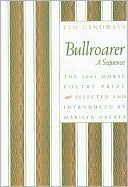
The most recent winner is Lisa Gluskin, whose collection Tulips, Water, Ash was selected by judge Jean Valentine earlier this year. The book is scheduled to be published in September. Previous winners include Carl Phillips (In the Blood, 1992), Allison Funk (Living at the Epicenter, 1995), Jennifer Atkinson (The Drowned City, 2000), Ted Genoways (Bullroarer, 2001), and Roy Jacobstein (A Form of Optimism, 2006). Past judges included Maxine Kumin, X.J. Kennedy, Donald Hall, Mary Oliver,
Peter Davison, Charles Simic, Rachel Hadas, A. R. Ammons,
David Ferry, Sonia Sanchez, Molly Peacock, Edward Hirsch, Carolyn
Kizer, Alfred Corn, Marilyn Hacker, Rosanna Warren, Ellen Bryant Voigt, Eric Pankey, Lucia Perillo, Charles
Harper Webb, and Rodney Jones.
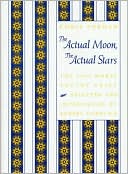
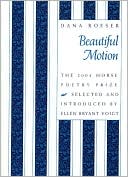
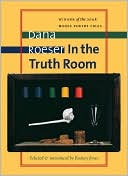
For the first twenty-one years of the award, the winning books retained the series' signature design. Below are a few of the covers from the earlier period, Genoways's Bullroarer, Robert Cording's The Actual Moon, the Actual Stars, and Dana Roeser's Beautiful Motion, followed by the most recently published—and, as it turns out, repeat—winner, Roeser's In the Truth Room.
Yesterday, less than three months after a round of layoffs at Publishers Weekly
that resulted in the departure of editor Sara Nelson, the industry
trade magazine's parent company, Reed Business Information, laid off
three more editors.
Around this time each year, Pacific Rim Voices, sponsor of the thirty-thousand-dollar Kiriyama Prizes, would announce the winners of the annual awards for books of fiction and nonfiction that encourage "greater understanding of and among the nations of the Pacific Rim and South Asia." But about six months ago the San Francisco-based nonprofit announced instead that the award program would be restructured. "While this process is under way, publishers are kindly asked not to submit further entries," the Web site states. "When a new time line and new rules are in place, entries will once again be welcome." So, we wait.
In the meantime, here's a list of the past winners of the prizes. Note that during the first three years of the prize, there was only one winner—in fiction or nonfiction.
2008
Fiction: Lloyd Jones for Mister Pip
Nonfiction: Julia Whitty for The Fragile Edge: Diving and Other Adventures in the South Pacific
2007
Haruki Murakami for Blind Willow, Sleeping Woman (translated by Phillip Gabriel and Jay Rubin)
Greg Mortensen and David Oliver Relin for Three Cups of Tea: One Man's Mission to Promote Peace... One School at a Time
2006
Luis Alberto Urrea for The Hummingbird's Daughter
Piers Vitebsky for The Reindeer People
2005
Nadeem Aslam for Maps for Lost Lovers
Suketu Mehta for Maximum City: Bombay Lost and Found
2004
Shan Sa for The Girl Who Played Go
Inga Clendinnen for Dancing With Strangers
2002
Rohinton Mistry for Family Matters
Pascap Khoo Thwe for From the Land of Green Ghosts: A Burmese Odyssey
2001
Patricia Grace for Dogside Story
Peter Hessler for River Town: Two Years on the Yangtze
2000
Michael Ondaatje for Anil's Ghost
Michael David Kwan for Things That Must Not Be Forgotten: A Childhood in Wartime China
1999
Cheng Ch'ing-wen for Three-Legged Horse (various translators)
Andrew X. Pham for Catfish and Mandala: A Two-Wheeled Journey through the Landscape and Memory of Vietnam
1998
Fiction: Ruth L. Ozeki for My Year of Meats
1997
Nonfiction: Patrick Smith for Japan: A Reinterpretation
1996
Fiction: Alan Brown for Audrey Hepburn's Neck
And, in case you're wondering which countries consitute the Pacific Rim, here's a map from the organization's Web site: