Genre: Poetry

Koon Woon Passes the Torch to Amber Nelson

P&W-supported poet Koon Woon, October’s Writer in Residence, was born in a timeless village in China in 1949. In 1960 he immigrated to Washington State, first to the logging town of Aberdeen, then to Seattle, where he now resides. He turned to poetry while he was a mathematics and philosophy student coping with mental illness. Later he attended the workshops of Nelson Bentley at the University of Washington. At the age of forty-eight, Koon’s first book, The Truth in Rented Rooms, was published by Kaya Press

Koon Woon

When I reached the age of fifty-six, I joked, “I have outlived Theodore Roethke by one year already, but he is immortal.” Now that I am sixty-four, am I a little bit jaded as far as poetry is concerned? I’ve received some small recognitions and awards for my poetry, but more than anything, poetry enabled me to weather the storms of life, gave me an aesthetic sense, and encouraged me to ask questions. I am glad that some young people today are as fervent as I was back in my early thirties about poetry. Now I am passing the torch to younger poets, as well as publishers, organizers, and advocates of poetry.

It seemed fitting, for my final post, to hand that torch to one such up-and-comer. When Amber Nelson was fresh out of college in 2005, she and Will and Sarah Gallien hatched the e-journal alice blue review. They sought to give a voice to poets that “major” print journals ignore. Amber also created handmade chapbooks published by alice blue books. She’s worked with such innovative Seattle groups as APRIL (Authors, Publishers, and Readers of Independent Literature).

These young people have merged information science and technology with poetics. They give webinars and organize online Google hangouts. Their poems are tweeted and texted, nimble fingers portraying nimble minds. I’m sad when I imagine my books going out of print, but I’m excited that new innovators are populating the scene. What they do—I am banking my last poetry dollar on it—is crucial to our survival.

And now, here’s Amber in her own words:

Amber Nelson


Will Gallien, Sarah Gallien (then Burgess), and I founded alice blue review in a shared apartment in the Northgate neighborhood of Seattle. It was founded out of a desire to see and publish more of the work we really liked. We were interested in taking good writing seriously, but not taking ourselves too seriously. As such, we wrote up our mission statement:

We’re a confused collective of marble designers who, after discovering a set of encyclopedias, decided to stick our pinkies into the asphalt parking-lot of words. We seek innovative poetry and prose, work that quivers nervously for attention, work that teethes endlessly on doorknobs. We could toss out a grocery-list of writers—from Spicer to Borges, or O’Connor to O’Hara—but that would confuse you. alice blue is published on a hidden mountain-top between Portland, Oregon, and Seattle, Washington.

We also wrote silly bios for our masthead, for example: “I want to be just like you when I grow up. I figure all I need is a lobotomy and some tights.”

That was my own bio—a quote from The Breakfast Club. And our rejection letters, which we spent a lot of time working on, were a combination of the “standard form letter” and language stolen from writers we love. We had a ridiculous shared blog, where we posted our first rejection letters (among other ridiculous things).

In starting alice blue, we were also responding, in a way, to what we saw as a serious lack of literary community in Seattle. That’s not to say that there weren’t people writing, and writing communities in Seattle, but they weren't involved in or interested in the work that was compelling to us. There were (and still are) plenty of open mics catering to the slam/spoken word community. There was a lot of "nature writing.” They weren’t, however, “our” community. So we hit the Internet and made one for ourselves.

We split up—geographically—for a while, but kept publishing alice blue, which became better known. After graduate school at Boise State, I moved back to Seattle and got involved with some of the writers Koon mentioned. With Greg Bem, I founded the Seattle Poetry Panels (SPP), influenced by his experiences in the world of library science and an invitation to him from Google to host an online reading via Google hangout. So we started SPP and invited Paul Nelson to host our first panel on the “State of Seattle Poetry.” You can watch that here:

Simultaneous to all of this, I was working on alice blue review and alice blue books. I was working on a chapbook called MONSTER: A GLOTTOCHRONOLOGY that really was a monster to make. There was a letter M hand cut from the cover, a velum slip, and a double-signature. As a palate cleanser, I decided to do Shotgun Wedding, a quick and dirty chapbook series—something that would just be photocopied and saddle stapled. I focused on writers from the Pacific Northwest whom I thought everyone should know about. I’m working on the next batch of this series now.
 
I have several readings coming up, and a book release party for my first full-length book (out from Coconut Books) on November 1 at Open Books. I have my friends in the literary community to thank. We are a supportive bunch here, I think. Everywhere I turn, it seems, one writer is reaching out to another.

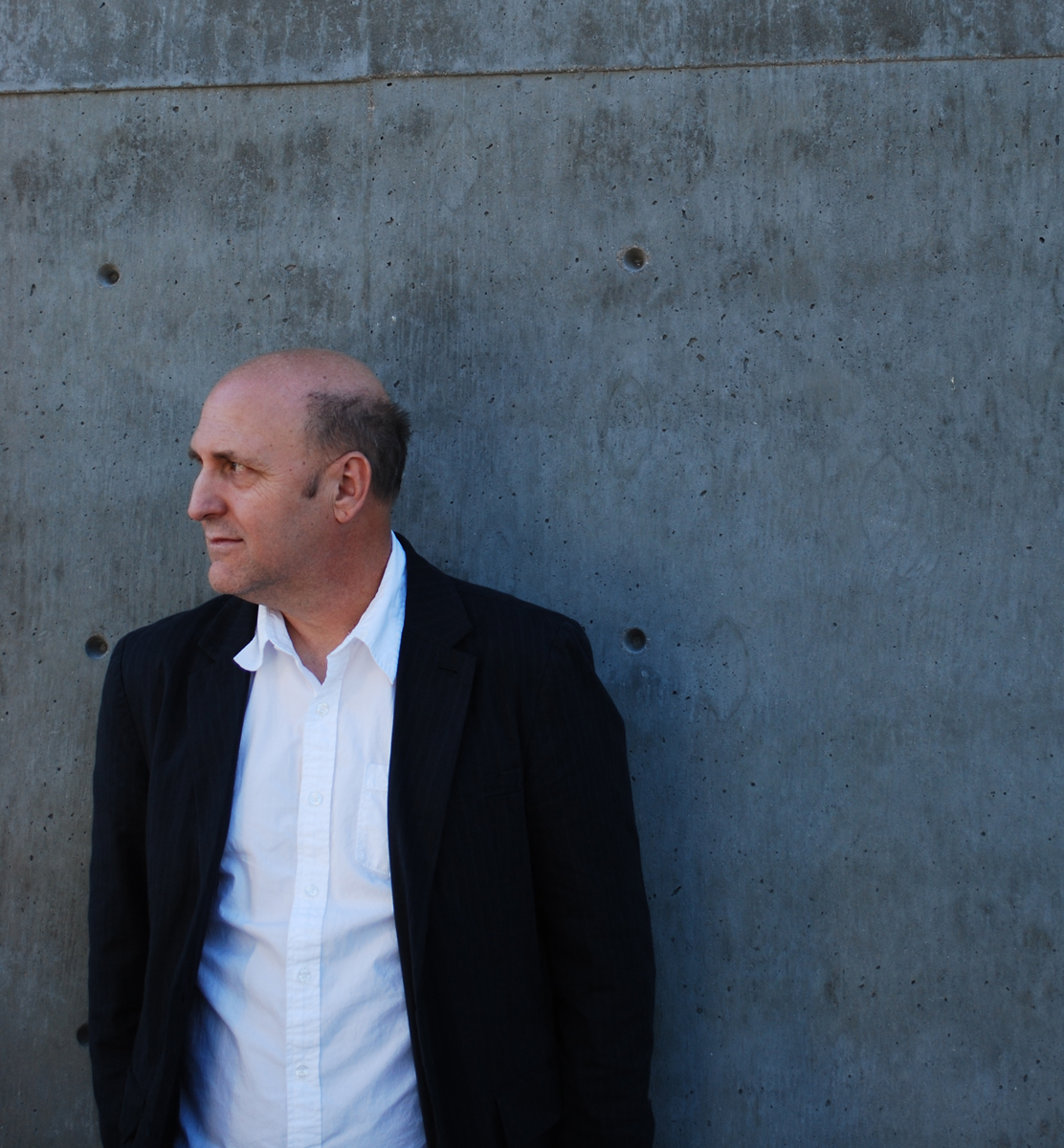
Photos: Top: Koon Woon reads with Beacon Bards at the Station coffee shop in Seattle. Credit: Greg Bem. Below: Amber Nelson. Credit: Amber Nelson.
Support for Readings/Workshops events in Seattle is provided by an endowment established with generous contributions from the Poets & Writers Board of Directors and others. Additional support comes from the Friends of Poets & Writers.
Vanishing Act

Caption: 

“How nice it is to disappear, float into a mist.” Musician and poet Lou Reed died on Sunday at the age of seventy-one. In this video, he recites the haunting and timely lyrics to “Vanishing Act.”

Genre: 

Ten Emerging Writers Receive Whiting Awards

The Whiting Writers’ Awards, given annually by the Mrs. Giles Whiting Foundation to ten emerging writers who show “exceptional talent and promise in early career,” were announced on Monday. Each writer will receive the $50,000. 

The 2013 winners are Hannah Dela Cruz Abrams, a fiction and nonfiction writer whose novella, The Man Who Danced with Dolls, was published in 2012 by Madras Press; Amanda Coplin, a fiction writer whose first novel, The Orchardist, was published by HarperCollins in 2012; Jennifer duBois, a fiction writer whose debut novel, A Partial History of Lost Causes, was published by Dial Press in 2012, and whose newest novel, Cartwheel, was published in September by Random House; Virginia Grise, the author of several plays including Making Myth; Ishion Hutchinson, a poet whose debut collection, Far District, was published by Peepal Tree Press Limited in 2010; Morgan Meis, a nonfiction writer whose collection of essays, Ruins, was published by Fallen Bros Press in 2012; C. E. Morgan, a fiction writer whose first novel, All the Living, was published by Farrar, Straus & Giroux in 2009; Rowan Ricardo Phillips, a poet whose first collection, The Ground, was published by Farrar Straus & Giroux in 2012; Clifford Thompson, a fiction and nonfiction writer whose essay collection, Love for Sale, was published this year by Autumn House Press; and Stephanie Powell Watts, a fiction writer whose debut story collection, We Are Taking Only What We Need, was published in 2012 by BkMk Press. 

The Whiting Awards honor works in the categories of poetry, fiction, nonfiction, and plays, and are intended to identify writers “who have yet to make their mark on the literary culture.'’

Since 1985, the Mrs. Giles Whiting Writing Foundation has given over $6 million to 290 writers. Visit the website to learn more about this year's winners.

Poetic Appreciation

10.22.13

Poetry is an act of appreciation. With our increasingly busy schedules, we lose our ability to appreciate. Poets must resist the modern temptation to overlook what holds meaning in our lives. Identify something in your surroundings—a rusted hoe draped in spider webs, an unfashionable dress abandoned by time, a wine cork buried in a drawer of unpaid bills—and write a poem that appreciates these lonely items.

Koon Woon’s Lessons from Uncle Sum

P&W-supported poet Koon Woon, October’s Writer in Residence, was born in a timeless village in China in 1949. In 1960 he immigrated to Washington State, first to the logging town of Aberdeen, then to Seattle, where he now resides. He turned to poetry while he was a mathematics and philosophy student coping with mental illness. Later he attended the workshops of Nelson Bentley at the University of Washington. At the age of forty-eight, Koon’s first book, The Truth in Rented Rooms, was published by Kaya Press

Koon WoonMy Uncle Sum was my second maternal uncle and my mentor, a man of three teachings: Confucianism, Taoism, and Buddhism. He told his wife that the proper place to wash his clothes was at the river by the ancestral shrine, the part of the chicken to give their nephew was the thigh, and the way to regulate the household was to avoid unnecessary noise.

He told me that the short pines behind his house in the village could be used to make furniture for newlyweds. Their scent, he said, would lure the Shaolin Buddhist monks, but the way to fight is by avoiding fights. The way to use an abacus is to balance equals with equals, the ebb and flow of the Tao. He read me stories in our Canton flat. He signed his name to my school report cards when my father was faraway in America.

Literature comes from great love—love for stories and books, love for the unseen and the invisible, but mostly love for humanity. My Uncle Sum taught me those things, and when I won my first literary prize, he told me that was the time to work even harder.

In taking my cues from Uncle Sum, I stood in opposition to my pragmatic father, who labored to support his wife and eight restless children. After I joined him in the United States, we lived in the housing projects. At one point, he worked as a fry cook for a restaurant owned by the mayor. Another time, he was forced to take a job at a restaurant that fronted a whorehouse, where I helped him in the kitchen until the wee hours of the morning. It was a traumatizing experience (and no doubt a contributor to my struggle with mental illness), which I blocked out as I hit the school books, became the literary chair of my high school, and won a science scholarship.

But that’s only part of my journey to becoming a poet. Here are my instructions for the rest: After a promising career as a student, begin a slow descent into the hell of mental illness. Live in flea bag hotels or on the street. Get confined to psychiatric hospitals and jails. Live in tenement rooms with a sink in the corner and a hotplate to cook pinto beans and bacon rinds, reading the poetry of Sylvia Plath, Robert Lowell, and Anne Sexton while not caring if your soul survives. Labor under the glare of a bare bulb trying to write as tenderly as Pablo Neruda and as daringly as Cesar Vallejo. You won’t have money, but you will have a strange, unshakable optimism about humanity.

The latter is what I learned from Uncle Sum. When he was across the Pacific dying of liver cancer, I was starting my life as a poet. I felt like I was drowning in shallow water. But armed with poetry, I survived, as strong as a cockroach.

Everyone wants to win the Yale Younger Poets prize or the Pulitzer. But even winning the Nobel does not guarantee nobility of soul. As I said before, I write because I have to. It is the exorcism of all that is still immature in me.

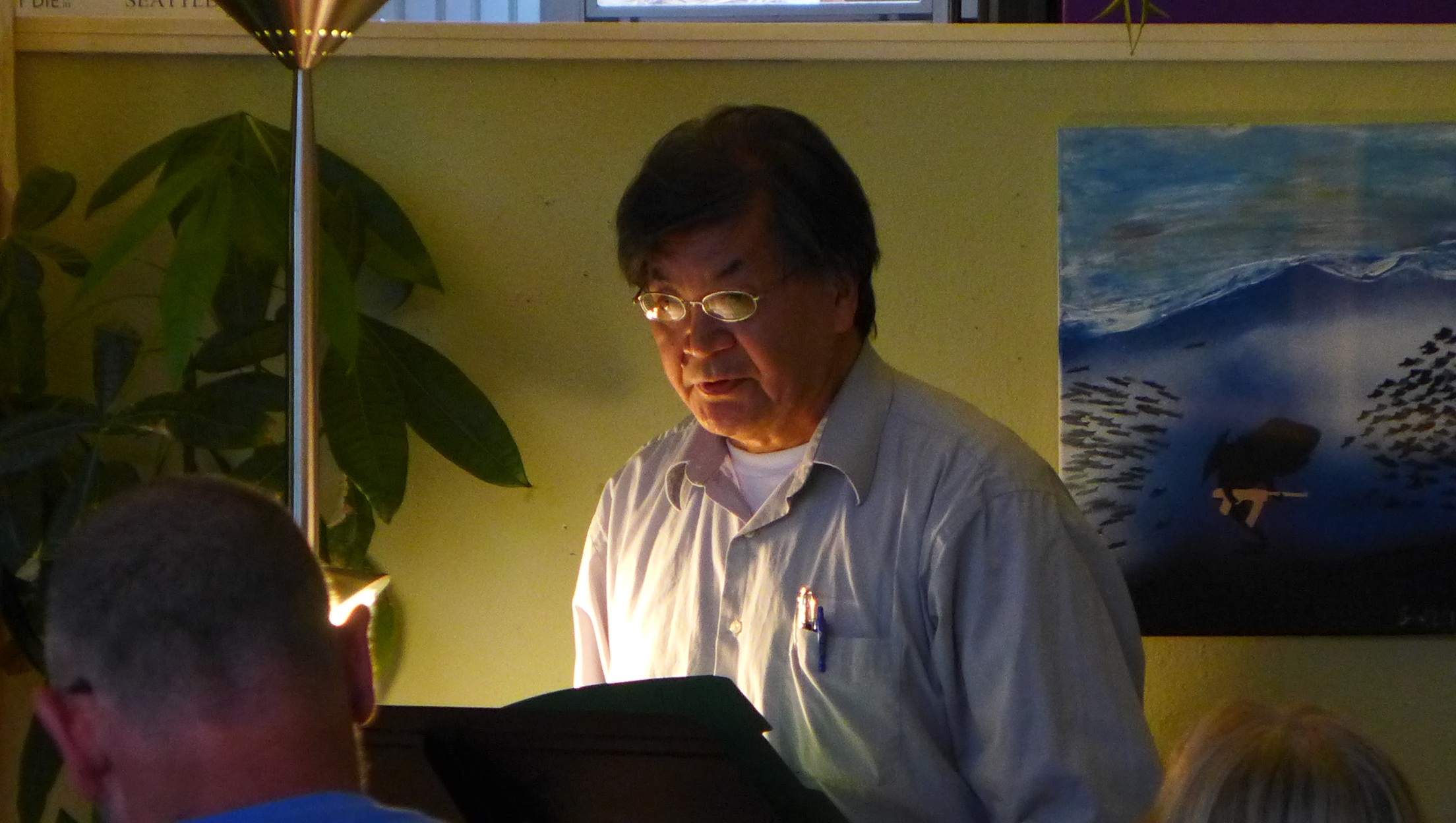
Photo: Koon Woon reads with Beacon Bards at the Station coffee shop in Seattle. Credit: Greg Bem
Support for Readings/Workshops events in Seattle is provided by an endowment established with generous contributions from the Poets & Writers Board of Directors and others. Additional support comes from the Friends of Poets & Writers.
National Book Award Finalists Announced

The National Book Foundation announced the finalists for its annual National Book Awards this week. The selection of finalists follows last month’s longlist announcement, the first time in the foundation’s sixty-four-year history that such a list has been published.

The finalists in fiction are Rachel Kushner, The Flamethrowers (Scribner); Jhumpa Lahiri, The Lowland (Knopf); James McBride, The Good Lord Bird (Riverhead); Thomas Pynchon, Bleeding Edge (Penguin); and George Saunders, Tenth of December (Random House).

The finalists in poetry are Frank Bidart, Metaphysical Dog (Farrar, Straus and Giroux); Lucie Brock-Broido, Stay, Illusion (Knopf); Adrian Matejka, The Big Smoke (Penguin); Matt Rasmussen, Black Aperture (Louisiana State University Press); and Mary Szybist, Incarnadine (Graywolf Press).

The finalists in nonfiction are Jill Lepore, Book of Ages: The Life and Opinions of Jane Franklin (Knopf); Wendy Lower, Hitler’s Furies: German Women in the Nazi Killing Fields (Houghton Mifflin Harcourt); George Packer, The Unwinding: An Inner History of the New America (Farrar, Straus and Giroux); Alan Taylor, The Internal Enemy: Slavery and War in Virginia, 1772-1832 (Norton); and Lawrence Wright, Going Clear: Scientology, Hollywood, & the Prison of Belief (Knopf).

Also new from the foundation is The Contenders: Excerpts from the 2013 National Book Award Finalists, a free National Book Award eBook series available for download from the foundation’s website in a variety of formats.

Visit the website to read more about the finalists, and to see the selections in the category of young people’s literature. Selections in each of the four categories were made by a panel of judges comprised of five writers and literary professionals.

The winners will be announced at the sixty-fourth annual National Book Awards Benefit Dinner and Ceremony in New York City on November 20, which will be streamed live on the Foundation’s website. Winners will receive $10,000; all finalists will receive $1,000.

Charles Alexander's Grand Collage

P&W-supported writer Charles Alexander is a poet, bookmaker, and founder/director of Chax Press. He is the author of five full-length books of poetry and ten chapbooks, and the editor of a critical work on the state of the book arts in America. His most recent book of poetry is Pushing Water, published by Cuneiform Press. Some Sentences Look for Some Periods, a chapbook, has just been released by Little Red Leaves. He has taught literature and writing at Naropa University, the University of Arizona, and elsewhere. He lives in Tucson, Arizona, with his partner, the painter Cynthia Miller.

Charles Alexander


What makes your press unique?

I might say, with Frank O’Hara, that we are “trying to keep it somewhere between mess and message,” i.e. while we have an overall purpose to support a broad range of innovative American poetry, the books happen because something grabs me. I have been asked how I can reconcile Chax Press’s interest in both the poetics of Black Mountain and that of language poetry; I see no contradiction in that reach, but rather an openness to various forms.

We also show our roots, i.e. that we began publishing books with handset type, printed on the Vandercook Press. We still publish such books, along with a lot more trade paperback books of terrific poetry.

Another fact that makes us unique: Chax has never offered a prize, and has almost never submitted our books for prizes, because we don’t believe that competition and recognition (of that variety) are what it’s all about.
 
What recent project and/or program have you been especially proud of and why?

The work of Linh Dinh seems to me some of the most creative and challenging poetry of our time. I am so glad we have been able to publish three of his books, including The Deluge, an anthology of new Vietnamese poetry, which he edited.

And of course, it doesn't hurt to look at recent books on our shelves by Alice Notley (Reason and Other Women), Maureen Owen (Edges of Water), Lisa Samuels (Anti M), and Will Alexander (Inside the Earthquake Palace), among others.

Plus, I get to work with young interns with terrific ideas.

As a book artist trained in letterpress printing, hand papermaking, and bookbinding, what are your thoughts on how e-books and new technologies are changing our concept of the book?

Books happen more quickly, get to people more quickly, and are more ever-present in our increasingly electronic lives. There is a lot of good about this, though I sometimes think people are reading bits and pieces more—songs rather than albums, greatest hits more than a poet’s deep immersion in a project. One terrific thing is that more young people are publishing works in new ways. As Charles Olson wrote in “The Kingfishers,” “what does not change/is the will to change.”
    
How do you prepare for a reading (especially if a reader’s experience of the text is linked with the book as a medium)?

While a book may have an intimate relationship with the form of a work, it can never be the defining form for that work. A live reading brings out something else entirely. When I give readings, I do not assume that the audience has read my work. I’m often surprised that they have, but I think a poet has to be attuned to that moment’s creation.

What do you consider to be the value of literary programs for your community?

So much! The word rouses the spirits of individuals, who then work and act in the community. Works of art in language challenge people to understand how language and life interact. Chax Press grew out of my practice as a poet and my sense of community with other poets. Its purpose has always been to contribute to a very wide community, one that is spread out in the present and that goes back deeply in time, forming something like what the poet Robert Duncan might have called a “grand collage.”

But let's get specific about community. It takes some very special people. My partner, Cynthia Miller, has been beside me all but the first year of Chax Press, and has become the artist for the press, a board member, my studio mate, and much more. Tenney Nathanson is simply one of the best poets I have ever known or read; he has also been a mainstay on the Chax board and in my life. Tim Trace Peterson exquisitely edits EOAGH, which is a web partner with Chax. Other members of the local community that have made Chax what it is include Barbara Henning, Lisa Cooper Anderson, Steven Salmoni, Karen Brennan, the late Hassan Falak, Anne Bunker, Samuel Ace, Jefferson Carter, and many more.

On the Chax Press website, it says “Chax press publishes writing that does not take things for granted—things like ‘what is a poem,’ ‘what is an author,’ or ‘what does it mean to read.’” Have your experiences as a writer, publisher, and bookmaker helped answer any of these questions for you?

I remember Jerome Rothenberg once writing that poetry must keep asking the questions that cannot be answered. If “what is a poem?” ever has a definitive answer, I don't know that I'd like to write poems anymore. I love it that we are always extending language, extending the possible answers to these questions. The poem, questions about author and authority, and reading remain essential to my life and work.

Photo: Charles Alexander. Credit: Cybele Knowles.
Support for Readings/Workshops events in Tucson is provided by an endowment established with generous contributions from the Poets & Writers Board of Directors and others. Additional support comes from the Friends of Poets & Writers.
Pages

Subscribe to Poetry