Jon Sands

Caption:
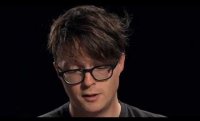
“Every door you open tonight is a sacrifice to gods whose names you will never learn.” Jon Sands, cofounder of Pop-Up Poets, performs in a New York City subway.
Genre:
Jump to navigation Skip to content
“Every door you open tonight is a sacrifice to gods whose names you will never learn.” Jon Sands, cofounder of Pop-Up Poets, performs in a New York City subway.
Poet and fiction writer Mia Couto of Mozambique has won the 2014 Neustadt Prize for Literature. The $50,000 prize is given internationally for lifetime achievement.
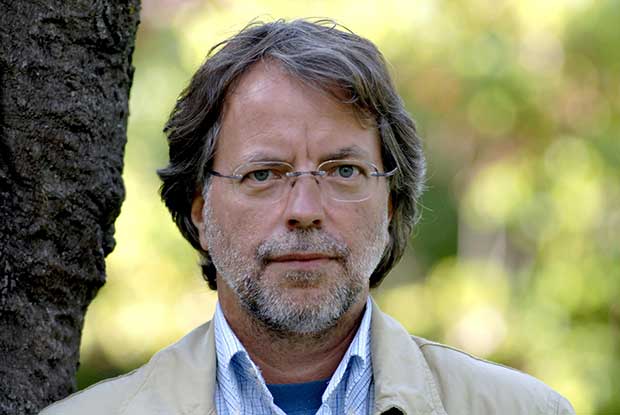 Couto, 58, is the first Mozambican author to be nominated for and to win the prize. His books include the novels Sleepwalking Land and The Last Flight of the Flamingo and a short story collection, Voices Made Night. His works have been published in more than twenty languages.
Italo-Ethiopian author Gabriella Ghermandi, who nominated Couto for the prize, said, “He is an author who addresses not just his country but the entire world, all human beings.”
Sponsored by the University of Oklahoma; World Literature Today, the university’s magazine of international literature and culture; and the Neustadt family, the international prize is awarded to a poet, fiction writer, or playwright. Couto was chosen by a jury of nine international authors.
Established in 1969, the award is given every two years. Previous winners include Elizabeth Bishop, Gabriel Garcia Marquez, Alice Munro, Octavio Paz, Orhan Pamuk, and Mo Yan.
Couto is the twenty-third laureate of the Neustadt Prize and will accept the award at the University of Oklahoma during the Fall 2014 Neustadt Festival.
The holiday season is here, which means you will soon be a guest at a work party, gathering of friends, or family-oriented celebration. This is the season for poets. Begin your “Thank You” poems now. Celebrate what companionship means to you and express your gratitude for the honor of being invited. Make your poems personal and sincere. (Consider attaching each poem to a nice bottle of wine and personally hand it to your host.)
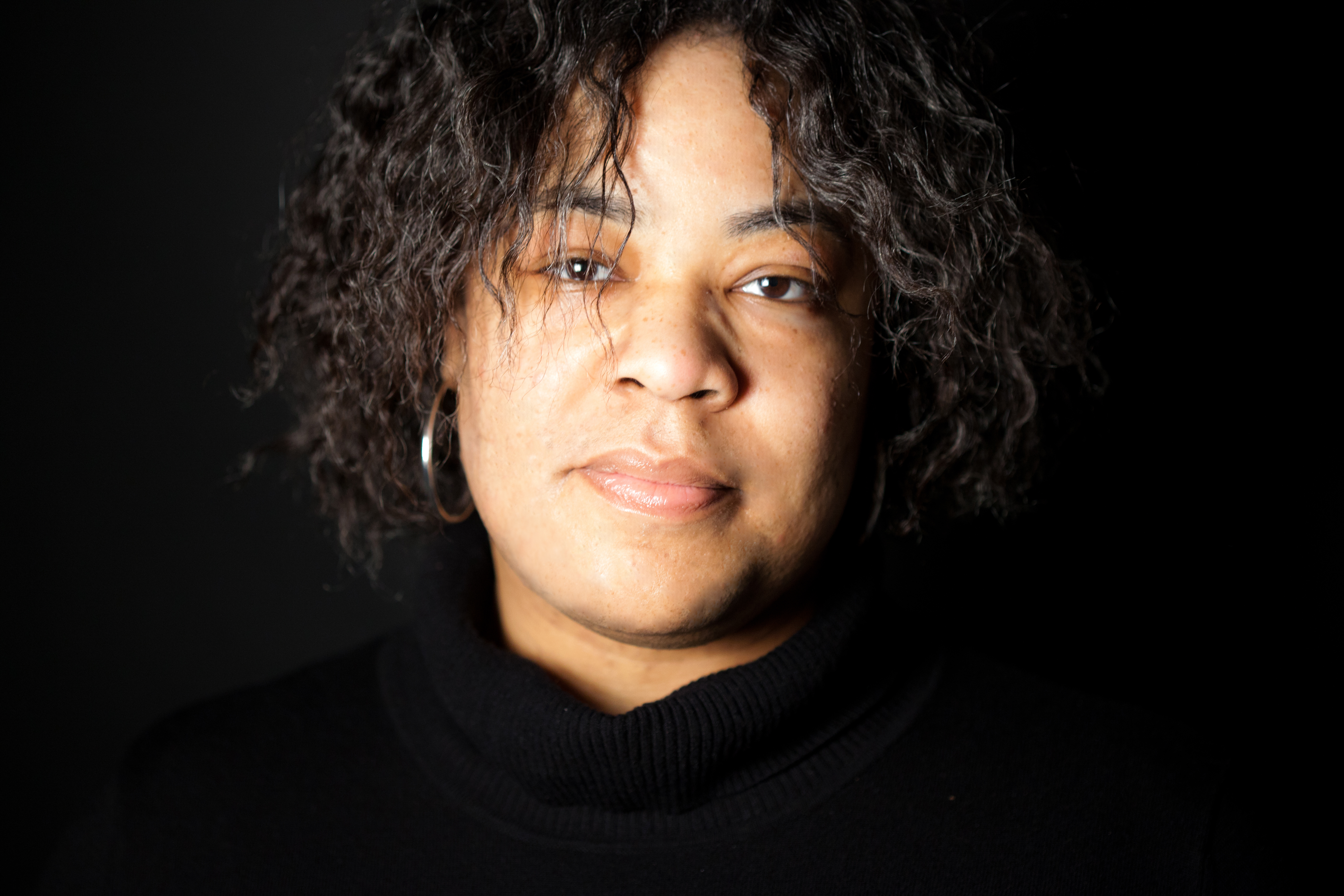
P&W-funded Kamilah Aisha Moon currently lives in Brooklyn, NY, and is the author of She Has a Name (Four Way Books). A recipient of fellowships to the Prague Summer Writing Institute, the Fine Arts Work Center, Cave Canem, and the Vermont Studio Center, Moon's work has been featured in several journals and anthologies, including Harvard Review, jubilat, Sou’wester, Oxford American, Lumina, Callaloo, Villanelles, Gathering Ground, and The Ringing Ear. She has taught English and Creative Writing at Medgar Evers College-CUNY, Drew University, and Adelphi University. Moon holds an MFA in Creative Writing from Sarah Lawrence College.
 Poets & Writers funds a wonderful workshop at a senior citizen recreational center in Manhattan called the Lincoln Square Neighborhood Center. A good friend of mine, Samantha Thornhill, regularly facilitates the workshop. I recently had the pleasure of being a guest instructor for one session, and it was an afternoon that I will continue to treasure for many reasons. What a treat to sit at the table with these women and experience their hard-won insights and revelations, their beauty. To witness their respect for what reading and writing poetry has always afforded them—how it delights, soothes and edifies; the sweet and profound awe it inspires.
Poetry is time travel. The opening free-write exercise “Give me back...” asked the women to reflect on the past. They transformed as they shared fifteen minutes later the many reveries they brought back to life, eyes sparkling as they showed through metaphor and great sensory detail what they once had and who they used to be "back in the day," and what their once young, supple bodies could accomplish (one of the ladies being a dancer). "Give me back my long, luxurious curls...nights with my husband before the kids came along. Just give me back my husband, gone now." They recalled what mattered and still does, expressed gratitude for what rose in the wake of loss along the way. There was sensuality, sass, and a healthy irreverence from a woman in her eighties as she read mantras for living that got her this far in life, until her respiratory problems took over and shortened her time in our session.
We discussed persona poems, compared lyric to narrative poetry, and explored space as breath in a poem. We studied form as the setting and craft as tools to compose these word-diamonds we hew from our personal experiences. The afternoon sun poured into the windows; we all glowed. It reminded me of the line in a Rumi poem, “Sunlight fell upon the wall / the wall received a borrowed splendor.” The sheen of discovery, recognition, acknowledgment, and transcendence filled the room. I always want to remember and keep sacred that this is a human business. As poet Jon Sands often says, we are “emotional historians.”
Two years ago, I taught a Poets & Writers-sponsored workshop filled with sixth grade honor students at the Young Women's Leadership Academy in Queens. For ten weeks, we focused on elements of craft and discussed the work of published poets, unpacking what each poem had to offer us. We created an anthology. These girls were gifted and bright beyond their young years, their poems suffused simultaneously with innocence and wisdom. Kristalyn proclaimed, “My name is a dragon / just like me! It has power / and can let loose.” In an ode to her fingers, Tearah wrote “You clasp my knuckles in prayer...you hold my pen, my writing sword!”
The young women made me hopeful for their individual futures and the future of the world. The more mature ladies filled me with the strength to face my own golden years with grace, and to handle the inevitable curves and challenges ahead with the same aplomb they exhibited. I was struck by how, in both workshops, the students' faces shone with the same wonder, and conveyed a careful stewardship and thoughtfulness when giving such astute feedback and suggestions. I was honored to encourage the young women to experience poetry for the first time, and equally honored to witness many of the older women use poetry to relive some major events that shaped their lives.
Among the many important moments, both of these workshops affirmed that poetry contains a brilliance that we can access and own for a lifetime. Through poetry, we can transform ourselves and change others as we sit around each other's poems like campfires for warmth and sustenance. For as long as we can hold our “writing swords,” we possess the power to draw breath, to speak, and to listen.
Photo: Kamilah Aisha Moon. Photo Credit: Rachel Eliza Griffiths.
Support for Readings/Workshops in New York City is provided, in part, by public funds from the New York State Council on the Arts, and the New York City Department of Cultural Affairs, with additional support from the Louis & Anne Abrons Foundation, the Axe-Houghton Foundation, the A.K. Charitable Trust, and the Friends of Poets & Writers.
“I’ve hurt you. I’ve loved you. I’ve mowed the front yard.” Poet Matthew Dickman, author most recently of Mayakovsky's Revolver: Poems, reads “Slow Dance.”
Writers have been self-publishing since the beginning of written words. Celebrating those creative individuals determined to be heard, we present a timeline of notable moments in self-publishing history.
Submissions are currently open for the annual Hurston/Wright Foundation Legacy Awards. The prizes are given to published poets, fiction writers, and nonfiction writers of African descent.
To apply, publishers and may submit four copies of books published in the United States in 2013 with a $30 entry fee by November 22. Submissions must be mailed to Hurston/Wright Legacy Award, 12138 Central Avenue Suite 953, Bowie, MD 20721. Books of poetry, fiction (including novels, novellas, and short story collections) creative nonfiction (including memoirs and essay collections), and general nonfiction are eligible.
Eligible writers must be of African descent from any area of the diaspora. Visit the website for complete submission and eligibility guidelines.
The winners of the 2012 prize were announced last week at an awards ceremony in Washington, D.C. The prize in poetry was awarded posthumously to the late Lucille Clifton for The Collected Poems of Lucille Clifton 1965-2010 (BOA Editions). Esi Edugyan won in fiction for her novel Half-Blood Blues (Picador); Fredrick C. Harris won in nonfiction for The Price of the Ticket: Barack Obama and Rise and Decline of Black Politics (Oxford University Press).
Natasha Trethewey, the United States Poet Laureate and author most recently of the collection Thrall, was also honored at the ceremony, along with nonfiction writers Wil Haygood and Isabel Wilkerson.
Founded in 1990 and named in honor of authors Zora Neale Hurston and Richard Wright, the Hurston/Wright Foundation seeks to “discover, educate, mentor, and develop African American writers.”
In the video below, poets gathered in New York City earlier this year for Blessing the Boats: A Tribute to Lucille Clifton, a celebration of the late poet's life and work on the occasion of the publication of Collected Poems.
“He uses tight quarters and claustrophobia to form new phobias." Chicago poet Olivia Cole performs “Wednesday.”
Halloween week is here. Write a poem about something you feared as a child. As adults we fear loneliness, intellectual and financial ruin, and—of course—death. However, children experience the world and their own humanity differently; yet, their fears are just as scary, valid, and profound. Begin the poem as an innocent child. End the poem as a mature adult.
Watch this engaging visual interpretation of Charles Bukowski’s poem “The Man With the Beautiful Eyes.” Filmed by Jonathan Hodgson.