Ten Outstanding Literary Magazines for Poetry

The author of How to Submit: Getting Your Writing Published With Literary Magazines and Small Presses names top journals offering visibility, community, and meaningful pay to poets.
Tags:
Jump to navigation Skip to content
The author of How to Submit: Getting Your Writing Published With Literary Magazines and Small Presses names top journals offering visibility, community, and meaningful pay to poets.

New publishing lines, reading series, symposia, and magazine partnerships are springing up in Dallas with support from SMU’s Project Poëtica.
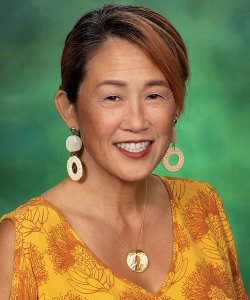
Since 2016, Poets & Writers Magazine has showcased authors who have made their literary debuts after the age of fifty in our annual 5 Over 50 series. These are the fifty writers and books that have been celebrated in our pages.

Based in Grinnell, Iowa, and motivated by a mission to support reforestation, Green Linden Press publishes around six titles per year and donates a portion of its proceeds to environmental efforts.
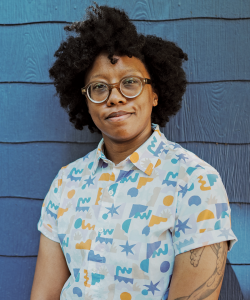
In her latest poetry collection, The Natural Order of Things, out now from Graywolf Press, Donika Kelly celebrates joy as a simple yet radical means of resisting despair.
“So much has happened / that I would never have known / I could remember.” In this Silo City Reading Series video, Donika Kelly reads her poem “Suicide Watch: Spring,” which appears in her third poetry collection, The Natural Order of Things (Graywolf Press, 2025). Read a profile of Kelly by Brian Gresko in the November/December issue of Poets & Writers Magazine.

Essays by debut authors Jennifer Eli Bowen, Princess Joy L. Perry, Yael Valencia Aldana, Vishwas R. Gaitonde, and Lauren K. Watel as well as excerpts from their books.

The translator of Ye Hui’s The Ruins highlights journals that embraced his translations, including Asymptote and Copihue Poetry.
“Tomorrow, when I wake, or think I do, what shall I say of today? That with Estragon my friend, at this place, until the fall of night, I waited for Godot?” In Samuel Beckett’s 1952 play Waiting for Godot, which has a new production on Broadway starring Keanu Reeves and Alex Winter, Vladimir and Estragon spend their days waiting for the arrival of someone named Godot, who never shows up. They pass the time with repetitious exchanges of banter, arguments, and musings. The ambiguity of their exact circumstances, as well as who Godot is and what would happen with Godot’s arrival, creates a tragicomic exploration of the nature and purpose of existence, and the significance of friendship and faith. Write a poem that uses the idea of an eternal waiting—for someone, or something—as an entry point to reflect on larger themes of life’s big questions.
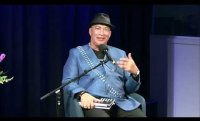
In this Poets & Writers event, 2025 Jackson Poetry Prize winner Cyrus Cassells reads a selection of poems from his first book, The Mud Actor (Henry Holt, 1982), and his most recent book, Everything in Life Is Resurrection: Selected Poems, 1982–2022 (TCU Press, 2025), and joins Pádraig Ó Tuama for a conversation about his evolution as a poet.