Genre: Creative Nonfiction

Notting Hill Editions Launches Essay Prize

The London–based nonfiction press Notting Hill Editions recently announced the launch of its international William Hazlitt Essay Prize, which will be given annually for an essay. The winner will receive a cash award of £15,000 (approximately $22,674); five runners-up will each receive £1,000 (approximately $1,511).

Writers of any nationality are eligible, but essays must be written in English. Previously unpublished essays or those that have appeared in either print or online journals, but not in book form, between January 1, 2012, and July 31, 2013, are eligible. Antonia Fraser, Adam Mars-Jones, Harry Mount, David Shields, and Gaby Wood will judge. Using the online submission system, writers, publishers, or agents may submit an essay of two thousand to eight thousand words with a £10 (approximately $15) entry fee by September 1. E-mail or visit the website for more information and complete guidelines.

Devoted to “the best in essayistic nonfiction writing,” Notting Hill Editions publishes both new and classic essays and collections in hardbound editions, having recently featured work by Joshua Cohen, Deborah Levy, David Shields, and W. G. Sebald.

The prize is named for British essayist William Hazlitt (1778-1830), who wrote of the form: “…it makes familiar with the world of men and women, records their actions, assigns their motives, exhibits their whims, characterizes their pursuits in all their singular and endless variety, ridicules their absurdities, exposes their inconsistencies, ‘holds the mirror up to nature, and shows the very age and body of the time its form and pressure’; takes minutes of our dress, air, looks, words, thoughts, and actions; shows us what we are, and what we are not; plays the whole game of human life over before us, and by making us enlightened Spectators of its many-coloured scenes, enables us (if possible) to become tolerably reasonable agents in the one in which we have to perform a part. It is the best and most natural course of study.”

Dare to be Vulnerable

7.11.13

When writing about our own lives it is tempting to tamper with the truth. We worry about what our fathers, daughters, and even strangers will think of our weak moments. Don’t be afraid. Vulnerability creates trust. Your words are only part of the literary experience. As David Sedaris said in an interview in the Louisville Courier-Journal, “Writing gives you the illusion of control, and then you realize it's just an illusion, that people are going to bring their own stuff into it.” Have faith in your readers. Identify a poor decision or embarrassing moment in your life. Write an essay about it. Don’t censor your words or thoughts and don't write with anyone else—including your critical self—in mind. Get out of your own way. Be honest. Be funny if possible. But be real.

Audible and the Center for Fiction Launch New Literary Award

Audible, Inc., and the New York City–based Center for Fiction have teamed up to create a new literary prize. The Christopher Doheny Award, given for an unpublished book of fiction or nonfiction on the topic of serious illness, will include a $10,000 prize, publication, and promotion of the winning book in print and audio editions.

The award was established in memory of Christopher Doheny, a long-time Audible employee who died of cystic fibrosis in February at the age of thirty-one.

“Supporting writers and literature is the most fitting tribute to Chris, a writer himself who loved reading, discussing, and working with good books,” said Beth Anderson, EVP and publisher of Audible.

“We are pleased to be able to honor Chris, while helping to support some excellent writers working on promising manuscripts,” added Center for Fiction executive director Noreen Tomassi.
   
Writers who have previously published work in literary journals or magazines, or who have published a book with an independent or traditional publisher, are eligible to enter. Both adult and young adult manuscripts are eligible. Writers may submit a completed manuscript and synopsis or two sample chapters of a work in progress and a book proposal, along with a bibliography, a brief bio, and contact information by July 31. Visit the website for complete submission guidelines.

Manuscripts will be judged by a panel of three distinguished writers chosen by the Center for Fiction and a representative of Audible. Writers are encouraged to contact dohenyaward@audible.com for more information.

“We hope that this prize will help talented writers who may be battling chronic or fatal disease tell their important stories,” said Dana Doheny, Chris’s mother.
 
A subsidiary of Amazon, Audible, Inc., provides audiobooks for a host of digital and mobile platforms. The Center for Fiction, the only nonprofit literary organization in the United States devoted solely to fiction, offers writing classes, an expansive library, and a variety of events, awards, and fellowships for writers in New York City. The Center is also accepting monetary donations to the Chris Doheny Award; visit the website to find out how to contribute.

The End

“It is easy to see the beginnings of things, and harder to see the ends.” So Joan Didion begins her famous essay “Goodbye to All That,” about arriving in—and eventually leaving—New York City. Write about a time when you left something—a city, a country, a job, or a lover. Include details about how things began, but focus most of your attention on how they ended. For inspiration, read or revisit Didion’s essay, originally published in her essential collection Slouching Towards Bethlehem (Farrar, Straus and Giroux, 1968).

Barry Lopez

Caption: 

The author of thirteen books of essays, short stories, and nonfiction—winner of the National Book Award, the Award in Literature from the American Academy of Arts and Letters, a Guggenheim Fellowship, and numerous other honors—talks about the landscape of his home in western Oregon and the art of storytelling in this video from Open Road Media.

The Universal Chord

6.27.13

In You Can’t Make This Stuff Up: The Complete Guide to Writing Creative Nonfiction—From Memoir to Literary Journalism and Everything in Between (Da Capo Press, 2012), Lee Gutkind writes that there are two sides to creative nonfiction: the personal, as found in memoirs and personal essays, and the "big idea"—a public topic, the kind often tackled in literary journalism—each of which tends to attract a different audience. The ideal piece, Gutkind writes, is one that offers both, one that explores a big idea from an intimate perspective. "Writers who can choose a public subject and give it a personal treatment are establishing a 'universal chord': reaching out and embracing a large umbrella of readership." This, he writes, is the creative nonfiction writer’s mission. Choose a "big idea" that interests you—a certain kind of food, a style of music, a political issue, a specific sport—and write down everything you know about the subject. Do further research and record everything you find. Then write an essay, including anecdotes about why the subject interests you, and try to strike that universal chord.

Reaching Audiences and Writers with Dahlma Llanos-Figueroa

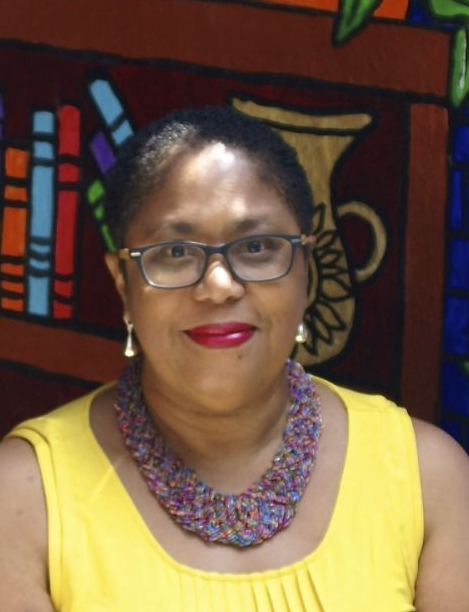
Dahlma Llanos-Figueroa is a novelist, memoirist, and short story writer whose work is grounded in the Puerto Rican communities on the island and in New York City. Her novel Daughters of the Stone (Thomas Dunne Books, 2009) was shortlisted for the 2010 PEN America Award and has been included in Breaking Ground/Habriendo Caminos, an Anthology of Puerto Rican Women Writers in New York 1980-2012 (Editorial Campana, 2012). She was a 2006–7 Bronx Council on the Arts Literary Fellow and is a three-time BRIO/ACE award winner. She is currently at work on a second novel titled People of Endurance. P&W has supported Llanos-Figueroa as both a reader at La Casa Azul bookstore and workshop leader with DeAlmas Women’s Collective, both in New York City.
 
Dahlma Llanos-FigueroaHow does giving a public reading inform your writing?
When I sit down and write my novels, I am creating a monologue. Only when I go out and share my words with readers am I participating in a dialogue. I get as much as I give. The audience welcomes my reaching out to them. They know I value their questions, suggestions, and ideas. Even small turnouts can be valuable in unexpected ways. They provide an intimacy that allows for each attendee to interact with me on a personal level, often expressing opinions that would never surface before a larger audience.

What are your reading dos?
I try to tailor my presentation to the needs and experiences of the audience. My novel spans the entire voyage of Afro-Puerto Ricans from Africa to Puerto Rico to New York City, as told through the lives of the women in one family. In East Harlem, I often choose an excerpt set there or a chapter on migration to a new city. In Puerto Rico, I choose chapters set there during colonial times. In high schools, I select excerpts that focus on parent/child relationships.

…and your reading don’ts?
I never cut off a question or response. No matter how much I agree or disagree, I give the speaker the space to express him/herself. I hope that the reader enjoyed my work, but if they didn’t, they are entitled to their point of view. And I might even learn something new.

What’s your writing critique philosophy?
When teaching, I tend to ask questions rather than make pronouncements. I believe by asking a question, you invite the writer to reconsider rather than defend. “How can this emotion be communicated in the character’s body language?” is better than “Show don’t tell!”

How do you get shy writers to open up?
Breaking up into small groups allows for a more personal, less threatening experience. I recently took a workshop with Cristina Garcia and loved the way she broke us up into groups of four. After each critiquing session, the groups rotated, allowing for each writer to get critiques from everyone. Getting feedback from three people at a time is better than sitting through twelve critiques that often get repetitive and feel like badgering. It’s a time consuming process, but well worth it. Also, you can always do an in-class small group critique, and then have the rest of the feedback in writing.
 
A safe, welcoming environment makes my job as a workshop leader much easier. In my P&W–supported workshop for the DeAlmas Women’s Collective, a group focused on women’s spiritual and emotional well-being, the intimate workshop space was set up with lighting, music, candles, and incense. The focus was on finding the story within, and the participants were asked to bring images significant to them. We created a Sacred Journal, and used meditation techniques and visual prompts to tap into memories, which yielded some outstanding memoir pieces. Because the group members were comfortable with the environment and each other, the sharing came easily.

What do you consider to be the value of literary programs in the community?
I have heard people in the industry justify the lack of Latino books being promoted by saying that Latinos don’t read. I wish they could see the crowds of readers who come from all over the city to attend literary events at La Casa Azul, the only Latino bookstore in East Harlem. My P&W–supported reading was standing-room-only. People in the community are thirsty for literature that reflects their reality and grateful to authors, who respect them enough to read there.

Photo: Dahlma Llanos-Figueroa. Credit: Orlando Gonzalez.
Support for Readings/Workshops in New York City is provided, in part, by public funds from the New York State Council on the Arts and the New York City Department of Cultural Affairs, with additional support from the Louis & Anne Abrons Foundation, the Axe-Houghton Foundation, The Cowles Charitable Trust, the Abbey K. Starr Charitable Trust, and the Friends of Poets & Writers.


Tilted Naked Weirdo

6.20.13

In “Why We Write: Tilted Naked Weirdo” (Poets & Writers Magazine, July/August 2013), Nancy Méndez-Booth writes that by allowing herself to explore her “uglies”—the weirdest, most uncomfortable, or embarrassing parts of her life—she has been able to find her truest voice. “Writing honestly makes me feel stripped and exposed,” she writes. “I put everything I’d rather hide right on the page for the world to see. It horrifies me.” Write an essay about your own uglies—the strange, the silly, the discomfiting and weird—the parts of your life that few people know but you.

Be Not Proud

6.13.13

"This is one of the few stories I’ve written for myself, about myself," wrote the late Sean Rowe in the introduction to his essay about his experiences in jail, "An Insider’s Guide to Jailhouse Cuisine: Dining In," which was originally published in Oxford American and reprinted in the third volume of The Best Creative Nonfiction. “That’s a dangerous practice. It’s dangerous because the more personal you get in a story, the harder it is to stay honest. Here I think I pulled it off, but at a price: I had to reveal things I’m not proud of to get at something bigger than me.” Write an essay about something—or a host of things—you’ve done that you’re not proud of. Be honest about what you did, what consequences you faced, and how you feel about it now. What lessons did you learn about yourself, and about life, that you can pass on to your readers?

Pages

Subscribe to Creative Nonfiction