Sam Shepard’s Last Novel, Emma Cline on Sexual Harassment, and More
Stefan Kiesbye describes losing his home in the California wildfires; the history behind the Booker Prize; Philip Pullman to launch book at midnight; and other news.
Jump to navigation Skip to content
Stefan Kiesbye describes losing his home in the California wildfires; the history behind the Booker Prize; Philip Pullman to launch book at midnight; and other news.
A bar napkin on display at the Smithsonian’s National Museum of American History in Washington, D.C. shows the now famous Laffer Curve, a mathematical curve economist Arthur Laffer sketched that convinced President Ford to cut tax rates in 1974. Recently it was revealed that it is not the original bar napkin, but a copy Laffer later recreated as a keepsake. The Smithsonian put the napkin on display in 2015, but at the time of the meeting more than forty years ago, Laffer was a young professor and nobody suspected anything especially momentous was occurring. Imagine that decades into the future, the Smithsonian will be acquiring a relic or souvenir from your own life that has taken on historical importance. What would the object be? Write an essay exploring mementos you’ve kept over the years in hopes that these objects might be of importance in the future.
Black poets on their inspirations; Asian American women writers roundtable; China’s largest digital publishing house to go public; and other news.
Dave Eggers interviews Chimamanda Ngozi Adichie; Mississippi school district pulls To Kill a Mockingbird from curriculum; remembering poet Richard Wilbur; and other news.
Emma Cline on the wildfires in California; the developmental benefits of reading at a young age; predictions for the 2017 Man Booker Prize; and other news.
NEA’s Big Read program adds new books to its library; Attica Locke on understanding the psyche; life lessons from Russian literature; and other news.
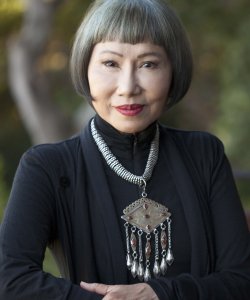
Novelist Amy Tan talks about her approach to memoir and how this shift in process changed the way she views her fiction writing.
Amazon releases waterproof Kindle; seventy-two writers pen letter in defense of Norton editor Jill Bialosky; a profile of Philip Pullman; and other news.
“You can always tell prettiness from beauty. Beauty arises from contradiction, even when it’s under the surface. Any report of experience will be contradictory. And part of the reportage is to include those contradictions,” says Chris Kraus in a conversation with Leslie Jamison for Interview magazine. Write a personal essay exploring the idea that an underlying contradiction is intrinsic to the value of beauty. What are some images, scenes, or emotions in your own life or in art you’ve encountered that you found to be beautiful, and what contradictions might lie within them? How can you effectively integrate contradictions into your own reportage to explore true beauty?
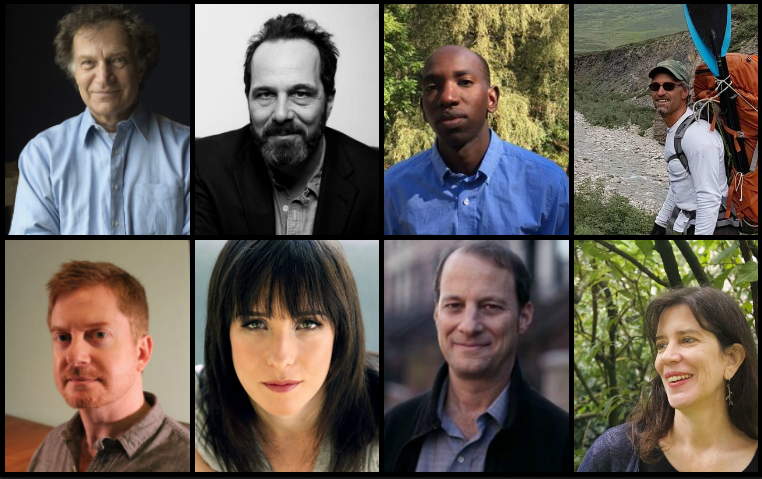
The Whiting Foundation has announced the recipients of the 2017 Whiting Creative Nonfiction Grants, given annually to up to eight writers in the process of completing a book of creative nonfiction. The writers will each receive $40,000.
The grantees are:
Michael Brenson for David Smith and the Transformation of American Sculpture, forthcoming from Farrar, Straus & Giroux
Philip Gourevitch for You Hide That You Hate Me and I Hide That I Know, forthcoming from Penguin Press
Pacifique Irankunda for The Time of Stories, forthcoming from Random House
Seth Kantner for A Thousand Trails Home, forthcoming from Mountaineers Books
Jay Kirk for Avoid the Day, forthcoming from Harper Perennial
Meghan O’Rourke for What’s Wrong With Me? The Mysteries of Chronic Illness, forthcoming from Riverhead Books
George Packer for Richard Holbrooke and the End of the American Century, forthcoming from Knopf
Julie Phillips for The Baby on the Fire Escape, forthcoming from Norton
The winners were selected from a list of fifteen finalists by an anonymous judging panel. Now in its second year, the Whiting Creative Nonfiction Grant “fosters original, ambitious projects that bring writing to the highest possible standard.” The applicants must have a publishing contract and be at least two years into their project. The next round of applications will open in Spring 2018.
For more than forty years, the Whiting Foundation has supported literature and the humanities through its various programs, including its annual awards for emerging writers and the new Whiting Literary Magazines Prizes, which honor literary journals. Visit the website for more information.
(Photos: Top row, from left: Michael Brenson, Philip Gourevitch, Pacifique Irankunda, Seth Kantner; Bottom row, from left: Jay Kirk, Meghan O'Rourke, George Packer, Julie Phillips)