Poets & Writers Blogs

Iowa Review Introduces Contest for Veterans

In partnership with the family of a Vietnam veteran known for his antiwar writing and activism, Iowa Review has launched a multigenre writing contest open to U.S. military veterans and active duty personnel. The Jeff Sharlet Memorial Award competition, which offers one thousand dollars and publication in Iowa Review, is accepting entries of poetry, fiction, and creative nonfiction on any subject.

Pulitzer Prize winner and Vietnam veteran Robert Olen Butler will select the winning work from a pool chosen by the journal's editors (all finalists will be considered for publication). Butler, much of whose work is informed by his experiences in the U.S. military, served in Vietnam as an intelligence agent and a translator. He is the author of twelve novels, most recently A Small Hotel (Grove Press, 2011), six short story collections, and a nonfiction book on craft, From Where You Dream: The Process of Writing Fiction (Grove Press, 2005).

Writers may submit their work with a fifteen-dollar entry fee via Submittable or postal mail (an extra ten dollars gets entrants a yearlong subscription to the magazine). The deadline is June 15. Visit the Iowa Review website for complete guidelines.

In the video below, Butler discusses how his time in the military led the former playwright to fiction, and how his experiences in Vietnam have shaped his work.

Please log in to continue.
LOG IN
Don’t yet have an account?
Register for a free account.

Bob Flor's April Reading

Presenter of literary events Robert Francis Flor, who is also the co-founder and director of Pinoy Words Expressed Kultura Arts, writes about his forthcoming P&W–supported event.

A while ago I met with Reni Roxas, the editor and publisher of Hanggang sa Muli–Homecoming Stories for the Filipino Soul, and Seattle University’s United Filipino Club/Filipino Alumni Association to curate a P&W–supported April reading, something we’ve been doing since 2008. This year contributing writers include several local poets and memoir writers, but the event's success is largely due to the work of our college student cohosts. Responsibilities were parsed out so students had an opportunity to organize and manage the event. They scheduled the conference room, planned and implemented the marketing, arranged for book sales, and even set up and secured refreshments.

  • The April 18 poetry, memoir, and short story program included a welcome from UFC cohosts Michael Cu and Rosalie Cabison, remarks by Silliman University Filipino Alumni Association member Mary Galvez, remarks from Reni Roxas, an introduction to selected readings by Maria Batayola and readings by Eddie Jose (son of F. Sionil Jose), Greg Castilla, Toni Bajado, Jeff Rice, Dorothy Cordova, and myself.

The students are great because they bring curiosity, enthusiasm, and innovation to everything they do. Several have expressed interest in becoming writers, and it’s a pleasure for me to help make their aspirations reality. Few things are better than getting to interact with the next generation of passionate writers.

Photo: Robert Francis Flor.

Support for Readings/Workshops events in Seattle is provided by an endowment established with generous contributions from the Poets & Writers Board of Directors and others. Additional support comes from the Friends of Poets & Writers.

Please log in to continue.
LOG IN
Don’t yet have an account?
Register for a free account.

Deborah Mayaan on Stories as Legacy

Writer and energy-work practitioner Deborah Mayaan recently co-taught a workshop for people with cancer and their loved ones in Tucson, Arizona, with Rabbi Stephanie Aaron. The workshop was co-sponsored by Congregation Chaverim and the Readings/Workshops program.

In a recent workshop on embodying our values, a woman wrote about her frustration with her mother, who had agreed to take care of a collection of large household items that had great meaning to her mother. We had been working on extracting the positive values from happy memories, and finding the life lessons in challenging experiences. When searching for what she might learn from this, the woman in the workshop first thought about the benefit of simplifying and not collecting things, because they can be a burden on future generations. But she was open to other perspectives, and several people suggested that the collection could be seen as a gift to be enjoyed rather than curated, and could even be dispersed throughout the family.

We agreed that stories can be the best legacies: They take up very little space in paper form and virtually none electronically. No one needs to dust them or move them from house to house. And when more than one person wants this legacy, there is no fighting over it; it can be shared infinitely among people.

When written down, a story has an enduring quality, so that the original writer’s thoughts and feelings are conveyed intact. And yet, it is still alive. Even when the story is received by someone with no memory of the event, or even of the writer, the reader’s  perspective continues to evolve over time. This last point was especially important to one participant who had been diagnosed with metastatic cancer, who was considering the legacy he would leave his children.

At all three venues where Rabbi Stephanie Aaron and I taught this winter—the Arizona Cancer Center, Casa de la Luz Hospice, and Congregation Chaverim—people felt the power of stories to help us clarify our values and strengthen us so that we can make the most of each moment, and share our legacies with those around us.

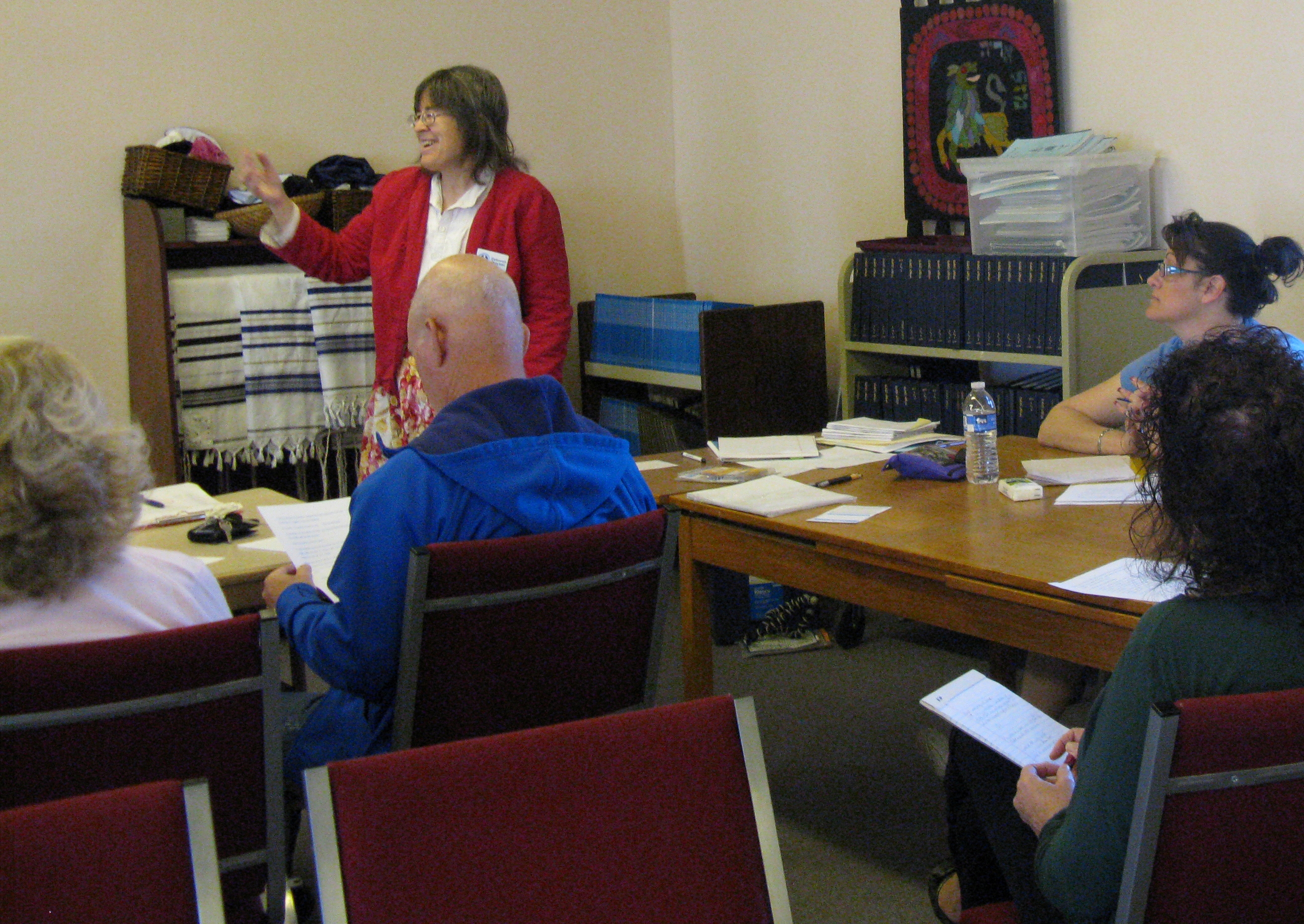
Photo: Deborah Mayaan (standing) tells a story about values learned from her mother. Credit: Rabbi Stephanie Aaron.

Support for Readings/Workshops events in Tucson is provided by an endowment established with generous contributions from the Poets & Writers Board of Directors and others. Additional support comes from the Friends of Poets & Writers.

Please log in to continue.
LOG IN
Don’t yet have an account?
Register for a free account.

National Poetry Series Launches Spanish-Language Book Prize

In collaboration with Miami Dade College, the thirty-four-year-old National Poetry Series has established a new book award to accompany its five annual prizes, for a collection of Spanish-language verse.

The winner of the inaugural Paz Prize for Poetry will receive five hundred dollars, and Akashic Books will publish the winning book in a bilingual edition.

The competition, open to American poets writing in Spanish, will begin accepting manuscript entries on May 1 and will close on June 15. Finalists will be announced in July, and a winner, selected by Puerto Rican American poet Victor Hernández Cruz, will be named in September.

"In our increasingly diverse nation, poetry in translation is not just desired, but necessary," says Alina Interian, executive director of Miami Dade College's literary hub, the Center, in a press release. "It allows for shared experience across cultures and greater understanding, and for even more beauty in our world."

Complete guidelines for the Paz Prize are available on the National Poetry Series website.

Please log in to continue.
LOG IN
Don’t yet have an account?
Register for a free account.

Ross Gay, Michael Waters Judge Two New Book Contests

Trio House Press, a new poetry outfit in Staten Island, New York, is accepting entries for two book awards. The prize for a first or second poetry collection, judged by Ross Gay, will award publication and one thousand dollars. A second one-thousand-dollar award, judged by Michael Waters, will grant publication of a manuscript by a poet in any stage of her career.

In addition to publication and the monetary prize, the press will also offer winners a role behind the scenes at Trio House. The press has adopted a cooperative structure, so winners will become part of publishing operations for a twenty-four month period (similar to the model employed by, for example, Alice James Books and Calypso Editions) and be involved, each joining one of four committees, in the publication of subsequent books. (Trio House plans to release three titles a year.)

This year's judge in emerging poetry, Gay is the author of two collections, Bringing the Shovel Down (University of Pittsburgh Press, 2011) and Against Which (CavanKerry Press, 2006). He is a Cave Canem fellow and a professor at Indiana University and Drew University's low-residency MFA program.

General prize judge Waters, also a teacher in Drew University's program (as well as a professor at Monmouth University in his home state of New Jersey), is author of ten collections, most recently Gospel Night (BOA Editions, 2011). He is also coeditor of the most recent edition of Contemporary American Poetry, published in 2006 by Houghton Mifflin.

For both of Trio House's competitions, poets residing in the United States may submit manuscripts of forty-eight to seventy pages with an entry fee of twenty-five dollars by April 30. Entries are accepted via Submittable (formerly Submishmash).

In the video below, Gay recites a poem at the Page Meets Stage reading series in New York City.

Please log in to continue.
LOG IN
Don’t yet have an account?
Register for a free account.

Bob Flor: Pinoy Words Expressed

For the month of April, P&W–supported poet, playwright, and presenter of literary events Robert Francis Flor blogs about his writing life and role as co-founder and director of the literary organization Pinoy Words Expressed Kultura Arts. A Seattle native, Flor has published poems in Soundings Review, 4 and 20 Journal, Poets Against the War, the Seattle Post Intelligencer, among others, and his debut play “Daniel’s Mood–Mestizos,” a Studio Lab selection at Freehold Theatre, was published in 2011.

In 2006 I co-founded Pinoy Words Expressed Kultura Arts with a friend—Maria Batayola. Our objective was to introduce the public to Filipino American writers, and we quickly discovered a number of Filipinos producing poetry, literature, and plays. This led us to launch our first reading at the Pagdiriwang Festival. Since then, writers such as Oliver de la Paz, Rick Barot, Geronimo Tagatac, Peter Bacho, Tess Uriza Holthe, Marianne Villaneuva, Toni Bajado, Oscar Penaranda, Donna Miscolta, Ben Gonio, Rebecca Mabanglo-Mayor, and Angela Martinez Dy have been featured. This month I am hard at work coordinating our 2012 reading series.

Poets & Writers, Inc., has supported Pinoy Words Expressed Kultura Arts readings since 2008. This past year, P&W funded the series at Seattle University and the University of Washington. Peter Bacho, author of Leaving Yesler, and Donna Miscolta, author of When the de la Cruz Family Danced, read from their recent novels. The funding supports the continued success of the readings and has elevated the profile of local Filipino writers. It’s also fostered the interest of the community, and several students have been inspired to embark on writing careers.

Pinoy Words Expressed will also be collaborating with the United Filipino Students at Seattle University and the Filipino American Students Association at the University of Washington to host readings from the anthology Hanggang sa Muli—Homecoming Stories for the Filipino Soul.

Photo: Robert Francis Flor.

Support for Readings/Workshops events in Seattle is provided by an endowment established with generous contributions from the Poets & Writers Board of Directors and others. Additional support comes from the Friends of Poets & Writers.

Please log in to continue.
LOG IN
Don’t yet have an account?
Register for a free account.

Forty-Year-Old Author Is Arabic Booker's Youngest Recipient

Last night in Abu Dhabi, Lebanese author Rabee Jaber was awarded the International Prize for Arabic Fiction, given for the past five years for novels originally written in Arabic.

The forty-two-year-old author took the award, also known as the Arabic Booker (it is sponsored by major literary prize underwriter Man Booker), for his historical novel The Druze of Belgrade.

Still unpublished in English, a state that is likely to change shortly if the fate of past honorees' work serves as any indication, Jaber is a well-known author in his native Lebanon. He has published seventeen novels and, in 1992, won the country's Critics Choice Award for his debut, Master of Darkness.

Jaber received fifty thousand U.S. dollars, and each finalist received ten thousand dollars. The shortlisted authors were Jabbour al-Douaihy of Lebanon for The Vagrant, Ezzedine Choukri Fishere of Egypt for Embrace on Brooklyn Bridge, Nasser Iraq of Egypt for The Unemployed, Bachir Mefti of Algeria for Toy of Fire, and Habib Selmi of Tunisia for The Women of al-Basatin.

The award was presented at the launch of the Abu Dhabi International Book Fair. The winner and shortlisted authors will appear in conversation tomorrow evening at the festival to discuss risk-taking in Arabic fiction.

Past winners of the Arabic Booker include Saudi novelist Raja Alem (The Doves' Necklace) and Moroccan author Mohammed Achaari (The Arch and the Butterfly), who split the award last year, as well as Egypt's Bahaa Taher (Sunset Oasis) and Youssef Ziedan (Azazel), and Abdo Khal of Saudi Arabia (Spewing Sparks as Big as Castles).

Please log in to continue.
LOG IN
Don’t yet have an account?
Register for a free account.

Bill Clegg on Being Both an Agent and an Author

Bill Clegg of the William Morris Endeavor literary agency represents authors such as Mary Jo Bang, Bonnie Jo Campbell, Mark Doty, Rivka Galchen, Daniyal Mueenuddin, Salvatore Scibona, and Rebecca Wolff. But he's an author, too, having published last year the memoir Portrait of an Addict as Young Man and this April the follow-up Ninety Days: A Memoir of Recovery. Both published by Little, Brown, the memoirs delve into Clegg's drug addiction and recovery. We asked Clegg to talk about what led him to become a literary agent, and a writer.

POETS & WRITERS: Your entry into the publishing industry was via the Radcliffe Publishing Seminar, and soon after you landed your first job at an agency. You've remarked on feeling a cultural outsider when you first arrived in New York (and within the rarefied air of the publishing world). But to the casual observer, you were moving quickly and easily among industry giants. Did outsider status fuel your passions and ambition?

BILL CLEGG: It fueled a lot of things.  What looks like ambition from the outside is often just compensating to get by. I was just trying to keep my head above water and along the way found escape and relief in booze and drugs and also, thank god, in the great work of writers I was lucky enough to represent. There were consequences to both modes of coping, some good, some not so good.

P&W: As a young man, you stood at the foot of J. D. Salinger's driveway, hoping he would come out and say hello. Did you aspire to write at an early age? Could you tell us about the romantic notion of a writer's life versus the work of writing? Do the two ever meet?

BC: I was in Paris a few weeks ago having dinner with a friend and her new boyfriend, a political journalist, who made my fixation on Salinger look like a flimsy crush. When I told him about standing at the bottom of the driveway in Cornish he smiled and excused himself from the table. A minute or two later he returned with a large NO TRESPASSING sign from you-know-where. It had fallen, he insisted, but I wasn't so sure. He'd made the trek twice from Paris—as an adult! What is it about Salinger and those books, that book? Funny that this restless, doubting political writer born and raised in France would linger in the same place hoping to connect with—even just be seen by—the same guy. It must have something to do with how he transcribed perfectly something that feels/felt so private and so intense—that ajar teenage feeling, the hesitancy at adolescence's end. Lingering at the end of the driveway is, in a way, a return to that feeling, that innocence. Maybe for some of us who never felt innocent the draw was exaggerated.

Did I think about writing then? In college, yes, and I wrote this terrible little children's story that was in the end a rip-off (I see now) of Holling C. Holling's Paddle to the Sea. I even sent it to an agent—the daughter of a older couple I did gardening work for in the summers in college. I had a fantasy she'd publish it and it'd go on to be a classic or something and I'd somehow be able to avoid the working world, the regular nine-to-five office-scape that I couldn't fathom finding a place in. Seven or eight months after sending her the manuscript she mailed it back without a cover note but scattered with Post-its with notes on them like "Sweet," "Cut," "No." I was crushed and probably as a result I now spend way too much time writing what I hope are thoughtful rejection letters to writers who submit their work to me for representation. Anyway, Salinger provided a fantasy of what that life could be like—away, shielded by woods, supported by the income of a book that would always sell, a few perfect pieces of literature to represent what I meant without messy human interaction to expose the flaws. We never met.

P&W: Your agent, Jennifer Rudolph Walsh, hired you as an agent at William Morris Endeavor when you returned to the publishing world, after a year-long recovery from addiction. Is there an analog to an agent having an agent? Is it akin to a surgeon having his appendix out? Is it tempting to be a backseat driver? Is your relationship with Jennifer that of a typical author and agent, or more as peers? Has the experience altered your own client relationships?

BC: There are examples of writers I admire who are also in book publishing and who also have agents—David Ebershoff, Jill Bialosky, Robin Robertson—so I'd seen over the years that it was not only possible but essential. I think all agent-author relationships are pretty subjective. Having Jennifer as my boss as well as my agent has been lucky in that she knows better than anyone what's going on in all areas of my work life. And she has an uncanny ability to metabolize writing—almost instantly—into the most useful, insightful responses. We don't tend to have big discussions about the publishing stuff—we have a kind of short hand of nods and hand signals, "yups" and "nopes" that acknowledge what we both sense is right/better/wrong. There's not a lot of hand-wringing or second-guessing. I trust her completely and so, yes, with her driving I'm happy to be in the backseat. When it's time to go there, I settle in comfortably, do my job as an agent, call my clients.

P&W: Please tell us about working with your editor, Pat Strachan. Did this process provide any insight into your life as an agent? 

BC: Working with Pat has been a great privilege. She is the most sensitive and respectful reader and has an architect's eye with writing. She'll see a chapter or a paragraph or even a chubby sentence and with a few quick strokes suggest a shape that is not only more attractive but one that transmits more effectively—usually with greater economy—whatever it was you were initially and not so elegantly trying to say. 

Please log in to continue.
LOG IN
Don’t yet have an account?
Register for a free account.

Bob Flor on Pinoy Words Expressed Kultura Arts' Annual Reading

Bob Flor, co-founder and director of  Pinoy Words Expressed Kultura Arts' on organizing their annual April Reading.

I met Reni Roxas the editor and publisher of “Hanggang sa Muli – Homecoming Stories for the Filipino Soul” with Seattle University’s United Filipino Club and their Filipino Alumni Association to develop an April reading. Contributing writers included several local poets and memoir writers. Pinoy Words Expressed Kultura Arts worked with the UFC or their counterpart, the Filipino American Student Association at the University of Washington, since 2008 to host readings featuring Filipino writers.

I’ve learned a lot, and am continuing to learn a lot, in my classes at ACT, so it’s nice to step back into the role of teacher with these annual readings. Responsibilities are parsed out so students have an opportunity to organize and manage an event. They schedule the conference room, plan and implement the marketing, arrange book sales, set-up and secure refreshments. Students emcee and host these readings, usually attracting 40 to 50 people.

The Wednesday, April 18th evening program of poetry, memoir and short story includes:

Welcome, UFC Co-emcees Michael Cu and Rosalie Cabison
Remarks by SU Filipino Alumni Association, Mary Galvez
Editor's Remarks, Reni Roxas
Introduction to Selected Readings, Maria Batayola
"The Pretenders" narrated by Eddie Jose (son of F. Sionil Jose)
"Bridging the Gap Among Filipinos in America" by Greg Castilla
"First Visit to Balogo" by Toni Bajado
"Sambayan" by Jeff Rice
"The Soil of My Roots" by Dorothy Cordova
"Pinoy Heroes" guest reading by Robert Francis Flor
* Q&A Panel *
12-Minute Audience Writing Exercise: "What Homecoming Means to Me" and sharing of written works
Closing Remarks, UFC Co-emcees
Book-signing and refreshments

The students are great because they bring curiosity, enthusiasm and potential. Several have expressed interest in becoming writers and it’s a pleasure to help bridge the gap of taking their aspirations from dreams to reality. What could be better than getting to interact with the next generation of passionate writers?

Support for Readings/Workshops events in Seattle is provided by an endowment established with generous contributions from the Poets & Writers Board of Directors and others. Additional support comes from the Friends of Poets & Writers.

Please log in to continue.
LOG IN
Don’t yet have an account?
Register for a free account.

Michael Cirelli Features

P&W–supported presenter of literary events Michael Cirelli, author of Lobster With Ol' Dirty Bastard, Vacations on the Black Star Line, and Everyone Loves The Situation, blogs about his experience as a P&W–supported poet.

As I began to get a steady hold on the roller coaster that is nonprofit management, while still finding time to engage NYC's rich literary scene, I quickly realized that not only did Urban Word NYC benefit from P&W’s Readings/Workshops program, but I would personally benefit from P&W support.

I was asked to read at the P&W–supported Parachute Literary Festival in Coney Island. The coolest thing about the reading was that it was held at the New York Aquarium in front of a wall-to-ceiling sized tank of glowing jellyfish! So, while I read poems about robots, the jellyfish floated behind me looking like spaceships. Fitting. It was an incredible event and the venue made it extremely memorable—not to mention The Cyclone roller coaster and Totonno’s Pizza down the block.
My trajectory crossed paths with another amazing P&W–supported reading, The Inspired Word series. What made this event special, aside from it being a great weekly open mic and feature, was that I was reading as a contributor to Best American Poetry 2011. My former professor and friend, poet David Lehman, hosted the reading and it was an honor to read with esteemed poets.

Being in NYC, the circles seem to get smaller and smaller. What once seemed like a dream, slowly became a reality that always seemed to be connected to P&W. I couldn’t have imagined ten years ago that one day I’d be part of a P&W–supported reading for Best American Poetry...

Photo: Michael Cirelli. Credit: Syreeta McFadden.

Support for Readings/Workshops in New York City is provided, in part, by public funds from the New York State Council on the Arts, and the Department of Cultural Affairs, with additional support from the Louis & Anne Abrons Foundation, the Axe-Houghton Foundation, the A.K. Starr Charitable Trust, and Friends of Poets & Writers.

Please log in to continue.
LOG IN
Don’t yet have an account?
Register for a free account.

Millhauser's We Others Triumphs at Story Prize

Last night Steven Millhauser took the Story Prize, the annual award celebrating a short story collection published in the previous year, at a ceremony in New York City. Following readings by the author, who began his career as a novelist (a Pulitzer Prize–winning one, at that), and his fellow finalists, Don DeLillo and Edith Pearlman, Millhauser's We Others (Knopf) was announced as the selection for this year's twenty-thousand-dollar award.

Millhauser, who admits influences ranging from Dr. Seuss's And to Think That I Saw It on Mulberry Street to makers, inventors, and craftsman (including those ne'er-do-wells of his youth who revealed their secret, and unmatched, talents in woodshop), was recognized for his skill at pushing the boundaries of the imaginative process. As prize director Larry Dark noted in his onstage interview with the author, one uniting feature of Millhauser's oeuvre is the "escalation of efforts" exemplified in stories such as "Snowmen," which the author presented last night. Millhauser followed the story with a reading of a "thingamajig," which he asked the audience to regard as such, avoiding classifying the two-minute lyric romp as a "poem" or "story."

Both DeLillo, shortlisted for The Angel Esmeralda (Scribner), and Pearlman, a finalist for Binocular Vision (Lookout Books), took home five thousand dollars each. The judges for this year's award were author Sherman Alexie, translator Breon Mitchell, and Louise Steinman of the Los Angeles Public Library.

After the prizes were presented (and the authors swamped with readers seeking autographs), the evening wound down with a party for the finalists, an intimate celebration in a Greenwich Village restaurant befitting the tiny beauty of, as DeLillo put it, "the classic American form."

Please log in to continue.
LOG IN
Don’t yet have an account?
Register for a free account.

The Hopi Foundation's Owl & Panther Program Speaks Peace

Marge Pellegrino, author, teaching artist, and project manager for The Hopi Foundation’s Owl & Panther project, blogs about P&W–supported programs with refugee families.

When the University of Arizona’s Poetry Center asked me if our families would write poems in response to drawings by Vietnamese children for their upcoming Speak Peace exhibit, I jumped at the chance. Our participants are as young as five and as old as sixty. They’re from Bhutan, Congo, Ethiopia, Iraq, Nepal, and Somalia. Many carry private memories of armed conflict, some the scarcity they experienced in refugee camps. Others still witness a family member's haunting nighttime battles with post-traumatic stress disorder. We had never come this close to addressing their backgrounds directly.

With a grant from Poets & Writers we were able to bring Christopher Mcllroy to work with us and meet the challenge that would allow our refugee families to speak up for peace—and for those brave enough—to talk back to war. McIlroy recently published Here I Am a Writer, stories and poems by Native American students in the Arts Reach Program in Tucson. Mcllroy knows how to inspire. He was willing to coach our volunteers, which included artists, retired social workers, a psychologist, a graphic designer, students, and writers, so they would feel confident in working on poems one-on-one with our clients. He worked with a variety of approaches to address this difficult topic and invited the volunteers to put pen to paper to create their own poems before they started to work with our families.
With this foundation in place, we were ready to get to work with the participants. This was the first time some of our newer clients ever wrote a poem. We invited one of our participants from Ethiopia to choose one of the Vietnamese student’s images and express his response in music. Others wrote poems, then broke their poems apart and put the words back together again in a new order. After three writing sessions we were ready to rehearse. Oh, the poetry! But, also the drama and song!

The resulting performance was, for some, the first time they ever spoke before a group, and certainly the first time they saw themselves on television, when the local public television station’s Arizona Illustrated covered our Speak Peace event. After each workshop and reading, each person was applauded and validated. And, in that space where they wrote and spoke peace, they were, for a time, at peace.

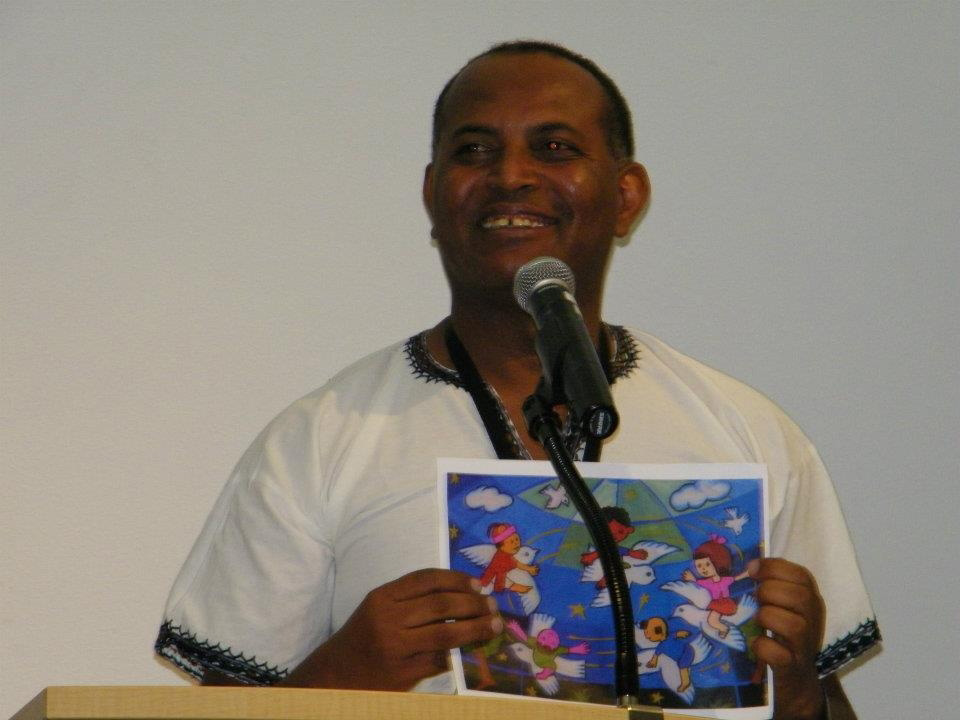
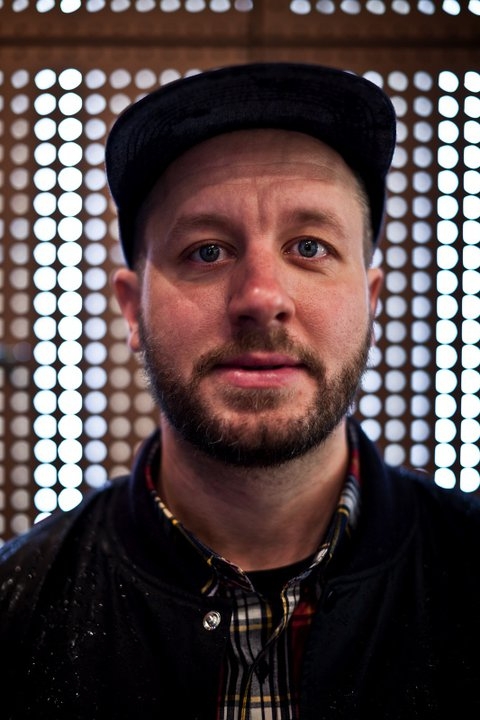
Photo: Tilahun Liben  Credit: Aspen Green

Support for Readings/Workshops events in Tucson is provided by an endowment established with generous contributions from the Poets & Writers Board of Directors and others. Additional support comes from the Friends of Poets & Writers.

Please log in to continue.
LOG IN
Don’t yet have an account?
Register for a free account.

Debut Poet: Michael Cirelli

P&W–supported poet Michael Cirelli, author of Lobster With Ol' Dirty Bastard, Vacations on the Black Star Line, and Everyone Loves The Situation, remembers his debut book launch in 2008.

In 2008, the crown jewel of P&W support came to me personally. The organization was gracious enough to sponsor my book release party at the Grand Café in Clinton Hill, Brooklyn (since closed). The Grand was one of those magical Brooklyn places where you could run into dozens of writers, musicians, and artists. I could have breakfast with Meshell Ndegeocello and lunch with Toshi Reagon all in the same day.

Just a few weeks ago I ran into the woman who used to own the café and reminisced on what an amazing night it was, one of the best in my life. Not only was my first collection released, Lobster With Ol’ Dirty Bastard, but my guest readers included the longtime P&W–supported poets Patricia Smith and Willie Perdomo, and the afterparty was deejayed by DJ Reborn (a popular teaching artist at Urban Word NYC). It was truly a memorable night and I was so grateful for P&W's support!
A few months after the book launch, the “debut poets” issue of Poets & Writers Magazine arrived to my Brooklyn home. I had made the debut poets list—I was in the magazine that I’d been reading for more than ten years!

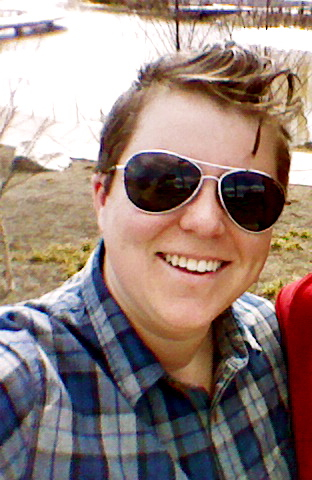
Photo: Michael Cirelli. Credit: NIKE staff.

Support for Readings/Workshops in New York City is provided, in part, by public funds from the New York State Council on the Arts, and the Department of Cultural Affairs, with additional support from the Louis & Anne Abrons Foundation, the Axe-Houghton Foundation, the A.K. Starr Charitable Trust, and Friends of Poets & Writers.

Please log in to continue.
LOG IN
Don’t yet have an account?
Register for a free account.

Charis Books and More: Keeping Doors Open for 38 Years

Elizabeth Anderson is the program director at P&W–supported Charis Books and More and Charis Circle, a unique for-profit independent feminist bookstore and 501(c)(3) social justice literary nonprofit hybrid located in Atlanta, Georgia. She is also a writing coach and fiction writer at work on her first novel, "Paradise Park."

What makes your reading series unique?
Charis Books is turning thirty-eight this year. With bookstores continuously closing, we will be the oldest feminist bookstore in North America and the primary LGBT-focused bookstore in Atlanta. Our events have always reflected the old feminist axiom, "the personal is political." We believe that fiction has the power to change the world and that reading can be a revolutionary act. We maintain a deep investment in helping to center voices traditionally at the literary margins.

What recent program have you been especially proud of?
The P&W–sponsored evening with Sassafras Lowrey, editor of Kicked Out, an anthology of work by homeless LGBTQ youth. Sassafras shared her own story of homelessness and talked about receiving one teen's story via text message because the kid didn't have access to traditional modes of journalistic communication. Sassafras opted to publish it in the book with a standard English translation. That anecdote spoke to me about the value of telling our story despite the obstacles.

What’s the craziest thing that’s happened at an event you’ve hosted?
The life of a bookseller is a crazy one. We hear more confessions than priests and doctors. People share. A LOT. Folks come to a reading about how to turn a front lawn into a food producing garden and end up talking about their grandmas who, as it turns out, were from the same small town. By the end of the night, you have complete strangers hugging and smiling and trading recipes and crying over long dead people. That is the wonder of a reading at Charis.

How do you cultivate an audience?
It's about relationships. It's about remembering people's names and tastes. I call people on the phone. I invite people personally via e-mail and on Facebook. If someone buys an author's book, I remember. If that author is slated to read at our store six months later, I make sure to remind the customer. If the independent bookstore is to survive, it will be because of relationships.

How has literary presenting informed your own life?
It has made me a better writing coach: I can tell you exactly the moment at which you will begin to bore your audience (seventeen minutes, don't ever read for more than seventeen minutes straight, I don't care if you sound like James Earl Jones and are the best looking person on the planet, people will start to glaze).

What do you consider to be the value of literary programs for your community?
All writers and readers have the potential to be activists if they choose. Bookstores are gathering grounds. They are the places to come and recharge your batteries or lick your wounds or rebuild after a hard political battle. At Charis, we fight to keep the doors open for our community because we believe there is a kind of grace in the act of gathering around stories no other space in our culture can provide.

Photo: Elizabeth Anderson.

Support for Readings/Workshops events in Atlanta is provided by an endowment established with generous contributions from the Poets & Writers Board of Directors and others. Additional support comes from the Friends of Poets & Writers.

Please log in to continue.
LOG IN
Don’t yet have an account?
Register for a free account.

Five Young Literary Lions Contend for 2012 Prize

The New York Public Library has announced the five finalists for its twelfth annual Young Lions Fiction Award, given to an emerging writer for a work published in in the previous year. The winner of the honor, which carries a prize of ten thousand dollars, will be announced on May 14.

The 2012 finalists are Teju Cole for Open City (Random House), Benjamin Hale for The Evolution of Bruno Littlemore (Twelve), Ben Lerner for Leaving the Atocha Station (Coffee House Press), Karen Russell for Swamplandia! (Knopf), and Jesmyn Ward for Salvage the Bones (Bloomsbury). Salvage the Bones, Ward's second novel after her breakout, Where the Line Bleeds (Agate Publishing, 2008), won the National Book Award in fiction last fall. Cole's debut was a finalist for this year's National Book Critics Circle Award.

Recent winners of the NYPL's top honor for emerging writers are Adam Levin for The Instructions (McSweeney's Books, 2010), Wells Tower for Everything Ravaged, Everything Burned (Farrar, Straus and Giroux, 2009), and Salvatore Scibona for The End (Graywolf Press, 2008). The award is an program of the library's Young Lions, a group of donors in their twenties and thirties.

In the video below, finalist Teju Cole presents "a sneak peak" into his nascent nonfiction project at Franklin Park bar in Brooklyn, New York.

Please log in to continue.
LOG IN
Don’t yet have an account?
Register for a free account.