
Poets & Writers Blogs

Tim Z. Hernandez on the Teenage Poet Laureate of Stockton

Poet and fiction writer Tim Z. Hernandez blogs about two workshops he led on May 2 at libraries in Stockton, California, as part of a Rural Library Tour partnership between Poets & Writers and the California Center for the Book.
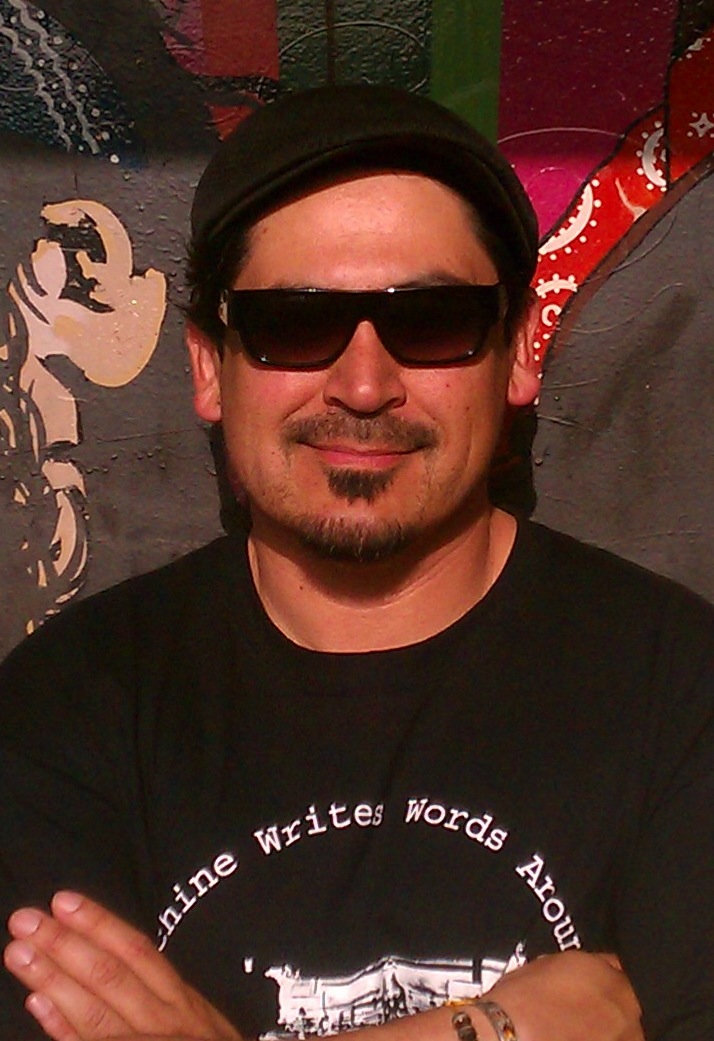
 
Tim Z. HernandezThe Maya Angelou Library on Stockton’s southeast side sits near a tired slab of old homes and pothole-ridden streets, but this is where my next workshop is, and I’m excited for it. By now I’ve learned that behind each workshop door are people whose stories and voices will stay with me for days, sometimes months after. Suzy Daveluy, librarian and my host, conveys her worry about the number of people in attendance. Before I can reply we are approached by two teenage girls, their younger brother, and their mother. The girls introduce themselves as Emilia and Yvette. Their brother is Jesus, and their mother is Gloria.*

They are here for the workshop, but their faces look grim. Right off, the girls let me know that they have no interest in pursuing writing as a career. In short, their mother makes them attend such workshops because she wants them to grow up articulate, well spoken. Jesus says nothing. Gloria tells me, in Spanish, that she is from Mexico but has been in the U.S. for over twenty-two years. She says the only reason she maintains a strong accent is because she’s always been reluctant to learn English. And this is it. This is my workshop.

We sit down and jump into a hearty discussion about memory. The girls giddily recall moments from their time growing up together, and there’s lots of laughing, and even a few tears, shed mostly by Gloria. I have them write those memories down, at the very least, I say, to capture them forever. “If we don’t tell our own stories,” I say, “who will?” When it’s time to share their writing, the girls go first, and then their mother, and now I’m staring at fifteen-year-old Jesus.

Finally he lifts his paper in front of him and glances over the words, then sits up straight and begins to read the memory he wrote about his father:

...the seatbelt, with its zigzag patterns
in blue, the shiny buckle, with its shiny button,
ahh, that little worn out button,
the sun, against the worn out button,
ahh, the sun and the worn out blue
of a button...
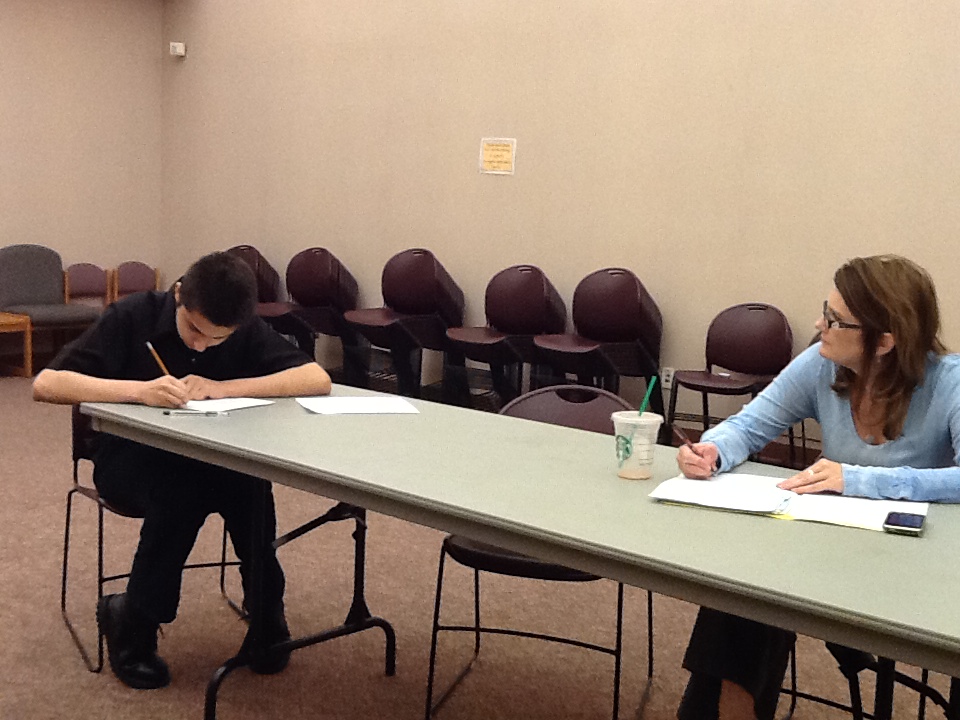
If I didn’t see him write those words out in front of me, I might have never believed he wrote it. His delivery is like a smooth Lenny Bruce, witty and sharp, confident. Suzy and I look at one another, and I know we’re thinking the same thing: We’ve found the future poet laureate of Stockton! Of California! Hell, of the United States!

“You’re a natural poet,” I tell him.

He lowers his eyes.

His mother feels the need to explain. “Jesus was picked on when he was in elementary school,” she says. Jesus rolls his eyes. “He had a bad teacher who put his English down in front of the other students, so he thought he was dumb. He used to come home saying he was dumb."

Jesus says, “Read and red.”

“What’s that?” I ask.

“Read and red,” he replies. “It was read and red. I didn’t understand the difference, so I always got those two words mixed up, and I always spelled them wrong.”
 
I tell him spelling doesn’t matter. I think of what the poet Maria Melendez says from the moment she enters a clasroom of children: YOU ARE THE BOSS OF YOUR OWN POETRY! And I can’t tell you how many times I’ve seen adults steal away this possibility from children.

I tell them about California’s newest poet laureate, Juan Felipe Herrera—the son of migrant farmworkers, selected by Governor Jerry Brown himself. And then I recite a line from one of Herrera’s poems: I didn’t start out as a poet, because I was silenced. I started out with something I wanted to say. Jesus smiles now, and so does his mother.

“You see,” she tells him in Spanish, “One day you could be a famous poet too!”   

He grins and looks over at his sisters. “That would be cool,” he says, folding his poem and sticking it into his back pocket. 


*Family members’ names have been changed.

Top photo: Tim Z. Hernandez. Credit: David Herrera. Bottom photo: Jesus (left) and librarian Suzy Daveluy. Credit: Tim Z. Hernandez.
Major support for Readings/Workshops in California is provided by The James Irvine Foundation. Additional support comes from the Friends of Poets & Writers.
Please log in to continue.
LOG IN
Don’t yet have an account?
Register for a free account.

ALA Gives First Awards for Adult Literature

The American Library Association awarded its inaugural Andrew Carnegie Awards for Excellence in Literature at a ceremony last night in Anaheim, California.

The organization that has for decades awarded the Caldecott and Newbery medals for children's and young adult literature is honoring for the first time books of fiction and nonfiction for adult readers.

Irish author and Man Booker alumna Anne Enright took the Carnegie Award in fiction for her fifth novel, The Forgotten Waltz, published in the United States by Norton. Also shortlisted were Russell Banks for his twelfth novel, Lost Memory of Skin (Ecco), and Pulitzer finalist Karen Russell for her first, Swamplandia! (Knopf).

In nonfiction, Robert K. Massie's biography Catherine the Great: Portrait of a Woman (Random House) won the Carnegie Award. The late Manning Marable's much-lauded biography Malcolm X (Viking) and James Gleick's The Information: A History, a Theory, a Flood (Pantheon) were also finalists.

Each winner, selected by a committee chaired by librarian Nancy Pearl, received five thousand dollars, and each finalist received fifteen hundred dollars. As with the Caldecott and Newbery medals, copies of the honored books will also be decorated with a seal announcing the award.

Please log in to continue.
LOG IN
Don’t yet have an account?
Register for a free account.

Debut Novelist Wins Major Australian Award

Australia's prestigious Miles Franklin Literary Award went this year to debut novelist Anna Funder for her best-seller All That I Am (Harper). Funder, whose novel of the Nazi resistance in Europe also won her country's Independent Bookseller’s Award for debut fiction and was named Indie Book of the Year, received $50,000 Australian (approximately $50,355).

Funder is also the author of the Samuel Johnson Prize–winning nonfiction book Stasiland: True Stories From Behind the Berlin Wall, published by Granta Books in 2003, which the author wrote after making a shift from previous careers in international law and television production in Germany. Her award-winning debut novel also carries threads of the real, particularly stories of pre-World War II activists who opposed Hitler's rise to power, some culled from the author's personal relationship with a German refugee living in Australia.

The other contenders for this year's Miles Franklin Award are Blood by Tony Birch, Foal's Bread by Gillian Mears, Cold Light by Frank Moorhouse, and Past the Shallows by Favel Parrett. The award is given annually for a novel that "presents Australian life in any of its phases."

In the video below, Funder describes the challenges of shaping her novel, including the importance, while crafting fiction from historical events, of getting the story "morally right."

Please log in to continue.
LOG IN
Don’t yet have an account?
Register for a free account.

The Center for Fiction Holds Story Contest

New York City's Center for Fiction, which annually honors writers with its Flaherty Dunnan First Novel Prize and the Clifton Fadiman Medal, is accepting entries for a new short story contest. One story will be selected to be published in the Literarian, the center's journal, and the winning author will receive one thousand dollars.

For the inaugural competition, stories of up to five thousand words may be submitted via e-mail by July 2. A fifteen dollar entry fee is payable via the center's online store.

The current issue of the Literarian features a story-as-slideshow by Roberta Allen, an essay by memoirist and fiction writer Esmeralda Santiago, a fiction translation from the Spanish of Raúl Ortega Alfonso excerpted from the Barcelona Review, and recommended reading from author Dan Chaon alongside stories by emerging writers. The magazine is accessible for free on the Center for Fiction website.

In the video below, featured in the latest issue of the Literarian, Joyce Carol Oates discusses the dream that gave life to her novel Mudwoman, published this past March by Ecco.

Please log in to continue.
LOG IN
Don’t yet have an account?
Register for a free account.

Canon Busting in Prison

Cara Benson, author of poetry book (made)and the forthcoming "Funny. Considering how heated it was," and receipient of a Poetry Fellowship from the New York Foundation for the Arts, blogs about teaching poetry at the Mt. McGregor Correctional Facility.

The poetry workshop I facilitate at Mt. McGregor Correctional Facility, a medium security state prison in Wilton, New York,  began as a three month teaching practicum for my graduate degree. It became clear fairly quickly that three months wasn’t nearly enough to meet the interest and needs of the students inside. So we extended it to four months. Then five. Then a year. Now it’s been seven years and counting.

In that time we have covered such varied poets as Lu Chi, Rumi, Sappho, Amiri Baraka, Federico García Lorca, T.S. Eliot, Sonia Sanchez, EE Cummings, Audre Lorde, Muriel Rukeyser, LaTasha N. Nevada Diggs, Alice Notley, Gil Scott-Heron, and CA Conrad. The list is growing like the years. Dozens of men - maybe a hundred - have come to and through the class. Some on the outside are now proud graduates of Higher Education. On the inside, a few lifers have been there since my first day. I have seen many things happen in that classroom, but fostering the dissolution of preconceived notions of what can be called “poetry” under the influence of poems like Joan Retallack’s “A I D /I/ S A P P E A R A N C E” or Douglas Kearney’s page work is particularly gratifying. I’ve seen, like realizing blondes aren’t the only beauties, the canon explode in front of our faces, and I tell you that this is a very right thing to be happening inside.
Last month we read Harryette Mullen’s Muse & Drudge and discerned a number of tactics worth replicating. The participants loved her multiple voices, taut quatrains, and ability to twist common sayings into such rhythmic, flipped scripts. This month we are working with Rob Budde’s Declining America. There is a section in this book that plays out in scenes he’s called “My American Movie” after Jean Baudrillard’s America. So we are writing our own American scenes under the influence of his text. His poems gyrate without punctuation and stream as one undulating and pullulating sentence in prose, and the task I’ve given us of emulating his approach has proven provocative and productive.

Eric Perez, one of the participants, has this to say about the class: “Our poetry workshop has given us a unique opportunity to liberate ourselves from an oppressive system, even if only for a brief time during the week. This helps us to reach a broader understanding of life and its circumstances and to push the boundaries of our intellect in order to build our self esteem.” I am very grateful to Poets & Writers for the support it gives for the class. It can be really challenging, the proverbial upstream swim, to be a volunteer poet for the New York State Department of Corrections. Poets & Writers not only provides remuneration, but it legitimizes the endeavor. It truly has helped me to show up week after week, year after year. And as the late poet and tireless prison educator/activist Janine Pommy Vega used to say to me whenever I complained about a seeming setback or “lost” student: “Cara, you just keep going in.” So I do.

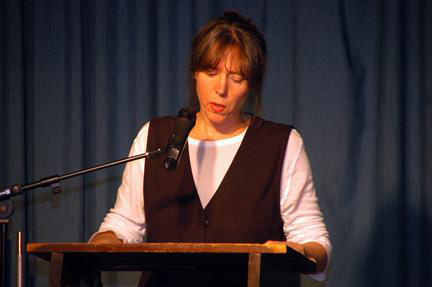
Photo:  Cara Benson.   Credit: David Brinson.

Support for Readings/Workshops in New York is provided, in part, by public funds from the New York State Council on the Arts, with additional support from the Friends of Poets & Writers.

Please log in to continue.
LOG IN
Don’t yet have an account?
Register for a free account.

Carole "Imani" Parker's Former Student "Donald"

Poet and educator Carole "Imani" Parker blogs about her former student "Donald" at the P&W–supported Jobs for Youth Apprenticeship Program (JFYAP) at Medgar Evers College, a job readiness program she once directed.

"Donald" was a withdrawn seventeen-year-old boy when he came to JFYAP. His reading and math scores were extremely low and he had very low self-esteem. He had been expelled from high school, two General Educational Development (GED) programs, and was eventually expelled from the GED component of JFYAP for threatening another student. With the help JFYAP coordinator, Ms. B, "Donald" was able to enroll in a computer training course and continued to attend JFYAP job readiness/life skills training, counseling, tutoring and P&W–supported poetry workshops. 

Although JFYAP is now defunct, I, with Ms. B, continue to follow up with and encourage "Donald." As a matter of fact, I spoke with "Donald" the other day. He said that he completed the computer course and received a certificate. He also plans to take the GED soon and is excited about participating in P&W's annual intergenerational reading later this month. Here are the first two lines from "What am I," a poem he hopes to read at the event: I am the sound that is heard from a mile away / I am that name you hear them whisper in the wind.

"Donald’s" story is not unique. There were many troubled and talented young people who walked through the doors of JFYAP. Most of them eventually passed the high school regents or GED exam and went on to college and, later, careers. JFYAP provided them with the necessary tools to become productive citizens. 

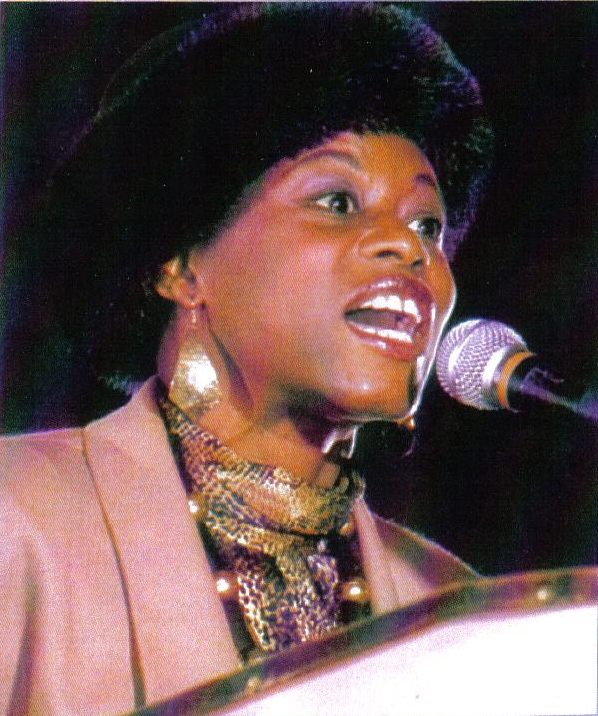
Photo: Carole Imani Parker.

Support for Readings/Workshops in New York City is provided, in part, by public funds from the New York State Council on the Arts, and the Department of Cultural Affairs, with additional support from the Louis & Anne Abrons Foundation, the Axe-Houghton Foundation, the A.K. Starr Charitable Trust, and Friends of Poets & Writers.

Please log in to continue.
LOG IN
Don’t yet have an account?
Register for a free account.

Inky Improv: Houston’s Fresh Arts Brings Artists and Writers Together

K.C. Scharnberg, program director of Fresh Arts, a multidisciplinary arts service organization in Houston, Texas, shares her thoughts on its P&W–supported Inky Improv event and the Houston literary scene.

What makes your organization unique?
Fresh Arts hosts professional development and networking events for artists in all fields and at all skill levels. We strive to support the professional growth of Houston’s art community and help make the starving artist a cliché of the past.
 
What recent project have you been especially proud of?
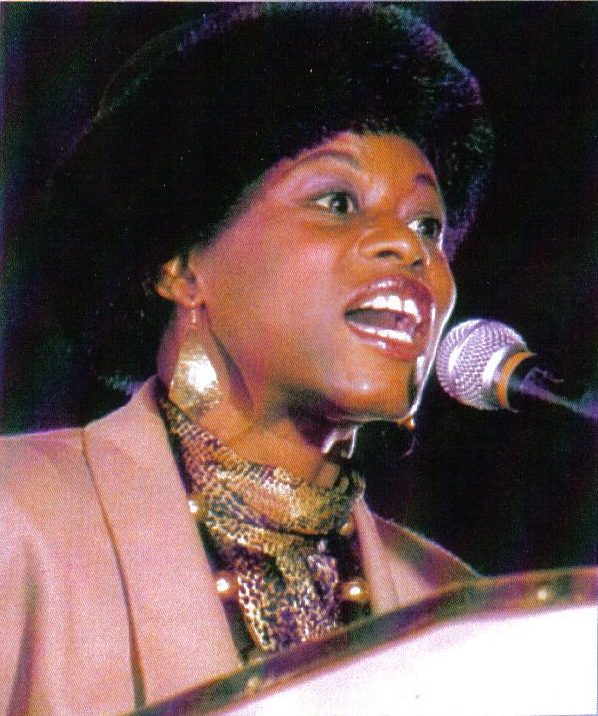
My favorite event sprang from a quirky idea to pair unlikely yet complementary groups of artists. With support from P&W, we hosted Inky Improv, an event that paired the visual arts group Sketchy Neighbors with the writers group NANO Fiction.

Four writers and four artists each got a five-word phrase suggested by an audience member. They had ten minutes to draw or write something inspired by the prompt. If the prompt began with an artist, they handed their work over to a writer, and vice versa. Each person created a story or drawing to finish the piece over the next ten minutes. When the clock stopped, each writer and artist took turns presenting the final creations.

It was an exceptionally fun night, and we hope it becomes an annual event.

How do you cultivate an audience?
We provide a strong network for local artists online in our Artist Registry and off-line with our programs and services. We pay close attention to what’s happening in the community and reach artists working in all disciplines. In addition, we strive to offer relevant and high-quality programs and services based on feedback (surveys and personal conversations) from the artist community. When people feel like a company listens and responds to them, they tend to be more loyal.

What do you consider to be the value of literary programs for your community?
In the same way that a piece of music or art can bring out deep emotion from a person, literature can stimulate the senses in a way that creates a more fulfilling life experience.

Houston has a rich literary community and audiences that truly appreciate what literary programs contribute to our culture. For example, the Poison Pen Reading Series is a monthly series that takes place at a local bar and is enormously popular. It draws in all kinds of people and celebrates literature, while making it less intimidating and more accessible.

Writers in the Schools, one of my favorite organizations, engages children in the pleasure and power of reading and writing through in-school and after-school programs, professional development for teachers, and community programs celebrating the great work and development of the youth with whom they work. They have impacted the community in a major way over the years.

Additionally, the University of Houston’s Creative Writing Program is one of the best in the country, which is a source of pride amongst the literary-loving community. We are fortunate enough to benefit from the groundswell of literary contributions from the students, faculty, and graduates who choose to make Houston their home.

Photo: Inky Improv participants at work. Credit: Fresh Arts.

Support for Readings/Workshops events in Houston is provided by an endowment established with generous contributions from the Poets & Writers Board of Directors and others. Additional support comes from the Friends of Poets & Writers.

Please log in to continue.
LOG IN
Don’t yet have an account?
Register for a free account.

Carole "Imani" Parker Readies Students

Poet, educator, and inspirational speaker Carole "Imani" Parker blogs about her former students at the P&W–supported Jobs for Youth Apprenticeship Program (JFYAP) at Medgar Evers College, a job readiness program she once directed.

In addition to classroom instructions, JFYAP students were engaged in exciting educational and recreational activities, such as college tours, United Nations forums, job shadowing, peer counseling, community service activities, entrepreneurial training, job readiness and life skills training, and, most importantly, P&W-supported poetry readings and workshops and participating in P&W's annual intergenerational poetry showcase. 

Because of their participation in JFYAP, many of the students have graduated from post secondary colleges or apprenticeship training programs and have entered successful careers as health care providers, teachers, social workers, accountants, production assistants, entertainers, etc.
JFYAP students have benefited and grown as a result of all of the training they've received. They have received a well-rounded education, complete with P&W-supported poetry workshops. 

Photo: Carole Imani Parker.

Support for Readings/Workshops in New York City is provided, in part, by public funds from the New York State Council on the Arts, and the Department of Cultural Affairs, with additional support from the Louis & Anne Abrons Foundation, the Axe-Houghton Foundation, the A.K. Starr Charitable Trust, and Friends of Poets & Writers.

Please log in to continue.
LOG IN
Don’t yet have an account?
Register for a free account.

The @ Noon Reading Series at Wayne State University

Poet and English professor Caroline Maun blogs about P&W–sponsored The @ Noon Reading Series, held at Wayne State University in Detriot. Maun's poetry collections include The Sleeping, and Cures and Poisons. She is also the editor of The Collected Poetry of Evelyn Scott. 

The @ Noon Reading Series began at Wayne State University during the 2010 winter semester. That first year, we paired creative writing faculty from the English department with student writers. In subsequent years we have showcased some of the finest poets and writers from the southeast Michigan region and beyond, and have continued to pair our guests with up-and-coming student writers. Since 2010, the series has enjoyed growing popularity and success with six public readings and one public workshop.

We managed to fund the first two years of the series with modest support from our department budget. This year, thanks to funding from Poets & Writers, we were able to extend the series considerably. This was helpful during a time when university budgets are shrinking, but also when creative activity in our city is burgeoning. It was great to provide this venue to wonderful artists and offer excellent programming to our students and the community. 
We have a collaborative approach to programming. Creative writing faculty select a date and a guest to invite to read and then find the student who is available and will compliment the featured guest’s work. Our students read for fifteen minutes. Our featured readers read for twenty to twenty-five minutes, and there is time for discussion afterwards. We offer coffee and snacks in our lounge where audience members continue the conversation. This semester, we regularly attracted audiences of twenty-five to fifty students, community members, faculty, and staff of the university.

Featured poets this year have included Matthew Olzmann, Vievee Francis, Keith Taylor, and Rob Halpern, and writers Lynn Crawford and Mitch and Megan Ryder. Student poets and writers have included Vincent Perrone, Aricka Foreman, John Kalogerakos, Jill Darling, Mathew Polzin, and Ricardo Castano IV.  One of the many highlights was Vievee Francis reading from Horse in the Dark, a poetry collection forthcoming from Northwestern University Press characterized by personal lyrics, which is a departure from the persona poetry in her first poetry book, Blue-Tail Fly. She was joined by student poet Aricka Foreman. Another highlight was Lynn Crawford reading from Simply Separate People, Two, accompanied by student writer Matthew Polzin. During the question-and-answer session, poets as well as fiction writers engaged with Lynn’s work enthusiastically for its condensed, lyrical style.

Jennifer LoPiccolo, one of my very talented students, commented on the series: “I make it a point to attend The @ Noon Series because I gain exposure to various forms of poetry and fiction that help me to hone my own work. Wayne’s creative writing students share a stage with our guest readers, which allows the audience to draw connections between their peers and more accomplished writers. While taking notes on both, I see the gap between my friends and the authors on my shelf narrow. It’s a rewarding hour."

We are looking forward to planning next year’s series and continuing this rich supplement to classroom experiences for our students.

Photo: Lynn Crawford and Matthew Polzin.  Credit: Caroline Maun.

Support for Readings/Workshops events in Detroit is provided by an endowment established with generous contributions from Poets & Writers Board of Directors and others. Additional support comes from the Friends of Poets & Writers.

Please log in to continue.
LOG IN
Don’t yet have an account?
Register for a free account.

More Words From Winners: Sarah Falkner

To accompany our May/June 2012 issue's feature "Winners on Winning," part of our special section on writing contests, we're posting a selection of mini-interviews with prize recipients on the benefits of their awards and what they learned from winning. The final author in our series is New York City fiction writer Sarah Falkner, who received the Starcherone Books Prize for Innovative Fiction in 2010 for her debut novel, Animal Sanctuary.

How did winning the Prize for Innovative Fiction change your career?
Winning the prize changed my life enormously in a variety of ways—I was so surprised and elated after hearing the news that I rode my bicycle very joyously and recklessly through a rainy night in Brooklyn. The prize money was extremely helpful to me as a self-employed person of modest means and frequently-tenuous existence, but the money was the least of the advantages I have enjoyed from winning the prize. I am a writer who for various reasons did not pursue an MFA in creative writing, although I value and recognize many reasons why a person might do so, and am not myself wholly an outsider: I do possess a BFA in painting. While I might, outside of an MFA program, still be able to reach some of the same goals an MFA candidate strives for—sustained focus and purpose; devotion to craft and technique; submission to peer and mentor analysis, guidance, and feedback—there is no easy substitute for the public credential of having completed a degree program. After all, an MFA is justifiably and understandably a clear demonstration of a writer's quality and seriousness. The juried evaluation and approval process that winning a prize suggests confers some sort of quantifiable credential, a common currency that peers and the public can measure and accept. After winning the Starcherone Prize, I applied for the first time to the MacDowell Colony, and was given a fellowship; I highly doubt that without the credential of the prize I would have been accepted.

Did the award have an effect on any decisions you made as a writer, on the path you chose to take in life or in your work?
Winning the prize encouraged me greatly to take myself more seriously as a writer, to feel entitled to publicly identify as a writer, and to allow my writing even more time in my life. Artistically, I have navigated many storms of cognitive dissonance during my development—my origins are of low socioeconomic status, but thanks to my mother and the wonderful thing that is the public library, I was exposed early to arts and letters that were foreign to our friends and neighbors. That both saved and ruined me. Since first studying visual art in college alongside people of greater privilege and means than I, then working for a time in the palace of inequity that is the New York City art world, I have frequently found myself at odds with myself—and others—about the necessity, wisdom, and appropriateness of identifying myself as an artist and prioritizing my artistic practice over more "practical" activities like earning a living or working for social justice, or other things that would more directly and immediately benefit my family, friends, and all sentient beings. Sometimes it's like I have an internalized hardline Maoist who tells me I shouldn't spend time alone at my computer expressing my most personal feelings in selfish bourgeois decadence when instead I could be out contributing to the collective good. Lately, the inner Maoist seems appeased by the fact that The People, or at least Some People, value my writing enough to have given it a prize and a readership.

What advice do you have for writers looking to contests as a way to get their work into the world?
I don't feel qualified to speak to the majority of writers or contests out there—but for writers working in experimental, interdisciplinary, and other non-mainstream modes, and less-common forms such as novellas and chapbooks, all of which are published by only a fraction of all the presses in existence, I can attest to the fact that there are a number of very high quality small independent publishers and literary magazines who seem to use the contest model very effectively to find emerging writers. Starcherone Books, Fiction Collective 2, Dzanc Books, Fence Books, and DIAGRAM are just a few who accept unsolicited submissions [via a competition model] during a specific reading period each year. Often an esteemed writer not published by or affiliated with the press is chosen to judge the winner from a group of finalists. My only advice for writers is the obvious and logical: Read a lot, apply to contests for presses that publish lots of books you think are both generally exemplary and also somehow simpatico with your own projects, and especially apply to contests judged by writers whose books you greatly admire and with whom you feel a kinship or resonance.

Below is the video trailer for Falkner's Animal Sanctuary.

Please log in to continue.
LOG IN
Don’t yet have an account?
Register for a free account.

Colm Tóibín, Farzana Doctor Among Lammy Winners

The twenty-fourth annual Lambda Literary Awards for LGBT literature, also known as the Lammys, were announced last night at a ceremony in New York City, where authors rubbed elbows with luminaries in other arts, including actress Olympia Dukakis, Broadway performer Anthony Rapp, and drag legend Charles Busch.

Dukakis and National Organization for Women founder Eleanor Pam presented Lambda's Pioneer Awards for lifetime achievement to novelist Armistead Maupin, author of the San Francisco–based Tales of the City series, and feminist writer Kate Millett. Fiction writers Stacy D'Erasmo and Brian Leung won Outstanding Mid-Career Novelist Prizes.

The Lammy for gay poetry award went to A Fast Life, the collected poems of the late Tim Dlugos (1950–1990), edited by David Trinidad and published by Nightboat Books. The prize for lesbian poetry went to Leah Lakshmi Piepza-Samarasinha for Love Cake (TSAR Publications).

In lesbian fiction, Farzana Doctor won the Lammy for her novel Six Metres of Pavement (Dundurn Press). Colm Tóibín won in gay fiction for his story collection The Empty Family (Scribner). The award in bisexual fiction went to Barbara Browning for her novel, The Correspondence Artist (Two Dollar Radio). Debut fiction writers Rahul Mehta and Laurie Weeks were also honored, Mehta for his story collection, Quarantine (Harper Perennial), and Weeks for her novel, Zipper Mouth (Feminist Press).

In lesbian memoir, Jeanne Córdova won for When We Were Outlaws: A Memoir of Love & Revolution (Spinsters Ink). Glen Retief won for gay memoir with The Jack Bank: A Memoir of a South African Childhood (St. Martin's Press). Justin Vivian Bond won the transgender nonfiction prize for Tango: My Childhood Backwards and in High Heels (Feminist Press).

For the list of winners in all categories, including erotica, young adult literature, and mystery, visit the Lambda Literary Foundation website.

In the video below, poetry awardee Piepza-Samarasinha performs a poem from her winning collection at a finalists reading held in April.

Please log in to continue.
LOG IN
Don’t yet have an account?
Register for a free account.

Carole "Imani" Parker and Jobs for Youth Apprenticeship Program

For the month of June, poet, educator, and inspirational speaker Carole "Imani" Parker blogs about her work with the P&W–supported Jobs for Youth Apprenticeship Program (JFYAP) at Medgar Evers College, a job readiness program she once directed.

As former director of JFYAP, I write this entry with a sense of joy, sadness, and pride. When I first started working at JFYAP in 1995, it had been closed for two years. I am privileged to have been able to watch the program grow for more than fifteen years. Unfortunately, due to the current recession, the program, which was funded by the New State Department of Labor, lost its funding and was forced to close in December 2011. Because of its collaboration with the GED Plus-Division of the New York City Department of Education and Medgar Evers College, however, the remaining students in the program have been allowed to complete their education at the college.

JFYAP was established as an academic enrichment/career development program. The program was designed to provide services to “at risk” youth as well as young people who had either dropped out of traditional high schools or migrated to the United States from other countries. For more than seventeen years, JFYAP assisted hundreds of students to reach their academic and vocational goals.

Some students came with a myriad of issues, including gang involvement, illiteracy, and substance abuse. With a caring staff and creative P&W–supported writers, such as George Edward Tait, Abu Muhammad, and Radhiyah Ayobami, many of the students were able to transform their negative conditions and behavior through the art of creative writing.

Photo: Carole Imani Parker.

Support for Readings/Workshops in New York City is provided, in part, by public funds from the New York State Council on the Arts, and the Department of Cultural Affairs, with additional support from the Louis & Anne Abrons Foundation, the Axe-Houghton Foundation, the A.K. Starr Charitable Trust, and Friends of Poets & Writers.

Please log in to continue.
LOG IN
Don’t yet have an account?
Register for a free account.

Andrei Guruianu and Archetypes in the Unconscious

In May, P&W-supported poet Andrei Guruianu, author of Postmodern Dogma and several other books, taught a workshop sponsored by the Center for Gender, Art and Culture in Binghamton, New York. Participants Lois Westgate and Kit Hartman blog about the experience.

Andrei Guruianu led a group of writers in the process of creating poetry at the Cooperative Gallery 213. The Gallery provides a space for local artists and photographers, and has welcomed writers’ workshops. Andrei has long been an inspiration to fledgling writers in Upstate New York: He taught at Binghamton University and Ithaca College, published a journal of work by writers from his community workshops, founded The Broome Review, and served as Poet Laureate of Broome County.
 
Our Saturday workshop was a small group, which Andrei prefers “…as it promotes intimate conversations and sharing, and allows people to feel more comfortable once the group settles into the work of writing.” He recommended we try to remove our biases and allow the subject of our poetry to live on its own.

Andrei showed scenes from the movie Iris, in which Judi Dench as British writer Iris Murdock says: “Every human soul has seen, perhaps before their birth, pure forms such as justice, temperance, beauty, and all the great moral qualities which we hold in honour.” We contemplated the archetypes of the unconscious, which are sometimes impossible to convey in words.

The movie includes a montage of Iris and her husband swimming, Iris nude in youth, and in a bathing suit in old age. Andrei asked us to identify concepts this scene evoked and capture these through images in our poetry. For our second poem, he asked us to respond to a scene in which Iris, now suffering from Alzheimer’s, places beach stones on rows of blank paper from her journal, then removes the stones. The papers are swept away. 

We read our poems aloud and Andrei pointed out the strongest parts of each. His critiques were honest, but not brutal. An example of one person’s best line inspired by the stones-on-paper scene: “…her fingers remembered the need to create.”

Andrei’s philosophy is this: “I continue to enjoy leading community writing workshops because it helps me stay true to my initial impulse, [which is] to take creative writing out of the classroom. The creative space that opens up when there is no pressure to create or publish is genuine, is as close to the ‘spirit’ of the art as you can get.”

We in Binghamton felt fortunate to have the opportunity to learn from him.

Top photo: Andrei Guruianu. Credit: Kit Hartman. Lower photo: Workshop participants. Credit: Andrei Guruianu.
Support for Readings/Workshops in New York City is provided, in part, by public funds from the New York State Council on the Arts, and the Department of Cultural Affairs, with additional support from the Louis & Anne Abrons Foundation, the Axe-Houghton Foundation, the A.K. Starr Charitable Trust, and Friends of Poets & Writers.

Please log in to continue.
LOG IN
Don’t yet have an account?
Register for a free account.

James Salter to Receive PEN Malamud Award for Short Fiction

Last week the PEN/Faulkner Foundation announced James Salter as the winner of its twenty-fifth annual PEN/Malamud Award for short fiction. The author, whose collection Dusk and Other Stories (North Point Press, 1988) won the 1989 PEN/Faulkner Award, will receive the five-thousand-dollar prize named in honor of story writer Bernard Malamud on December 7.

Salter is also the author of the story collection Last Night (Knopf, 2005), as well as novels such as A Sport and a Pastime (Doubleday, 1967), Light Years (Random House, 1975), and The Hunters (Harper, 1956). Also recognizing his contribution to short story form, he was awarded the 2010 Rea Award last summer.

Below is a brief digest of online access points to the literature and life of the author PEN/Malamud juror Alan Cheuse said "has shown us how to work with fire, flame, the laser, all the forces of life at the service of creating sentences that spark and make stories burn."

In a 1993 Paris Review interview (with Edward Hirsch), Salter said, "I've never had a story in The New Yorker; everything has been rejected." (Salter's story "Last Night" is available online in the November 18, 2002, issue of the New Yorker.) He also discusses practice (in solitude, in longhand), revision ("Normally I just go a sentence at a time"), and his own short fiction influences (Babel, Chekhov).

The Paris Review published a number of Salter stories, including "Am Strande von Tanger" (Fall 1968). Last year the journal awarded Salter the Hadada Prize, and celebrated the author with a month of coverage on the Paris Review Daily blog. (Online literary review fwriction paid similar tribute.)

The video below, the first in a series of four, Salter reads "Palm Court" from Last Night. The reading took place at an event held by the literary journal Narrative.

Please log in to continue.
LOG IN
Don’t yet have an account?
Register for a free account.

British Novelist (and Game Designer) Wins Rolex Protégé Award

The sixth literary pairing in the biennial Rolex Mentor and Protégé Arts Initiative was announced earlier this month. The program, launched a decade ago, offers emerging artists the opportunity to spend a year under the tutelage of established professionals in their respective fields.

The 2012–2013 literature mentor, Canadian novelist Margaret Atwood, selected as her protégé thirty-seven-year-old British writer Naomi Alderman. The author of three novels—Disobedience (Viking, 2006), which won the Orange Award for New Writers, The Lessons (Viking, 2010), and The Liar's Gospel, forthcoming from Viking in August—Alderman is also a game designer (her latest, Zombies, Run!, is available as an iPhone app).

"The future is a subject of interest for both Margaret Atwood and me," Alderman says in an interview on the Rolex Arts Initiative website. "I have another life outside literary novels: I write computer games. I think games are going to be an important art form in the next hundred years. They’re only just beginning to approach what they'll be. Margaret’s work is grounded in the present, but also the same desire to look forward."

Atwood's thirteen novels include the dystopian classic The Handmaid's Tale (1985), the speculative work Oryx and Crake (2003), the Booker Prize–winning The Blind Assassin (2000), and, most recently, The Year of the Flood (2009). She is also the author of seven short story collections, as well as volumes of poetry and nonfiction and books for children.

In addition to time spent with her mentor in both London and Atwood's home city of Toronto, Alderman will receive twenty-five thousand dollars to subsidize her work during the mentorship year, followed by an additional twenty-five thousand after the program ends. Atwood, for her service as a mentor, receives an honorarium of fifty thousand dollars.

The finalists for this year's mentorship award, all interviewed by Atwood as part of the months-long protégé selection process, were Malaysian novelist Preeta Samarasan, author of Evening Is the Whole Day (Houghton Mifflin Harcourt, 2008); American author Claire Vaye Watkins, whose debut short story collection, Brattleborn, is forthcoming from Riverhead Books in August; and South African writer Mary Watson, who won the Caine Prize for short fiction in 2006.

Past mentees include Pulitzer Prize–winning American poet Tracy K. Smith; Togolese novelist and Prix Goncourt finalist Edem Awumey; and Australian novelist Julia Leigh, who recently made her debut in the medium of film as writer and director of Sleeping Beauty (2011).

Please log in to continue.
LOG IN
Don’t yet have an account?
Register for a free account.