Hateship, Friendship, Courtship, Loveship, Marriage

1.18.18

Cultures around the world have always developed rituals and traditions to act as guides through all types and stages of interpersonal relationships. Taking inspiration from “Hateship, Friendship, Courtship, Loveship, Marriage,” the title story from the 2001 collection by Alice Munro, choose one of these words and think of a personal habit, routine, or ritual you have developed or participated in as part of a relationship. You might think about or research historical or modern friendship rituals involving bracelets and necklaces, or secret passwords and handshakes. You might find inspiration in considering romance and courtship traditions involving chastity belts, love potions, gentlemen callers—even arranged marriages. Write a short personal essay that delves deep into your experiences and memories, exploring the social conventions and restrictions involved in your navigation of that relationship. 

Holiday Helter-Skelter

1.17.18

Many traditional symbols of the winter holiday season bring with them associations of playfulness, innocence, togetherness, and celebration. Jo Nesbø’s crime novel The Snowman, however, turns one such symbol on its head, following a detective as he tracks a serial killer whose victims are always found after winter’s first snowfall, with a snowman nearby. Many other authors have experimented with the ominous side of holiday symbolism, such as Terry Pratchett in his fantasy novel Hogfather (a twist on Father Christmas); Christopher Moore in the satirical The Stupidest Angel: A Heartwarming Tale of Christmas Terror; and Nick Hornby in his darkly humorous A Long Way Down, in which four strangers coincidentally decide to jump off the roof of the same high-rise building on New Year’s Eve. Write a short story in which you subvert an expectation that arises with a holiday of your choice, imbuing one of the symbols surrounding the occasion with a new layer of meaning. Why might holiday cheer and sentimentality inspire stories of the opposite?

Teen Writers Find Their Creative Voices

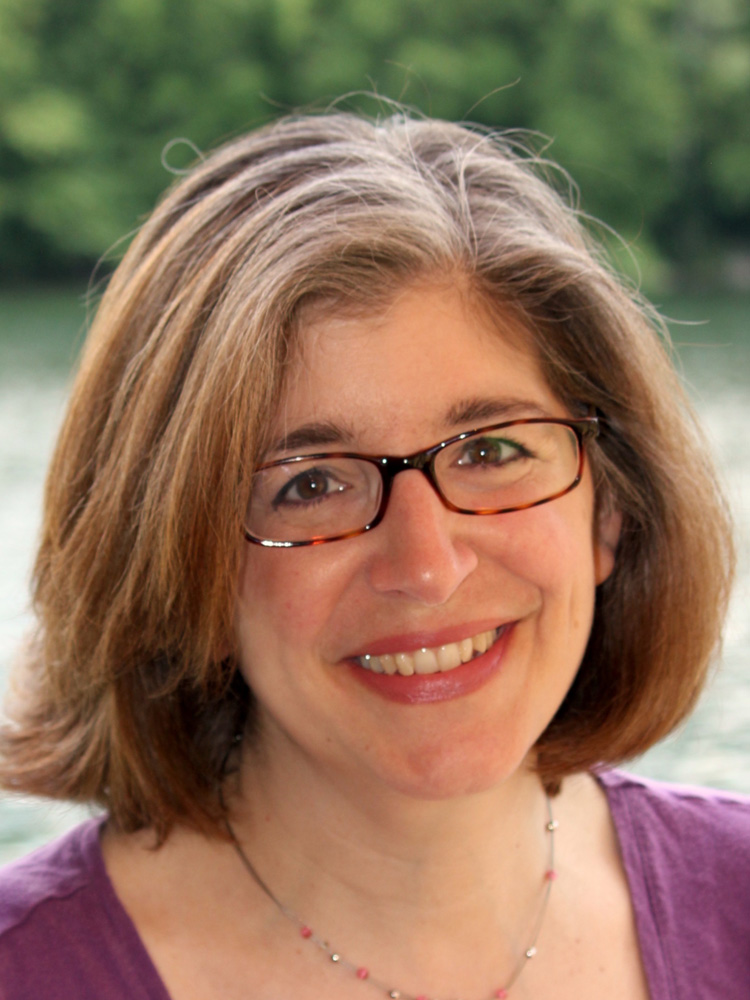
Christine Adler is the president of the Women’s Fiction Writers Association (WFWA) and former editor of Inkwell. Her articles, essays, poems, and book reviews have appeared in various print and online publications throughout the Northeastern United States and Canada. She has an MFA in Writing from Manhattanville College, and is represented by Ann Leslie Tuttle of Dystel, Goderich & Bourret LLC. Adler leads the Teen Creative Writers Workshop at Somers Library in Somers, New York, and is currently at work on her second novel.

The Teen Creative Writers Workshop at Somers Library was created for teens who love to write, those middle and high schoolers who’d tell you writing is their thing. We cover all genres—essays, fiction, fan fiction, poetry, you name it. We wanted to create a safe setting for writers where they can share their work and receive constructive feedback, while learning how to give helpful critiques to each other. We also discuss various genres and how to strengthen important elements in each one.

When a new writer attends the workshop for the first time, we talk briefly about how to give and receive feedback. This way, everyone knows we’re using the same guidelines and have the same goal in mind: to help each other improve. I give the group a prompt and have them write for a few minutes. Each student is then invited to share and read what they’ve just written, or read something they’ve brought with them. I also read what I write from the prompts and solicit feedback from the group.

Every writer knows it can be hard to separate your work from yourself, especially when opening up to criticism. If someone is still shy about reading, I ask them to trade work with another writer in the group and read each other’s work aloud. This gives the students an opportunity to experience reading to a group, and also helps illustrate that the critiques are focused on the writing, and not on the writer.

By far, my most rewarding experience as a teacher has been witnessing the enthusiasm expressed by the students. When we get into a discussion about books, or writing, or characters’ motivations they become so animated. It’s exciting to have them ask if we can meet weekly instead of biweekly, or if we can continue the workshop over the summer. Their interest shows me that they truly value the time spent, and enjoy learning the craft. I know they won’t all go on to become writers, but there was nothing like this for me in high school. If there had been, I might have had the confidence to start my writing career earlier in life. I love that I can be a resource to help these students start sooner if they wish.

Leading a group of young writers has greatly influenced my own art too. One thing I emphasize to the members is that we’re never done learning, in writing or in life. We can always improve. I’m strong at dialogue, but weaker at character development and world-building. Many of the teens write fantasy, and as a result are world-building wizards. I’ve learned a lot about world-building from them, and I often leave the workshop, go home, and dive into my work-in-progress. We share tips and tools with each other, encourage one another to keep writing, and together, we see our work getting better. For a writer, there’s nothing more inspiring.

Support for the Readings & Workshops Program in New York is provided, in part, by public funds from the New York State Council on the Arts, with additional support from the Friends of Poets & Writers.

Photos: (top) Christine Adler (Credit: Alex Lindquist). (bottom) Teen Creative Writers Workshop participants (Credit: Tara Ferretti).

Back to Basics

1.16.18

Plaid flannel shirt, leather pants, polo shirt, hoodie, Levi’s 501 jeans, fanny pack, Dr. Martens, red lipstick. The exhibit “Items: Is Fashion Modern?” organized by Paola Antonelli and Michelle Millar Fisher, curators at the Museum of Modern Art in New York City, explores 111 iconic clothing pieces that have transformed fashion in the twentieth and twenty-first centuries, interweaving research and responses from designers and engineers on politics, cultural identity, labor, technology, aesthetics, and economics. Many contemporary poems that revolve around clothing also focus on basic and iconic items, such as Ruth Fainlight’s “Handbag,” Lynda Hull’s “Red Velvet Jacket,” Michael Longley’s “The Pattern,” “Harryette Mullen’s “Black Nikes,” and Sean O’Brien’s “Cousin Coat,” and investigate the intimacies of creation, nostalgia, transformation, and appearance. Write a poem that excavates the memories associated with one of your favorite everyday clothing items, then move on to provide a personal point of view of the item’s wider historical and functional roles. 

Breaking Down Our Barriers: A Q&A With Jim Daniels, Founder of the Martin Luther King, Jr. Day Writing Awards

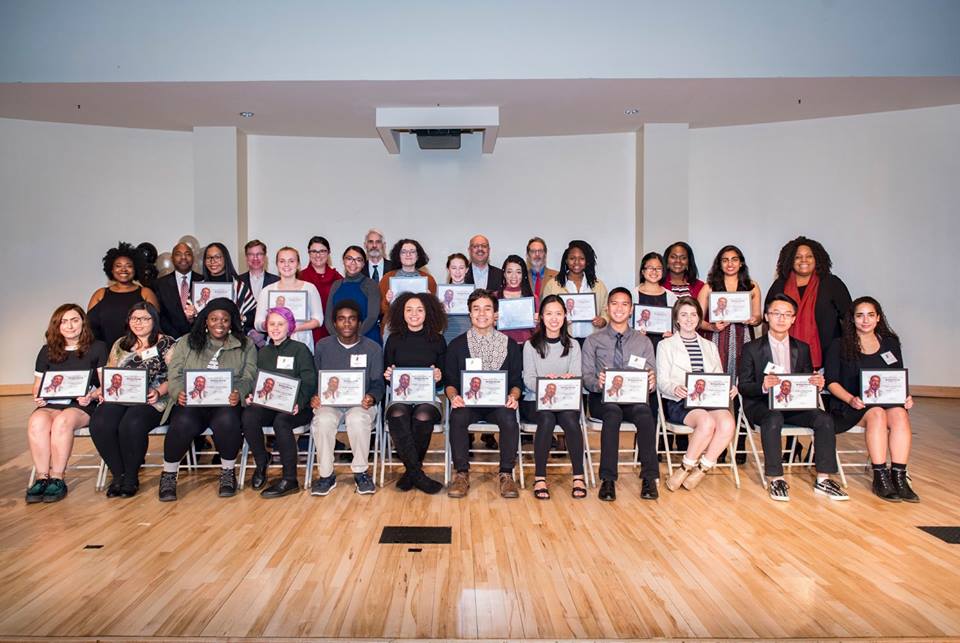
Since 1999 the annual Martin Luther King, Jr. Day Writing Awards program has provided an outlet for young people to express their complex experiences with race and diversity through writing. Based at Carnegie Mellon University (CMU) in Pittsburgh, the awards are open annually to high school and college students in the Pittsburgh area or any remote CMU location. Jim Daniels, founder and director of the awards, is of the belief that “the process of writing itself can help young people explore and break down issues of differences in their lives.” In advance of Martin Luther King, Jr. Day—and the nineteenth annual MLK Day Writing Awards ceremony—on January 15, Poets & Writers spoke with Daniels about the establishment of the program, the importance of providing a platform for young people to discuss issues of diversity, and the impact that the awards have had on young writers’ lives and careers.

How did the MLK Day Writing Awards begin? What goals did you hope to achieve by establishing this program?

In graduate school back in 1980, I took a course from James Baldwin, in which he challenged us to examine our own experience with race more honestly. As a white kid who grew up on the edge of Detroit, I wasn’t up to the challenge, but never forgot it. In 1995 I edited the anthology Letters to America: Contemporary American Poetry on Race (Wayne State University Press). Both that anthology and the MLK Day Writing Awards are attempts to respond to Baldwin’s challenge. With Letters to America, I wanted to bring a diverse group of poets together to talk about what so often divides us in this country. When Carnegie Mellon University sought to establish campus-wide events for Martin Luther King, Jr. Day, I decided to try and do something similar with high school and college students, and the University gave me, and continues to give me, its support. We ask for personal narratives on race—not “Martin Luther King was a great man” or “Racism is bad” essays. Not angry screeds either. One of the key beliefs of the awards is that through telling each other our complex, nuanced stories, and listening to each other’s stories, we can break down some of the barriers between us, break some of the silence. For young people finding their way into the world, this can be particularly difficult and challenging, so we hope to provide a safe space for their voices to be heard.

What is offered as part of the prize? How many winners are selected each year?

The awards are $200, $100, and $50, for first, second, and third place. We also give a number of honorable mentions and select the best entry from each school to be recognized at our awards ceremony. In addition to the cash prizes, students are invited to read their work at the on-campus ceremony on MLK Day, and the entries are published in a chapbook that’s available at the ceremony. We try and extend the reach of the awards beyond the day itself, and winners are often invited to participate in additional readings and discussions in and out of the Pittsburgh community throughout the year. We also visit schools to do workshops to promote writing on race and difference. The list of schools from which students submit continues to grow. Currently we don’t have the resources to expand it to a national competition, but I encourage anyone who might want to start something similar in their community to contact me. Our website also includes videos and chapbooks of previous award winners.

In addition to publishing the annual chapbook of winners’ work, you recently edited the anthology, Challenges to the Dream:  The Best of the Martin Luther King, Jr. Day Writing Awards (Carnegie Mellon Press, 2017). What was the impetus to create the anthology and how do you feel it will help accomplish the goals of the program and its future?

I work with a very talented, committed team here at Carnegie Mellon on the awards, and we felt that the fine writing being done over the years should be preserved and made available to a larger audience. We’re hoping the anthology will help accomplish that. These voices deserve to be heard again and again. In addition, these issues are often hard to talk about in the classroom, and we hope the anthology might make that a little easier to do. We also want to reach a national audience with this work and perhaps inspire other communities to get involved. In fact, in conjunction with the publication of the anthology, we produced an online study guide so that teachers anywhere can use the work in the anthology for discussion and writing prompts.

Have you witnessed any unforeseen successes of the awards over the past two decades?

I think that seeing their stories recognized and celebrated has made a difference for some of the winners going forward. When we published the anthology last fall, we hosted a reading to celebrate it at City of Asylum in Pittsburgh, and a dozen contributors to the anthology read to an overflow crowd—one former winner brought her three children—and I felt a great sense of community in the room. Many of the contributors from previous years have made social justice issues part of their adult lives and careers. 

When is the next round of submissions and how can students enter their work? 

We open submissions each Fall, and the deadline is usually right before Thanksgiving. Students can enter their work online via Submittable, where they will find complete submission guidelines.


(Photo: 2017 MLK Writing Award–winners and honorees)

Window of Opportunity

1.11.18

“Yet where else besides windows can we perceive the thin boundaries between our inner and outer realities?” Justin Hocking’s essay “Diving Through Windows” in the January/February issue of Poets & Writers Magazine is a series of vignettes, quotations, anecdotes, and observations that all revolve literally or metaphorically around windows. Hocking discusses windows in the context of creative perspective, architecture, literature, politics, linguistics, and nature. Choose a symbolic object, perhaps an architectural element, and write an essay comprised of short vignettes that explore a variety of topics currently on your mind.

Lambda Literary Announces New Lesbian Nonfiction Prize

Lambda Literary has announced the new Córdova Prize for Lesbian Nonfiction, a $2,500 award that will be given annually to a lesbian-identified nonfiction writer whose ongoing work “captures the depth and complexity of lesbian life, culture, and/or history.” Submissions are now open.

Lesbian-identified writers who have published at least one book of nonfiction are eligible. Submit up to 20 pages from a previously published book and up to 10 pages from an ongoing work by February 23. There is no entry fee.

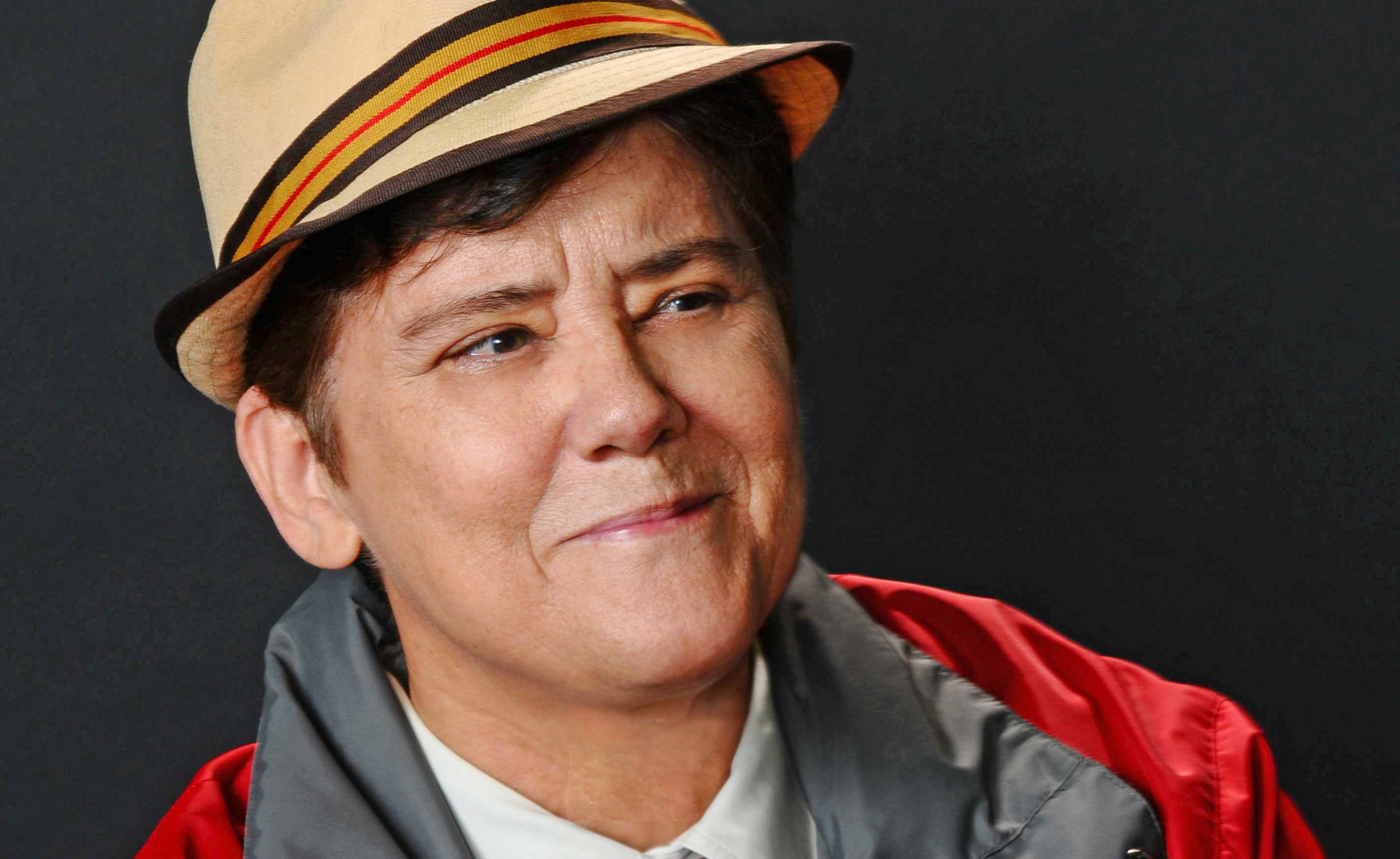
The award is named for author, activist, and publisher Jeanne Córdova, a prominent figure of the West Coast LGBTQ movement in the 1970s. In addition to contributing to numerous anthologies and news columns, Córdova published a memoir, When We Were Outlaws: A Memoir of Love & Revolution, in 2011. She died in 2016 at age sixty-seven.

In addition to the Córdova Prize, submissions are currently open for Lambda’s 2018 Judith A. Markowitz Award for Emerging LGBTQ Writers. Two awards of $1,000 each are given annually to LGBTQ-identified writers who have published at least one but no more than two books of poetry, fiction, or nonfiction. The 2017 winners were H. Melt and Victor Yates. Submit up to 10 pages of poetry or up to 20 pages of prose by February 23.

The Lambda Literary Foundation champions the work of LGBTQ writers through its cash awards, writers in schools program, writers retreat, literary festival, and more. Visit the website for more information and complete submission guidelines.

(Photo: Jeanne Córdova Credit: Los Angeles Times)

Going Up or Down?

1.10.18

Your Happy Place

“The happiest places incubate happiness for their people,” writes Dan Buettner in National Geographic about findings from the annual World Happiness Report that revealed that three-quarters of human happiness is driven by six factors. These include: strong economic growth, healthy life expectancy, quality social relationships, generosity, trust, and freedom to live the life that’s right for you. Write a poem that examines how your personal happiness is connected to your location and environment. How does living in your home, neighborhood, city, state, or country affect your general feelings of contentment or joy? Think of specific memories of happiness, and explore how a particular location might have contributed in direct or indirect ways to your feelings.

The Journey

Brian Evans-Jones immigrated to southern Maine from Hampshire, U.K. in 2014. He received his BA in English Literature and Creative Writing from the University of Warwick, U.K., and was poet laureate of Hampshire, U.K. from 2013 to 2014. He received his MFA from the University of New Hampshire in 2016. His poems have appeared or are forthcoming in Outlook Springs, Stoneboat Literary Journal, and the Cafe Review. Evans-Jones is a juried teaching artist in both Maine and New Hampshire, and teaches poetry and creative writing in schools, colleges, and community venues.

You are a poet—or you think you are: perhaps you have never been sure. After all, you don’t have the four or five books to your name that you thought you’d have by now. A couple of competition wins, an award or two, yes, but no book. It seems so complicated, so difficult, this business of getting published. You live in a small town, in a rural state, far away from the publishing centers of America; the editors and poets who throng there seem so far above you.
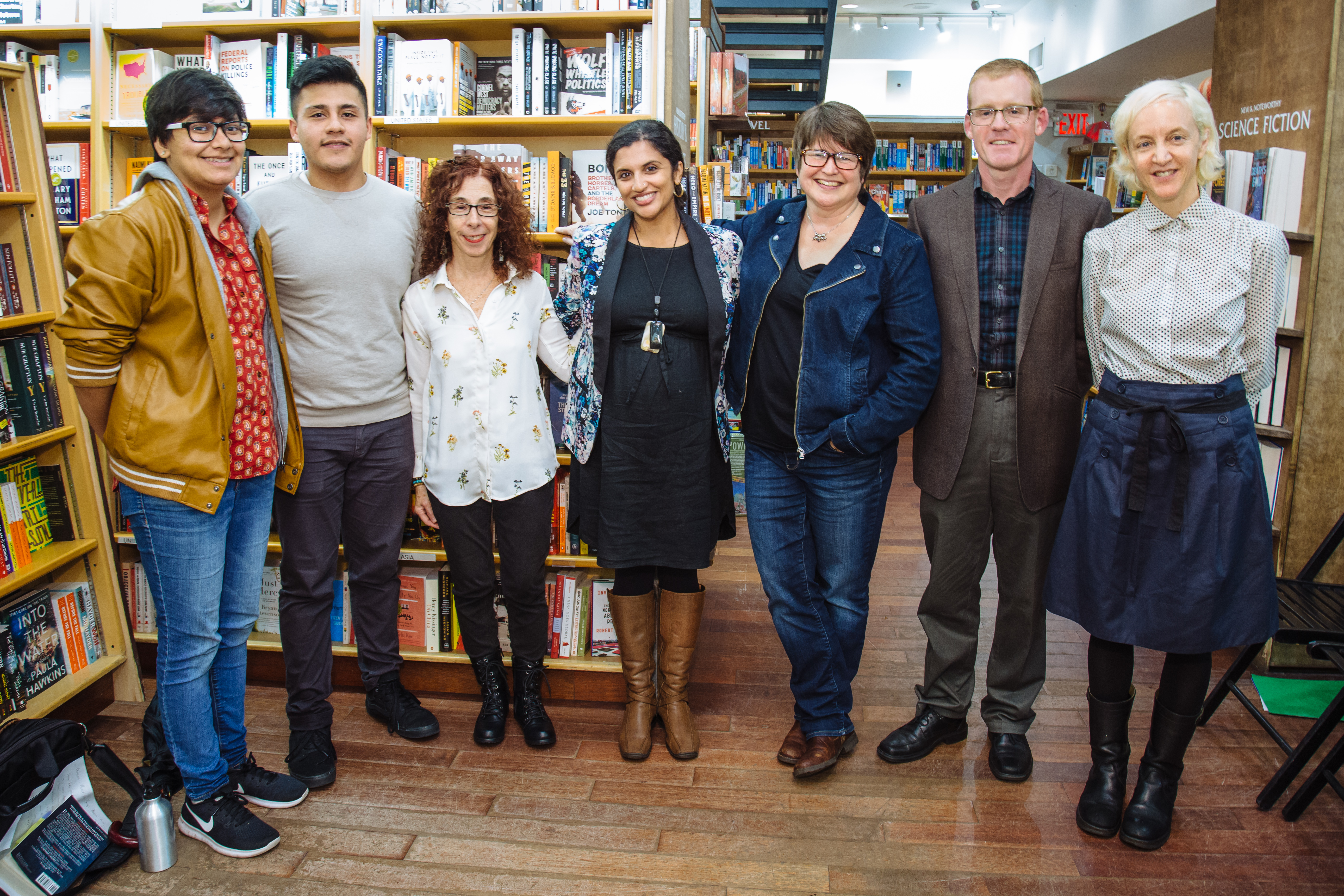
But you try. You enter awards, send to magazines. The magazines all say no. In April, you get a missed call, a New York number—probably a scam. There is a voicemail, from “Bonnie.” It’s not a scam. You have won Poets & Writers’ Maureen Egen Writers Exchange Award—you are going to New York City.

Six months later, you arrive. The buildings are enormous, the streets teeming. You meet Bonnie Rose Marcus, director of Readings & Workshops (East) and the Writers Exchange, tiny and beaming, and go out for dinner with Joan Dempsey, the fiction winner, who fast becomes a good friend. Your nerves are tingling; you almost dread the thought of meeting your first guests tomorrow, these poets who have made it, who have books and books; these editors of famous magazines. What will you ask them, that won’t sound ridiculous? Will they look down on you, will they expect you to know all the poets and trends that you don’t?

Morning comes. Bonnie guides you; the streets seem less alien. The first meeting is with Patricia Carlin, poet and editor. You meet at a coffee shop, get a quiet table in the corner. You’re so nervous, you can’t remember what you said. It doesn’t matter. She’s gracious, interested, friendly. You talk about assembling collections, the benefits and downsides of small presses and regional presses, places to network. She asks if one of your winning poems is available for her magazine, and gives you her card.

Now you feel better. This is going to be okay—maybe even fun. In the next meetings, with agents and other fiction folk, you relax. From the sidelines, you see that all these people—big, important New York City people—are just people: interested in writers, passionate about literature, interested in you.

At dinner, editors from A Public Space, Four Way Books, and Hanging Loose Press discuss magazine life, small press life, poetry. You see that editors simply want their work to be thoughtfully read, the same as you do. Submissions, you realize, can be not a battle, but a communication—maybe even an offering. Someone will like your work—if you take the time to learn what they like first.

The days zoom by. Breakfast with a writer, coffee with an agent, lunch with another writer, tea with a publisher. You grow comfortable with the routine, with the city, with the important New York folk. You meet the president of Farrar, Straus and Giroux and feel entirely at your ease. You love hearing gossip about the Iowa Writers’ Workshop. Kate Angus tells you eight small presses she thinks would appreciate your aesthetic. The tour of the New Yorker offices is unforgettable.

Suddenly, it’s the end. You’re going home, to your small town, your green and quiet state. Nothing has changed there—but when you sit in your placid town library, New York feels close. You start work on your manuscript. You are a poet. You are ready.

The Maureen Egen Writers Exchange Award is generously supported by Maureen Egen, a member of the Poets & Writers Board of Directors.

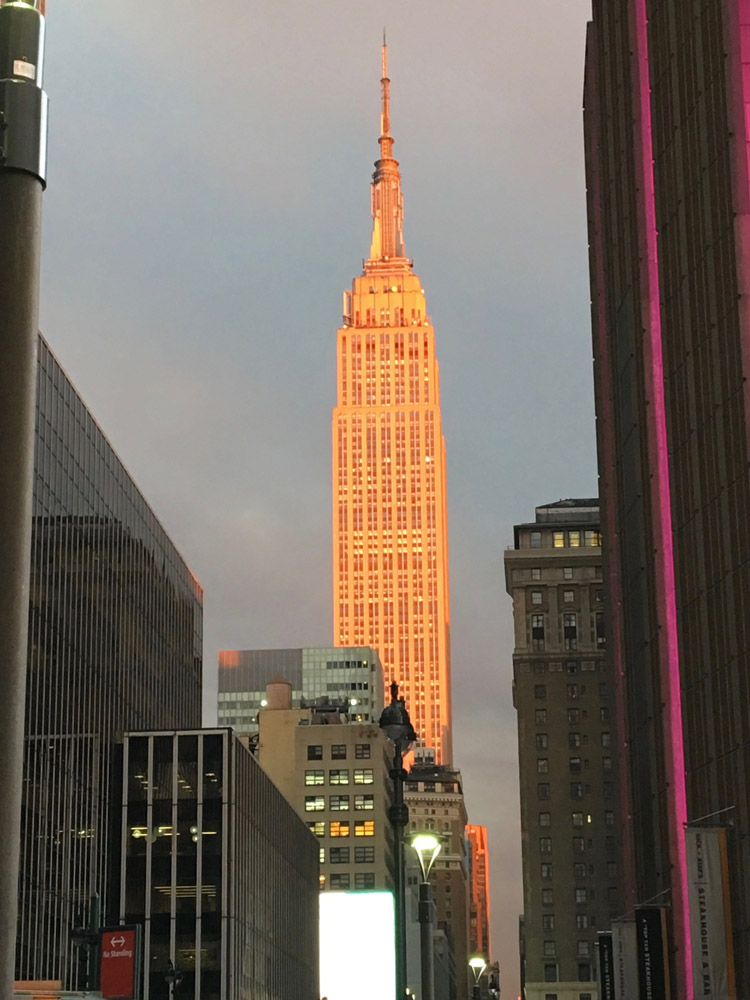
Photos: (top) New York City skyline (Credit: Brian Evans-Jones). (bottom, left to right) R&W fellow Sreshtha Sen, R&W program assistant Ricardo Hernandez, R&W (east) director Bonnie Rose Marcus, 2017 WEX fiction judge Tania James, Joan Dempsey, Brian Evans-Jones, and 2017 WEX poetry judge Cynthia Cruz (Credit: Margarita Corporan).

Pages

Subscribe to RSS - blogs