Upcoming Poetry Contest Deadlines

Is it your New Year’s resolution to submit more of your poetry to contests and journals? Here are several poetry contests, all of which offer a cash prize of $500 to $2,000, with upcoming deadlines.

92Y Unterberg Poetry Center Discover Poetry Prizes: Four prizes of $500 each and publication in the Paris Review Daily are given annually for a group of poems. Winners also receive lodging and travel expenses to give a reading at the 92nd Street Y in New York City in May. Poets who have not yet published a full-length poetry collection are eligible. Timothy Donnelly and Mai Der Vang will serve as preliminary judges; Daniel Borzutzky, Randall Mann, and Patricia Smith will serve as final judges. Entry fee: $15. Deadline: January 11.

Colorado Review Colorado Prize for Poetry: A prize of $2,000 and publication by the Center for Literary Publishing is given annually for a poetry collection. Kazim Ali will judge. Entry fee: $25.Deadline: January 14.

BkMk Press Ciardi Prize: A prize of $1,000 and publication by BkMk Press is given annually for a poetry collection. Entry fee: $30. Deadline: January 15. 

WOMR/WFMR Community Radio Joe Gouveia Outermost Poetry Contest: A prize of $1,000 is given annually for a poem. Marge Piercy will judge. Entry fee: $15. Deadline: January 15.

Third Coast Poetry Contest: A prize of $1,000 each and publication in Third Coast is given annually for a poem. Leila Chatti will judge. Entry fee: $18. Deadline: January 15.

Asheville Poetry Review William Matthews Poetry Prize: A prize of $1,000 and publication in Asheville Poetry Review is given annually for a poem. Dorianne Laux will judge. Entry fee: $20. Deadline: January 15.

Wells College Press Chapbook Competition: A prize of $1,000, publication by Wells College Press, and 10 author copies is given annually for a poetry chapbook. The winner will also receive room and board to attend a launch party at Wells College in Fall 2019. Dan Rosenberg will judge. Entry fee: $20. Deadline: January 15.

Visit the contest websites for complete submission details, including eligibility guidelines and length requirements. For a look at more writing contests with upcoming deadlines, visit our Grants & Awards database and submission calendar


New Year’s Reflections

“Philosophically, the New Year is a time for beginnings, a time for reflection and change. I can’t think of a better place than this vast and ruggedly beautiful continent to put things in perspective,” says traveler Chuck Ward in a recent New York Times article about celebrating New Year’s Eve in Antarctica. Write a personal essay about a particularly poignant or exciting New Year’s celebration you’ve had in the past. Describe the setting and how it influenced your mood. What made the night memorable and did you intend for your festivities to help start the year off in a certain way? How did the rest of the year measure up to your New Year’s expectations? 

Frozen in Time

“There is no market, school, doctor, or shop, and from late-autumn until mid-spring the village is inaccessible by car and uninhabited,” Alex Crevar writes in National Geographic about Lukomir, Bosnia and Herzegovina’s highest village and home to just seventeen families. Write a story set in such a place (real or imagined) that is similarly caught between modernity and the social and technological isolation of its landscape. What does living in this world do to alter the interactions and daily concerns of its inhabitants? Is there a generational shift or a longing for change?

Let’s Get Mystical

“Whenever I find myself at a literary crossroads, I reach for my Tarot deck. In my regular life, I’m a staunch scientific materialist…but in my creative life, I’m an unqualified mystic,” writes Will Dowd in a 2017 installment of Writers Recommend. In fact, there are many writers who have found inspiration in the Tarot, including W. B. Yeats, Italo Calvino, and Charles Williams. Try your hand at choosing a card to guide you for this week’s poem. Conduct an online search for a card and allow the image to be your muse. Their names, such as Temperance, Wheel of Fortune, the Magician, and Death,­ may be enough to conjure up ideas.

Recipe for Reminiscence

12.27.18

In the essay “The Poet’s Table,” published by the Poetry Foundation, food writer Mayukh Sen pays tribute to the late Maya Angelou for her lesser-known literary feats: her cookbooks. Angelou published two cookbooks when she was in her seventies and eighties, which offer readers more than just lists of measured ingredients and directions. The pages are filled with anecdotes and deeply personal stories touching upon cultural narratives, racial divisions, juvenile traumas, and moments of joy. “I feel cooking is a natural extension to my autobiography,” Angelou told the Guardian in 2011 regarding her cookbooks. This week, think of a recipe that contains some of your personal history within it—childhood memory, exploration of heritage, sense of place, or simply a snapshot of life. Write about the dish in detailed prose, allowing instruction to blend with your reminiscence.

Holiday Newsletter

12.26.18

In “How to Write a Family Newsletter Your Friends Will Actually Read,” New York Times writer Anna Goldfarb offers suggestions for the dos and don’ts of penning a family holiday newsletter. Perhaps you receive these missives annually from a friend or relative with a curated list of their accomplishments that year, or you participate voluntarily or involuntarily in one. For this week’s exercise, write a fictionalized holiday dispatch—maybe from someone with mischievous and beloved pets, parents that detail each of their children’s achievements, or that pays tribute to a departed relative. For tone, take in consideration Goldfarb’s advice: “Figure out whether you want this piece of writing to be preserved for future generations—a keepsake—or if you want this to be a throwaway piece of mail—scan, chuckle and toss.”

Lunacy

12.25.18

There is a long tradition of writers waxing poetic about the moon, dating back as far as ancient Vedic texts. Recently, Louisiana Channel asked six authors to discuss the mysterious figure in the sky and why it has such a profound effect on their writing lives. There’s even a word in German, Yoko Tawada says, which literally means “addicted to the moon”: mondsüchtig (translated as lunatic). For this week’s poem, continue the tradition of lunar poetry with your own lines about the moon. If you need more inspiration, read “To the Moon” by Percy Bysshe Shelley or “The Moon and the Yew Tree” by Sylvia Plath.

Twenty Year-End Contest Deadlines for Poets & Writers

Planning to write over the holidays? Finish your writing year up strong and head into 2019 resolved to send more work out into the world with the following contests in poetry, fiction, and nonfiction. The twenty contests below have deadlines at the end of December or in the first days of January.

Bauhan Publishing Monadnock Essay Collection Prize: A prize of $1,000, publication by Bauhan Publishing, and 50 author copies is given annually for an essay collection. Anne Barngrover will judge. Entry fee: $25. Deadline: December 31.

Bayou Magazine Poetry and Fiction Prizes: Two prizes of $1,000 each and a subscription to Bayou Magazine are given annually for a poem and a short story. Entry fee: $20. Deadline: January 1.

Boulevard Short Fiction Contest: A prize of $1,500 and publication in Boulevard is given annually for a short story by a writer who has not published a nationally distributed book. Entry fee: $16. Deadline: December 31.

Bright Hill Press Poetry Book Competition: A prize of $1,000, publication by Bright Hill Press, and 30 author copies is given annually for a poetry collection. Entry fee: $27. Deadline: December 31.

Crosswinds Poetry Contest: A prize of $1,000 and publication in Crosswinds is given annually for a poem. Tina Cane will judge. Entry fee: $20. Deadline: December 31.

Florida Review Jeanne Leiby Memorial Chapbook Award: A prize of $1,000 and publication by Florida Review is given annually for a chapbook of short fiction, short nonfiction, or graphic narrative. Entry fee: 25. Deadline: December 31.

Gemini Magazine Poetry Contest: A prize of $1,000 and publication in Gemini Magazine is given annually for a poem. The editors will judge. Entry fee: $7. Deadline: January 2.

Glimmer Train Family Matters Contest: A prize of $2,500, publication in Glimmer Train Stories, and 20 copies of the prize issue is given annually for a short story about families of any configuration. Entry fee: $18 Deadline: January 2.

Lascaux Review Prize in Short Fiction: A prize of $1,000 and publication in Lascaux Review is given annually for a short story. Entry fee: $10. Deadline: December 31.

Mississippi Review Prize: Three prizes of $1,000 each and publication in Mississippi Review are given annually for a poem, a short story, and an essay. Entry fee: $15. Deadline: January 1.

The Moth Poetry Prize: A prize of €10,000 (approximately $12,000) and publication in the Moth is given annually for a poem. Three runner-up prizes of €1,000 (approximately $1,200) each are also given. The winners will also be invited to read at an awards ceremony at the Poetry Ireland festival in Dublin in Spring 2019. Jacob Polley will judge. Entry fee: $13. Deadline: December 31.

New Rivers Press Many Voices Project Competition: Two prizes of $1,000 each and publication by New Rivers Press are given annually for a poetry collection and a book of fiction or creative nonfiction by an emerging writer. Entry fee: $25. Deadline: December 31.

Nowhere Magazine Travel Writing Contest: A prize of $1,000 and publication in Nowhere Magazine is given twice yearly for a poem, a short story, or an essay that “possesses a powerful sense of place.” Porter Fox will judge. Entry fee: $20. Deadline: December 31.

Press 53 Award for Short Fiction: A prize of $1,000, publication by Press 53, and 50 author copies is given annually for a story collection. Kevin Morgan Watson will judge. Entry fee: $30. Deadline: December 31.

Quercus Review Press Poetry Book Award: A prize of $1,000, publication by Quercus Review Press, and 15 author copies is given annually for a poetry collection. Sam Pierstorff will judge. Entry fee: $25. Deadline: December 28.

River Styx Micro-Fiction Contest: A prize of $1,500 and publication in River Styx is given annually for a short short story. Entry fee: $10. Deadline: December 31.

Tampa Review Danahy Fiction Prize: A prize of $1,000 and publication in Tampa Review is given annually for a short story. The editors will judge. Entry fee: $20. Deadline: December 31.

Tampa Review Prize for Poetry: A prize of $2,000 and publication by University of Tampa Press is given annually for a poetry collection. Entry fee: $28. Deadline: December 31.

Tupelo Press Dorset Prize: A prize of $3,000 and publication by Tupelo Press is given annually for a poetry collection. The winner also receives a weeklong residency at the Massachusetts Museum of Contemporary Art. Entry fee: $30. Deadline: December 31.

Whitefish Review Montana Award for Fiction: A prize of $1,000 and publication in Whitefish Review is given annually for a short story. Rick Bass will judge. Entry fee: $20. Deadline: January 1.

Visit the contest websites for complete submission details, including eligibility guidelines and length requirements. For a look at more writing contests with upcoming deadlines, visit our Grants & Awards database and submission calendar. Happy holidays, and happy submitting! 

Writing in Community

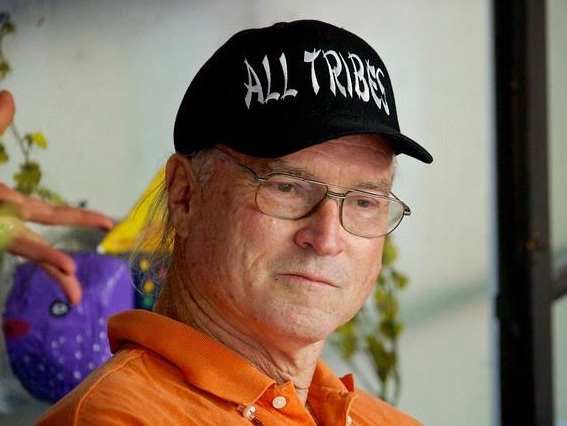
Jim Hornsby Moreno is a Vietnam veteran and an adopted member of the Smuwich Chumash tribe. He is the author of Dancing in Dissent: Poetry for Activism (Dolphin Calling Press, 2007), and two CDs of poetry and music: reversing the erased: exhuming the expunged (Dolphin Calling Press, 2016) and A Question From Love (Dolphin Calling Press, 2017). His poems have appeared in Tidepools, Magee Park Poets Anthology, the San Diego Poetry Annual, and others. Hornsby Moreno is a teaching artist with San Diego Writers, Ink, and on the advisory board of the Poetic Medicine Institute in Palo Alto, California.

On November 18 I facilitated a workshop at San Diego Writers, Ink called Gems of 10 Imagists: Masterpiece Poems of Imagism. The course description began with a quote from Wallace Stevens: In poetry, you must love the words, the ideas and the images and rhythms with all your capacity to love anything at all. This quote captures the essence of how I teach: Write from your heart. Don’t let your editor write your poem. Let your poet write the poem. Then, as many have said, turn it over to your (internal) editor so the craft can begin.

My workshops are not critique classes. I go out of my way in my course descriptions to make that point. I also point out that if you are looking for an audience for your poems, my workshops are not for you. I teach poetry as discovery, as Joy Harjo often describes her writing process. Or as Julia Alvarez wrote: I write to find out what I am thinking. I write to find out who I am. I write to understand things.

After one of my classes in San Diego’s Juvenile Hall I sent Joy one of my student’s poems. I had read “She Had Some Horses” in class, Joy’s poem from her book of the same name. The young woman had written a poem from her heart, obviously influenced by the Muscogee poet. Joy sent me a box of books and CDs with a short note thanking me for the poem. She also encouraged me to continue teaching. A nice prompt from a master prompter.

My workshops involve a lot of research. In the five years I lived on the Pala Reservation, I saw the differences and the similarities of tribes that were just a few miles down the highway from each other in San Diego’s North County. From that experience, my workshops have two parts. The first part exposed students to the poetry of e .e. cummings, Amy Lawrence Lowell, Ezra Pound, Wallace Stevens, and the founder of the Imagist movement T. E. Hulme, among others.

The second part of the workshop focused on poets from other genres, cultures, and generations that resonated with the poems of the Imagists: Sandra Cisneros, Joy Harjo, Octavio Paz, Lawrence Raab, Sonia Sanchez, and William E. Stafford. A three-hour workshop takes two to three weeks of research and is a labor of love finding the bridges that unite poets and people.

Writing in community is different than writing in solitude. When you find a safe space with an instructor that invites you to grow as a writer, your writing will take off because of the consciousness in the room and your innate talent as a storyteller, waiting for you to take on the blank page. Write from your heart and listen to your muse.

Support for Readings & Workshops in California is provided by the California Arts Council, a state agency, and the National Endowment for the Arts, a federal agency. Additional support comes from the Friends of Poets & Writers.

Photo: Jim Hornsby Moreno (Credit: Jack Foster Mancilla)

Mental Twilight

12.20.18

What riches lie in that special space between the conscious and unconscious mind, when you’re just about to fall asleep or right as you’re waking up? In “The Hour Between Dog and Wolf: Harnessing the Power of Hypnagogia” in the January/February issue of Poets & Writers Magazine, Melissa Burkley writes about this mental twilight state, and the ways that these daily moments before and after sleep can be used for storytelling inspiration. Read about the hypnagogic techniques Burkley outlines in the piece and try one of her tips for harnessing these moments of creative potential. For example, use a twenty-minute nap or ease yourself out of your waking routine slowly to let your semi-conscious mind work over the ideas. Record notes on your experiences as soon as you get up, and then see how you might incorporate them into your writing.

Pages

Subscribe to RSS - blogs