Institute of American Indian Arts MFA in Creative Writing
MFA Program
Poetry, Fiction, Creative Nonfiction
Santa Fe, NM

Application Deadline:
Sun, 02/15/2026
Application Fee:
$25
Affiliated Publications/Publishers:
Jump to navigation Skip to content
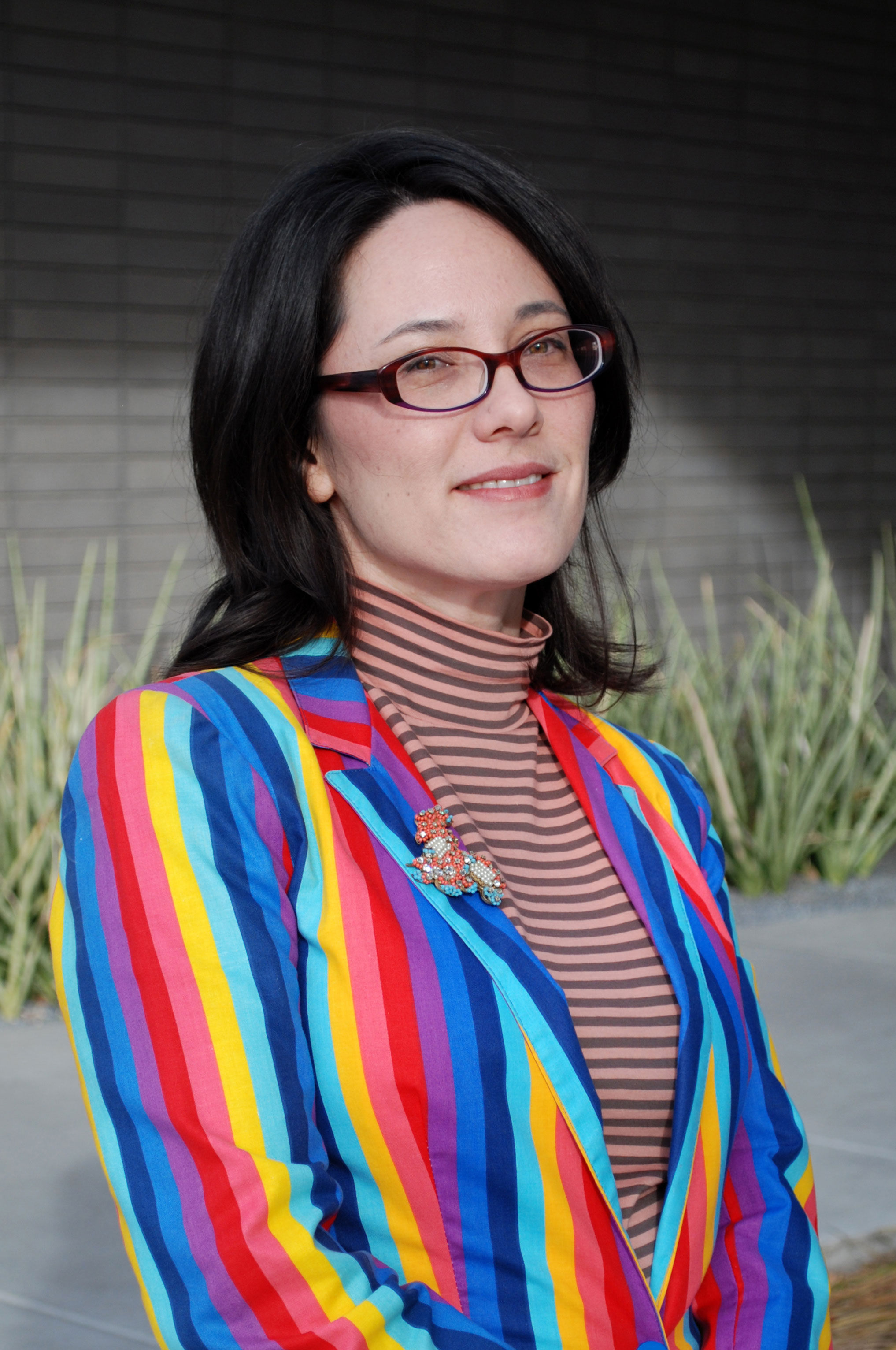
Cybele Knowles works as a program coordinator at the University of Arizona Poetry Center, where she coordinates the PW-funded Center’s Reading and Lecture Series, Classes & Workshops program, and Closer Look Book Club. She holds an MFA in fiction from the University of Arizona and an MA in English from U.C. Berkeley. Her poetry and prose have appeared in the Destroyer, Spiral Orb, Diagram, Pindeldyboz, the Asian Pacific American Journal, Faucheuse, and the Prose Poem.
 I have served as the coordinator of the University of Arizona Poetry Center Reading and Lecture Series for four years. The longer I work with this literary program, the more I admire it and understand its power. This year, the series celebrates its fiftieth anniversary. It has been sustained over the decades by an extensive community of individuals and organizations, including Poets & Writers through the Readings/Workshops program. It is capacious and generous, representing many poetic voices, and (for the most part) free and open to the public. One of the things I particularly admire about the series is that our poetry readings regularly attract audiences in excess of 150 people. In today's post, I want to share a sketch of how the Poetry Center creates an audience for poetry, using the example of a reading by Mary Jo Bang with Joni Wallace on October 6, 2011, which was supported by Poets & Writers.
We (the Poetry Center staff) conceive of our task as creating an audience not just for poetry events, but for Poetry with a capital "P." Therefore we treat each reading not just as an event, but as an occasion to educate local communities about the poetry being presented. To get people reading the poems before the event, and to help keep them engaged afterward, we schedule ancillary programs in conjunction with each reading.
In the case of the reading by Mary Jo, the ancillary events included a visit to a University of Arizona literature class and a “shop talk” about Mary Jo’s work. Shop Talk is the Poetry Center’s poetry discussion group, which is free and open to the public. We also led our Poetry Center docents (a group of fifteen dedicated volunteers at the time; currently, there are many more) through an introduction to Mary Jo’s work. The reading itself, attended by 160 people, was recorded for the Poetry Center’s online audiovisual library, voca. Recordings are tagged with accurate metadata, which enhances their value as an archive. Now available on voca, Mary Jo’s reading can continue to be enjoyed and experienced by many others. And last but not least, about a year after the reading, we scheduled our Closer Look Book Club to read Mary Jo’s translation of The Inferno. Typically our book club reads prose, of course, but we took advantage of a seasonal theme of “Narratives in Translation” to “serve up” poetry to our prose readers. Both the Shop Talk and Book Club were led by poet Joni Wallace, who also read with Mary Jo, and whose first book, Blinking Ephemeral Valentine, was selected by Mary Jo for the 2009 Levis Prize.
We have additional ways of connecting visiting poets to local communities. Other ancillary events we schedule for a visiting poet might include a meeting with middle- and high-school students, or a workshop offered through our community Classes and Workshops program, or a meeting with Poetry Center donors or other specific community- or university-based group.
Through this multi-pronged approach, we introduced Mary Jo to many readers, and I know that through this process she garnered new fans, as did Poetry with a capital “P.” As you can imagine, pulling all this off took a lot of coordination! Even though the Reading Series is only one of the Poetry Center’s many areas of activity, all eight of the Poetry Center staff, and many volunteers, must pitch in to produce the series in the manner described above. In my post next week, you’ll meet some of the hard-working team at the Poetry Center.
Photo: Cybele Knowles. Credit: Allie Leach.
Support for Readings/Workshops events in Tucson is provided by an endowment established with generous contributions from the Poets & Writers Board of Directors and others. Additional support comes from the Friends of Poets & Writers.
The video poem may be ushering a whole new demographic to poetry. Here are six that have been made available to a wide audience on YouTube.
Claremont Graduate University has announced the finalists for the 2013 Kingsley Tufts Poetry Award. Given annually for a book published in the previous award year by a poet in midcareer, the Tufts Award is one of the most prestigious prizes given to an American poet. The winner receives $100,000.
The finalists are Marianne Boruch for The Book of Hours (Copper Canyon Press), Edward Haworth Hoeppner Blood Prism (Ohio State University Press), and Paisley Rekdal for Animal Eye (University of Pittsburgh Press).
Boruch is the author of eight previous collections, including most recently Grace, Fallen from (Wesleyan, 2008), and a memoir, The Glimpse Traveler (Break Away Books, 2011). She is a professor of creative writing and poetry at Purdue University. Hoeppner is the author of two previous collections, including Rain Through High Windows (New Issues, 2000). He directs the creative writing program at Oakland University in Rochester, Michigan. Rekdal is the author of three previous collections, including most recently The Invention of the Kaleidoscope (University of Pittsburgh Press, 2007). She is an associate professor of English at the University of Utah.
Claremont also announced the finalists for the 2013 Kate Tufts Discovery Award, a prize of $10,000 given annually for a debut poetry collection. The finalists are Rebecca Morgan Frank for Little Murders Everywhere (Salmon Poetry), Francine J. Harris for Allegiance (Wayne State University Press), and Heidy Steidlmayer for Fowling Piece (Triquarterly Books).
This year's panel of judges for both awards includes Linda Gregerson, David Barber, Kate Gale, Ted Genoways, and Carl Phillips. Winners will be announced in March and recognized during a ceremony at Claremont Graduate University in April.
Timothy Donnelly of Brooklyn, New York, received the 2012 Kingsley Tufts Poetry Award for The Cloud Corporation (Wave Books). Katherine Larson received the Kate Tufts Discovery Award for Radial Symmetry (Yale University Press).
Authors, editors, and publishers may submit books for consideration for both the Kate and Kingsley Tufts Awards. For the 2014 awards, books published between September 1, 2012, and August 31, 2013, are eligible, and must be postmarked by September 15. Visit the website for more information and complete submission guidelines.
The poet, who passed away on January 29, is seen here reading "It Was All Right, or What I Learned from Kenneth Koch" at an event sponsored by Rain Taxi Review of Books in Minneapolis in 2007.
Elena Martinez, advisory board member for Women's Housing and Economic Development Corporation (WHEDco) and folklorist at City Lore, blogs about the P&W-supported readings with the Bronx Music Heritage Center (BMHC). Martinez has an MA in Anthopolgy and an MA in Folklore from the University of Oregon. She co-produced the documentary, From Mambo to Hip Hop: A South Bronx Tale, which won the National Council of La Raza 2007 ALMA Award for Best TV Documentary. She is currently on the Advisory Boards for Casita Maria/Dancing in the Streets' South Bronx Cultural Trail, WHEDco's Bronx Music Heritage Center, and the Center for Puerto Rican Studies Archive at Hunter College.
Since 2010, I have been part of a group of musicians, artists, advocates, and educators driving the planning and development of the Bronx Music Heritage Center (BMHC). We were brought together by the Women’s Housing and Economic Development Corporation (WHEDco), a Bronx-based nonprofit that sees value in preserving and promoting Bronx music and cultivating Bronx artists as a way to spur neighborhood revival and bring cultural programs to the community. Currently, BMHC programming takes place in the BMHC Laboratory, a storefront in the Crotona East neighborhood of the South Bronx.
This fall, I worked with Grammy-nominated musician Bobby Sanabria to co-curate Bronx Rising! Music, Film & Spoken Word of the Borough, a new series at the BMHC Lab. Our goal was to showcase art about the Bronx, by Bronx artists, or significant to the Bronx community. Over the course of the series we maintained a loyal audience but struggled to get community members, who might peer in the windows, to come into the Lab and stay awhile.
Thanks to Poets & Writers, we were able to present two exceptional Bronx Rising! poetry nights in honor of Puerto Rican Heritage Month. On November 19, 2012, we hosted Americo Casiano, an original Nuyorican Poet. Americo was backed by his NuYoRican Poetry Jazz Ensemble, which accompanied his poetry seamlessly. During the program, two young men, enticed by the activity they viewed from the sidewalk entered the Lab. These newcomers actively listened, participated, and quickly became Lab “regulars.”
The December program paid homage to the declamadores of Puerto Rico, who use the language and themes of the area’s African heritage throughout the Spanish-speaking Caribbean. While the declamadores work within oral tradition, historically literary poets have also been proponents, among them Julia de Burgos (Puerto Rico) and Federico Garcia Lorca (Spain), whose poems were included in this program. The poetry was recited by organizer and declamador Sery Colón, Prisionera (Paula Santiago), and Tato Laviera, another original member of the Nuyorican Poetry Movement. This evening was once again punctuated by a few new faces that had been drawn to the prophetic personalities and socially-minded works filling the Lab. Robert, a first-time visitor, likened the event to “a revival." He said, “Once the crowd got going, the energy was infectious and I began to understand why these powerful messages needed to be delivered that way.”
These events, where new community members interacted with the BMHC, were symbolic for the series. Over the last few months, audience members who came into the Lab for hip hop stayed for Latin Jazz. People who came in for a photography exhibit returned for African drums.
On our last evening of Bronx Rising! Word(s) on the Street, five minutes before the program started, I realized we had a new problem on our hands. We ran out of chairs. For the first time, the BMHC Lab was packed to the brim with nearly 100 audience members. With this momentum, we are looking forward to our next season. We hope to see you there.
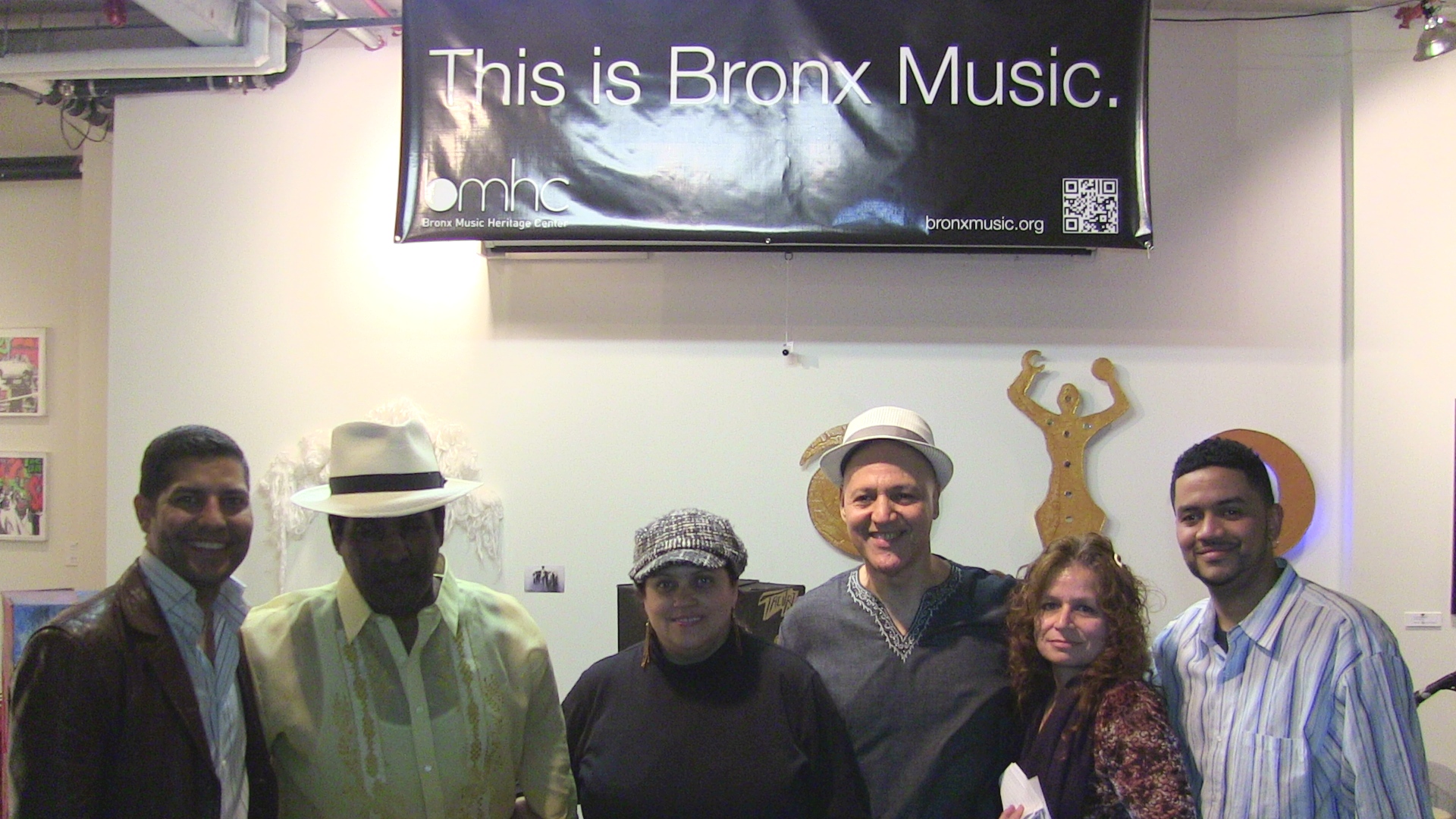
Photo: (left to right) Chris Nieves, Tato Laviera, Prisionera, Sery Colón, Elena Martinez, Jorge Vazquez.
Photo Credit: Thomas Haskin.
Support for Readings/Workshops in New York City is provided, in part, by funds from the New York State Council on the Arts, and the New York City Department of Cultural Affairs, with additional support from the Louis & Anne Abrons Foundation, the Axe-Houghton Foundation, the A.K. Starr Charitable Trust and the Friends of Poets & Writers.
The youngest poet ever selected to write and read the inaugural poem discusses his piece and the experience of delivering it at the inaugural ceremony last week.
Today is the fiftieth anniversary of the death of American poet Robert Frost. To honor this day, read Frost's poem "Stopping by Woods on a Snowy Evening" on the Academy of American Poets' website. Analyze the poem's structure, and write a poem with the same rhyme scheme and number of lines.
The Loft Anthology: New England Poetry and Art is accepting submissions for its annual Loft Prize for Poetry until February 1. The award, which includes $1,000 and publication in the Loft Anthology, is given for poems about visual art, written by poets who reside in or are natives of New England.
Poets may submit up to two poems by e-mail with a $15 entry fee. Poems inspired by a piece of artwork from a New England museum are eligible. A list of museums is available on the Loft Anthology website; artwork can also be found online at the Athenaeum. Winners and finalists will be invited to read at an awards reception at the Providence Public Library in Rhode Island on June 6.
Poet Denise Duhamel, whose latest collection, Blowout, will be released by the University of Pittsburgh Press in February, will judge.
The Loft Anthology is published by the Cranston, Rhode Island-based Poetry Loft, a nonprofit literary arts organization that provides free poetry workshops in Rhode Island. The anthology publishes original work by both established and emerging poets in an effort, as stated on the website, to paint “an intimate portrait of the rich state of poetry in our region, informed by the distinct voices and souls of New Englanders. We humbly seek to inspire and disseminate the best poetry of New England.”
Copies of the 2012 anthology can be ordered through the Loft Anthology website, and are available for purchase at Brown Bookstore, Books on the Square, Symposium Books, and Cellar Books in Providence. For more information and complete submission guidelines, visit the website or send questions by e-mail to info@thepoetryloft.org.
PW-funded poet Camille Dungy blogs about the daily life of writers and the role Poets & Writers' Readings/Workshops program plays in that life. Dungy is a professor in the Creative Writing Department at San Francisco State University. She has published three collections of poetry—Smith Blue (Southern Illinois University Press), winner of the 2010 Crab Orchard Open Book Prize; Suck on the Marrow (Red Hen Press); and What to Drink, What to Leave for Poison (Red Hen Press).
1) The writer asks questions.
2) The writer answers those questions.
3) The writer elaborates on the answers. In other words, a writer doesn't just stick with ROYGBiV answers, but answers questions the way a bird can see colors, as in more completely, more complexly, more deeply than most humans can imagine.
4) The writer imagines.
5) The writer worries. Does anyone care? Does it matter? Is anyone out there? Can anyone see what I say I have seen? Does anyone care?
6) The writer asks a series of questions that override the worry for awhile. What, for instance, is it about writing, the writer asks, that would cause a group of young people in Mozambique, a nation devastated by decades of war and until recently listed as one of the 10 poorest in the world, to found Revista Líteratas, a blog dedicated to discussing the vibrancy of Afro-Lusophone literature? The writer won't rest until she can begin to understand what is it about the literature that keeps the writer going back to the page, even if the page is written in something as foreign as Portuguese.
7) The writer works toward penning answers to those questions. This is what the writer might call the spreading of truth. This is what the world might call translation.
8) The writer elaborates, wondering how the time she spends writing her own poems or translating others' can honor the time writers in organizations like California Poets in the Schools spend teaching second grade students, and high school students, and hospital-bound children, and children moving through the juvenile correction system, and students moving past the juvenile correction system, and junior high school students, and first graders how to learn to love poetry. The writer could go on and on about the importance of expanding people's access to literature.
9) The writer worries that the questions she is asking have been asked already or that the answers, those particular answers the writer spent so much time elaborately imagining in tones far beyond red, orange, yellow, green, blue, and even violet, have been written already by someone who is better at writing than the writer believes herself to be. The writer also imagines that the answers she has taken such care elaborating upon will reveal Poets & Writers' secrets and will, she half worries, trigger the release of some agent who will set out hot on her tail. Will the agent laugh at the writer's tail?
10) The writer asks what on heaven's earth is the relationship between a tail and a trail and a tale and when the words diverged or converged, if ever they did either; and how to most colorfully get this cacophony of ideas down on the page without confusing the reader, if there is a reader out there to confuse; and if these are questions worth spending time writing about...
That's what writers do all day.
Go ask a writer.
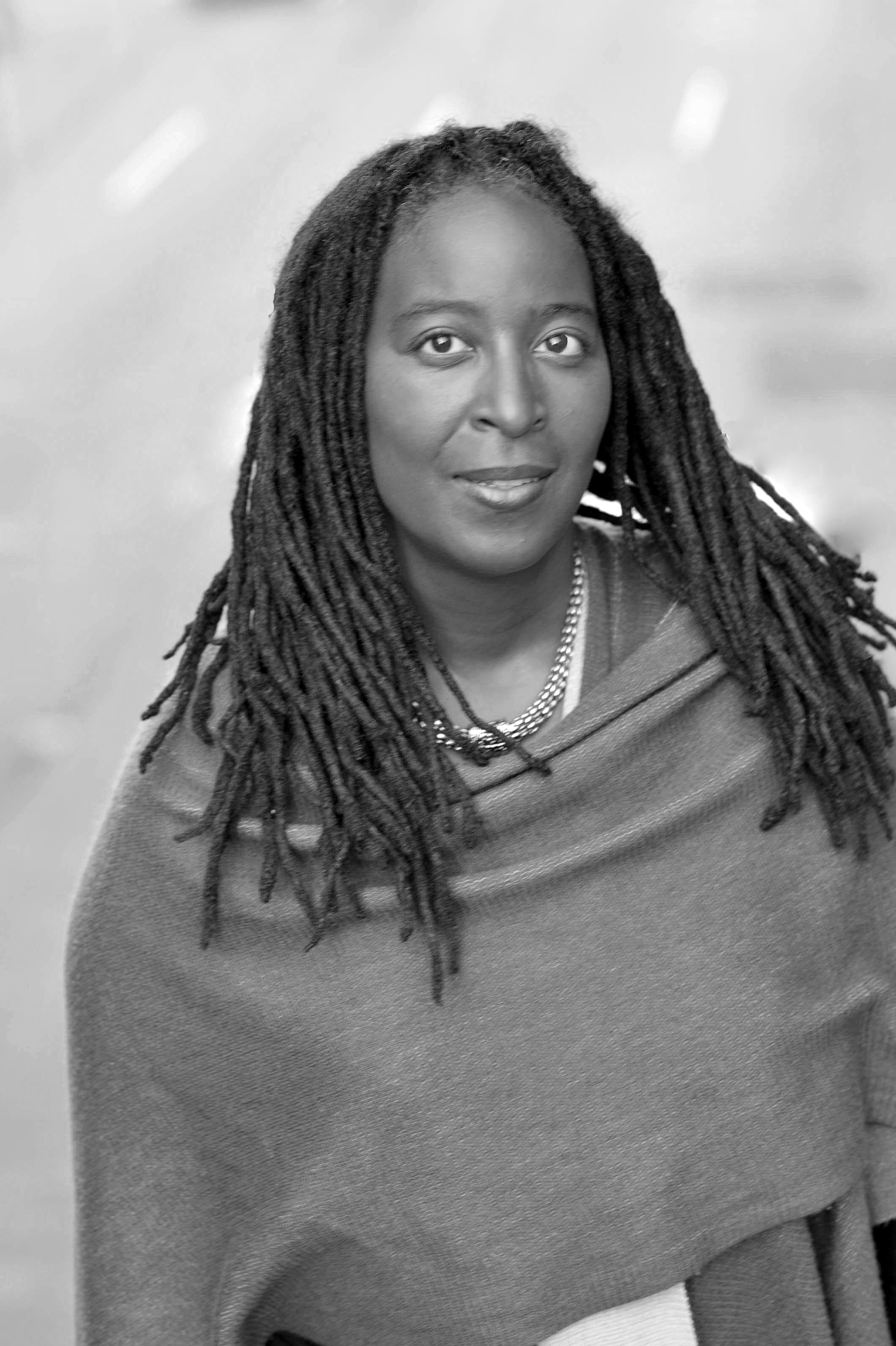
Photo: Camille Dungy. Photo credit: Marcia Wilson/Wide Vision Photography.
Major support for Readings/Workshops in California is provided by The James Irvine Foundation. Additional support comes from the Friends of Poets & Writers.