2019 MFA Index: Your Guide to More Than 220 Programs
A guide to 158 full-residency and 64 low-residency programs in creative writing, plus questions to consider before you apply.
Jump to navigation Skip to content
A guide to 158 full-residency and 64 low-residency programs in creative writing, plus questions to consider before you apply.
A writing teacher proposes a new way to approach workshops—without the language of “good” or “bad.”
Why do you want an MFA? Important questions to ask yourself before you apply.
The Writers House at Rutgers University-Camden cultivates and celebrates the writing arts. Programming goes year-round, and is always open to both students and the public: programs such as Writers in Camden, an NEA-supported reading series, the annual Summer Writers’ Conference, and the Cooper Street Writers Workshops, unite artists and scholars, students and citizens, around the power of the written word.

No MFA? No problem. A novelist shares his journey to publication—and becoming a successful full-time writer—without attending a graduate writing program.
A writer and publishing professional reflects on her decision to leave an MFA program, and how academic and workshop language can be used to reify the invisible structures that suppress marginalized communities.
Do some financial planning, head to the library, research locations, and ask around—ten tips to consider before you apply to a graduate writing program.
MFA graduates from around the country share the valuable skills, experiences, and other intangible benefits they took away from their MFA programs.
While most MFA fiction workshops focus on short stories, the director of the creative writing MFA program at the University of Michigan proposes a different form on which to focus: the novella.
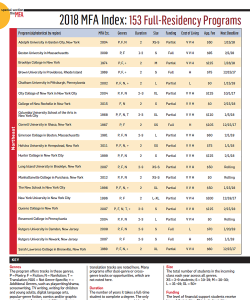
A look at 153 full-residency programs and 59 low-residency programs, sorted alphabetically by region.