Poetry: Flitting
In Matt Longabucco’s collection The Hummingbird, published by Nightboat Books in October, the poet’s attention flits from subject to subject with sharp observations of mundane goings-on, attending to contemporary life in all its forms. In one section of the title poem, Longabucco moves swiftly from the natural environment to the objects of workday technology: “big ant / scales my power cord / achieves the plug / prepares to mount the keyboard / I give it a decisive flick / we’re both surprised when an instant later / it’s flat against the windowpane / six feet away, intact and unharmed….” Compose a poem that revels in the unbroken interconnectedness of energies and emotions that are revealed when you pay close attention to the vividness of your immediate surroundings. How might the world around you generate a sense of openness and abundance when you find ways to intertwine a multitude of its everyday offerings?
Fiction: All Souls
A coffee grinder, the soul of a man who drowned to death, a board game, a house, angels, God, mushrooms, and trees are all characters in Olga Tokarczuk’s third novel, Primeval and Other Times, first published in Polish in 1996 and forthcoming in a new edition, translated by Antonia Lloyd-Jones, in December from Riverhead Books. The narrative chronicles the universe of a fictional village called Primeval through short vignettes of different characters, both human and nonhuman, over the course of three generations during the twentieth century. In “The Time of Misia’s Grinder,” Tokarczuk writes: “Perhaps coffee grinders are the axis of reality, around which everything turns and unwinds, perhaps they are more important for the world than people.” Write a collection of vignettes about diverse characters that collaboratively reveal a microcosm of points of view in a specific time and place. What objects will give voice to the philosophical and existential questions you wish to explore?
Nonfiction: Myth and Memoir
“I was born on the banks of the Rukarara, but I have no memory of it. My memories come from my mother and her inconsolable nostalgia.” In the first pages of Scholastique Mukasonga’s Murmurs From the Hills: Rwandan Tales, translated from the French by Mark Polizzotti and published by Archipelago Books in November, the author recounts a genre-defying collection of stories reminiscent of an oral history. Blending mythology and memoir, the stories recount the horrors of the Rwandan civil war and genocide along with other memories lived and passed down by family members. In this hybrid form of storytelling, Mukasonga creates a retelling of history—and therefore a retelling of the present and the future—with contributions from a complex range of voices with layered knowledge. Write a lyric essay that braids some of your early memories with stories passed down from your ancestors. Allow yourself the freedom to invent your own mythologies.
Suggested Reading
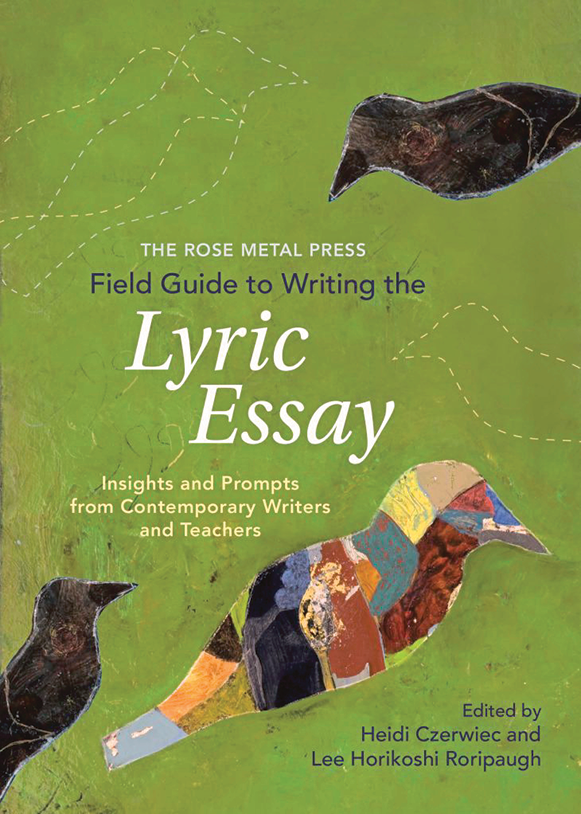
The Rose Metal Press Field Guide to Writing the Lyric Essay: Insights and Prompts From Contemporary Writers and Teachers (Rose Metal Press, October 2026), edited by Heidi Czerwiec and Lee Horikoshi Roripaugh
The fifth volume in the Rose Metal Press Field Guide series of books, this anthology includes a history of the genre by the coeditors as well as craft essays, exercises, and examples of lyric essays by twenty-six contemporary practitioners of the form, including Oliver de la Paz, Camille T. Dungy, Rigoberto González, Michael Kleber-Diggs, Rajiv Mohabir, Aimee Nezhukumatathil, and Diane Seuss. Spanning possible forms (braid, fragment, hermit crab, zuihitsu), techniques (anaphora, fractal repetition, white space), and processes (research, visual, engineering leaps), the field guide illuminates what the editors describe as “a delicious collision of genres.” As Brian Turner writes in his essay, “A certain pressure and heat are generated...that bring content and song together in ways that, when just the right conditions are met, the words transcend themselves. They transform.”
Thumbnail credit: Jesse Bauer via Unsplash