Genre: Poetry

Poets & Writers Celebrates Twenty-Five Years in California

Jamie Asaye FitzGerald, Director of Poets & Writers’ California Office and Readings & Workshops (West) program, blogs about the California program’s twenty-fifth anniversary celebration, which took place on March 6, 2015, in Los Angeles.
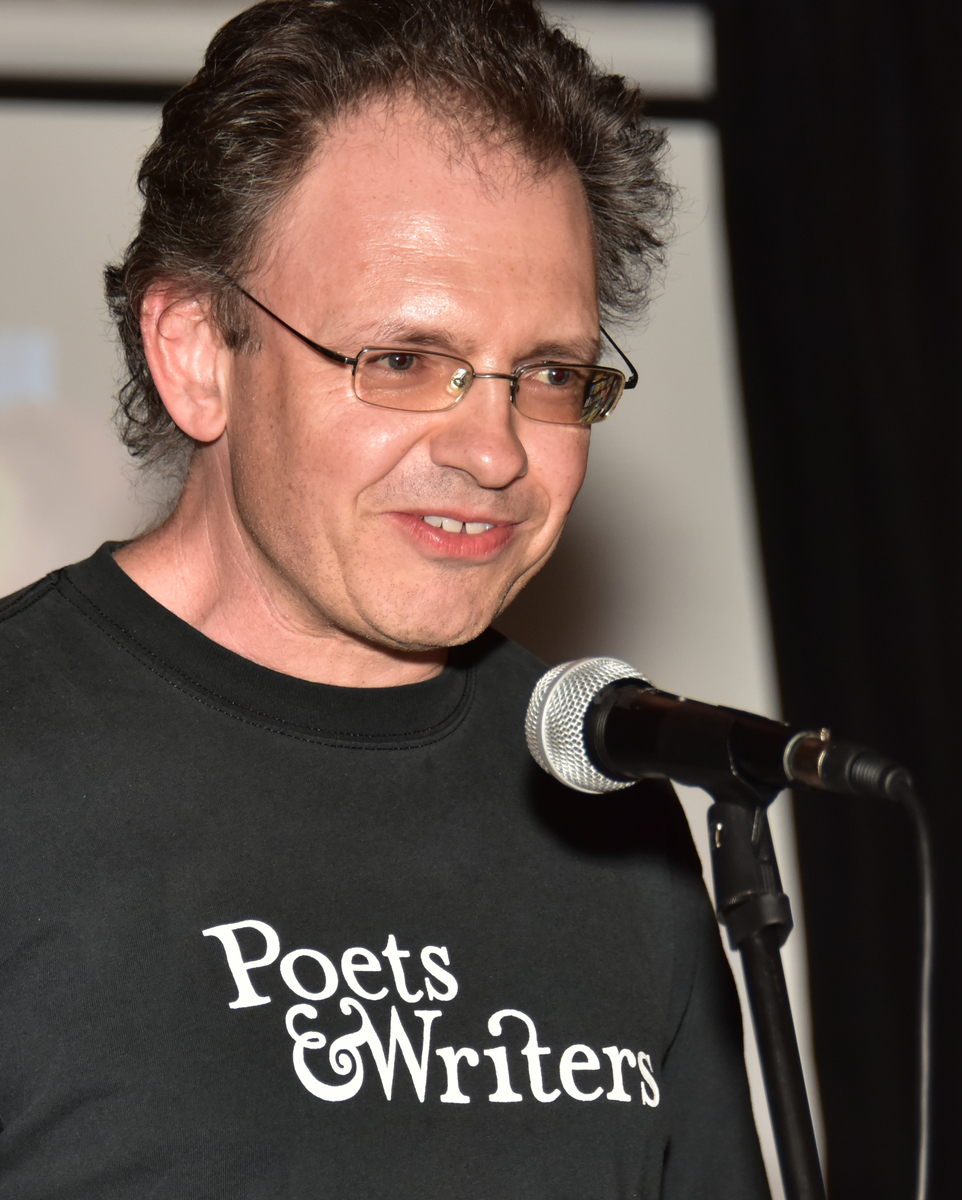
Ryan Tranquilla

The excitement in the room was palpable. The open mic sign-up sheets were filling up with names (fifty-two, to be precise!). Free copies of Poets & Writers Magazine were flying off the table. The audience of nearly one hundred sat in chairs, congregated in the aisles between bookshelves, and leaned on the balcony railings of downtown Los Angeles’s the Last Bookstore for a special celebration.

For twenty-five years, Poets & Writers has served California through the Readings & Workshops program, providing grants to thousands of writers and reaching an audience of tens of thousands annually. We offer regular roundtable meetings for the literary community, sponsor an annual cross-cultural reading, and much more.

The evening’s featured readers were introduced by emcee Mike “the Poet” Sonksen, himself a P&W-supported writer, and included Gloria Alvarez, Olga Garcia Echeverria, Kate Gale, Dorothy Randall GrayPeter J. Harris, Richard Modiano, Ruth NolanCati Porter, and Terry Wolverton, as well as past Readings & Workshops program directors Ryan Tranquilla and Cheryl Klein. Together, these writers represented organizations that included Avenue 50 Studio, Red Hen Press, Urban Possibilities, the World Stage, Grand Performances, Beyond Baroque, Inlandia Institute, and Writers at Work. Between open-mic readers, program assistant Brandi M. Spaethe raffled off fantastic P&W door prizes!
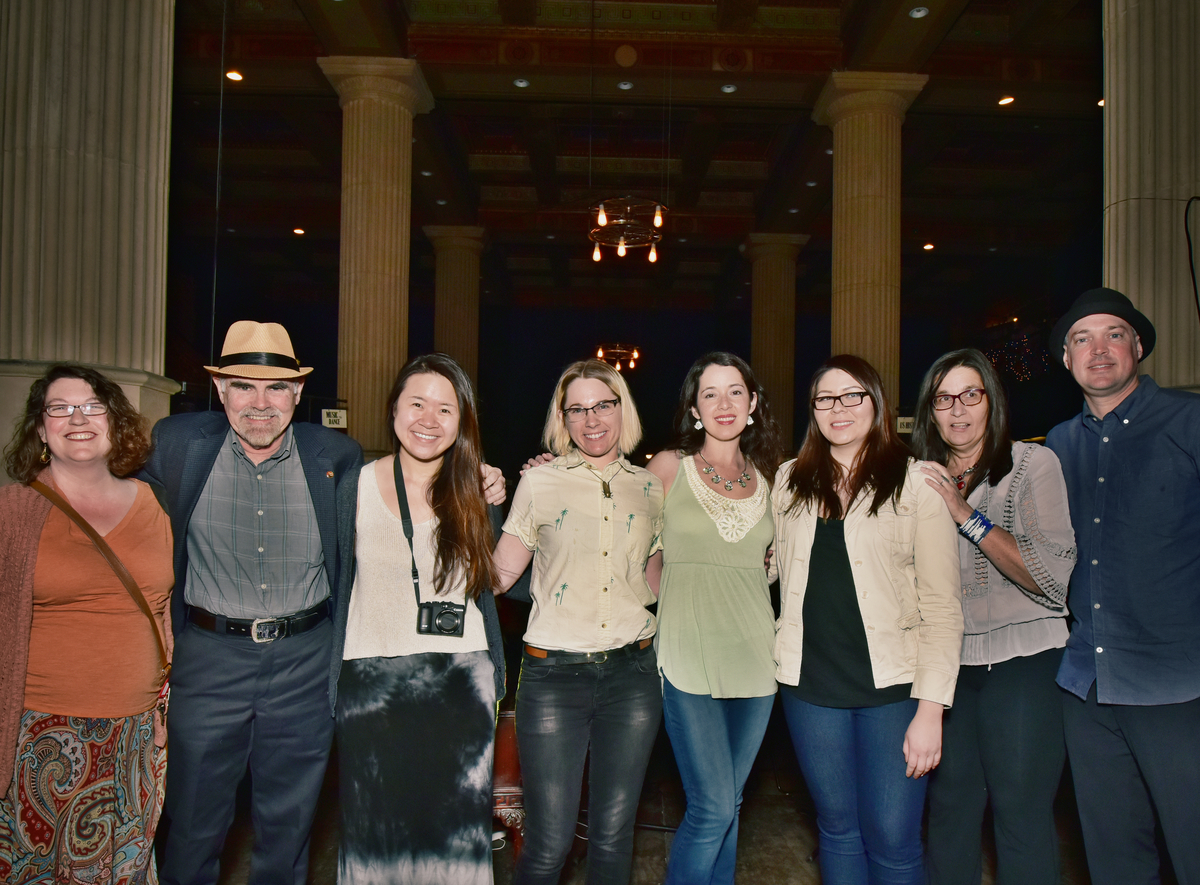
Group

Writer Ruth Nolan, who drove to Los Angeles from the blooming desert of California’s Inland Empire to participate in the event, thanked P&W for building writing communities in unlikely places with unlikely people.

Poet and teacher Dorothy Randall Gray, who has received P&W support for her Urban Possibilities workshops serving Los Angeles’s Skid Row, summed it up: "I sometimes think of writers as swimming in a sea of creativity—and, you know, in this sea we have tidal waves and monsoons and tsunamis. We also have blue skies and smooth waters and smooth sailing. I think of Poets & Writers as people, as vessels, who help us get to the shore of success by giving us their support—but even more than support, by saying, We believe in you and we believe in what you're doing, and we're going to put our money where our mouths are. They have always been there to support, to guide, to say, Hey, we're gonna back whatever you do. So I just want to give a huge thank you. Thank you, thank you, for all the support that you've given to me and all the writers that are sitting in this audience, and those writers to come."

Poets & Writers is proud to serve and partner with the writers and literary presenters of California, and we hope to do so for years to come.

Photo 1: Former program director Ryan Tranquilla. Photo 2: (Left to right): Featured poet Cati Porter, featured poet Richard Modiano, P&W intern Tammy Tarng, P&W program assistant Brandi M. Spaethe, P&W program director Jamie Asaye FitzGerald, former P&W intern Leticia Valente, featured poet Ruth Nolan, emcee Mike “the Poet” Sonksen. Credit: Katy Winn.

Major support for Readings & Workshops in California is provided by the James Irvine Foundation. Additional support comes from the Friends of Poets & Writers.
PEN Announces Longlist for Literary Awards

PEN American Center has announced the longlist for its 2015 Literary Awards. The annual prizes are given for works of poetry, fiction, nonfiction, translation, and children’s literature written by emerging and established writers. This year PEN will award over $150,000 to writers through its awards.

The full longlist for the 2015 awards, given in seventeen categories (eight of which do not have a longlist), can be read on PEN’s website. Below are the semi-finalists for a few awards:

PEN/Robert W. Bingham Prize for Debut Fiction ($25,000): Awarded annually for a debut short story collection or novel published in the previous year that represents distinguished literary achievement and suggests great promise.

The UnAmericans (Norton) by Molly Antopol
Ruby
(Hogarth) by Cynthia Bond
Black Moon
(Hogarth) by Kenneth Calhoun
Redeployment
(Penguin Press) by Phil Klay
Ride Around Shining
(Harper) by Chris Leslie-Hynan
The Dog
(Farrar, Straus and Giroux) by Jack Livings
The Wives of Los Alamos
(Bloomsbury) by TaraShea Nesbit
The Heaven of Animals
(Simon & Schuster) by David James Poissant
Love Me Back
(Doubleday) by Merritt Tierce
Time of the Locust
(Atria Books) by Morowa Yejidé

Judges: Caroline Fraser, Katie Kitamura, Paul La Farge, Victor LaValle

PEN/Diamonstein-Spielvogel Award for the Art of the Essay ($10,000): Awarded annually for an essay collection published in the previous year that exemplifies the dignity and esteem the essay form imparts to literature.

Moral Imagination (Princeton University Press) by David Bromwich
Theater of Cruelty
(New York Review Books) by Ian Buruma
Loitering
(Tin House Books) by Charles D’Ambrosio
Surrendering Oz
(Etruscan Press) by Bonnie Friedman
The Hard Way on Purpose
(Scribner) by David Giffels
Where Have You Been?
(Farrar, Straus and Giroux) by Michael Hofmann
The Empathy Exams
(Graywolf Press) by Leslie Jamison
Sidewalks
(Coffee House Press) by Valeria Luiselli
Limber
(Sarabande Books) by Angela Pelster
You Feel So Mortal
(University of Chicago Press) by Peggy Shinner

Judges: Diane Johnson, Dahlia Lithwick, Vijay Seshadri, Mark Slouka

PEN Open Book Award ($5,000); Awarded annually for an exceptional book-length work of literature by an author of color.

An Unnecessary Woman (Grove Press) by Rabih Alameddine
Fire Shut Up in My Bones
(Houghton Mifflin Harcourt) by Charles M. Blow
Team Seven
(Doubleday) by Marcus Burke
Streaming
(Coffee House Press) by Allison Adelle Hedge Coke
Every Day Is for the Thief
(Random House) by Teju Cole
An Untamed State
(Black Cat) by Roxane Gay
A Brief History of Seven Killings
(Riverhead Press) by Marlon James
Citizen: An American Lyric
(Graywolf Press) by Claudia Rankine
The Fateful Apple
(Urban Poets and Lyricists) by Venus Thrash
The City Son
(Soho Press) by Samrat Upadhyay
Kinder Than Solitude
(Random House) by Yiyun Li

Judges: R. Erica Doyle, W. Ralph Eubanks, Chinelo Okparanta

Finalists will be announced on April 15, and the winners will be announced on May 13 and honored at an award ceremony at the New School in New York City on June 8.

Established in 1922, PEN American Center has administered its Literary Awards for nearly fifty years. Based in New York City, PEN works to “ensure that people everywhere have the freedom to create literature, to convey information and ideas, to express their views, and to make it possible for everyone to access the views, ideas, and literatures of others.”

Virtual Friendship

3.17.15

These days, friendships are often formed over the Internet. Have you corresponded with someone via a social networking site or dating site who you’ve never met in person? This week, write a poem about what you imagine meeting this person would be like. If you’ve never seen a picture of him or her, write about what you think this person looks like based on how he or she writes. 

Flyleaf Books

Flyleaf Books stocks new and used adult and children's titles. They welcome special orders and host an array of author events each week. They also offer trade credit for used books. Stop in to browse and feel free to bring your coffee from next door!

Tags: 

Rankine, Robinson, and Chast Win NBCC Awards

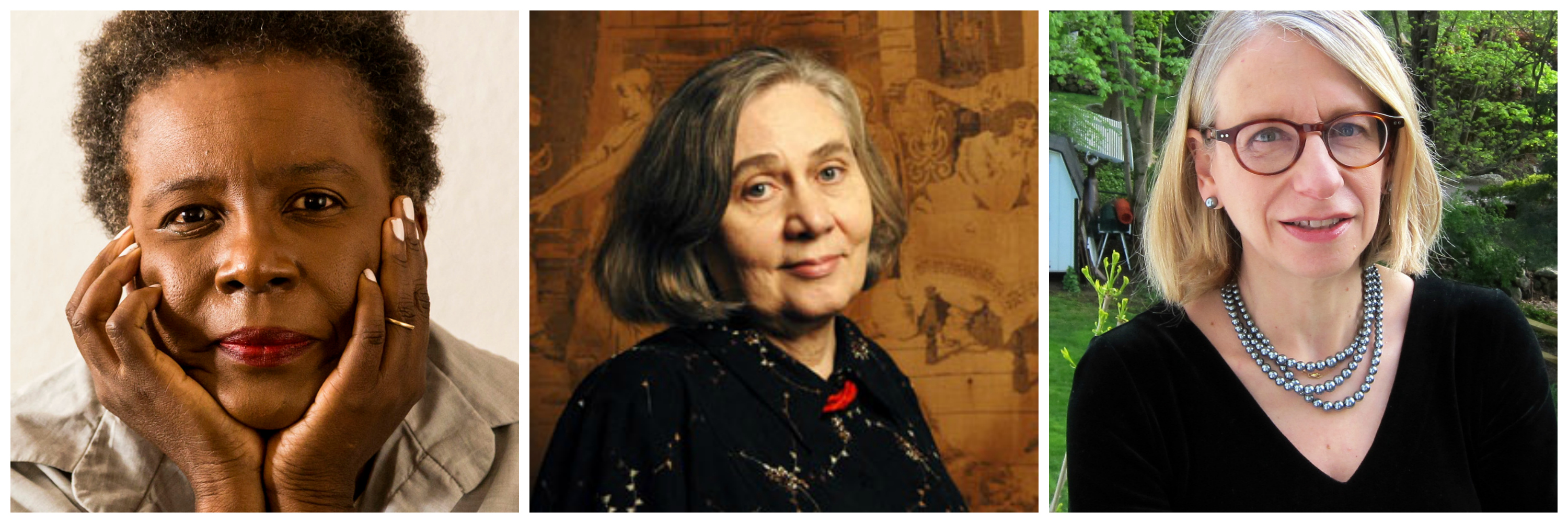
The winners of the 2014 National Book Critics Circle Awards were announced last night at the New School in New York City. Claudia Rankine, whose poetry collection Citizen: An American Lyric (Graywolf Press) was the first book in the NBCC’s history to be nominated in two categories—poetry and criticism—took home the award in poetry. Marilynne Robinson won in fiction for her novel Lila (Farrar, Straus & Giroux), and Roz Chast won the autobiography prize for her graphic memoir Can’t We Talk About Something More Pleasant? (Bloomsbury).John Lahr won in biography for Tennessee Williams: Mad Pilgrimage of the Flesh (Norton); David Brion Davis won in general nonfiction for The Problem of Slavery In the Age of Emancipation (Knopf); and the criticism prize was awarded posthumously to Ellen Willis for The Essential Ellen Willis (University of Minnesota Press), edited by Willis’s daughter, Nona Willis Aronowitz. Phil Klay won the John Leonard Prize for his National Book Award–winning short story collection, Redeployment (Penguin Press); the John Leonard Prize recognizes an outstanding first book in any genre. Alexandra Schwartz, an assistant editor at the New Yorker, won the Nona Balakian Citation for Excellence in Reviewing. Nobel laureate Toni Morrison received the Ivan Sandrof Lifetime Achievement Award.

The poetry finalists were Saeed Jones’s Prelude to Bruise (Coffee House Press), Willie Perdomo’s The Essential Hits of Shorty Bon Bon (Penguin Books), Christian Wiman’s Once in the West (Farrar, Straus and Giroux), and the late Jake Adam York’s Abide (Southern Illinois University Press).

The finalists in fiction were Rabih Alameddine’s An Unnecessary Woman (Grove Press), Marlon James’s A Brief History of Seven Killings (Riverhead), Lily King’s Euphoria (Atlantic Monthly Press), and Chang-rae Lee’s On Such a Full Sea (Riverhead).

The autobiography finalists were Blake Bailey’s The Splendid Things We Planned: A Family Portrait (Norton), Lacy M. Johnson’s The Other Side (Tin House), Gary Shteyngart’s Little Failure (Random House), and Meline Toumani’s There Was and There Was Not (Metropolitan Books).

Established in 1974, the National Book Critics Circle Awards, which are considered amongst the most prestigious awards given in the literary world, are given annually for books published in the previous year. A board of twenty-four working newspaper and magazine critics and editors nominates and selects the winners each year. The 2013 winners included Frank Bidart for poetry and Chimamanda Ngozi Adichie for fiction.

Photos from left to right: Claudia Rankine (Ricardo DeAratanha/Los Angeles Times), Marilynne Robinson (Ulf Andersen/Getty), and Roz Chast (Bill Franzen/Washington Post)

Make it Happen

3.10.15

This past Sunday was International Women’s Day. The theme for 2015 was “Make it Happen,” a slogan encouraging effective action for advancing and recognizing women. This week, write a poem celebrating the achievements of women. Write about the accomplishments of women in your community, or a woman you think deserves recognition for her strength of character and outstanding achievements. 

Carolyn Joyner and Intrinsic Ardor

A Washington, D.C. poet, Carolyn Joyner has been featured in many publications and anthologies including Obsidian, Amistad, and Beltway Quarterly poetry magazines, Gathering Ground, Beyond the Frontier, Mass Ave Review, and the 2004-2005 Cave Canem annual collections. She is a former WritersCorps and River of Words Project instructor, and was a fellow at the Virginia Center for the Creative Arts and Cave Canem. In 2010, she cohosted Poet’s Corner, a program on local D.C. radio station, WPFW, and in 2003 and 2013, she received an Artist Fellowship grant from the D.C. Commission on the Arts and Humanities. Joyner has a Master of Arts degree in creative writing from Johns Hopkins University.

“They strutted like peacocks,” she said.

Upon completion of writing poems in a workshop for displaced women, a colleague likened the pride swelling from their chests to the swagger of the glorious peafowl. I was studying to be a poet at the time, and was immediately smitten by her comparison. It not only seemed to flesh out the emotion of the women’s newfound self-respect, but awoke in me the warmth and delight she felt about it. How great to limber up the imagination enough to stir lyrical life into those who didn’t know it was there. I vowed right then that I would do my best to achieve this impact when it was my turn to lead a workshop, and when I attended one, I would expect nothing less. This was a tall order for a newcomer, and the challenge persists to this day.

When I was first invited to conduct a Saturday workshop for the CentroNía community in Washington, D.C., which is funded through the Readings & Workshops program at Poets & Writers, I was asked to identify my implementation strategy. Would the focus be on the use of visual and sensory imagery? Would it be theme-based? Understanding that this would be the least of my concerns, I settled on a “generative” workshop—one designed to generate poems.

The poetry workshops at CentroNía have always been exciting and unique. I lived in the community and had attended many. The participants are very eclectic and representative of the intergenerational, varied ethnicities and cultures of the community, writers who range from the experienced to those just trying their hand. And this was the challenge—to tailor a workshop that would address the literary needs of such a diverse group and have them leave “strutting like peacocks.”

Workshop preparation took me well beyond the usual outline of discussion and accompanying exercises. I threw myself into my own thoughts, sensations, and feelings about poetry, and moved away from placing too much importance on the distinct characteristics of the target group. I thought of the workshops I had attended where my “imagination machine” was awakened, censors were turned off, I trusted my inner guide’s prompt, and wrote with ease and patience. This is what I wanted for the participants, and I set about constructing ways to ignite the “intrinsic ardor” that Phillis Wheatley referenced in her poem, “To the University of Cambridge, in New-England.” I’m always encouraged and amazed when reminded that she understood, at such a young age, that we carry the will to become poets despite the obstacles around us. 

My literary desires and expectations include many of the same things as the workshop participants: to stretch the mind, feel free to go off on a writing tangent, be irrational, and embrace the “intrinsic ardor” of our calling. I began to realize how essential the repeated exposure to poetry is through community workshops, for the participants, as well as for those who lead them. We read and discussed the works of a wide spectrum of poets—from Wallace Stevens to Langston Hughes, Maya Angelou to Emily Dickinson, Genny Lim to E. E. Cummings—and we let poetry “dance carefully in our minds.”

The work that Poets & Writers is doing for so many cities is nothing short of revolutionary. The philosophy embodies the belief that once a mind expands, it resists contraction, and therefore, narrow-mindedness.  As a writer, I have become more pliant, my writing is more imaginative, and my ability to blend abstract and concrete elements has greatly improved.

I had no idea whether those in attendance would accept the dare to recreate themselves and write poems that would make them “strut like peacocks,” but most gave it their all, and left happily with an awesome starter poem in hand. I didn’t wait to see their swagger, I had my own.

Photo (top): Carolyn Joyner.  Photo Credit: Mignonette Dooley. 

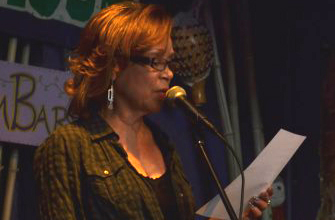
Photo (bottom): Carolyn Joyner reading. Photo Credit: Elizabeth Bruce

Support for Readings & Workshops events in Washington, D.C. is provided by an endowment  established with generous contributions from the Poets & Writers Board of Directors, and others. Additional support comes from the Friends of Poets & Writers.

.

Pages

Subscribe to Poetry