Genre: Creative Nonfiction

Impediments

2.17.22

Last week’s Ten Questions series featured Sarah Manguso, whose first novel, Very Cold People (Hogarth, 2022), chronicles the coming of age of a young girl named Ruthie in a small town in Massachusetts. The series highlights the writing process of authors and how their books come together. Asked about writing impediments, Manguso replies: “At the risk of sounding coy, I’ll say that the biggest impediment to my writing life was recently removed from my life. I currently feel unimpeded.” Inspired by Manguso’s response, make a list of impediments to your writing life. Try to avoid superficial answers. Then, write an essay about how you see yourself overcoming these obstacles.

Upcoming Contest Deadlines

Opportunities abound in the last contests of February. Awards with a deadline of February 28 include a celebration of self-published books by Black authors and a prize honoring a story set in the Little Tokyo district of Los Angeles. Several others award book publication by an independent press. All contests offer a cash prize of at least $500 and two charge no entry fee. Good luck, writers!

Association of Writers & Writing Programs Award Series: Two prizes of $5,500 each and publication by a participating press are given annually for a poetry collection and a short story collection. In addition, two prizes of $2,500 each and publication by a participating press are given annually for a novel and a book of creative nonfiction. Presses participating in the 2022 award series are New Issues Press, Red Hen Press, University of Georgia Press, and University of Pittsburgh Press. Entry fee: $30.

Austin Community College Balcones Prizes: Two prizes of $1,500 each are given annually for a poetry collection and a book of fiction published during the previous year. Entry fee: $25 for poetry and $30 for fiction. 

Black Caucus of the American Library Association Self-Publishing Literary Awards: Two prizes of $1,000 each are given annually for a poetry e-book and a fiction e-book by an African American writer self-published in the United States during the previous year. The awards honor books that depict “cultural, historical, and sociopolitical aspects of the Black Diaspora.” Entry fee: None.

Fish Publishing Flash Fiction Prize: A prize of €1,000 (approximately $1,164) and publication in the Fish Publishing anthology is given annually for a short short story. The winner is also invited to give a reading at the West Cork Literary Festival in July 2022. Tracey Slaughter will judge. Entry fee: €14 (approximately $16) for online entries or €16 (approximately $19) for postal entries. 

Little Tokyo Historical Society Short Story Contest: A prize of $500 and publication in Rafu Shimpo and on the Discover Nikkei website is given annually for a short story that takes place in the Little Tokyo district of Los Angeles. Entry fee: None.

Omnidawn Publishing First/Second Poetry Book Contest: A prize of $3,000, publication by Omnidawn Publishing, and 100 author copies is given annually for a first or second poetry collection. Mary Jo Bang will judge. Submit a manuscript of 40 to 120 pages with a $27 entry fee ($30 to receive a book from the Omnidawn catalogue) by February 28.

Red Hen Press Women’s Prose Prize: A prize of $1,000 and publication by Red Hen Press is given annually for a book of fiction or nonfiction by a writer who identifies as a woman. Melanie Conroy-Goldman will judge. Entry fee: $25.

Tupelo Press Snowbound Chapbook Award: A prize of $1,000 and publication by Tupelo Press is given annually for a poetry chapbook. Entry fee: $25. All entries are considered for publication. 

Visit the contest websites for complete guidelines, and check out the Grants & Awards database and Submission Calendar for more contests in poetry, fiction, and creative nonfiction. 

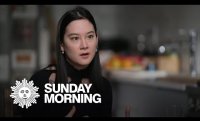
Michelle Zauner on Crying in H Mart

Caption: 

“Suddenly I wasn’t thinking about my mom losing her hair, or my mom losing weight, I was thinking about us in Korea eating patbingsu,” says Michelle Zauner in this CBS Sunday Morning interview about her best-selling memoir, Crying in H Mart (Knopf, 2021), and finding comfort in the Korean-owned supermarket chain after losing her mother to cancer.

Failing Better

2.10.22

“The best thing to come out of all of this is that my perception of the novel’s failures really awakened a new awareness in me,” says Jonathan Evison in a conversation with Caroline Leavitt from the March/April 2018 issue of Poets & Writers Magazine, in which they discuss their failed novels and what went wrong. “So much of writing fiction is persuasion. But a subtle persuasion.” This week, write an essay that reflects on a piece of writing that you think has failed. Try to parse the technical and emotional issues that occur when something isn’t working.

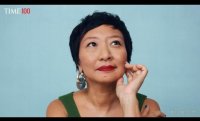
TIME100: Cathy Park Hong

Caption: 

“It was important for me to write a book in which I could try to change this country’s consciousness.” Cathy Park Hong speaks about her award-winning essay collection, Minor Feelings: An Asian American Reckoning (One World, 2020), and the urgency to write from a personal perspective in this 2021 video for TIME Magazine’s annual 100 most influential people in the world issue.

Snowfall

Whether it’s sledding outside or staying cozy inside, a snowstorm can offer an occasion to get together and enjoy the scenic weather phenomenon unfold. Soft and pillowy at first, then sludgy and slippery the next day, the window to enjoy the snowfall is brief, which makes it a polarizing aspect of the winter season. Inspired by the recent blizzards hitting the Northeast region of the United States, write an essay about your memories of snow. Have you lived through a snowstorm or have you only experienced the magic of snow through movies and stories?

Upcoming Contest Deadlines

February may be the shortest month of the year, but there are still plenty of writing contests to go around. These grants and awards close on either February 14 or February 15 and include three contests from the Academy of American Poets with no entry fee. All contests offer a cash prize of $1,000 or more.

Academy of American Poets Ambroggio Prize: A prize of $1,000 and publication by University of Arizona Press is given annually for a book of poetry originally written in Spanish by a living writer and translated into English. Raina J. León will judge. Deadline: February 15. Entry fee: None.

Academy of American Poets Harold Morton Landon Translation Award: A prize of $1,000 is given annually for a book of poetry translated from any language into English and published in the United States during the previous year. David Shook will judge. Deadline: February 15. Entry fee: None.

Academy of American Poets Raiziss/De Palchi Book Prize: A prize of $10,000 is given biennially for the translation into English of a significant work of modern Italian poetry published in the United States. Books by living translators are eligible. Nick Benson, Moira Egan, and Graziella Sidoli will judge. Deadline: February 15. Entry fee: None.

Arrowsmith Press Derek Walcott Prize for Poetry: A prize of $1,000 will be given annually for a poetry collection published in English by a writer who is not a citizen of the United States. The winner will also receive an invitation to read at the Boston Playwrights’ Theatre. Poets who are living in the United States as green card holders are among those eligible. Poets whose work appears in translation into English are also eligible. Carolyn Forché will judge. Deadline: February 15. Entry fee: $20.

Furious Flower Poetry Center Poetry Prize: A prize of $1,000 and publication in Obsidian, the literary journal of Illinois State University, is given annually for a group of poems. The winner also receives a $500 honorarium to give a reading at James Madison University (either virtually or in-person, as public health allows). Poets who have published no more than one collection of poetry are eligible. Tim Seibles will judge. Deadline: February 15. Entry fee: $15.

Hippocrates Prize Prizes for Poetry and Medicine: A prize of £1,000 (approximately $1,379) and publication in the Hippocrates Prize anthology and as a video recording on the Hippocrates website is given annually for a single poem on a medical theme. A prize of £1,000 (approximately $1,379) and publication in the Hippocrates Prize anthology and on the website is also given for a single poem on a medical theme written by a health professional. Deadline: February 14. Entry fee: $10 ($15 for postal submissions).

New American Press Poetry Prize: A prize of $1,500, publication by New American Press, and 25 author copies is given annually for a poetry collection. Eduardo C. Corral will judge. Deadline: February 14. Entry fee: $20.

Sarabande Books Morton and McCarthy Prizes: Two prizes of $2,000 each and publication by Sarabande Books are given annually for collections of poetry and fiction. Terrance Hayes will judge in poetry and Susan Minot will judge in fiction. Deadline: February 15. Entry fee: $29.

Visit the contest websites for complete guidelines, and check out the Grants & Awards database and Submission Calendar for more contests in poetry, fiction, and creative nonfiction. 



Love Letter to an Era

1.27.22

Hanif Abdurraqib’s essay collection Go Ahead in the Rain: Notes to A Tribe Called Quest (University of Texas Press, 2019) chronicles the founding, legacy, and dissolution of the iconic rap group A Tribe Called Quest and their influence on countless fans. In the essays, Abdurraqib incorporates historical facts and anecdotes to tell a gripping story of the rap music industry in the nineties while emphasizing the personal connections he has with each member of the group. In a key section of the book, Abdurraqib uses the epistolary form to address each member resulting in an intimate, one-way conversation. This week, use the epistolary form to directly address the members of an influential music group. What place did their music have in your life, and how do their struggles align with your own?

Reading Habits

1.20.22

During the pandemic, people have been forced to change their habits. Some have found peace in picking up new skills while others have valued the chance to return to old ones. Perhaps some readers have finally had time to finish their “to-read” pile of books or turned to new genres to enjoy. How have your reading habits changed during the pandemic? Have you read more than you used to, or are you having trouble getting through a book? Write an essay about your relationship to reading during difficult times. Are there certain books you gravitate towards or avoid?

Pages

Subscribe to Creative Nonfiction