

“Temple Words”: Brendan Constantine on Being a Poet in Public

Brendan Constantine, September’s Writer in Residence, was born in 1967 and named after Irish playwright Brendan Behan. An ardent supporter of Southern California’s poetry communities, he is one of the region’s most recognized authors. He is currently poet-in-residence at the Windward School and regularly conducts workshops in hospitals, foster homes, and with the Art of Elysium. His latest collections of poetry are Birthday Girl With Possum (2011 Write Bloody Publishing) and Calamity Joe (2012 Red Hen Press). He lives in Hollywood, California, at Bela Lugosi’s last address.
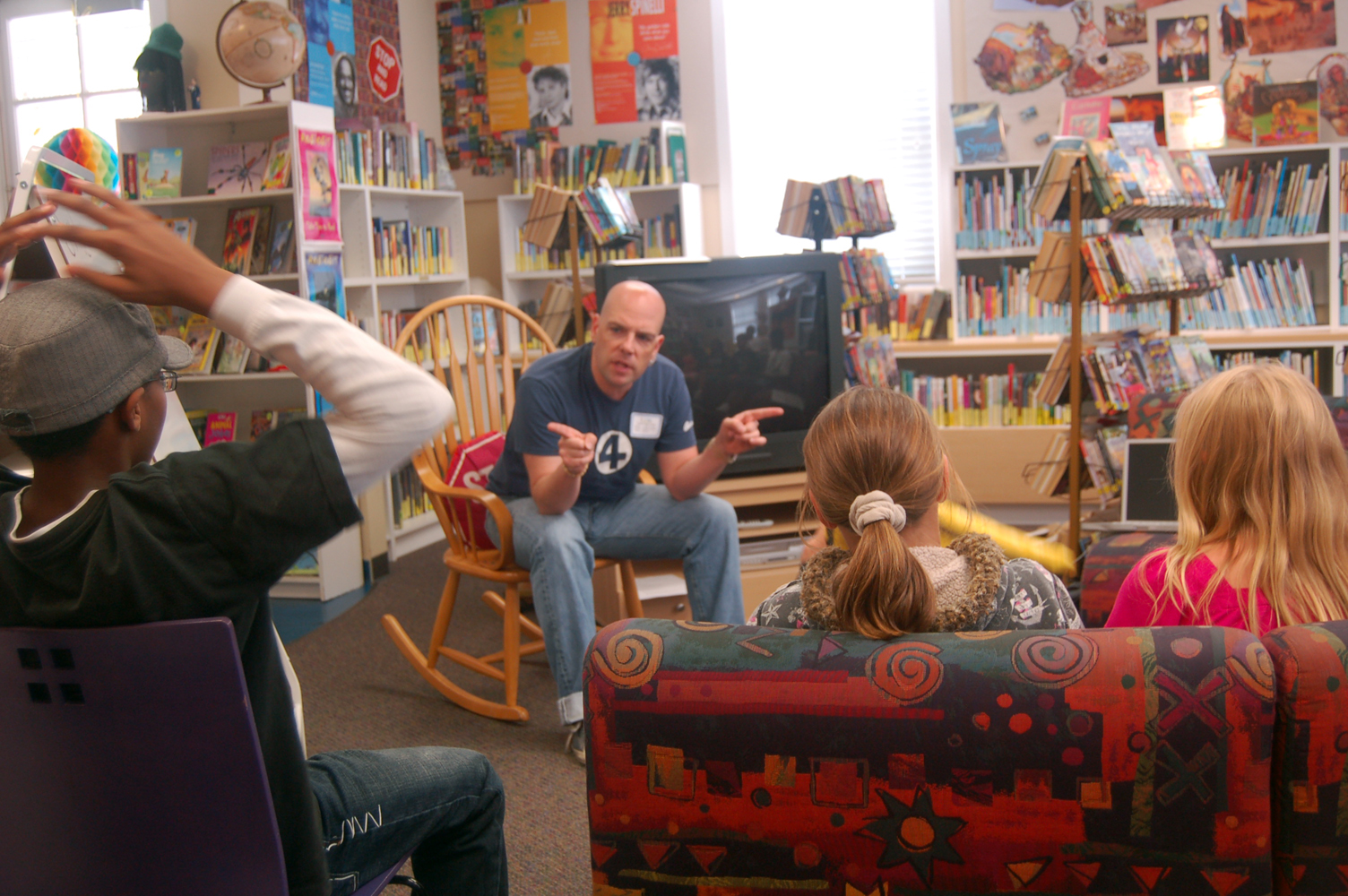
Brendan Constantine at HillsidesHow do you do? Brendan Constantine here with my last blog as “writer in residence” for P&W. Thanks for visiting with me today.

A while ago, I came across this comment in response to an L.A. Daily News article about efforts to appoint L.A.’s first poet laureate: “The economy is in shambles, people are looking for work and the city wants to hire a poet? This is the most absurd thing I have ever heard of! I am so glad that I moved away from Los Angeles!”

Wow. How do we begin to respond to that? How does a poet help a city? Isn’t it a waste of time and resources when people are desperate? Why do we need poets at all?

Those are worthy topics. But in the days since the story appeared I’ve noticed something else. Many of the poets I know have, or have had, reservations about identifying as such. Some of them seem to have internalized the prejudice displayed in the opening quote. More about that in a moment.

First, let’s face it, the term “poet” is pretty laden (indeed, even “leaden”) with associations. Even after I’d begun to write poetry in earnest, I shrunk from using the title. It sounded like bragging, or worse, likening myself to the most extreme stereotypes of self-absorption. To call myself a poet was like telling people I made a career of being tragically misunderstood.

Yesterday I had lunch with poet Mindy Nettifee. Like all the poets mentioned in this post, she’s received grants from the Readings/Workshops program to present her work—meaning that, on some level, she’s publicly owned the title of “poet.” But when I asked her if she’d ever had reservations about it, she said, “Are you kidding? I still sometimes feel like I’ve just told people I’m a really famous mime in Texas.” I laughed out loud for five minutes.

Today I started calling poets I knew and asked the same question. I caught poet Kim Addonizio in an airport—come to think of it, I never asked where she was going, oh well—and she said that for her, the title of poet was something that had to be deserved. Writing one poem wasn’t enough. Writing two or three was still tourism. “I had to earn my stripes,” she said.

But there’s no day that stands out as the one when she knew she’d crossed a line into the territory of legitimacy. She just noticed that she had been calling herself a poet.

“It’s a ridiculous thing to call yourself,” says poet Doug Kearney. “I mean, what does it actually say about what you do? A painter’s title contains a verb. So does ‘singer’ or ‘sculptor,’ ‘dancer,’ etc…. But a poet is a...what...a poem-er?”

Kearney does identify as a poet and began to do so around the time of his fellowship with Cave Canem, a renowned writer’s conservancy with a focus on African-American authors. At some point in his residency, being daily in the company of other poets who regarded him as one of them, he passed through an initiation. But again, he noticed only in retrospect.

So what’s the big deal already? Do you call yourself a poet? There’s no shame in it, is there? No licenses to practice, no tribe with the power to vote you off an island. Do you have associations with the term (or expect others will) that give it a bad light?

Poet Julianna McCarthy, who happens to be my mom, has been writing poetry for quite some time. She has a degree and body of published work. And yet, this evening, she said over the phone, “I still can’t do it. I have to change the syntax so that instead of saying I’m a poet, I say ‘I write poetry.’”

This isn’t going to end cleanly, by the way. I don’t have any answers and I’m not blaming poets for opinions like the one appearing at the top of this post.  I will say that whatever it is about poetry that inspired such passionate criticism may be related to whatever it is that stops some of us from going public.

In my first post I said: “People invent poetry as a means of expressing something they can’t easily say. The desire to talk about special things in a special way, the desire to change, elaborate, or deliberately misuse language for the purpose of greater communion is all but universal.”

I wish to add that when I say “people” I don’t necessarily mean poets. Poetry predates the job of poet. In ancient Greece and Rome, the words for poetry refer to something “made,” a thing, even a formula. In Arabic cultures it can mean to “ask” or inquire. It may also mean to “perceive.” In China and later Japan, poems are “sacred words,” “temple words.”

Who needs temple words? Everyone outside the temple. Who needs to ask or perceive? Anyone who would answer, who would face another questioner. Who needs to make a thing out of words? Anyone unmade by speechlessness.

Photo: Brendan Constantine talks with young poets at Hillsides in Pasadena, California. Credit: Nicola Wilkens-Miller

Major support for Readings/Workshops in California is provided by The James Irvine Foundation. Additional support comes from the Friends of Poets & Writers.
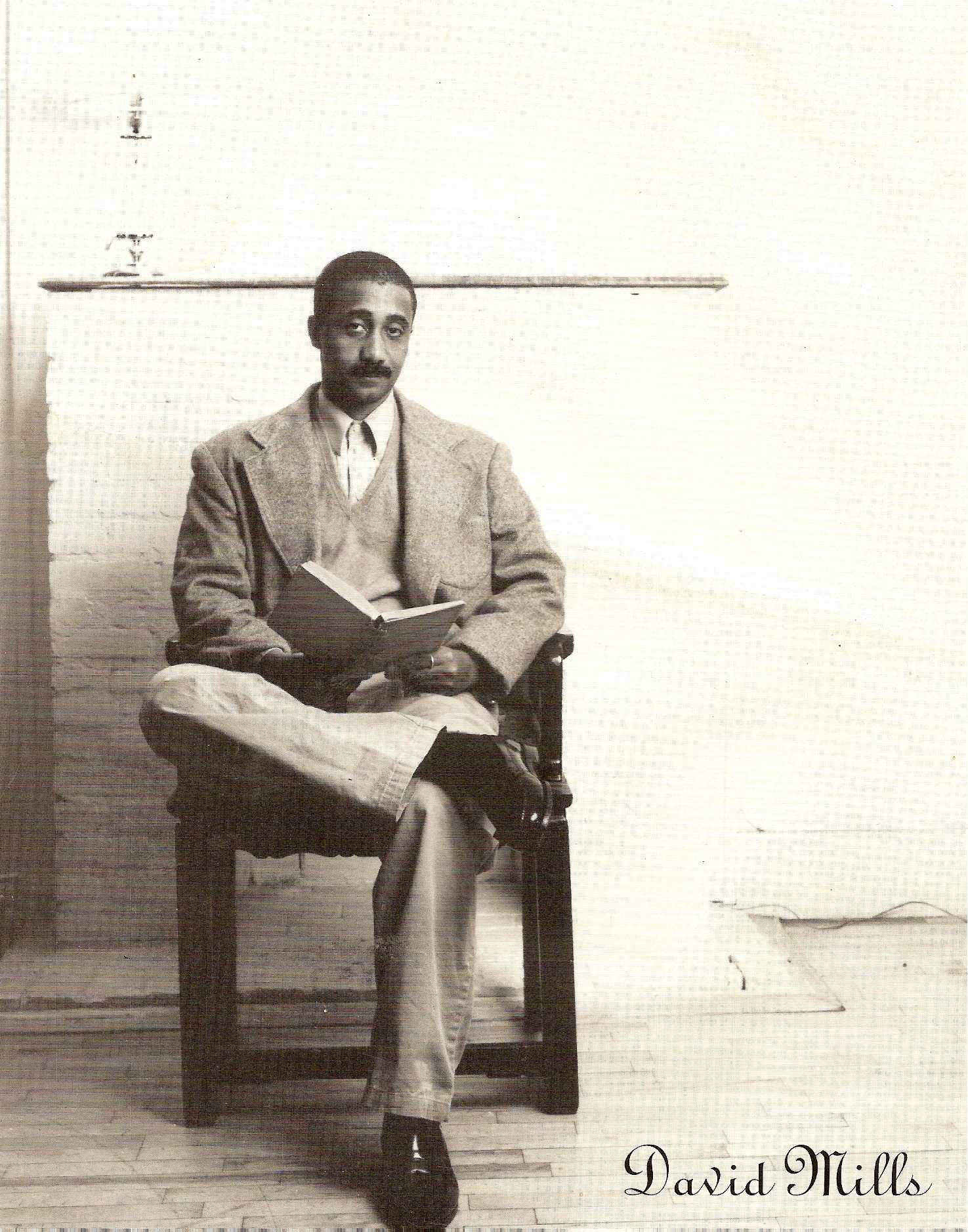
David Mills’ Poetic Arithmetic, Kooky Koans, and Redemptive Communion

David Mills has taught several P&W–supported workshops at the Cook County Juvenile Detention Center in Chicago. He is author of the poetry collection The Dream Detective (Straw Gate Books) and has poems in the anthology Jubilation! (Peepal Tree Press) and magazines, including Ploughshares and jubilat. Mills is also the recipient of a New York Foundation for the Arts Fellowship.

What is your writing critique philosophy?
Most of the workshops I conduct are with kids, so I always write on the board “2+2=57,” which means for the hour that I am with them, I don’t want them to worry about spelling or grammar because obsessing over “crossed Ts” could mean losing a moment of genius.

How do you get shy writers to open up?
I try to present a model poem that will spark both conversation and creativity. I remind the students that poetry is not on Mount Parnassus. It’s right t/here, wherever we happen to be geographically and psychically. I make self-deprecating jokes to put them at ease and let them know everything is poetic fair game.

I sweat, so I’ll say: “I sweat while I swim. Use that. ‘How can this guy sweat while he swims?’”

I have abstract expressionist penmanship, so I’ll say: “I write like a blind man with five broken fingers. How’s that possible for a poet?”

I don’t want them to write about my idiosyncrasies, but I hope that by framing them as kooky koans the kids will access their own creative centers.

What has been your most rewarding experience as a writing teacher?
Workshops like the ones P&W sponsored at the Cook County Juvenile Detention come to mind. In one visit, I used Randall Horton’s poignant and ironic poem “Poetry Reading at Mount McGregor (Saratoga, NY).” During his own incarceration, he could never have imagined voluntarily returning to a prison, yet in the poem that’s exactly where he finds himself.

I discuss redemption.

What happens for Randall in his poem is what I hope will happen for these kids. Writing gave him a raison d’etre. Horton writes: “tonight poetry is a sinner’s prayer,” and reflects on how when he was incarcerated he “searched for the… alphabets to help me escape.” He concludes the poem: “How do I say welcome me, I am your brother?”

I got misty-eyed as I read those lines. I think the boys felt what the poem was meant to evoke: union, communion.

There were gangbangers in the class from opposing gangs—African-American and Chicano-American. The teachers had warned that certain guys had to sit on opposite sides of the room. As we discussed the poem, guys started talking across “colors,” opening up. Teachers who weren’t part of the workshop stepped in and stayed.

I asked the guys to write about returning to a place—physically or psychically--that might be filled with pain, fear, anger, or an unresolved question. I asked them to describe it physically, but to then address the wound or fear to a person who had something to do with whatever unresolved feeling was back there.

One Chicano student described a town center in Mexico where an incident had occurred that caused his family to flee to the U.S. What happened to his family is less important than what happened to his peers as a result of his avowal. His poem gave his classmates both insight into and greater empathy for him.

What do you consider to be the benefits of writing workshops for special groups (i.e. teens, elders, the disabled, veterans, prisoners)?
I have only worked with male populations where posturing and bravura run deep. But given an opportunity to see that their vulnerability will not be used against them, these boys will open up. I think some of these young men feel—and sometimes rightfully so—like the words in Patricia Smith’s poem, “CRIPtic Comment”:

If we are not shooting
at someone
then no one
can see us.

There is the sense that these boys feel both seen and heard during our time together. In one of the P&W–supported Cook County Juvenile Detention workshops, I used Langston Hughes’s “The Negro Speaks of Rivers”:

I've known rivers:
I've known rivers ancient as the world and older than the
     flow of human blood in human veins.

Hughes’s piece has an epic reach—bodies of water of mythic, cultural, and historic proportion. I talked about Hughes’s “knowing.” I got the boys to write about things they knew intimately, using Hughes’ structure to organize their “knowing.” One participant wrote about the various sneakers he has “rocked”:

I’ve known Nikes, shell-top Adidas...

You get the idea.

Another student had lived in Illinois and Indiana, so he wrote about “knowing” distinct parts of these two states, both in terms of geography but also the “temperature” of different communities.

What's the strangest question you’ve received from a student?
I am pretty zany so no question strikes me as strange. I do get a lot of “Why do you sweat so much?”

Photo: David Mills. Credit: Luig Cazzaniga.

Support for Readings/Workshops events in Chicago is provided by an endowment established with generous contributions from the Poets & Writers Board of Directors and others. Additional support comes from the Friends of Poets & Writers.

My Hometown

9.20.12

Some of the best stories and essays revolve around the author's hometown. Spend fifteen minutes freewriting about the town or city in which you grew up. Focus on the people, the places, the landscape, and the memories surrounding them. Where was your favorite place to eat? Who were the most interesting characters? What did you do with your family and friends? What did the school look like? Where did you go when you wanted to run away?

Cassill's Conversion

9.19.12

In R. V. Cassill’s classic book Writing Fiction (Prentice Hall Trade, 1975), he describes “conversion,” a method for revision that he says is “vaguely comparable to transposing a piece of music from one key to another.” Try the following conversion exercise: Cut up a story into its paragraphs (using scissors). Rearrange the paragraphs, and add any connective writing needed to support the new structure.

Poetic Structure

9.18.12

Choose a poem—one of your favorites or one you select randomly—and closely analyze its structure. How many stanzas does it have? How many lines comprise each stanza? How many stressed syllables are in each line? Is there a pattern to the number of syllables per line? Once you've fully analyzed the structure, write a poem of your own using that structure.

Whitefish Review Launches New Fiction Prize

Whitefish Review, a literary journal based in Whitefish, Montana, has launched its first annual Montana Prize for Fiction. The winner will receive $1,000 and publication in the Winter 2012/2013 issue of Whitefish Review. Acclaimed author Rick Bass will judge.

The theme for the issue, which is also currently open to general submissions, is “Beneath the Surface.” The editors seek submissions that “use art to mine for something beneath the surface, to search for something deeper than is apparent to the naked eye.”

Emerging writers are particularly encouraged to submit. “We're especially excited about finding new talent,” says founding editor Brian Schott. “We're proud to have published literary legends like Bill Kittredge, but finding that spark of fresh talent and publishing younger and previously unpublished authors is what gets us really excited. We have a huge volunteer staff of readers and weigh the merits of each submission very carefully. When we wake up the next day thinking about a piece we have read, that is a good indicator. It should surprise us. It should challenge us. Take a risk!”

Using the online submission manager, submit a short story of up to 5,000 words, along with a brief biography and a $15 entry fee, by October 15.

Fiction and nonfiction writer Rick Bass, author most recently of the novel Nashville Chrome (Houghton Mifflin Harcourt, 2010), will judge the contest. The author of over twenty books of fiction and nonfiction, Bass received the 1995 James Jones Literary Society First Novel Fellowship, and has been a finalist for the Story Prize and the National Book Critics Circle Award. His work has appeared in the Pushcart and O. Henry anthologies, Best American Short Stories, and numerous literary magazines. Bass will also serve as the guest editor of the Winter issue, and will contribute a new essay to its pages. 

Established in 2007, Whitefish Review publishes original poetry, fiction, and creative nonfiction, as well as art, photography, and interviews, with a focus on mountain culture. General submissions for the Winter issue run annually from August 15 to October 15; submissions for the Spring issue run from January 15 to March 15. There is no entry fee for general submissions. 

For more information about Whitefish Review, and for complete submission guidelines, visit the website

Idle Hands are the Poet’s Playground: Brendan Constantine on Taking a Chance

Brendan Constantine, September’s Writer in Residence, was born in 1967 and named after Irish playwright Brendan Behan. An ardent supporter of Southern California’s poetry communities, he is one of the region’s most recognized authors. He is currently poet-in-residence at the Windward School and regularly conducts workshops in hospitals, foster homes, and with the Art of Elysium. His latest collections of poetry are Birthday Girl With Possum (2011 Write Bloody Publishing) and Calamity Joe (2012 Red Hen Press). He lives in Hollywood, California, at Bela Lugosi’s last address.

Brendan ConstantineHow do you do? Brendan Constantine here with the third “blog” of my residency with Poets & Writers. Thanks for joining me.
My relationship with Poets & Writers began in 1995 when I first sought their help in paying authors to read for a local series, the Valley Contemporary Poets. In the years since, their support—both financial and creative—has enabled me to build a whole career. I’m sure you can appreciate how daunting it is, then, to try to write something “worthy.” At every keystroke I imagine someone at the P&W main office looking up from a computer and saying, “Wait, we’ve PAID this guy to give readings?”

Of course, it’s just the same old vanity that plagues every writer: the Phantom of Originality, also known as the Tenth Muse. Not only is originality a false god, history has made it plain there are no profundities so great they cannot be trivialized; death is a business, so are babies, and now Webster’s definition of  “reality” includes the subheading  “a genre of television.” If nothing is sacred, neither is writing.

Exactly ninety years before the date this blog will appear, a writer named Richard le Gallienne wrote a New York Times review of four new books of poetry. Before addressing any of the titles, he observes, “Unless poetry is as compelling as Ragtime, we labor in vain to read it.”

Ragtime. Join me for a deep sigh, would you?

For those of you who’ve ever felt as though your art has too much with which to compete in popular media, that it’s no match for TV, movies, or popular music, the above quote should offer some comfort. Ragtime may have topped the charts of 1922, but a good deal of transcendent writing came after, indeed most of what we call Modern poetry. Give yourself a break.

Speaking of taking a break, in Samuel Johnson’s essay “The Rambler,” he contends, “It is certain that any wild wish or vain imagination never takes such firm possession of the mind, as when it is found empty and unoccupied….” He is praising activity for its own sake, warning against the hazards of idleness. What are the hazards? Depression, melancholy, and, even worse, posthumous notoriety.

But for writers, the value of “down time,” with nothing on our minds but the cookie in our hands, is priceless. There’s no telling what combination of whim and weariness will send us into despair or creative action. But perhaps they’re the same. To be an artist is to create “stillnesses”—the stillness of the page, the plinth, and the canvas, the thousand stillnesses in one minute of film. Or dance.

To be an artist is to invite “any wild wish or vain imagination” to take firm possession of our minds, to dare boredom to do its worst, to take second place to Ragtime.

Furthermore, it will always be true that our poorest work lies ahead of us. We’re going to write something truly awful in the future. We have to. Why do we have to? It’s often the only way to uncover the good writing. Like going through a kitchen drawer, sometimes we have to take out things we don’t need in order to get at the things we do.

Ask yourself about the conditions under which you’ve done your best work so far. Did you start with a defined vision and follow it to the end without deviation? I’m guessing, No.

Where I see many of us get stuck, again and again, is in forgetting the role of “chance.” No sooner are we enjoying a sense of success (even if it’s just saying “Well, that didn’t TOTALLY suck.”) than we are forgetting the experience of discovering our art as we went.

Chances are (sorry), we’ll attempt to create something else, but this time out of sheer will. Under these conditions, we’re totally screwed. Excuse me, Ragtimed. The best we can hope for is something almost as good as we used to be.

I think the answer is to just create, create a lot, make lots of mistakes, finish a bunch of lousy work, emphasis on “finish,” but get it all the way out. Make something. Make anything. Buy a children’s paint set. Get an airplane model. Make a list of the times and conditions under which someone says “awesome” and then set it to music. Something with piano and trumpets, a trombone and snare drum. Write about a room where someone is dancing to it, someone who knows it’s stupid and dances anyway.

Major support for Readings/Workshops in California is provided by The James Irvine Foundation. Additional support comes from the Friends of Poets & Writers.

Worth the Climb: David Surface on Writing Workshops for Veterans

David Surface, who has led writing workshops in public schools and social service settings for over twenty years, blogs about P&W–supported writing workshops with Veterans in Westchester, New York. He is the founder of the Veterans Writing Workshop, which runs free writing workshops for U.S. veterans.

I first met Frank at the Common Ground Residence for Homeless Veterans in Montrose. I was there to start a ten-week creative writing workshop funded through the Readings/Workshops program at Poets & Writers. Frank’s pale blue eyes were intense and attentive. He was interested but expressed doubt about his writing abilities. I assured him that he already had everything he needed to write a good story—all we needed to do was to help him get it down on paper.

I later learned that Frank had just graduated from the Post Traumatic Stress Disorder (PTSD) Program, and his counselor had recommended that he participate in the writing workshop. “She thinks it’ll be good for me,” he said.

Not all veterans’ traumas happen on the battlefield. Frank’s had happened during his service in the Military Police at a U.S. Naval Air Station base, though exactly what happened was unknown to the rest of us.

For the first few weeks, Frank wrote about struggling to fit in with the culture of the Naval base; his discomfort with guns, his poor performance on the firing range, the “liquid debriefs” with the other MPs, and their nightly drunken jackrabbit hunts.

"They would pull a patrol car up in front and point the high beams and spotlights at the dusty and sparse vegetation. Then these guys would shoot at the jackrabbits that were hopping around; creating puffs of dust as the rabbits scattered to get away."

Week after week, Frank continued to work his way toward the incident he’d come to the workshop to write about. I never pushed him. This was not, as I’d explained, a “writing therapy” group—this was a writing workshop, and our goal was to create the very best stories we could write.

Finally, Frank brought in the pages he’d struggled so hard to complete. With his friend Eddie’s hand on his shoulder for support, Frank read to us about the day he’d gone out on a call to search for a missing child.

"After ten minutes that felt like ten hours, I decided to go into the house myself. As I walked up the steps, something at the left of the entrance caught my eye. It was a medium-sized Coleman cooler with the lid closed. I walked up to the cooler and opened it up on a hunch. To my shock and dismay, the little boy was in there, his ball lying right next to his hand. The odor was overwhelming and his skin was clammy and grey. Instinctively, I reached into the cooler and pulled him out."

Taking deep, shaky breaths between words, Frank read about his unsuccessful attempts to revive the child, his subsequent realization that he could no longer be a policeman, and the hard-won wisdom he’d come away with.

"It would be years before I accepted the fact that there was not anything I could have done to prevent that child from dying like that. As I look back now, I realize that there are things that happen in life that you cannot control."

Watching Frank read that story for us was the bravest thing I’d ever seen—until two weeks later when I saw him stand up in front of a large audience at a public reading and do it again. Afterwards when I asked him how he felt, he wiped the sweat from his brow, grinned and said, “Great!”

I’ve seen Frank read that story three more times in public. Every time, it’s like watching someone climb the highest, most difficult mountain in the world to end up on top. It’s not easy, but, as Frank will tell you, it’s well worth the climb.

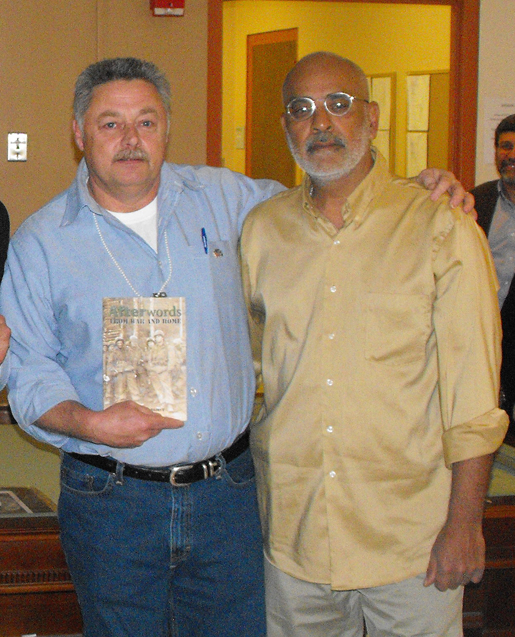
Photo: (Left) Frank Muer and fellow workshop participant Eduardo Padilla.  Photo Credit: Howard Charton.

Support for Readings/Workshops in New York is provided, in part, by public funds from the New York State Council on the Arts, with additional support from Friends of Poets & Writers.

Near-Death Experience

9.12.12

Extreme experiences can significantly alter our perspective on life. Write an essay about a time when you faced a near-death experience, or believed you were in serious danger. Consider the following questions: How did you react immediately? How did you respond later? In retrospect, do you wish you'd reacted differently when it happened? What from the experience do you still carry with you?

Lose Your Senses

9.12.12

One of a writer’s most powerful tools is sensory perception. As an exercise, deprive yourself of stimulation. Sit quietly in a dark room, turn off and hide your electronics, and avoid becoming distracted. Try this for an entire day, or whatever time span you can manage. After leaving yourself alone with your thoughts for some time, write a story inspired by your musings. Try starting with a single sentence that may have risen to the surface during your day.

Pages

Subscribe to RSS - blogs