Poet and artist Amanda Deutch blogs about P&W–supported Parachute: the Coney Island Performance Festival, a literary nonprofit she founded in 2009. Parachute hosts a festival in the fall, free writing workshops, and innovative poetry happenings in Coney Island, New York. She is the author of four chapbooks: Gena Rowlands (Sounds Nice), Box of Sky: Skeleton Poems (Dusie Kollektiv 4), Motel Drift, and The Subway Series. She is also the recipient of a 2007 Footpaths to Creativity Fellowship to write in the Azores Archipelago. Deutch lives by the water in Brooklyn, NY, and plays skee-ball in her free time.
“Coney Island, Let me see, let me hear, let me know what is real, let me believe.”
—Muriel Rukeyser
 From street signs to carnival talkers, from the Chief hawking fresh clams with a call of, “Hey! Get it! Get it!” to the influx of monarch butterflies in late August, there is poetry in the everyday language that surrounds us. I want people to stop and notice poetry in daily motions. That’s part of my job as a poet. Parachute: the Coney Island Performance Festival is the manifestation of these desires. Since I was a young poet, I’ve thought of ways to make poetry appealing, accessible and to draw attention to the poetry that is all around us.
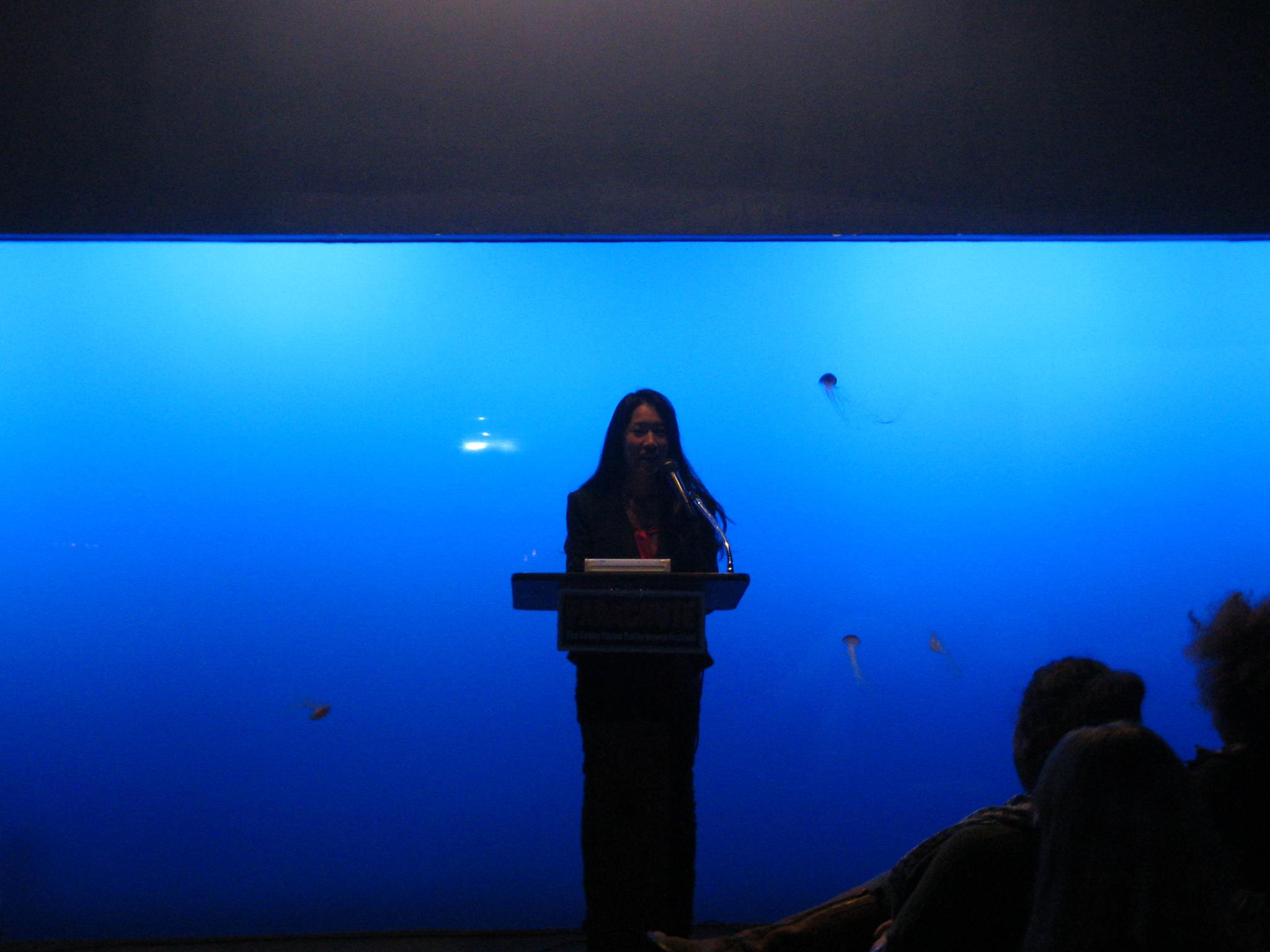
I founded Parachute, a community-based literary organization, in 2009 to host a free two-day festival that features an array of local poets and writers. The writers read in front of an ethereal blue floor- to-ceiling tank of jellyfish in the New York Aquarium. Throughout the year, Parachute leads creative writing workshops, curates innovative poetic events, and celebrates Coney Island’s vibrant literary culture through readings, broadsides, workshops, and attention to the luminaries that have been inspired by Coney’s shores—Walt Whitman, Muriel Rukeyser, and Henry Miller, to name a few.
Among the festival’s featured readers have been Coney Island poet Sheila Maldonado, Brooklyn Poet Laureate Tina Chang, Edwin Torres, and Martin Espada. 2012 marks the first time that the current Brooklyn Poet Laureate has ever read in Coney Island. Parachute’s audience is diverse, comprised mostly of people who live and work in the neighborhood: business owners from Mermaid Avenue, pastors, community board members, local teenagers, ticket takers, Cyclone operators, and poets. Ruth Magwood, who worked in Astroland, comes every year and tells me who her favorite poets are each night. Describing the festival, Ruth said, “It’s gorgeous with the jellyfish. Normally you’d have to go all the way to the city for something like this.”
 The grants we receive from Poets & Writers are instrumental in helping us pay writers to lead workshops during the festival. These funds, along with other grants enable us to invite amazing New York poets and writers to read and lead workshops in an underserved neighborhood. We believe it is important to pay writers, both established and emerging, for their work and want to continue to do this in a field where this is not always the “norm.” Through grants such as the one from P&W, we are able to keep the Parachute Festival and its writing workshops free so that anyone who would like to can attend. It is very important to us that this continue to be accessible and welcoming to people who live in the community. Coney Island has arts and culture for those who come and visit, but not so many opportunities for those who live there. This festival is designed with the neighborhood as well as greater New York in mind.
Henry Miller wrote about Coney Island, "everything glitters…” Parachute illustrates Coney Island’s vital glittering landscape with poetry and all the poetic voices that have found solace and delight here—from Walt Whitman, America’s bard, to Woody Guthrie, and more recently, Bernadette Mayer. Coney Island has a not-so-hidden literary landscape that’s been traveled by many of our great American writers. I want to showcase that through landscape and create a space where living poets, fiction writers, and artists can come down, eat some clams, and read their words about Coney Island. Hopefully, sometime soon we’ll put their words together in a book, and you can read that book while sitting on the boardwalk. Meanwhile, “Hey! Get It! Get It!”
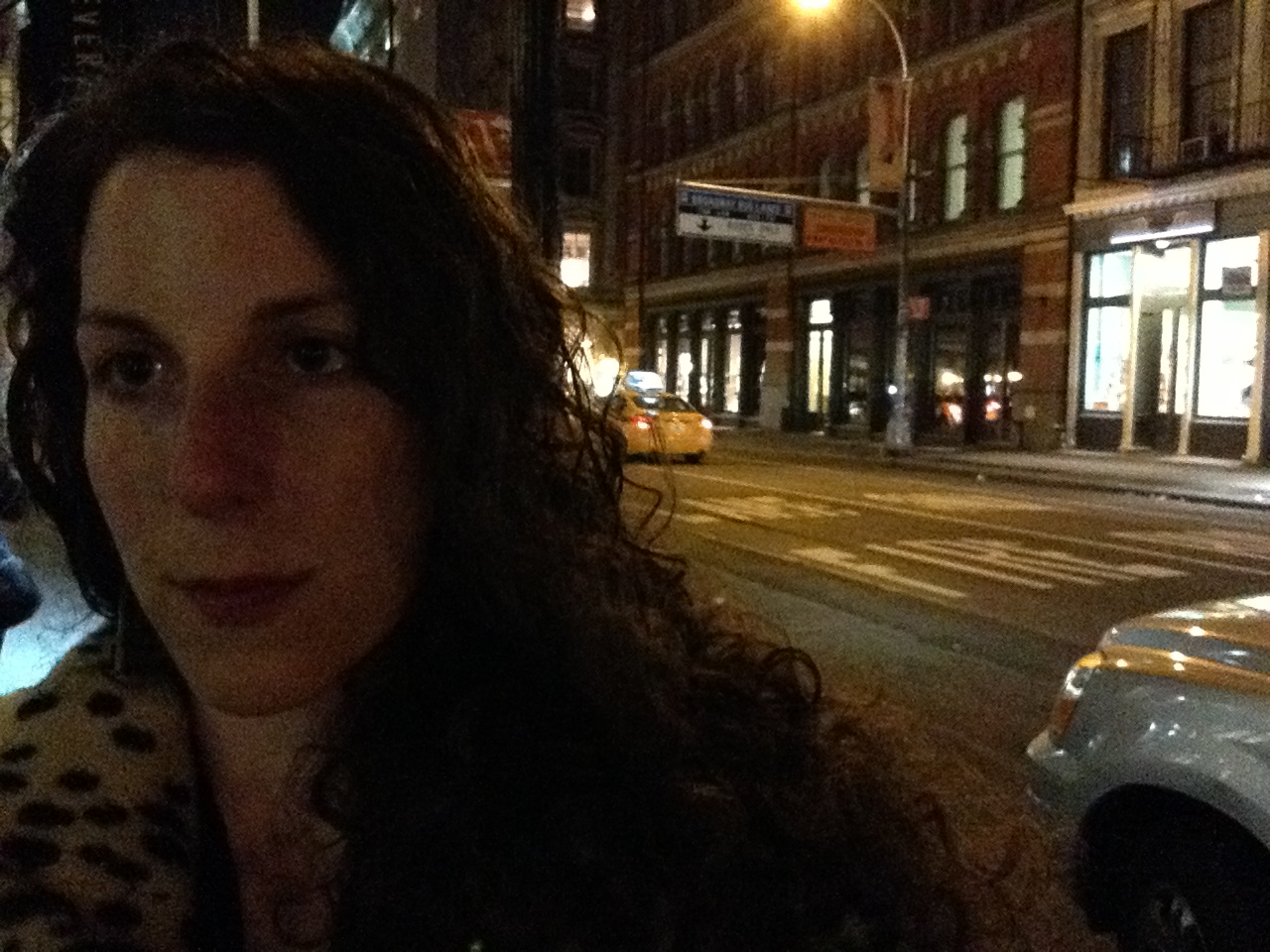
Photo: (Top) Amanda Deutch. (Bottom) Tina Chang reading in front of the jellyfish at the Coney Island Aquarium. Credit: Amanda Deutch.
Support for Readings/Workshops in New York City is provided, in part, by public funds from the New York State Council on the Arts and the New York City Department of Cultural Affairs, with additional support from the Louis & Anne Abrons Foundation, the Axe-Houghton Foundation, The Cowles Charitable Trust, the Abbey K. Starr Charitable Trust, and the Friends of Poets & Writers.





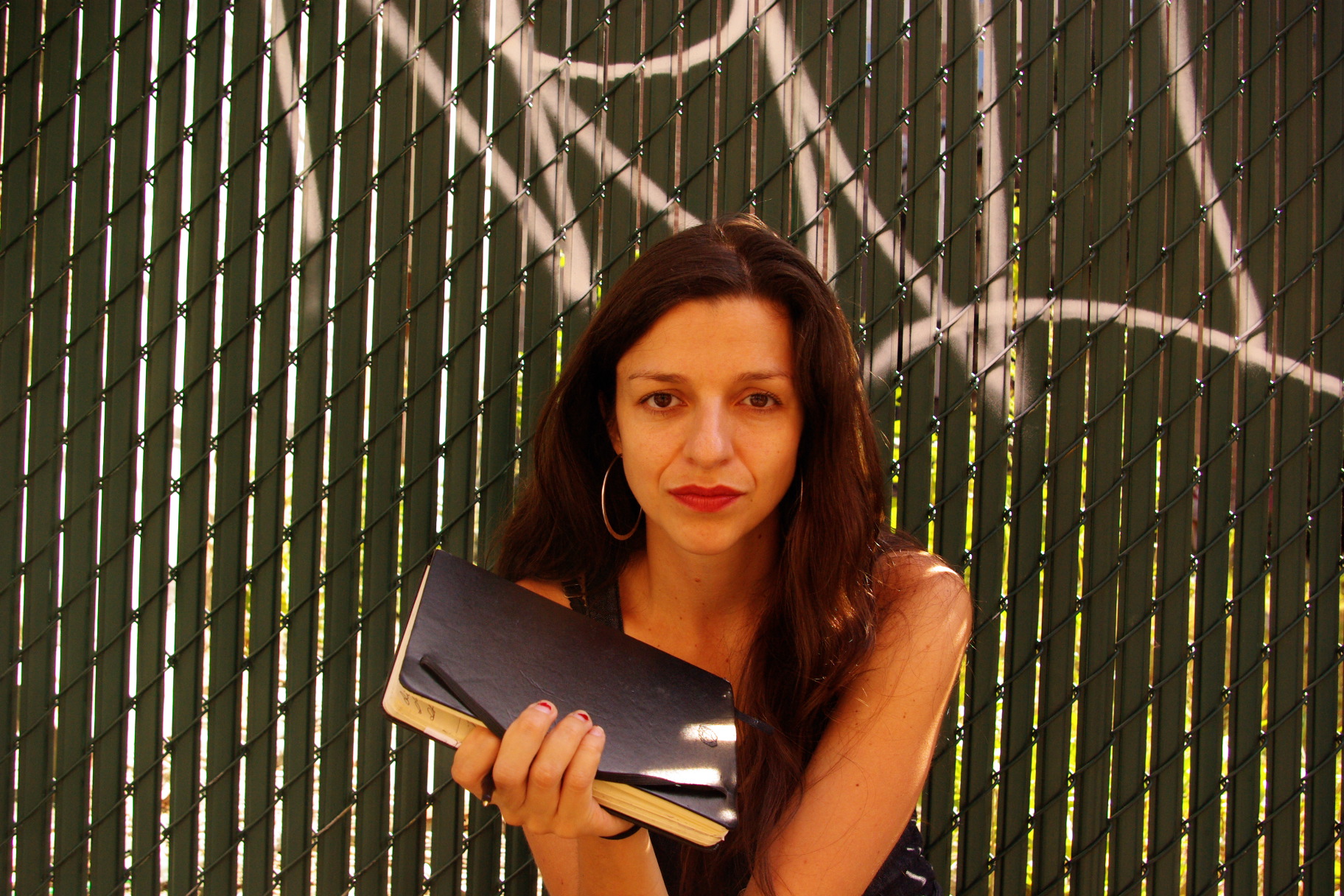 I have spent much of the last week with Sabrina Chap. I organized two events while she was in Seattle, and I enjoyed the conversations in between as much as the workshop and lecture. Sabrina is very open and encouraging when it comes to difficult subjects. She makes it suddenly okay to talk about topics such as grief and self-destruction that our society says are shameful. Her book
 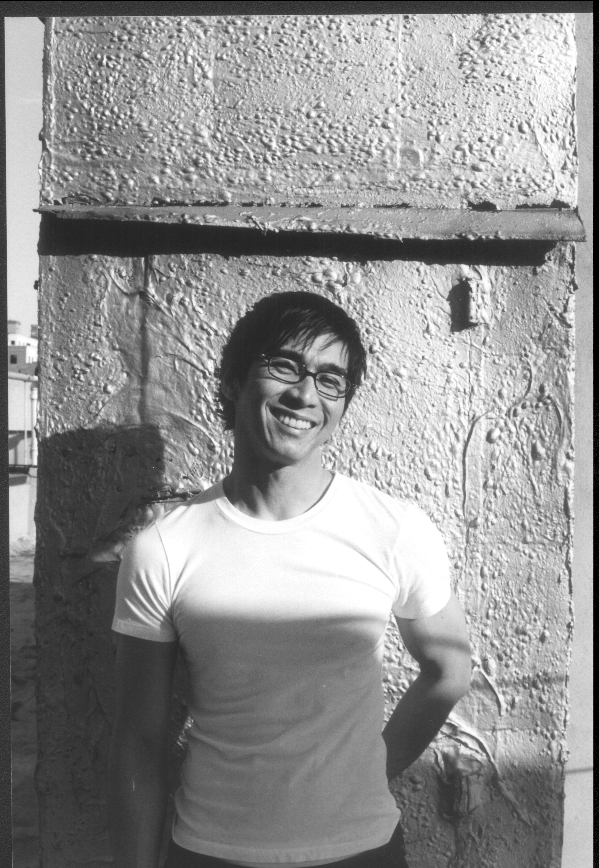 Why poetry? I’m asked frequently, which brings me to ask myself the same question. I imagine the typical inquisitor thinks poetry as gilded, arcane, highfalutin'. As it is, it has taken me years to be comfortable saying that I’m a poet. To this day there’s still a tiny level of discomfort, uttering the—what? title, character, state of being? What does it mean to be a poet? Poetry is not a career nor is it employment that pay the bills. It's not a marker of identity like gender or nationality. What is it that you do? Americans love to ask. I write poems. But not all the time. Not the same amount of hours as my day job, and my other jobs.
 The thing about invisibility is that there are real risks to refusing its cloak. Invisibility counts on these risks for its effective deployment. Anyone who has found their space at the periphery—which is more of us than not—knows how terrifying it can be to push back the curtain and demand to be counted. As the person at the helm of programming for the (In)Visible Memoirs Project, I am constantly awed by how many people—instructors, participants, and community sponsors alike—are ready to let their stories ring out.