Emotional Truth

5.18.16

In “The Deepest Place” by Kevin Nance in the May/June issue of Poets & Writers Magazine, Adam Haslett says of his new novel, Imagine Me Gone (Little, Brown, 2016), “it’s the most autobiographical thing I’ve ever written,” referring to the intensity of the emotional truth laid bare on the page. Choose an emotional event from your past and transmute it into a fictional scene. Create new, imagined consequences that nonetheless reflect the true anguish of the moment. How can turning fact into fiction construct a distance between the life and the work that offers a new take on an intense situation?

Han Kang Wins Man Booker International Prize

South Korean author Han Kang has won the Man Booker International Prize for her novel The Vegetarian. The £50,000 prize, announced on Monday at a ceremony in London, will be split between the author and her translator, Deborah Smith. This is the first year that the prize was given for a single work of fiction, and was open to writers of any language whose books have been translated into English.

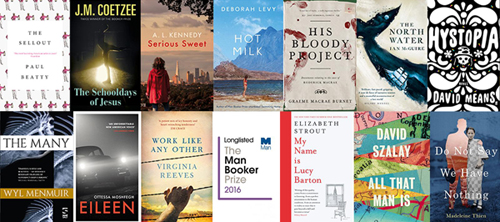
Han Kang beat out an impressive and diverse shortlist for the prize, which included Italian author Elena Ferrante for The Story of the Lost Child, the fourth and final volume of her Neapolitan Novels; José Eduardo Agualusa of Angola for A General Theory of Oblivion, which was written in Portuguese; Turkish Nobel laureate Orhan Pamuk for A Strangeness in My Mind; Robert Seethaler of Austria for A Whole Life; and Yan Lianke of China for The Four Books.

The Vegetarian, Han’s first book to be translated into English, is a dark novel about a woman who stops eating meat and wants to become a tree. From the Man Booker International website: “Fraught, disturbing, and beautiful, The Vegetarian is a novel about modern day South Korea, but also a novel about shame, desire, and our faltering attempts to understand others, from one imprisoned body to another.”

Han Kang is the author of two novels, The Vegetarian and Human Acts, both published in the UK by Portobello Books, in 2015 and 2016, respectively. Han was born in Gwangju, South Korea, and moved to Seoul at age ten. Her writing has won the Yi Sang Literary Prize, the Today’s Young Artist Award, and the Korean Literature Novel Award. She currently teaches creative writing at the Seoul Institute of the Arts.

British translator Deborah Smith began studying Korean in 2010. Her other translations include Kang’s second book, Human Acts, and Bae Suah’s The Essayist’s Desk and The Low Hills of Seoul. Smith recently founded Tilted Axis Press, a nonprofit publishing house focused on translations from Asia and Africa.

The Man Booker International Prize was created in 2005 to highlight “one writer's overall contribution to fiction on the world stage.” Until this year, the award was given biennially to a living author for a body of work published either originally in English or available widely in translation. The prize is now awarded annually for a single work of fiction, translated from any language into English and published in the UK.

Photo: Deborah Smith (left) and Han Kang (right) at the Man Booker International Prize ceremony in London. Anadolu Agency/Getty Images

Personal Possessions

5.17.16

Beginning next week, a collection of Marilyn Monroe’s personal possessions—including handwritten notes and receipts, an address book, lipstick and cigarettes—will be displayed on a worldwide tour before being put on auction. Choose one of Monroe’s items and write a poem imagining the story behind her connection to the item. You might even want to try writing from the point of view of the inanimate object.

The Seventh Annual Poets & Writers' Connecting Cultures Reading in New York City

Jyothi Natarajan is an editor and writer based in New York City who has worked in publishing and journalism for the past ten years. She is now managing editor at the Asian American Writers' Workshop, where she edits the Margins and runs a fellowship for emerging writers. As someone invested in the intersection of writing, social justice, and education, she helps run IndyKids, a social justice-oriented newspaper written by youth ages nine to thirteen. 

The Poets & Writers' seventh annual Connecting Cultures Reading took place on April 27, 2016, before a generous audience at the Asian American Writers’ Workshop. Ten writers representing P&W–supported organizations Jack Arts, Inc., Kundiman/Adhikaar, National Domestic Workers Alliance, Union Square Slam, and Women Writers in Bloom Poetry Salon gathered to celebrate the diverse literary communities of New York City and Poets & Writers' Readings & Workshops program.

When K Sloan, a singer-songwriter hailing from Detroit, opened the reading with a song, the audience fell into a stunned silence—her voice was just that powerful. "Down, down, down, bring it down," began the lyrics to "Ancestor Song," which Sloan wrote as part of Jack Arts, Inc.’s writing workshop Creating Dangerously. “I wrote these lyrics in response to a prompt asking us, ‘What would it look like to walk with your ancestors? What would you say to her?'” said Sloan. 

Joining K Sloan on stage was Sara Abdullah, an indigenous Arab/Iranian/Pin@y mestiza queer Muslima living the diasporic hustle, whose stunning poems were also generated from the Creating Dangerously workshop.

An experimental, performance-based writing workshop for women of color led by a rotating cadre of instructors including Virginia Grise and Kyla Searle, Creating Dangerously received support from Poets & Writers’ Readings and Workshops program, which has provided fees to writers who lead workshops that serve underrepresented audiences since Poets & Writers was founded in 1970. The Connecting Cultures Reading brought together writers who had participated in five such workshops. This year’s reading marked the first time Poets & Writers has featured work from multilingual workshops, bringing writers together with translators to help share immigrants’ stories, like Babita Chhetri.

Chhetri grew up in Darjeeling, India and had been doing childcare and housework for a family in Singapore for nearly a year when she decided she needed to escape from her employer’s exploitation and abuse. Underpaid and overworked, Chhetri did something most workers wouldn't have the strength or courage to do: She ran away from her employer. She had accompanied the family on a summer holiday in New York City and at the crack of dawn, Chhetri crept out of the building they were staying in, forced to leave her flip-flops behind.

"I felt everyone's eyes on me: here was a scared woman in wet pajamas, barefoot, carrying a small bag in her hand. Where could she be going?” Chhetri, who has been in the United States for the past nine years, read on stage from a letter she wrote in Nepali addressed to her daughter and son in Darjeeling. The audience was in tears. Her story was one of ten that were told through letters as part of a workshop called A Letter Home, organized by Kundiman and Adhikaar and led by writers Meera Nair and Muna Gurung.

Through the workshop, Nepali and Tibetan women expressed their experiences as domestic workers, immigrants, mothers, sisters, and daughters. Dolly Sharma joined Chhetri on stage to read her own letter, while the audience followed along with English translation printouts, all the while dabbing their eyes with tissues.

The night shifted from Nepali to Spanish when Adriana Mora, from Aguascalientes, México, and María Guaillazaca, who moved to New York from Ecuador nine years ago, read before the packed audience. Both women participated in a writing program organized by the National Domestic Workers Alliance in which they wrote in Spanish, responding to the idea of home—whether it was where they feel at home, other people’s homes, or the experience of working in someone’s home.

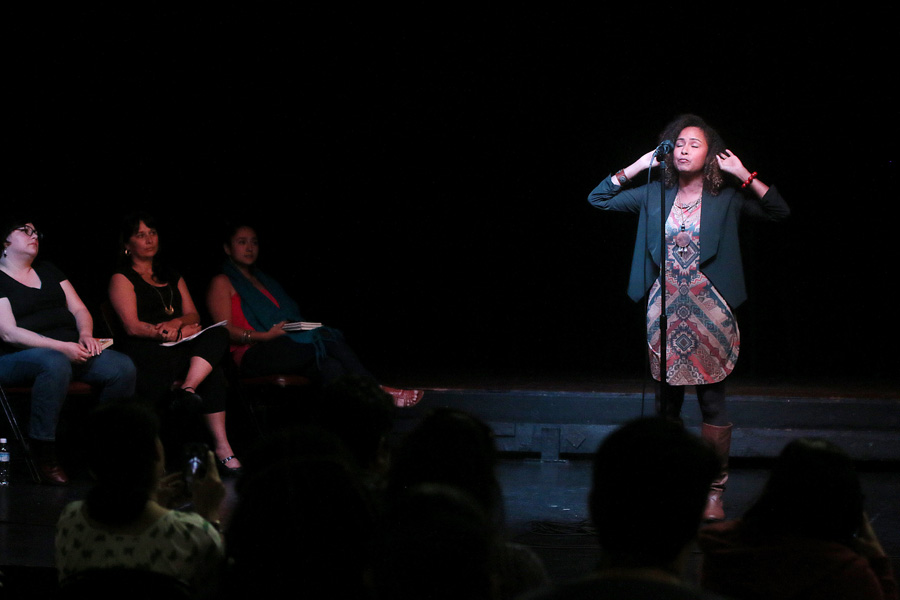
Other highlights from the evening included poet Sam Rush, who began writing poems after developing progressive hearing loss. Rush, who has been a part of Union Square Slam’s writing workshops, read poems that played with their realization of how many words each word could be, leaving the crowd dizzy with the emotional heft of their wordplay. Also a part of Union Square Slam, poet, screenwriter, and essayist Taylor Steele stepped on stage and immediately moved the mic aside. Her slam poems filled the room and left goose bumps in their wake.

Closing the evening were two writers from the Women Writers in Bloom Poetry Salon (WWBPS): Amber Atiya and Jacqueline Johnson. WWBPS, which is now celebrating its fifth anniversary, offers women writers of all levels space to create and share poetic work.

By the end of the evening the room felt much smaller. The stories and words shared so courageously gave even the audience members the strength to say hello to strangers, and share words with the writers who had moved them to tears.

Photo: (top) Readers from the Seventh Annual Poets & Writers' Connecting Cultures Reading. (middle) Dolly Sharma and Babita Chhetri. (bottom) Sam Rush. Photo credit: Alycia Kravitz.

Support for Readings & Workshops in New York City is provided, in part, by public funds from the New York State Council on the Arts, and the New York City Department of Cultural Affairs, with additional support from the Louis & Anne Abrons Foundation, the Axe-Houghton Foundation, the A.K. Starr Charitable Fund Trust, and the Friends of Poets & Writers.

What’s in a Name?

5.12.16

In a recent public poll, over 120,000 online voters suggested “Boaty McBoatface” as the name for a British polar research ship only to be disappointed when the Science Ministry in Britain decided to name the vessel instead after naturalist and broadcaster Sir David Attenborough. Write an essay about a name you’ve bestowed upon a person, a car, a stuffed animal, a plant, a kitchen appliance, or anything else. Recount the story behind the naming, and think about how it reflects your own sensibilities.

Ed Roberson Wins Ruth Lilly Poetry Prize

The Poetry Foundation announced today that Ed Roberson has won the 2016 Ruth Lilly Poetry Prize. The annual award of $100,000 honors the outstanding lifetime achievement of a living U.S. poet.

“In both language and in life (his studies have taken him to Alaska, South America, Africa and Bermuda), Ed Roberson is an explorer,” says Poetry magazine editor Don Share. “Working at a healthy remove from the precincts of professional critics and tastemakers, but admired deeply by them, Roberson’s ten books of poetry take readers, as they have taken the poet himself, to every corner of the vivid labyrinth of life.”

Based in Chicago, Roberson has written several poetry collections, most recently To See the Earth Before the End of the World (Wesleyan University Press, 2010). His experimental poetry is influenced by visual art, spirituals and the blues, as well as his extensive travels: Roberson has climbed mountains in the Peruvian and Ecuadorian Andes, explored the upper Amazon jungle, and motorcycled across the United States, amongst many other travels. He has received the Lila Wallace Writers’ Award, the Poetry Society of America’s Shelley Award, and the 2016 PEN/Voelcker Award for Poetry.

Established in 1986 by Ruth Lilly and sponsored by the Chicago-based Poetry Foundation, the Ruth Lilly Prize is one of the most prestigious American poetry awards and among the largest literary honors for English language works. Adrienne Rich won the inaugural award, and recent winners have included Alice Notley, Nathaniel Mackey, and Marie Ponsot.

At the Poetry Foundation website, listen to an audio recording of Ed Roberson discussing his work.

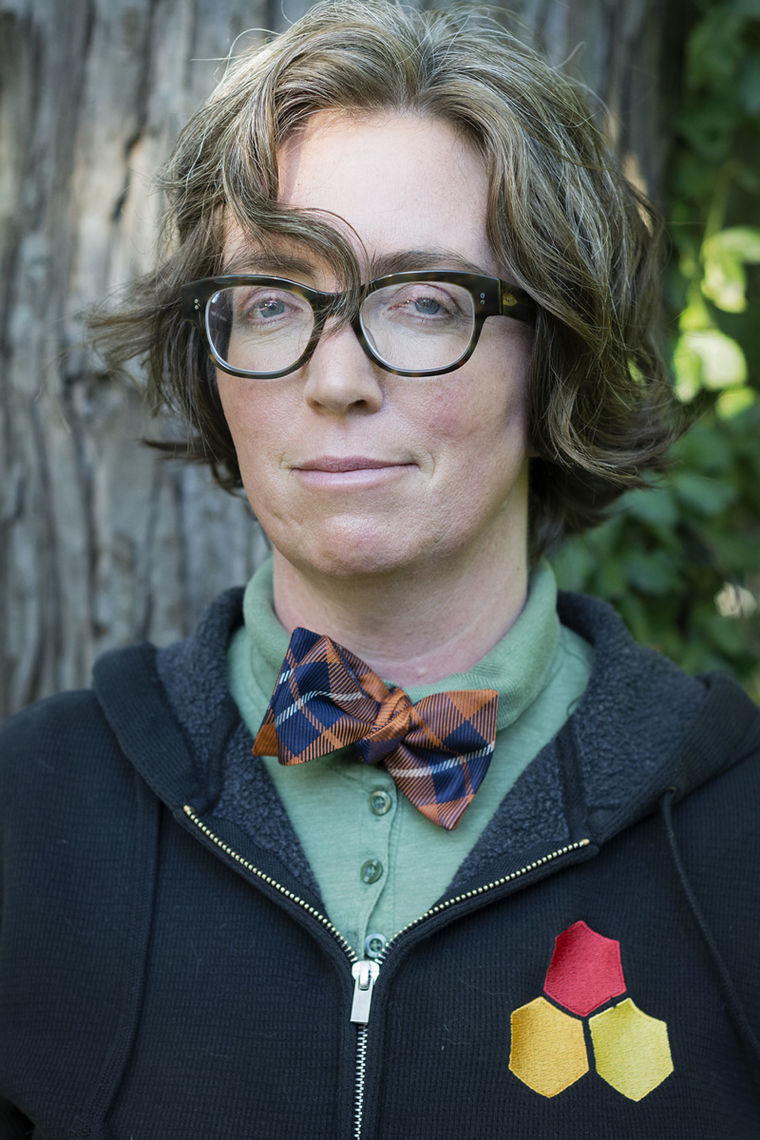
Photo credit: Anya Schultz for the Daily Californian.

Cult Book

5.11.16

Cult books, as with films that are considered cult favorites, often contain elements of the extreme, bizarre, or subversive—their power to inspire and persuade seemingly just on the edge of propriety. This week, choose one of your favorite cult books, or browse through this top-fifty list for ideas. Then, write a story about a character who stumbles upon this cult book for the first time, and after speeding through it from cover to cover, is suddenly empowered toward a new course of action. What is the single most influential element of this book for the character?

Word Aversion

5.10.16

A recent study by Paul Thibodeau, a professor of psychology at Oberlin College, examines the phenomenon of “word aversion”—the extremely visceral distaste that some people have in response to certain words, such as “moist,” “luggage,” and “phlegm.” Write down a list of five words that you find particularly repulsive, words that might not otherwise have any definitively negative connotations. Use these words in a poem and explore how word choice can propel you toward certain subject matter. Do you find yourself pulled to other repellant images and memories, or pushed to offset those words with more pleasing evocations?

Deadline Approaches for Little Bird Writing Contest

Submissions are currently open for the Little Bird Writing Prize,  given each spring for a short story. The winner will receive an award of $1,000 and publication in the annual short fiction anthology Little Bird Stories. A first and second runner-up will each receive $250, as well as publication in the anthology. Writer Lisa Moore will judge.
A bonus prize of free admission to contest founder Sarah Selecky’s Story Intensive, an online creating writing class featuring guest lectures from Margaret Atwood and George Saunders, will also be awarded to one entrant, chosen at random.

Using the online submission system, submit a story of up to 2,500 words and a $25 application fee, which includes a subscription to Little Bird Stories, by May 27. The story must incorporate one of the daily writing prompts or “story dares” featured on the contest website. For example, the 2015 winning story, “Paradise,” by Neil Smith, used this prompt: “Write a scene that uses layers and layers of clichés intentionally.”

Now in its sixth year, the Little Bird Story Contest was founded by fiction writer and writing instructor Sarah Selecky to support “innovative and emerging fiction writers.” In addition to daily writing prompts and the Story Intensive, Selecky also offers an online fiction workshop, revision tutorials, and homework for writers. She publishes Little Bird Stories each year; a percentage of each subscription goes to the Pelee Island Bird Observatory. For more information, visit the website or e-mail Selecky at support@sarahselecky.com.

Finding Our Voice After War

Mario Bonifacio writes short fiction. He served for ten years in the U.S. Army, both active and reserve, as a field artillery and cavalry officer, including a combat deployment to Iraq. He currently resides in Brooklyn, New York and has participated in the Voices From War writing workshop since 2014.

Back when war was a concept that only existed to me in history books or on the news, I wrote for myself—well, for myself and for the strangers who were out there, faceless, and felt things similar to me, even if they never read my work.

I chose active duty in the U.S. Army in 2003 and my writing slowed. Being trained for war, training a platoon for war and, eventually, war itself, all pulled my thoughts outward; reflections that could have once filled notebooks now remained on Texas shooting ranges and ambling desert roads in Iraq. The external world I’d chosen was dangerous and not to be taken lightly, but as I'd learn in the years that followed, so was ignoring the internal conflict that inevitably followed many of us home.

When I returned home from war, I focused on my professional reintegration, which was far from easy but a welcome distraction and enough to convince myself that I was happy—that to be walking and breathing was all I needed to be happy. To be anything but seemed a crime against the memory of those unlucky enough to have not made it back. But I knew enough to understand my happiness was worthy of distrust, like the way you feel when entering a rush hour subway car with what seems like too many available seats.

I joined the Voices From War workshop, sponsored by Poets & Writers, at first, to remain connected to other veterans, not yet convinced I wanted to write about my time serving or the issues I, and veteran friends, faced while readjusting. I obviously knew there was writing out there about the Iraq War, in addition to movies and other media, but I passively avoided it. The world beyond the military offered no shortage of lessons to learn, so why use my limited facilities to hear others speak about something I had already experienced firsthand? Much of it was pretty terrible anyway—inaccurate and exaggerated.

It was the other participants in Voices From War who convinced me that this wasn't a problem to be avoided, but rather one to be solved—a problem that would persist until we rose up to tell our version of the story. After all, no one but us had the memories to draw upon, to become the voices from the war in Iraq.

After completing my first few works and participating in my first readings, both in conjunction with the workshop, I was able for the first time to see those faceless readers I'd once imagined—people who might never have heard a war story directly from the source, people who feel they don't have a voice, and people I served alongside who, for many reasons, cannot tell their own stories.

In the most literal sense, our story doesn't exist unless we write it down. And I very much want our stories to exist.

Photos: (top) Mario Bonifacio. Photo credit: Christina Garofalo. (bottom) Voices From War workshop participants. Photo credit: Kara Frye Krauze.

Support for Readings & Workshops in New York City is provided, in part, by public funds from the New York State Council on the Arts, and the New York City Department of Cultural Affairs, with additional support from the Louis & Anne Abrons Foundation, the Axe-Houghton Foundation, the A.K. Starr Charitable Fund Trust, and the Friends of Poets & Writers.

Pages

Subscribe to RSS - blogs