Genre: Poetry

PEN Announces Literary Award Winners

PEN American Center, the New York City–based branch of the world’s leading literary and human rights organization, has announced the winners of the 2013 PEN literary awards. 

First-time novelist Sergio De La Pava received the organization’s most lucrative award, the $25,000 PEN/Robert W. Bingham Prize, given annually for a debut work of fiction. A Naked Singularity, De La Pava’s novel about the son of Columbian immigrants, was originally self-published in 2008 before being picked up by the University of Chicago Press.

Katherine Boo won the $10,000 PEN/John Kenneth Galbraith Award for Nonfiction for Behind the Beautiful Forevers: Life, Death, and Hope in a Mumbai Undercity (Random House), which won the National Book Award in nonfiction last year. Robert Hass received the $10,000 PEN/Diamonstein-Spielvogel Award for the Art of the Essay for his collection What Light Can Do (Ecco). The awards are given to writers of poetry, fiction, and nonfiction, as well as translators, playwrights, young adult authors, and editors.

“Every year PEN’s literary awards recognize the brightest lights in literary fiction and nonfiction and honor the sustained careers of writers who are distinguished in their fields, raising awareness for a diverse array of outstanding books,” said PEN President Peter Godwin. “These awards represent the best of PEN’s work in defense of free expression throughout the world—fighting censorship, promoting translations into English, and honoring both the new and well-known authors who make up the core of PEN as an organization. Their voices amplify our advocacy work.”

The winners and finalists will be honored at a ceremony at the CUNY Graduate Center in New York City on October 21. Visit the PEN American website for more information on the annual awards program.

Poet Jenny Sadre-Orafai on Superstition, Hair Color, and Building a Literary Life

Jenny Sadre-Orafai is the author of four chapbooks. Recent poetry has appeared in Rhino, [PANK], The Bakery, Sixth Finch, ILK, iO: A Journal of New American Poetry, and Poemeleon. Recent prose has appeared in The Rumpus, Delirious Hem, the Los Angeles Review, and South Loop Review. She is co-founding editor of Josephine Quarterly and an Assistant Professor of English at Kennesaw State University. This past spring, she participated in a P&W–supported reading with poet Heather Tosteson at the Dekalb Public Library in Atlanta.

Jenny Sadre-OrafaiWhat opportunities are there for younger writers such as yourself to build a literary life/livelihood?
The internet and social networking sites are wonderful resources for those who, like me, might be shier than others. They serve as great tools to be in conversation with other writers.

There is also much to be said for writers’ conferences and being in that kind of environment. There’s a sense of camaraderie and mentorship that is difficult to find once you leave college (if you attend college).

It’s really important that younger writers are proactive and seek out living the literary life if that’s what they truly want. Being passive isn’t really an option when it comes to being a writer, not for me at least.

Does your bicultural background (Mexican and Iranian) play a significant role in your writing?
So much of what I write about is who I am and who I came from. What Her Hair Says About Her, my second chapbook, is largely about having dark hair and wanting blonde hair, and then wanting my dark hair back. I associate my hair color with where I come from.

My fourth chapbook, Avoid Disaster, is based on my research of different superstitions from around the world. Those poems were written because I am an extremely superstitious human and because of the superstitions that were a part of my life growing up.

Can you describe a memorable moment from an event you’ve been part of?
After a recent reading, some people came up to tell me that they really enjoyed my poems about my grandmother and how she read coffee cups. That compliment led to a discussion about superstitions—which animals come for the dead in different cultures (a fox in Iran and a hummingbird in Mexico). By the end of the exchange, the group had almost tripled in size.

I always assumed that people would be leery of superstitions, but I’ve learned that most people are not only intrigued by them, they also don’t find them terribly difficult to believe. The conversations that happen after readings—and the listening I get to practice—are what makes them even more rewarding.

What are your reading dos?
I try to always be prepared with poems I think work well together and have a nice momentum, but I’m also ready to change things up depending on how the reading is going. I'm more aware of breathing and grateful for the opportunity to be heard. Perhaps what’s most important is that I take my time when I read, so I’m there in that moment with everyone else.

…and your reading don’ts?
I avoid long-winded explanations. A little background information here and there allows the reading to be more of a conversation, but I try to limit how much I talk between or about poems since I think the audience is there to hear the poems.

What do you consider to be the value of literary programs for your community?
It’s such an extraordinary thing to be able to meet other people who write or love to read and listen to literature. These programs serve as important reminders that even though writing and reading are mostly solitary acts, we are not so alone.

Photo: Jenny Sadre-Orafai. Credit: Stephanie Sadre-Orafai.
Support for Readings/Workshops events in Atlanta is provided by an endowment established with generous contribution from the Poets & Writers Board of Directors, and others. Additional support comes from the Friends of Poets & Writers.

Food for Thought

8.13.13

Think of your favorite meal. Write a poem about the recipe, describing how each ingredient and every action contributes to the final whole.  Evoke the five senses—from the sound of a whisk to the smell of paprika. Explore what this meal means to you and why. Write vibrantly, unless gruel is your thing.

Wendell Berry Receives Dayton Literary Peace Prize

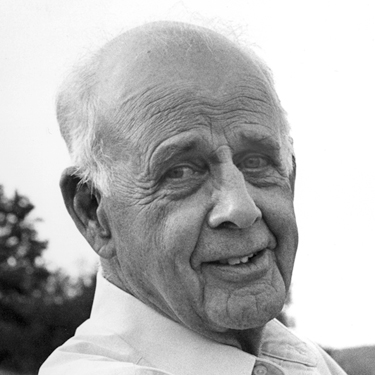
Wendell Berry, the Kentucky–based poet, novelist, essayist, farmer, and activist, will receive the 2013 Dayton Literary Peace Prize Richard C. Holbrooke Distinguished Achievement Award.

The award, announced yesterday, was given to Berry “in recognition of a lifetime of letters exploring how humans can live more harmoniously with both the land and each other.” Presented annually to an author for a complete body of work, the award is named in honor of the celebrated U.S. diplomat who played an instrumental role in negotiating the 1995 Dayton Peace Accords on Bosnia. The award will be presented to Berry at a ceremony in Dayton, Ohio, on November 3. Tim O’Brien, who won in 2012, will present the award.

berryBorn in Kentucky in 1934, Berry is a full-time farmer who has written more than fifty works of poetry, fiction, and nonfiction “that explore themes of community, conservation, and the quiet power of living a simple and slower life.” His most recent works include New Collected Poems, the story collection A Place in Time, and the essay collection It All Turns on Affection, all published by Counterpoint Press in 2012. Berry was named the 2012 Jefferson Lecturer and received the National Humanities Medal from President Obama in 2011.

“In a career spanning more than half a century, Wendell Berry has used poetry, fiction, and essays to offer a consistent, timely, and timeless reminder that we must live in harmony with the earth in order to live in harmony with each other,” said Sharon Rab, founder and co-chair of the Dayton Literary Peace Prize Foundation. “His writing has inspired readers to imagine the lives of people and things other than themselves—enemies, neighbors, plants, and animals—in order to advance the survival of humankind and Earth itself.”

“In a time that spends so many words and dollars upon conflict," Berry said, "it is encouraging to be noticed for having said a few words in favor of peace.”

Linda Nemec Foster- Despite Everything You're Heard About the Motor City, Detroit's Poetry Community Flourishes

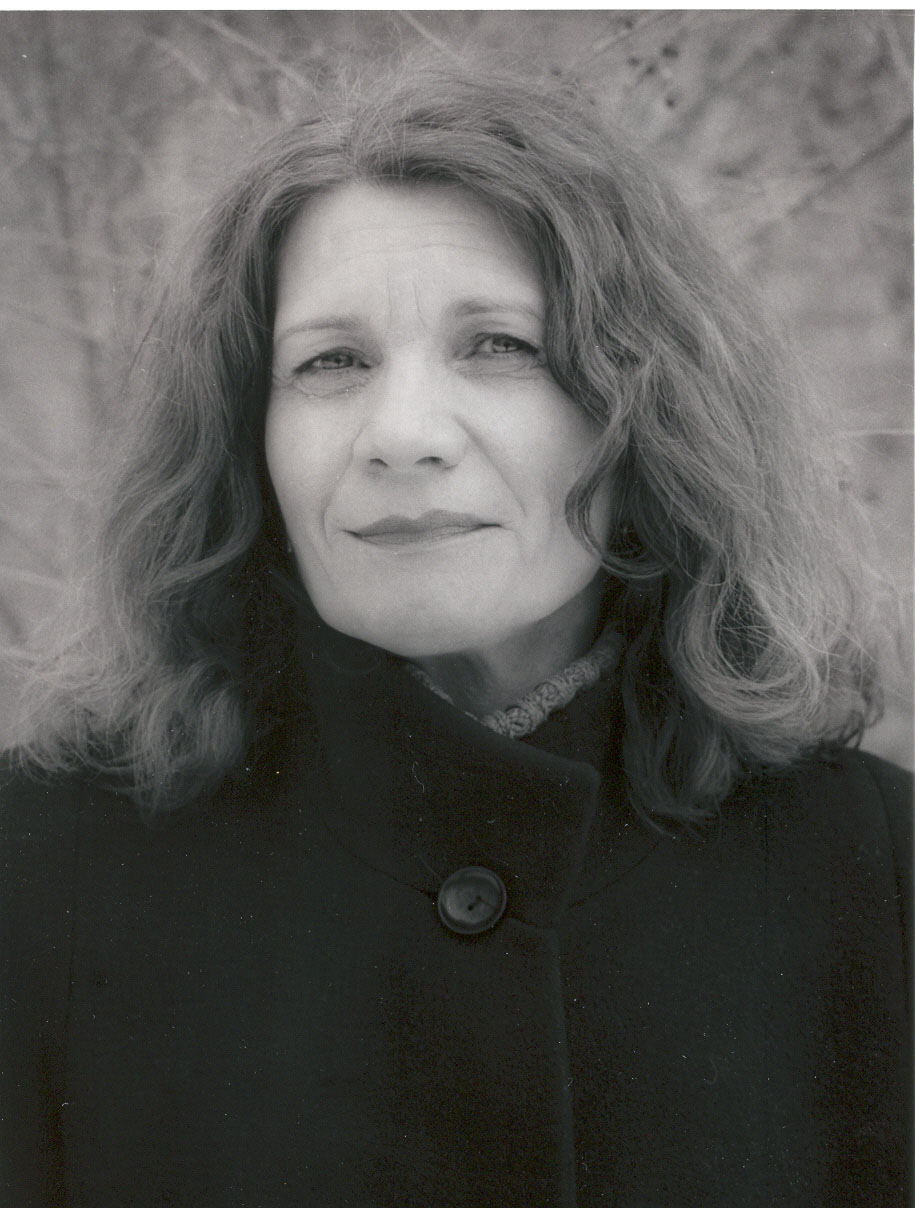
Linda Nemec Foster blogs about the P&W supported event at UDetroit Cafe. Author of nine collections of poetry, including Talking Diamonds (finalist for ForeWord Magazine's Book of the Year) and Amber Necklace from Gdansk (finalist for the Ohio Book Award). Linda Nemec Foster's work has been published in the Georgia Review, Nimrod, North American Review, and New American Writing. Cry of Freedom, her collaboration with musician Laszlo Slomovits, inspired by the poems in her chapbook, Ten Songs from Bulgaria, was released as a CD in 2013. She is a Pushcart Prize nominee and the founder of the Contemporary Writers Series at Aquinas College.

The same day that the public announcement of Detroit’s bankruptcy was blasted around the world, I was invited to write this blog. Pretty ironic, eh? Not if you know anything about the D’s thriving and dynamic poetry scene. I currently live in west Michigan (Grand Rapids, to be exact), but I lived in Detroit for ten pivotal years in the ’70’s and ’80’s. Those were the years when I started writing poetry and began working on my degree in the country’s first low-residency MFA Program at Goddard College (this program that Ellen Bryant Voigt founded has subsequently moved to Warren Wilson College). There is another reason why the city has played a special role in my life--my first child, Brian, was born there in 1979.
Because of my personal connection to the D, I have maintained close relationships with a number of Detroit’s poets and writers. Through those connections, I have been invited to give readings, workshops, and conference presentations several times a year. Many of those events have been sponsored by Poets & Writers including my appearance on August 15, 2012, at the UDetroit Cafe. That was one very special night.

The venue was packed, the crowd was enthusiastic, and the host--Detroit poetry impresario M. L. Liebler--was a great M.C. His introductions were lively and so were the readers and performers. Besides your humble blogger, the program included the music of the RJ Spangler Trio with Larry Smith, performance poet Wardell Montgomery Jr., Detroit musician Keith Gamble, and poet Mary Jo Firth Gillett. Reading with Mary Jo was particularly wonderful: She’s a fine poet and a former student (she participated in a master level poetry workshop I taught at the Detroit Institute of Arts in 1999). Everyone who took the stage was in terrific form. I read five poems including a long piece on my favorite movie star of all time, Barbara Stanwyck. It brought down the house. Who knew that I had a bit of the performance poet in me?

It certainly was a grand evening. Besides, there was someone in the audience that made it even more of a memorable event. Brian (yes, my son who was born in the D) was able to come to the reading and be part of that enthusiastic crowd. Unbeknown to both of us, there was an artist sitting nearby who drew a pen and ink sketch of us while we were talking before the readings: mother and son with the Detroit skyline in the background. He gave us the drawing gratis--”a gift from the D.”

Poets & Writers, with its Readings/Workshops Program, is the epitome of The Gift. The impact of its support that has benefited communities throughout the country is immeasurable. And for a community like Detroit--with everything it’s been through--the Program is a significant affirmation of the vibrant voices of poets and writers that care deeply about their city.

Photo: Linda Nemec Foster. Credit: Robert Turney.

Support for Readings/Workshops events in Detroit is provided by an endowment established with generous contribution from the Poets & Writers Board of Directors, and others. Additional support comes from the Friends of Poets & Writers.


Pages

Subscribe to Poetry