Welcome to Our New Blog

Last week we posted a comment on our Facebook page inviting our fans to contribute questions for our Agents Advice column. We received some great questions from writers who wanted to know more about the process of getting the attention of a good agent, writing an intriguing query letter, and, you know, sealing the deal.

There were also some good-natured (we think) jokes about agents. “Are you consistently drunk on the power you possess, fighting every moment to maintain a hold on decorum?” one fan asked of any agents who might have been following the comment thread. “If I had that kind of influence, I’d wield it like an angry hammer.”

We know that the prospect of securing a literary agent is daunting and, for some writers, seemingly not worth the trouble. That’s partly why we decided to launch this, our new Agent Action blog. Here we’ll regularly explore the nuts and bolts of approaching an agent and selling your work, provide news about agents and their clients, and relay some first-hand anecdotes from authors who have had success—and even some who haven’t.
Together we’ll take that angry hammer and break down the wall that seems to separate us from them.

As one agent wrote in response to the Facebook comment above: “Most agents work their butts off to sell books that they believe in, and often fail. Just like writers, we face rejection and discouragement all the time.”

If you have any suggestions for Agent Action, let us know in the Comments field below.
Randall Horton

Poets & Writers has been integral to my development as a poet in the larger universe. The print magazine and Web site have been valuable resources in terms of knowing how other poets are navigating this very difficult landscape of writing. While I was completing my MFA at Chicago State University, Poets & Writers helped me to submit my work to literary journals and magazines, and eventually to the press that would publish my first book. Also, through support from P&W's Readings/Workshops program, I have been able to read in places that I might not have normally read.

randallhorton.JPG
Writer Photo Credit: 
Rachel Eliza Griffiths

Kingsolver Takes Orange Prize, Top Sales in U.K.

Earlier this week, Virginia author Barbara Kingsolver took home the fifteenth annual Orange Prize for Fiction, a thirty-thousand-pound award (nearly forty-four thousand dollars) given to a woman writer of any nationality for a novel written in English. Kingsolver's winning book, The Lacuna (Harper), was up against American Lorrie Moore's A Gate at the Stairs (Knopf) and Wolf Hall (Holt) by Hilary Mantel of England, who won the Booker Prize and the National Book Critics Circle Award for her historical novel.

This is the second year in a row in which an American has received the Orange Prize—last year Marilynne Robinson won the award for Home (Farrar, Straus and Giroux, 2008).

Zimbabwean author Irene Sabatini won this year's Orange Award for New Writers for her debut novel The Boy Next Door (Sceptre), rising to the top of a shortlist that included U.K. writers Jane Borodale for The Book of Fires (Harper Press) and Evie Wyld for After the Fire, a Still Small Voice (Jonathan Cape). Sabatini received ten thousand pounds (approximately $14,500).

In the United Kingdom, where the prize's sponsor, Orange Broadband, is based, Kingsolver's novel (in paperback) leapt to the top spot on U.K. Amazon best-seller list in contemporary fiction, and is currently at number six in books overall, with a rise of 835 percent the night after the award announcement, according to the Guardian. Meanwhile, on the American retail site, the book (in hardcover—a paperback edition won't be released until August) weighs in at number seventy in the contemporary category and ranks in the mid-hundreds in general. This may be a slight disparity given the sheer number of books available on Amazon, but a curious one nonetheless.

How do literary awards inform your interest in a book? Are you more likely to purchase a title that comes with a prize committee's imprimatur? Would a book recognized by a local or national prize be more likely to be in your shopping basket? Leave a comment and let us know what you think about the Orange Prize and literature's other big awards.

In the video below, prize judge Daisy Goodwin discusses Kingsolver's Mexican Revolution-era book, which calls out the lacunae, or gaps, in history.

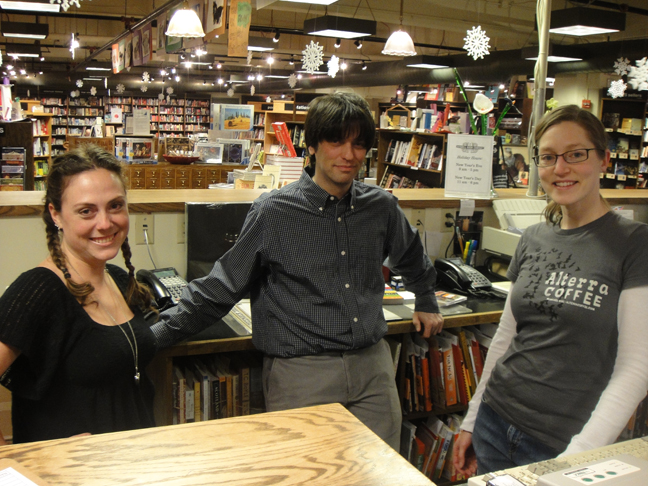
Boswell Book Company 9

"People who don’t know me sometimes refer to me as Daniel Boswell," Goldin says. "That’s of course not the case, but in a sense it is. The store is close to a half-century of my book and idea obsessions, plus the brainstorms and hard work of my booksellers, together with the whims of my customers. It’s very much me, but I hope it will also live on after me. All you have to do is say to yourself, 'This is the most important thing you will ever do,' and it should fall into place."

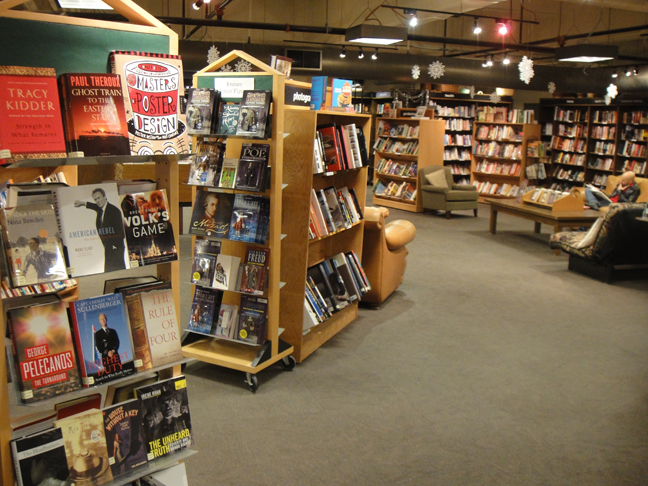
Boswell Book Company 8

"In the front of the store I have a book club section; I have the IndieBound best-sellers; I have my staff picks; I have Boswell’s Best, which is really like a buyer’s pick; and I have prizewinners and what’s in the media," says Goldin. "My idea is that—especially with hardcover—I will put the same book in two or three different places if it belongs there. That way maybe someone will get confirmation from three different sources that this is the book that they want to buy."

Pages

Subscribe to Poets & Writers RSS