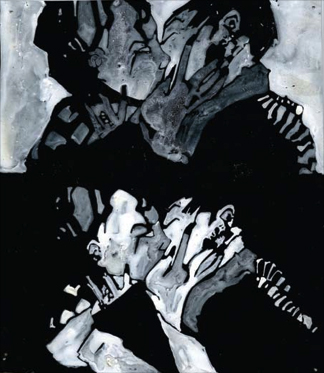
Zak Smith 3

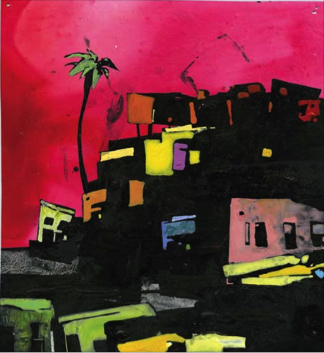
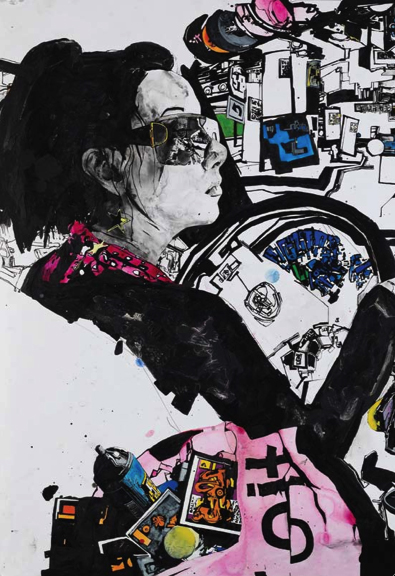
"The drawings were done in ink on paper using whatever pen was around, usually a Uniball Vision Micro or Pigma Micron. The paintings are acrylic paint," writes Zak Smith in a note at the end of his new memoir. "Although there are no photos, there are two images that are derived from drawings that have been transferred and altered in a chemical darkroom using a process called contact printing. It brings out the texture of the paper and the color in the ink and makes the drawings blurry in an interesting way."

Zak Smith 2

"The drawings were done in ink on paper using whatever pen was around, usually a Uniball Vision Micro or Pigma Micron. The paintings are acrylic paint," writes Zak Smith in a note at the end of his new memoir. "Although there are no photos, there are two images that are derived from drawings that have been transferred and altered in a chemical darkroom using a process called contact printing. It brings out the texture of the paper and the color in the ink and makes the drawings blurry in an interesting way."

Zak Smith 1

"The drawings were done in ink on paper using whatever pen was around, usually a Uniball Vision Micro or Pigma Micron. The paintings are acrylic paint," writes Zak Smith in a note at the end of his new memoir. "Although there are no photos, there are two images that are derived from drawings that have been transferred and altered in a chemical darkroom using a process called contact printing. It brings out the texture of the paper and the color in the ink and makes the drawings blurry in an interesting way."

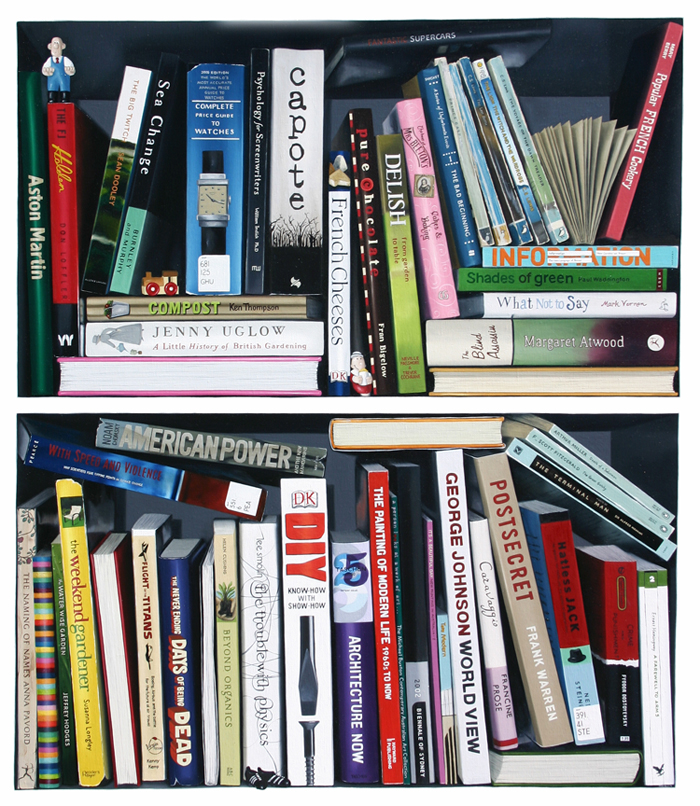
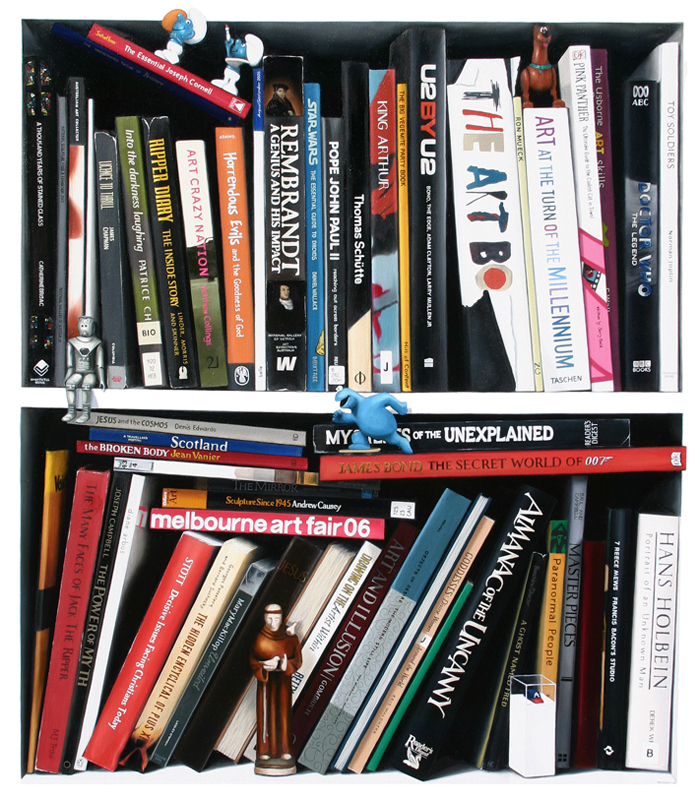
The Big Twitch, oil on canvas, 2008, 66 x 75 cm

Victoria Reichelt has been shortlisted for a number of art prizes, including the Geelong Contemporary Art Prize, Conrad Jupiter's Art Prize, and the Canberra Contemporary Art Prize. Her work has been shown at the Canberra Contemporary Art Space, the the QUT Art Museum in Brisbane, the 2008 Melbourne Art Fair, and most recently at the Gallery of Modern Art in Brisbane. She is represented by the Dianne Tanzer Gallery in Melbourne, Victoria.


Self Portrait, oil on canvas, 2009, 110 x 110 cm

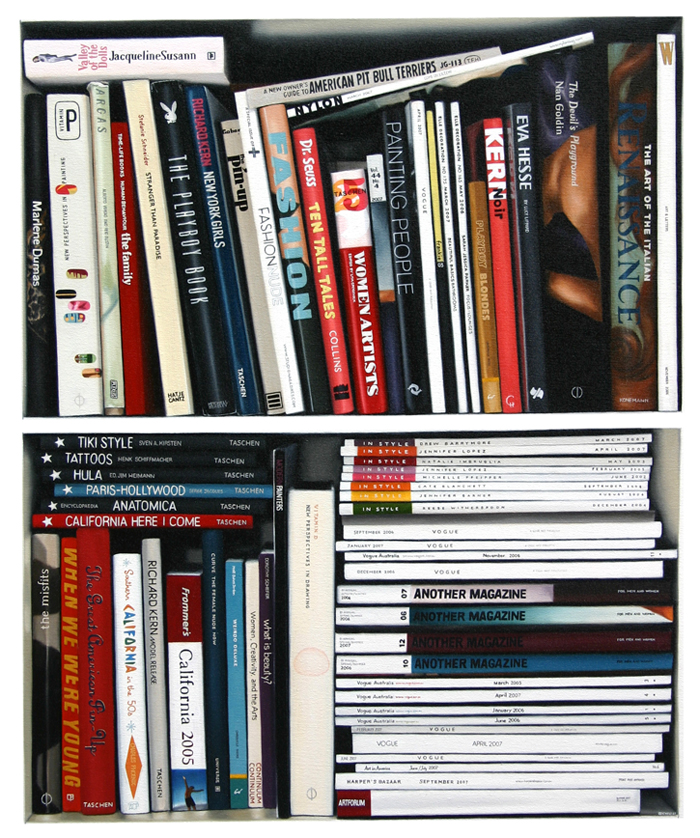
"When discussing bookshelves in modern day houses, Alan Powers suggests that 'they represent the extension of a personal world, whether their purpose is the active research of the scholar, the pride possession of the collector or the random acquisitiveness of the curious mind.'"


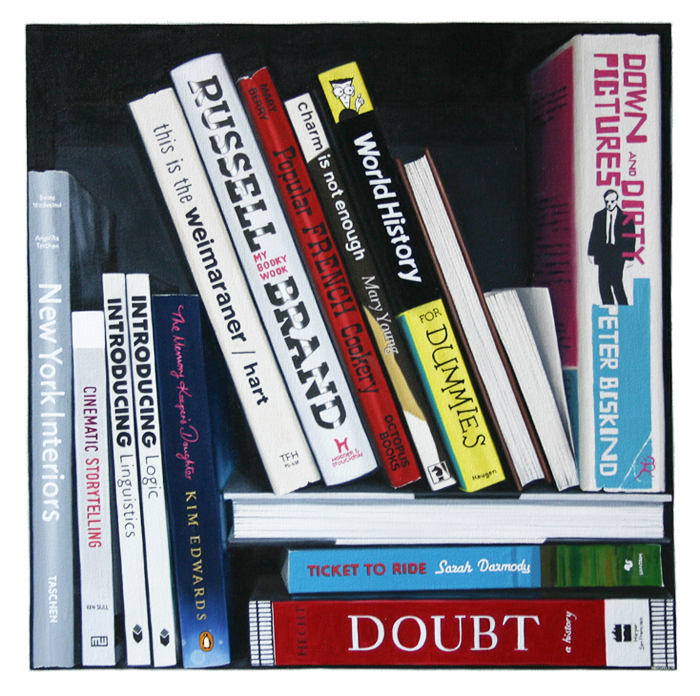
Doubt, oil on canvas, 2008, 44 x 44 cm

"Conventional portraiture relies on a visual representation of the subject, through which most of the information you get is about their visual appearance. However, photographing and painting someone's bookshelf reveals another side to them and offers a deeper insight into their interests."


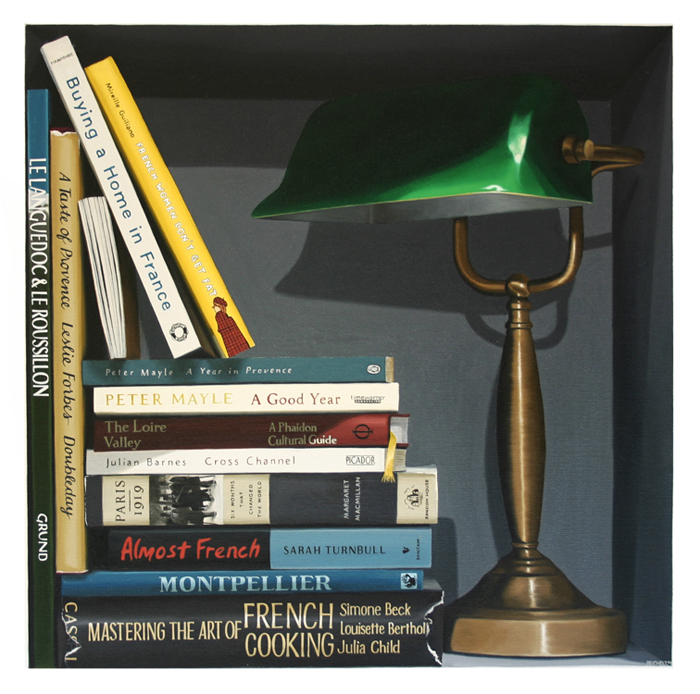
Almost French, oil on canvas, 2008, 44 x 44 cm

"With the invention of printing techniques that enabled the mass reproduction of books in the 19th century, came a desire for people to collect and display books. Decisions people make about the books they chose to buy, keep and display reveal a considerable amount about them."


Alasdair Macintyre, oil on canvas, 2008, 64 x 73 cm

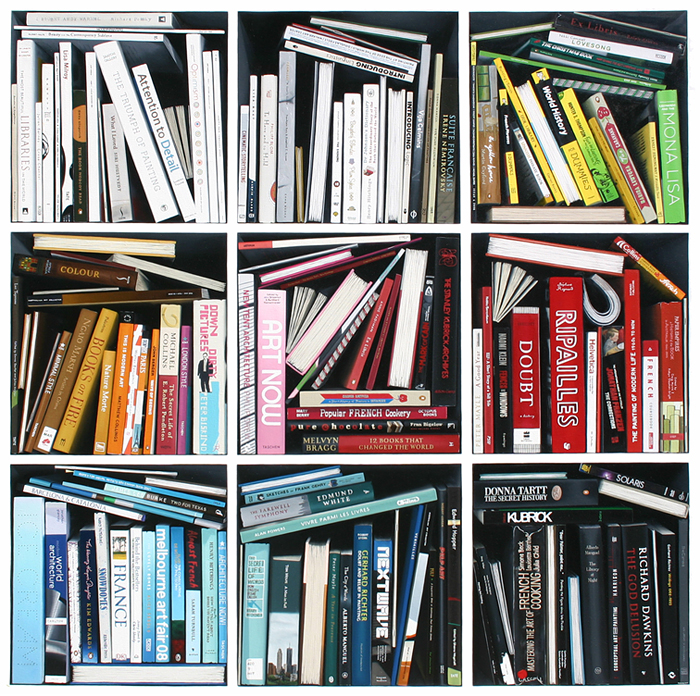
"These works are a paradox to paint, as once the books are an image on canvas they are shut forever and can never be read," Reichelt writes. "In a painting they serve a very different purpose from their intended function—they are purely objects like any others, that have histories and narratives of their own, quite separate from the text inside them. Yet we are still drawn to that text and narrative as represented by the painting and underscored by the book jacket illustrations, titles and authors' names."

Abbey McCulloch, oil on canvas, 2008, 60 x 70 cm

"I am currently making a series of paintings based on photographs of bookshelves," writes Australian artist Victoria Reichelt. "Some paintings are portraits of Australian artists and some are random shelves and collections of books, often particularly worn, their tattered jackets reflect their long years and multiple readings."


Care to Kick Back in Frost's Old Farmhouse?

Looking for a place to write during the summer? Sure, you could hole up in your home office or sweet-talk the barista at your local coffee bar and claim the corner table as your own. But if you want a truly unique writing spot, consider Frost Place, the nonprofit educational center for poetry and the arts based at Robert Frost’s old homestead in Franconia, New Hampshire. July 3 is the deadline for next year's Resident Poet Award. The prize of two thousand dollars and a two-month residency at Frost's old farmhouse is given annually to a poet who has published at least one poetry collection. 

This year's winner is Poets & Writers Magazine contributing editor Rigoberto González, who will be arriving in Franconia in early July and spend two months in the house where Frost and his family lived full-time from 1915 to 1920 and spent nineteen summers. The Frost Place has been awarding the residency for the past tweny-two years. Previous winners include Katha Pollitt, Robert Hass, William Matthews, Mary Jo Salter, Denis Johnson, Sherod Santos, Pattiann Rogers, Stanley Plumly, Jeffrey Skinner, B. H. Fairchild, Major Jackson, and Laura Kasischke.


Pages

Subscribe to Poets & Writers RSS