

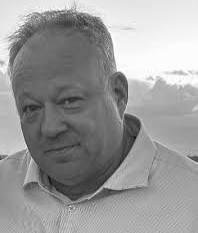
Poet

Author's Bio
I am a New York-based poet who began submitting poetry for publication in 2025.
My approach to and theory of poetry is "Organic Structure."
It is an approach I developed but did not name when I wrote and published poetry in college 35 years ago, and it conceives of the poem as a living organism, within which, the ideas and emotions that it conveys are its soul and DNA, and like DNA, they permeate, and in fact create, every detail, every aspect of the poem, in the way that Henri Bergson envisioned "Creative Evolution" would work.
The finished product can but does not necessarily take the form of "concrete poetry." The process can manifest itself in inumerable ways, which for me have included various custom forms, prose poetry and a wide range of received forms the internal architecture of which is then molded by and for the ideas, emotions and story. The external form is only the skeleton - within which the ideas, emotions, story and theme live in every detail, every facet, of the piece. By every facet, I mean justification, enjambment, punctuation (or lack of it), end and internal rhyme, choice of word, choice and number of narrative characters, setting, story, pacing, meter, metaphor, imagery, symbolism, cultural references and more. Every detail.
That is the "structure." It manifests as "show-don't-tell" taken to the extreme, and goes beyond harmony and cohersion. There can occasionally be ambiguity within the piece, but the ambiguity introduces new perspective, and invites new questions, deeper analysis instead of causing confusion. The idea can be the existence of an unresolved conflict - two forces that collide or that are parallel - but the idea is the soul, and it permeates and creates the body, and the body exhibits the relationship between the two concepts.
That is where the "organic" comes in - the poem evolves on its own - the ideas create the physical poem. My process is that ideas - often ideas from different categories of learning, where I see parallels, connections, or opposites - combine in a chemical reaction, and compound and evolve to create a physical embodiment of their being, and that is what becomes a poem - which sometimes elongates into a story. which isn't much of a departure, as so many of my poems are narrative (just, not narrated by me).
This explanation contemplates a poem as a visual, but it applies to all the senses, and can be done in a way that engages the sight-challenged. I am working on one example now, to be published in Braille 2.
While I agree with the Udege and Native American concept that "The Creator lives on all things," I refer to my approach as "organic" because I cannot claim as a "creator" to have consciously driven the entire process. I harvested the ideas and put them in or on the same dish, and they grew organically.
I will provide a recent example. My stepdaughter gave me a copy of Gertude Stein's "Tender Buttons." I read it in the Conservatory Garden, and the discussion of pink, light blue, "the same red," purple, thread, a carafe, and rooms, in the abstract, were simultaneously fascinating and bothersome, and this internal conflict brewed into a reaction - a series of related, tangible, physical, hard-reality-based images emerged in the other side of my brain, and suddenly, Archimedes was narrating about pink sailors in the light blue sea, swimming away from a ship sinking after having been capsized by his claw, and of the daughter of the now-deceased King, his friend, manipulating her brother into an allegiance with the purple of Carthage, ending a 50-year relationship with Rome, obviously angering the Romans, and of the red of the tunics of Roman soldiers climbing the wall, and the same red of the wine being consumed from too many carafes on the feast of Artemis, and the same red of Archimedes' blood, spilling out onto his floor, and this all took the shape of a Sicilian ottava rima in which the first two stanzas use the traditional and more feminine trochaic end words while the third and last uses single syllables at the end, and through most of each line, breaking from traditional meter to bring in shorter and more masculine phrasing to describe the very tangible fall of Syracuse and the narrator's death during the siege - though the posthumous narration and the placement of wine and blood next to each other hint at life after death.
The poem wrote itself - the ideas evolved into the narrative and adopted and then adapted the only form that would make sense - an Italian form native to Sicily. I tweaked and pruned for a bit afterwards, but the organic process had produced in my head a very-far-along draft that I feverishly typed to record, before the tweaking began.
You can like this or not like this, aesthetically, and that particular poem is not published yet, so you will have to wait - but it does something new. It represents an evolution beyond what had been done before, in that this is "show-don't tell," multiplied by itself. It is never forced, precisely because it is organic. The seamless flow often results in the reader not catching everything, but the poem is not meant to be read once, quickly, and then discarded - there is no intention that every detail be recognized immediately. The poem is meant to be engaged with. That is how I read poetry, and how a lot of people used to read poetry.
This was the direction I took 35 years ago, and at that time, it was a clear "next step" after, or outgrowth from most of what had been done prior. Not necessarily an improvement, just a new direction stemming from most of what had been done.
The interim period, during which I not only did not write poetry but did not read any new poetry, creates a new context for this evolution, because while I was on long hiatus - reading old poetry but no new poetry - most of the new poetry produced, especially by writers who came of age after me, did not evolve from the old, but rather, rejected it and rebelled against it, or just didn't want to do the things that distinguished poetry from other short form written communication - leading to a lot of "tell, don't show" - there is a lot of "vibe," in which it isn't always clear what the writer is attempting to communicate or that lays out a grim, gritty but trite scenario - like the funeral speech in Robert Altman's "The Player.". Then there is "direct" poetry - what call "contemporary confessional" - first person narrative with the poet as narrator - and then "sincere" poetry, which appears to be "contemporary confessional, with more feeling," or at least, at higher volume. While 1960s "confessional" traces its roots to Romanticism, the contemporary version is something different, and resembles SM posts, some of which are converted into a poem, not through artifice but through odd like breaks, wordsmithing, narrating using vocabulary words or poem words (e.g., short consonant sound surrounded by complex, multi-consonant sounds, making the poem hard to physically speak, which seems to make it less relatable, not more, and less direct, not more). The odd line-breaks or spacing are often done with the intention not of creating a visual of the subject but of telling the reader to pause, then read the isolated word, which, by itself, in the context of first person narrative in which the writer is the narrator, which seems unnecessary and forced. I have used virgules once, as punctuation, because viewed together on the page, they resembled raindrops, in a poem narrated by a young, distraught woman who takes sleeping pills and other measures to block out time and dates and the sun outside, then brings our attention to her nightstand photo of herself and her sister outside on a rainy day. That too just came to me. The virgules are not there to "look cool" or "edgy."
a / mangy / dog / barks //
The development of poets through workshops, and selection of poetry through fast-paced editorial curation, seem designed to support the quick, the direct, the heartfelt and/or hard-punching statement, over the slow burn, the ache, the metaphor inside a metaphor, the lead-up to the aha moment - all of which are characteristic of most of the "great" art - poetry, painting or otherwise. The listener or reader is bound to miss all but the most obvious metaphors, and may simply be anti-metaphor, at this point.
I did not return to writing in response to that shift - my thesis originated before it had occurred, and I came back to writing because I had time and because nobody had gone in the direction I'd gone, and I thought that I had begun to lay down a path was worth being walked. I have not altered my approach in consideration of the shift to the "direct" - I cannot do that, because I have no other way to write - the ideas pop in there, and I cannot sit down with the assignment of writing a rondeau, and write a good one - if I have an idea about birds, it may evolve into a rondeau because the repetition enables the repeating bird's calls and behavior, but the idea has to come first.
But this shift that took place while I was dormant certainly makes me and my writing stand out more than they would have stood out had I kept writing into the 1990s. That would not have been feasible, financially, and so this development in which I returned to a world in which so much of poetry has gone in almost the opposite direction from mine is the inevitable reality that now surrounds me. I would say that, despite the fact that I publish in a wide variety of forms (I have over twenty poems and one story published or accepted for publication soon, in a span of a year and a half, and no three pieces are the same form), nobody would have trouble picking ten of my poems out of a lineup of 100, and this divergence makes that more certain. The variety of skeletons/forms is part of my voice and does not dilute my voice or recognizability, and the method, if you slow down and are looking for it, can be easily seen.
Can we now go back to the beginning and trace the "organic" part of me?
I was born and raised in Massachusetts. I grew up in North Andover, and in summers I would bike to a preserved colonial house, drop a few quarters into the collection box, sit in the garden and read Anne Bradstreet, not far from where her house had burned down in 1666. I would then bike to my grandparents' house nearby. Over time, I read poets and writers not from my corner of the world, and explored and enjoyed many of the "greats" and many lesser-known "great" writers. Bradstreet was not America's first poet - she was America's first European, colonial, published poet - but she was far ahead of her time.
My mother had studied Geology and was a road construction and environmental risk manager. My father taught French and Latin and practiced law. Though they divorced, I spent much time with both, and we engaged with culture, through trips to the MFA, Gardner and other museums, and with nature, through scouting and hiking, and with history, including the rich history of our region, from colonial through revolutionary, through industrial and post-industrial, and of the wider world. I would later share this appreciation for culture and arts, and the outdoors, with my own family, my children and now my partner and her children. All of that is as important to becoming a writer as is learning how to write.
I attended the College of the Holy Cross, also in Massachusetts, and studied many subjects including literature and philosophy, economics and other practical concerns. I contributed to the school's literary magazine, and took a few writing courses, one in poetry, one in short fiction.
After that, I put poetry aside, other than personal poetry for my partner, until 2025. I was caught up with family and work. I continued to visit museums, eventually could afford to travel, and I continued to read. On the train to work, I enjoyed reading more of the "great" poetry - which I defined as the poetry that, while it exhibited virtuosity - beauty or exquisite presentation of things not so beautiful - left me with, after reading a half page to two or three pages, for fifteen minutes, insights, thoughts, that could last for days. I enjoyed the fact that if and when I returned to the same poem, I "got something new from it." I saw other clues, other entry points to deeper discussion, other lines of thought. This density of content - which is not the same thing as brevity - was the difference, in most cases, between "great" and "not great," which included "good." It was achieved through many means, including literary devices, such as cultural, theological, philosophical, historical and other references that would require the reader to have what was then a well-rounded education, and metaphor, simile, symbolism, rich character development when the piece was a narrator - a lot of "show, don't tell," because in showing, you can harness these other ideas and big questions and all of the previous discussion of them, in a phrase or a line or two. There was ambiguity, but it was an ambiguity that was crafted to enable the reader to think about a subject from different perspectives, rather than a lack of clarity. The selection of a received form could also invite discussion of the underlying issues. I enjoyed that the great poetry took on the big ideas, even if that was done through examination of the little things, the quotidian - to find the big in the small, the timeless in the everyday. Elizabeth Bishop's fish story was not only about a fish.
From my college graduation in 1991, well into 2024, I read no new poetry.
I now live in NYC, with my partner and stepdaughters, and I had more time to read after they'd gone off to college, and thankfully they are not far away. And after reading new poetry for the first time in decades, I went back into writing it. I did so because nobody had gone in the direction I'd begun to take in college. In fact, I seem to have missed a foundational shift in the opposite direction.
Why is this my approach in the first place, and why do I still think that it is worthwhile, despite that shift?
When you visit an art museum or take one of the Great Courses on, say, painting, there is always a lot to say about what often seems to be a fairly realistic rendering of a recognizable subject, but when you dig into the details, you find that each conveys meaning, and you become engaged in a discovery and engagement with ideas, and it can begin with something as simple as a dog symbolizing fidelity in a Titian painting but it goes on from there, and while "good" is a matter of the technique and perspective, and capacity to paint different textures, capture different moods, the "great" paintings are the ones you could discuss for days. Ever notice that? The docent doesn't typically take you to a technically well-painted portrait and leave it at, "isn't that a handsome fellow, and look at how shiny the brass buttons are," and discuss the painting technique that mimics light, and leave you to admire technique and nothing more. There is always a lot more going on than what the viewer sees at first glance - that first glance needs to work, but the piece does so much more, as you look more closely - even with an impressionist painting that looks like it took an hour and a half to complete.
And even when the painting presents radical expression, self-projection, the fountain of what is within - Van Gogh and Schiele come to mind - the painting equivalent of poetic artifice is used. They were called "expressionists" for a reason. And let us not forget Munch.
There is no dichotomy between uninhibited and emotional self-expression and craft.
The rejection, or at least abandonment, in the name of "directness," of what was once considered "craft" is not necessary or fundamental to the communication of vulnerability, intimacy, hurt, ache. "Craft" has a long history of being used to convey urgency, not lacquer over it. It is not what overshadows the immediate and personal - it is what links the immediate and personal to the timeless and universal.
Poetry used to do that. It should still do that. Some of it still does.
At least most of the time, a poem needs to do more and be more than an SM post or greeting card. Otherwise, why is it a poem? How is it a poem? What is the difference?
It should be the case that with at least some poetry, if you go through the poem asking "why," like a curious child, there are answers that all relate to each other, and that reveal threads of meaning that form a web or textile, and that all those threads interact with each other, such that you could, if you wanted, discuss or ponder that web for days, and wake up tomorrow or the next day with some new insight, or re-read the poem and find some detail you had overlooked that makes you think of a new angle, develop a new understanding of the piece.
Poetry is communication, but it a unique form of communication, that distinguishes itself from other short forms such as the social media post, diary entry or Ben Franklin aphorism, through virtuosity, beauty, intensity of feeling, skill with words, and also, and I think most importantly, density of meaning. It is not about saying only a little but of of saying a little that reveals a lot.
My poetry does this. It is not unique that that respect, but it does it in a unique way, and it is being written during a period in which saying a little that reveals a lot is no longer the uniform objective of poetry and may not even be the mainstream objective.
All of that makes it relevant, perhaps more relevant than it would have been if I had somehow been able to continue into the 1990s rather than taking a long hiatus.
Publications & Prizes
Phil Lit Journal "Winter"-themed poetry competition January 2026 - Shortlist
Four Tulips "Out at Sea" ocean-themed competition May 2026 - Finalist


