When translators visit San Francisco, they sometimes reach out to Michael Holtmann, president of the Center for the Art of Translation (CAT), to tell him they’re going to be in town. “Can I visit the center?” they ask. “It’s kind of just a couple of offices; you can say hi, and we’ll give you a book, and we can go out for lunch,” Holtmann says with a laugh, because even though CAT was officially founded in 2000 by Olivia Sears, it has never had an actual center.
That’s about to change. In April, CAT, which has spotlighted over a hundred languages through its programs, journal, and events, and reached more than a hundred and fifty thousand readers, announced that in 2027 it will be opening a permanent brick-and-mortar literary and cultural space in San Francisco at 554–556 Commercial Street. Just blocks from the legendary City Lights bookstore, the three-story building had been empty for some time, Sears says, when CAT finally persuaded its owner to sell rather than rent it to them. “So we bought the building and then immediately started trying to raise money to pay for it and to pay for the renovation,” she says. “We want to make it super accessible…and extremely welcoming.” The fundraising campaign is ongoing; as of this writing CAT is nearly 80 percent of the way toward the goal of raising $17 million in capital.
A rendering of the Center for the Art of Translation, scheduled to open in 2027. (Credit: Courtesy of Jensen Architects)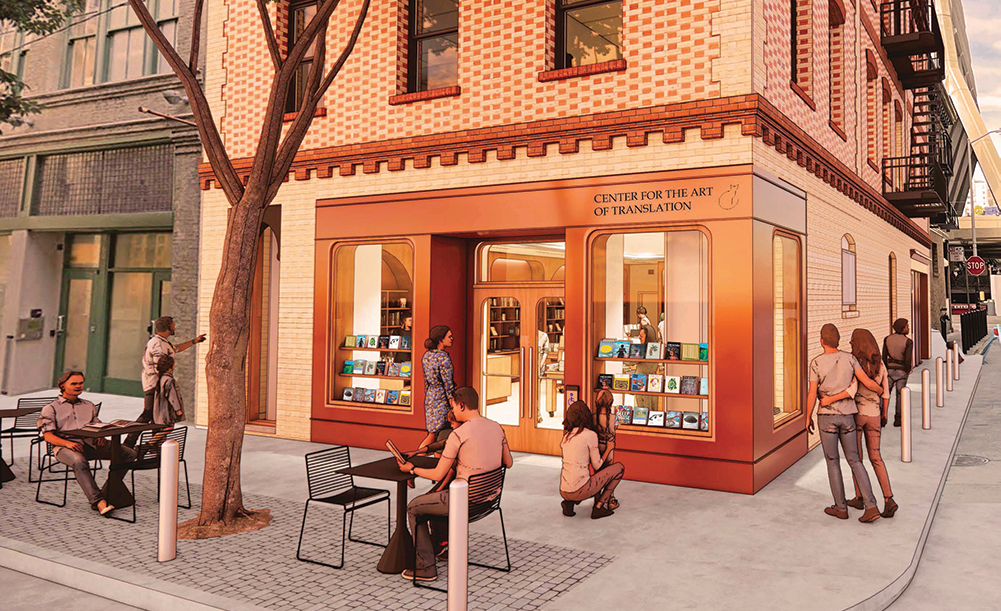
Among the projects housed at CAT is Two Lines Press, which Sears founded in 2013. Long before that, in 1993, Sears and fellow graduate students at Stanford University started Two Lines as a literary journal. The name gestured toward the idea that there should be two lines of attribution for a piece of translated literature, one each for the author and translator. “At that time,” she says, “you’d read things in magazines like Trafika and Granta and they’d have the translator at the very back, in the index, so that it looked like [the translated works were] written by the authors in English.” Although it’s far more common to see the translator mentioned on a book’s cover these days, it’s still not a universally adopted practice.
Jazmina Barrera, a Mexican writer whose books have all been translated into English by Christina MacSweeney and published by Two Lines Press, says that thanks to the press she has “traveled to many cities in the United States and witnessed a vibrant world of books.” But she has also observed how translation—which she sees as “a kind of magic, an art, and a fortune”—continues to struggle in the U.S. literary landscape. “To have a space just for [translation],” she says, “will be a gift for translators, publishers, readers, and writers in San Francisco and far away.”
Michael Holtmann, president of the Center for the Art of Translation, and founder Olivia Sears. (Credit: Anastasiia Sapon)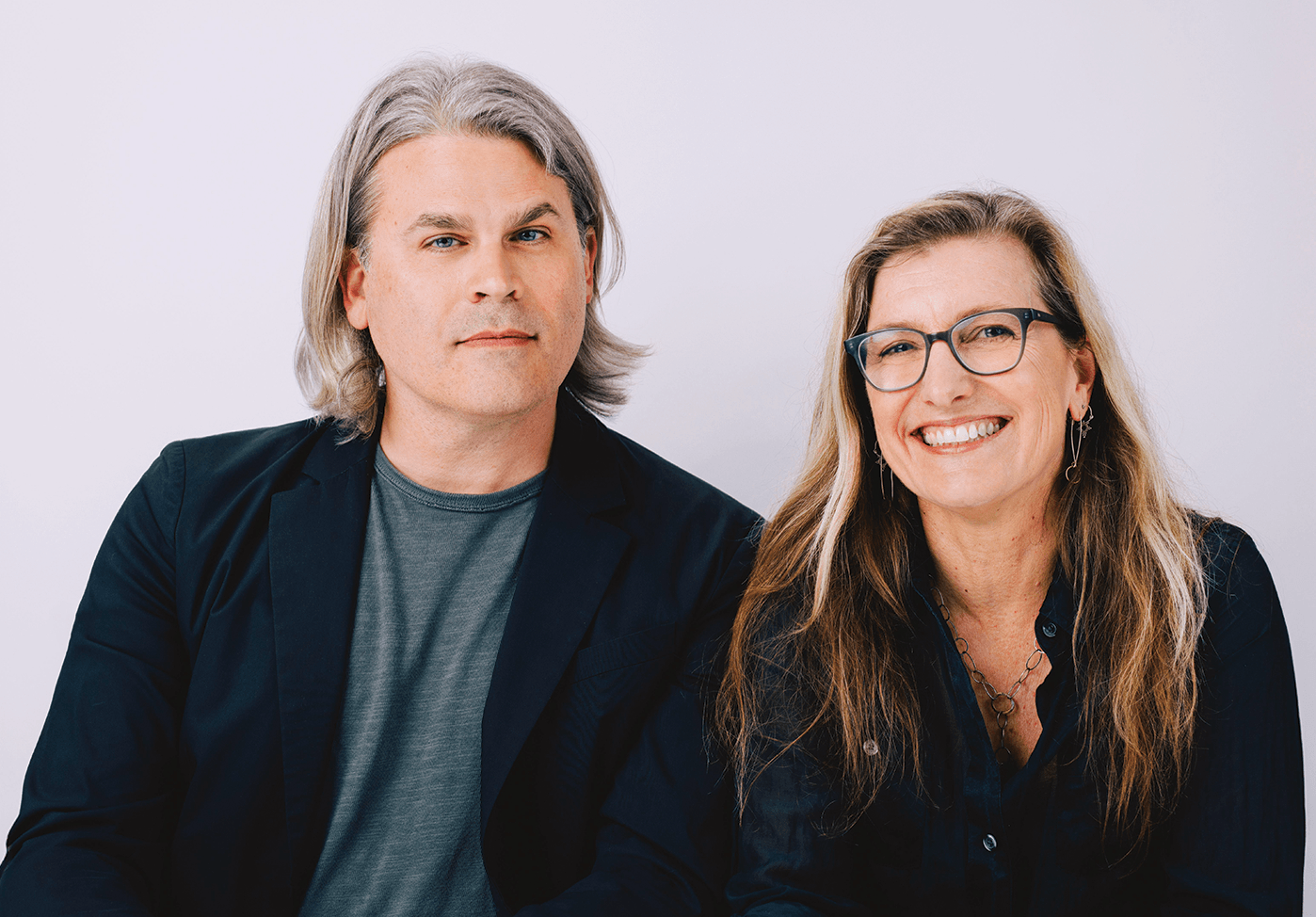
Paul Yamazaki, the principal buyer at City Lights, agrees. “It’s something that I’ve dreamed about through my fifty years at City Lights,” he says. “To have more literary neighbors to revive the North Beach–Chinatown–international district as a literary hub of not just San Francisco, but of the whole state of California.”
The three-story building on Commercial Street will house, on its ground floor, a bookstore entirely dedicated to translated literature—the only one on the West Coast, according to CAT’s press release—as well as an event space that will welcome other literary and arts organizations’ programming. “So many nonprofits have been displaced,” Sears says of how expensive San Francisco has become. “We’ll have this stage and this huge screen, and we can have other nonprofits come and use the space. And then we get to meet them, and they get to meet us—and there’s more connecting.”
The second and third floors will house CAT’s offices as well as versatile spaces that can be used for workshops, professional development, and the center’s own ongoing educational programs like Poetry Inside Out, a collaborative, cross-cultural language arts curriculum that brings translation into classrooms.
In addition, Holtmann says, Bloomberg Philanthropies has provided generous support. “Their digital accelerator program is helping us establish really cool livestreaming capabilities that aren’t just for live in-person events but [also] make it possible for us to have these hybrid events with authors and translators across the world, which has been an exciting thing we’ve piloted with the Center for Fiction in New York.” Since visiting the United States has become a more precarious endeavor in the past few years, this ability to digitally collaborate with writers and translators based abroad seems especially, though unfortunately, prescient.
Aaron Coleman, a poet, translator, and assistant professor of English and comparative literature at the University of Michigan, says that ever since he met Michael Holtmann at an Association of Writers & Writing Programs panel years ago, he has been impressed with CAT’s community building and how central it has always been to the center’s practice. “I think that this new step of having this brick-and-mortar space is just going to add a different level of momentum,” he says, “and create an actual physical gathering ground for writers and translators of all languages, of all generations.” The building, Coleman adds, is “a physical manifestation of the centrality of translation to literature.”
Ilana Masad is the author of the novels Beings (Bloomsbury, 2025) and All My Mother’s Lovers (Dutton, 2020) and the coeditor of the anthology Here for All the Reasons: Why We Watch “The Bachelor” (Turner, 2026).