Loose and Lyrical Truths

“Lyrical essays are more like jazz than a concerto. The idea that lyrical essays are more poetic than logical has allowed authors to play fast and loose with the truth,” writes GD Dess in his Los Angeles Review of Books review of Elisa Gabbert’s essay collection The Word Pretty (Black Ocean, 2018). Think of a current conflict or issue in your personal life that remains unresolved—perhaps you are uncertain where exactly the truth of the matter lies. Write a lyric essay that engages with the seemingly solid facts of the topic, but allow yourself the freedom to veer into stream of consciousness and follow a “more poetic” logic. 

Reshaping Memory

“Experiencing gives you a ‘first’ person perspective. You see others while you act. Watching gives you a ‘third’ person perspective. You learn something about how others see you,” says Elizabeth Loftus, a UC Irvine professor who studies memory, in Julia Cho’s New York Times piece on how watching a recording of an event can alter one’s initial memory of the experience. Write a scene in which your character attends or participates in a performance, party, or special occasion. Explore how her initial memory of the experience changes once she watches a video of the event. What stands out from the recording that hadn’t been noticed before? How does this reshape her memory?

Futurepoem Contest Open for Submissions

Submissions are currently open for The Other Futures Award, given by Futurepoem for a book-length work of poetry, prose, or multi-genre writing. The editors of Futurepoem launched the award this year to recognize “innovative, adventurous work that challenges conventions of genre and language, content and form.” The winner will receive $1,000 and will be published by Futurepoem in 2021.

Using the online submission system, submit a manuscript of any length—the suggested length is 50 to 100 pages—with a $28 entry fee by June 15. Dan Machlin, Carly Dashiell, Ariel Yelen, and Aiden Garabed Farrell—Futurepoem’s permanent editors and staff—will judge. The winning entry will be announced by September 15. Visit the website for complete guidelines.

“The Other Futures Award focuses on innovative, experimental poetry and cross-genre literature,” write the editors. “We are interested in considering work that imagines new literary possibilities, pushes the boundaries, and questions established paradigms.”

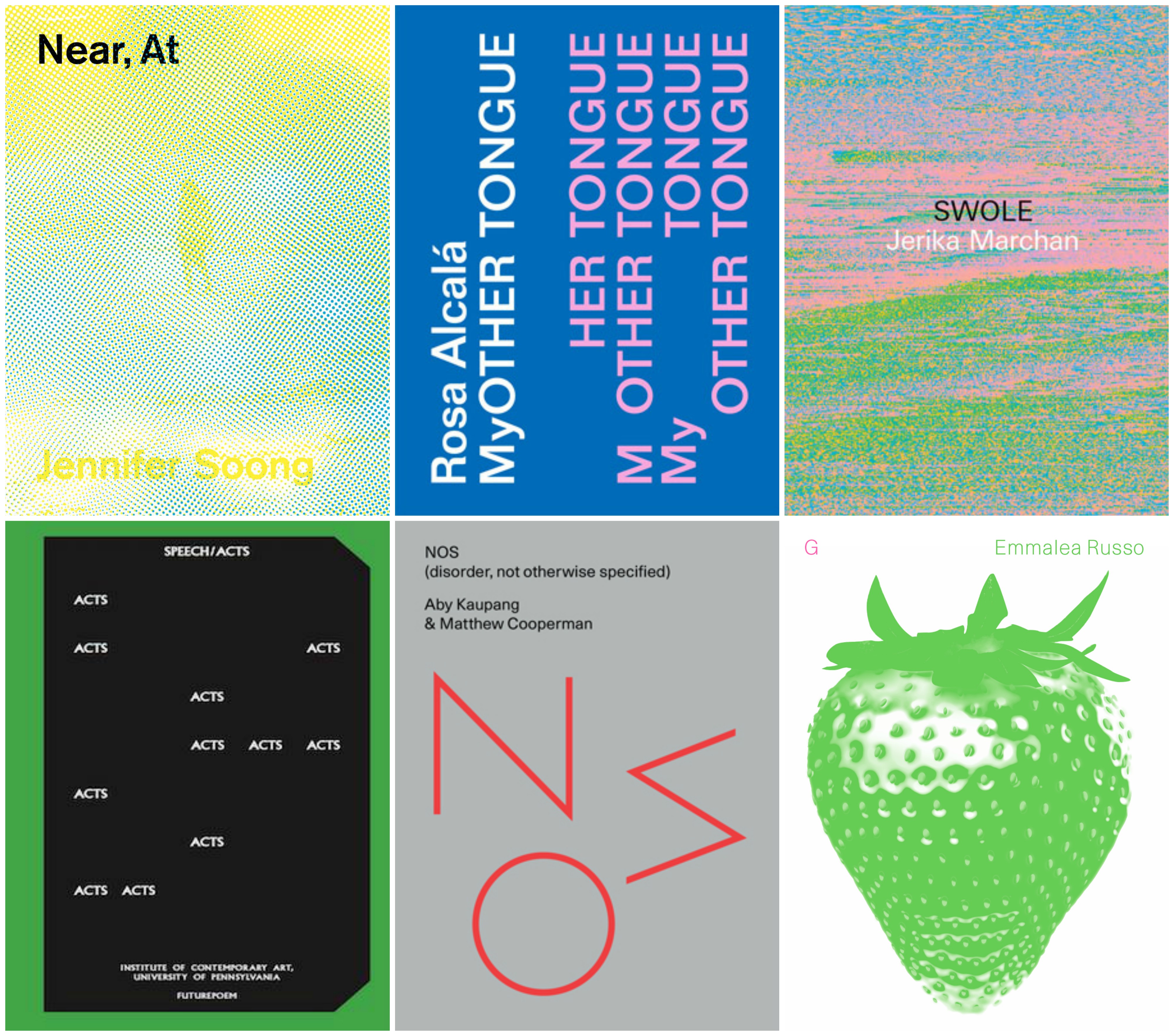
Founded in 2002, Futurepoem is a New York City–based publishing collaborative. It has a rotating editorial panel and is “dedicated to presenting innovative works of contemporary poetry and prose by both emerging and important underrepresented writers.” Dan Machlin is founder and executive editor. Recent releases include Jennifer Soong’s debut poetry collection, Near, At; Emmalea Russo’s debut poetry collection, G; and Aby Kaupang and Matthew Cooperman’s collaborative poetry collection NOS (disorder, not otherwise specified).

There’s Something About Sophia

Created by former Disney Imagineer David Hanson, Sophia is one of the world’s most expressive robots. She can mirror people’s postures, discern emotions from tone and expression, and react with her own realistic facial movements. National Geographic photographer Giulio Di Sturco says about their first meeting, “She started to look at me and smile, and I looked at her, and at that point for me, she was not human, but there was kind of a connection.” Write a poem about an imagined encounter with Sophia. How do you envision an emotional connection with a lifelike robot? What kind of language would you use? 

Strange Talk

5.30.19

“When you talk to strangers, you’re making beautiful interruptions into the expected narrative of your daily life—and theirs,” Kio Stark says in her 2016 TED Talk “Why You Should Talk to Strangers.” As children, we are often cautioned against talking to strangers, but as adults, this warning becomes nearly impossible to heed. Whether online or in person, many of our daily interactions are with people we may never see or speak to again. Once in a while, this anonymity can lead to a level of intimacy and honesty that is surprising and unparalleled even with close friends or family. Think about a time in your life when an unexpected moment with a stranger had a profound effect on you. Write an essay about this exchange, the circumstances surrounding it, and what it meant to you.

Deadline Approaches for Robert Traver Fly-Fishing Writing Award

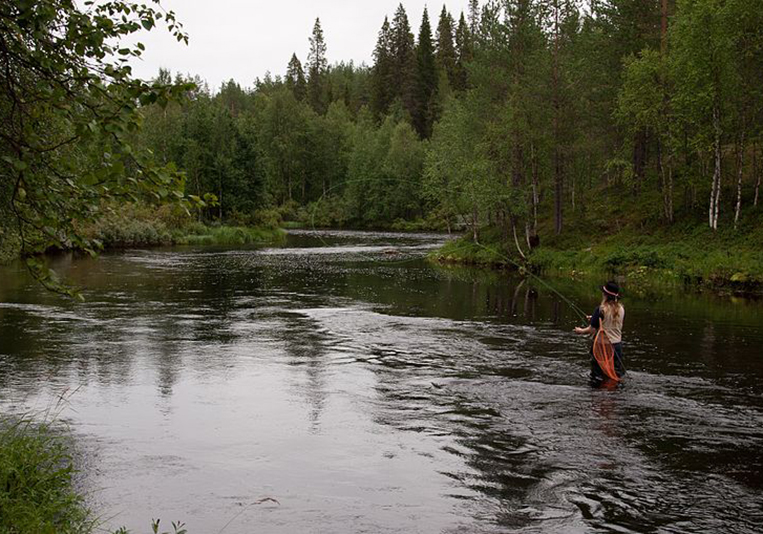
Submissions are currently open for the Robert Traver Fly-Fishing Writing Award. The award is given for a story or essay that engages with “the joy of fly-fishing, ecology, and humor regarding piscatorial friendships and fun on the water.” The winner receives $2,500 and publication in the Spring 2020 edition of the American Fly Fisher.

Using the online submission system, submit a story or essay of up to 3,000 words with a $25 entry fee. Unpublished pieces and pieces published during the previous two years are eligible. The deadline is May 31. Visit the website for the required entry form and complete guidelines. The winner will be announced in September.

Writer Nick Lyons and the Voelker Foundation created the award in 1994 to encourage and recognize “distinguished original stories or essays that embody the implicit love of fly fishing, respect for the sport, and the natural world in which it takes place.” The Voelker Foundation is dedicated to the work and values of writer and fly-fisherman John Voelker.

Festival of the Ugly

5.29.19

What does it mean to be crowned the ugliest in the village? Every year, thousands gather in Piobbico, Italy to attend the Festival of the Ugly and vote for the president of the World Association of Ugly People, known by locals as Club dei Brutti. In the Paris Review, Rebecca Brill writes of the festival and attendees: “Centuries of hard work have destigmatized ugliness to the point that Piobbicans declare their ugliness cavalierly, as if the categorization were no more charged than that of having say, brown hair or blue eyes.” This week, write a story in which characters vie for a prize or title that would be generally considered undesirable. Describe the history of the competition and what this unusual accolade means to your characters.

Deformation

5.28.19

Sandra Simonds’s essay “Riot Girl,” published by the Poetry Foundation, praises the work of Chelsey Minnis and her “unladylike poetry.” Of a Minnis poem titled “Anti Vitae,” Simonds notes how it is organized as “a humorous, self-reported catalog of failures in the form of a faux CV.” For this week’s prompt, choose a form that is not inherently inspiring—a tax form, visa application, or cover letter—and borrow from its prescriptive language and structure to format your own poem. Let the form constrict your writing as much (or as little) as you’d like—perhaps writing an “anti” poem like Minnis’s or embracing the form faithfully for effect. 

Where It Happens

5.23.19

Anna Wintour’s office, the United Nations’ Security Council Consultations Room, David Zwirner’s office, an IKEA design lab, a Fox News studio. Brent Murray’s New York Times piece “The Rooms Where It Happens” showcases photographs of these rarely seen spaces where powerful decision-making occurs. Write a personal essay about a room that has played an important role in your life. Describe the furniture, lighting, and paraphernalia, and consider the actions, behaviors, and thinking you’ve done in this room. Are there expected and unexpected correlations between the objects and actions?

Vilcek Prizes for Creative Promise Accepting Submissions

Applications are currently open for the Vilcek Foundation’s Prizes for Creative Promise in Literature. Three prizes of $50,000 each are awarded to writers not born in the United States to recognize achievement early in their careers. Poets, fiction writers, and nonfiction writers who are thirty-eight years of age or younger and have published at least one full-length book are eligible. Winners will be notified in the fall and honored at an annual awards ceremony in New York City in Spring 2020.

Using the online submission system, submit a writing sample of up to twenty pages, a curriculum vitae, proof of your immigration status, five press clippings about your work, and contact information for two professional references by June 10. There is no application fee. Visit the website for complete guidelines and eligibility requirements.

The shortlist will be chosen by a jury of experts from the literary community who will evaluate the applicants based on their “excellence, innovation, and impact.”

Established in 2009, the Vilcek Prizes for Creative Promise aim to “encourage and support emerging to mid-career immigrant artists and scientists who have demonstrated exceptional achievements early in their careers.” The awards are given annually to biomedical scientists and in alternating years to writers, dancers, musicians, designers, fashion designers, theater artists, architects, visual artists, and culinary artists. The Vilcek Prize for Creative Promise in Literature was last awarded in 2011 to Dinaw Mengestu.

The Vilcek Prizes are sponsored by the Vilcek Foundation, which is dedicated to raising awareness of immigrant contributions to America. Jan and Marica Vilcek, immigrants from the former Czechoslovakia, established the foundation in 2000.


Pages

Subscribe to RSS - blogs