Best Books for Writers

From the newly published to the invaluable classic, our list of essential books for creative writers.

  • The Situation and the Story: The Art of Personal Narrative
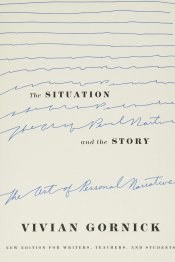
    by
    Vivian Gornick
    Published in 2002
    by Farrar, Straus and Giroux

    “To fashion a persona out of one’s own undisguised self is no easy thing,” writes Vivian Gornick in The Situation and the Story: The Art of Personal Narrative. “A novel or a poem provides invented characters or speaking voices that act as surrogates for the writer. The persona in a nonfiction narrative is an unsurrogated one.” In this seminal craft book on the art of writing nonfiction, Gornick makes visible and practical the task of casting one’s self into a personal narrative. Using experience from decades of teaching in MFA programs, the renowned critic and memoirist offers examples from the works of luminaries such as James Baldwin, Joan Didion, Marguerite Duras, and Edmund Gosse. Through intimate and lucid prose, this book provides guidance on how to identify truth in the words one reads and writes. 
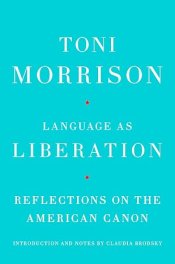
  • Language as Liberation: Reflections on the American Canon

    by
    Toni Morrison
    Published in 2026
    by Knopf

    Collected for the first time in one volume, Language as Liberation compiles Toni Morrison’s lectures from her tenure as a professor at Princeton University as she explores and interrogates the American literary canon. Morrison examines the works of American authors, such as Ernest Hemingway, Carson McCullers, Herman Melville, Edgar Allan Poe, Gertrude Stein, and Mark Twain, and how the American conception of race is both reflected and invented in these works. With an introduction from Morrison’s Princeton comparative literature colleague Claudia Brodsky, this book displays the brilliance of Morrison, as a thinker, reader, and writer. “The originality of Morrison’s thinking, with respect to the composition of specifically American fiction, lies, by contrast, in its theoretical and practical contention that imagination and race do not contradict but rather supplement each other within the constitution of a constitutively divided nation’s literature,” writes Brodsky. 

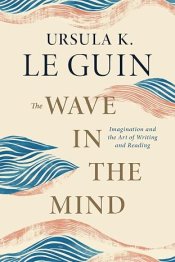
  • The Wave in the Mind: Imagination and the Art of Writing and Reading

    by
    Ursula K. Le Guin
    Published in 2026
    by Shambhala

    With a literary career that spanned more than half a century, Ursula K. Le Guin continues to make an impact on readers and writers with her imaginative and challenging ideas. Her love for storytelling is captured in this rare collection of essays, talks, and performance pieces. Originally published in 2004, the book is divided into four sections: “Personal Matters,” “Readings,” “Discussions and Opinions,” and “On Writing.” Included are literary criticisms of classic books, advice on writing, and personal takes on gender, beauty, and aging. “All of us have to learn how to invent our lives, make them up, imagine them,” writes Le Guin. “We need to be taught these skills; we need guides to show us how. If we don’t, our lives get made up for us by other people.” 

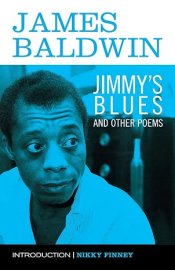
  • Jimmy’s Blues and Other Poems

    by
    James Baldwin
    Published in 2014
    by Beacon Press

    Although he is best known for his novels and essay collections, which have remained in print, James Baldwin’s single book of poetry, Jimmy’s Blues, is the only book to fall out of print. This collection, published by Beacon Press in 2014, includes all nineteen poems from his original book of poetry and all the poems from his little-known, limited-edition volume, Gypsy. With an introductory essay by Nikky Finney, this book celebrates Baldwin as a poet with his lyrical insights on race, gender, class, and identity that remain as poignant as the day they were written. “Baldwin wrote poetry throughout his life. He wrote with an engaged, layered, facile hand,” writes Finney. “His language: informal, inviting; his ideas from the four corners of the earth, beginning, always with love.” 

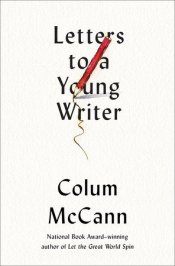
  • Letters to a Young Writer: Some Practical and Philosophical Advice

    by
    Colum McCann
    Published in 2017
    by Random House

    “Do the things that do not compute. Be earnest. Be devoted. Be subversive of ease. Read aloud. Risk yourself,” writes Colum McCann at the start of Letters to a Young Writer, encouraging aspiring writers not only to learn the rules, but also to break them. Each short essay in this collection examines different aspects of both the craft and the profession of writing fiction, with titles such as “Don’t Write What You Know,” “Finding the Right Editor” and “To MFA or Not to MFA?” The book offers inspiration and concrete examples, welcoming writers to trust their own voice and most importantly, to write.  

  • The Art of Brevity: Crafting the Very Short Story

    by
    Grant Faulkner
    Published in 2023
    by University of New Mexico Press

    In the Art of Brevity, Grant Faulkner, author of Pep Talks for Writers: 52 Insights and Actions to Boost Your Creative Mojo (Chronicle Books, 2017) and the cofounder of 100 Word Story, guides readers through the inner workings of short fiction. Describing the book as a “meditation on the aesthetic of brevity,” Faulkner walks through the art of excision, compression, and breath that a writer will learn when creating stories of less than a thousand words. “The short form requires a deeper humility from the writer,” says Faulkner. “You’re writing not to draw attention to yourself, as some works do with verbal flourishes or stylistic panache, but to serve the story in all of its nuances, searching for exactly the right word to work in such a tiny space. A short-short exists on a different plane.” Among the twenty-four chapters in the book are: “The Freedom of Constraints,” “The Fullness of Omission,” and “Is It Poetry or Prose?” Each chapter ends with a writing exercise, inviting readers to try out all of the different forms of flash fiction and observe what elements truly matter in a story. 

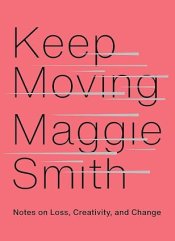
  • Keep Moving: Notes on Loss, Creativity, and Change

    by
    Maggie Smith
    Published in 2020
    by Atria

    What began as notes of encouragement to herself during a time of loss and upheaval, turned into inspirational daily posts shared on social media, which are collected in this book of essays and quotes by Maggie Smith. Each motivational quote ends with her mantra: Keep moving. Walking the reader through each step, Smith divides the book into three sections: “Revision,” “Resilience,” and “Transformation.” With a mix of life lessons and writing lessons, readers can feel less alone and hopeful to learn how to heal through writing, and receive practical tips on process. “I believe in the importance of revision, but here’s something I believe just as strongly: If you’re not careful, you can revise the life right out of a piece of writing,” writes Smith. “If you’re not careful, you can scrub all the weirdness and wildness right out of it.” 

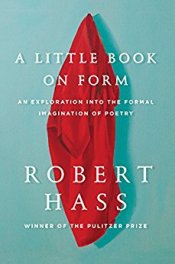
  • A Little Book on Form: An Exploration Into the Formal Imagination of Poetry

    by
    Robert Hass
    Published in 2017
    by Ecco

    In this book on craft, former U.S. Poet Laureate Robert Hass dismantles the idea of a poem down to its barest building blocks, from the one-line haiku to the villanelle and sonnet. “A single line is a naked thing. It is both light and heavy. It is, obviously, the basic unit of all lyric forms,” begins the first chapter. Examining poems by Catullus and Allen Ginsberg, Issa and Czeslaw Milosz, among others, Hass investigates the ancient roots of the poetic impulse, taking a wide-ranging look at the form and its creations.  

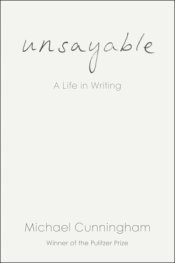
  • Unsayable: A Life in Writing

    by
    Michael Cunningham
    Published in 2026
    by Random House

    In Unsayable: A Life in Writing, Pulitzer Prize–winning author Michael Cunningham reflects on his life as a writer and on the craft of writing through intimate portraits and memories of his lifelong love of language. In vignettes with titles, such as “How to Write, How Not to Write,” “Is It Autobiographical?” and “Notes for a Story I Didn’t Write,” Cunningham offers his companionship on the journey of a writer’s life, from discovering the power of language to the mysteries of putting words down on paper. “Stories are, by definition, experiences about experiences,” he writes, “and we who write them know that any story, even the greatest of them, is an approximation of the unsayable—that which we all know but can’t express in language.” With insights on craft and storytelling, process, and exemplary passages from authors including Cormac McCarthy, Toni Morrison, and Marilynne Robinson, this book is full of inspiration. 

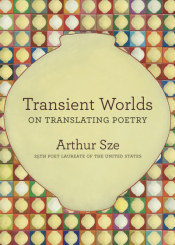
  • Transient Worlds: On Translating Poetry

    by
    Arthur Sze
    Published in 2026
    by Copper Canyon Press

    Edited by U.S. Poet Laureate Arthur Sze, this is the first anthology of poetry translation published in association with the Library of Congress during a laureate’s appointment, part of Sze’s signature project “Words Bridging Worlds.” Covering nearly two millennia of poetry and featuring twenty-three poems drawn from thirteen languages, Sze guides readers through key works showcasing multiple translations of the same source poems and original poems written by translators in order to display the creative art and depth of translation. The collection is organized into zones that interconnect and highlight works of Surrealism, classical Greek poetry, visual poetry, and Asian poetry. “A good translation appeals to our ears, eyes, and heart; it is a singular endeavor and a humanizing act that makes the ancient contemporary, the foreign accessible and the emotional, intellectual, and spiritual music of the human interior universal,” writes Sze in the introduction. Transient Worlds is an invitation to “revel in the power of words” and to craft your own translations and poems inspired by the act of translation.  

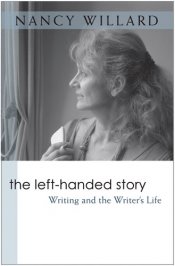
  • The Left-Handed Story: Writing and the Writer’s Life

    by
    Nancy Willard
    Published in 2008
    by University of Michigan Press

    The subjects and ideas explored in this collection of essays by Nancy Willard span a wide range of the poet and novelist’s many passions: creative muses, fairy tales, litany as poetic form, and children’s literature. Readers and writers of all genres and levels of experience will enjoy Willard’s practical and entertaining insights and analyses, and find inspiration in her examination of the imaginative processes integral not only to literature, but to other creative disciplines such as art and film.  

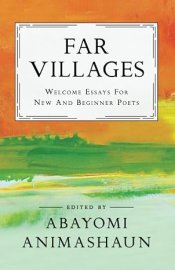
  • Far Villages: Welcome Essays for New and Beginner Poets

    by
    Abayomi Animashaun, editor
    Published in 2020
    by Black Lawrence Press

    “At the heart of this anthology is the belief that poetry is open to everyone but also the recognition that substantial progress within it takes years of apprenticeship, of experimenting, of trying, of failing,” begins the introduction to this volume of craft essays edited by Abayomi Animashaun. With over sixty contributors, from emerging to established poets, the topics range from how to begin a poem to muses, form, workshops and community, and publishing. This collection of voices offers inspiration, practical tips and advice, and writing prompts to poets at any stage of their career. The book may also be a great addition for anyone teaching poetry. 

  • A Compass on the Navigable Sea: 100 Years of World Literature

    by
    Daniel Simon, editor
    Published in 2026
    by Restless Books

    This anthology celebrates the centennial of World Literature Today, the University of Oklahoma’s award-winning magazine of contemporary international literature and culture. Edited by Daniel Simon, the journal’s editor in chief, the collection serves as an archive of work from Nobel laureates, dissident authors, renowned and emerging writers, such as Refaat Alareer, Marguerite Duras, Joy Harjo, Han Kang, Toni Morrison, Haruki Murakami, Octavio Paz, Elie Wiesel, Ngũgĩ wa Thiong’o, and Dubravka Ugrešić. The five sections feature impactful poetry, lectures, and essays that span across time and the globe, offering readers a vision of how literature can connect and act as a guiding light through times of crisis. “Publishing a magazine like World Literature Today takes the abstraction of a term like ‘world literature’ and materializes it in the work of the writers featured—and the readers envisioned—in its pages,” writes Simon in his introduction. “I hope the materiality of that work…will translate into an imaginative republic and ethical praxis that continue to inspire a global vision of literature.” 

  • On Witness and Respair

    by
    Jesmyn Ward
    Published in 2026
    by Scribner

    One needn’t be a writer to appreciate the essays in Jesmyn Ward’s collected nonfiction, filled as they are with insights and observations about the two-time National Book Award–winning author’s childhood and upbringing in rural Mississippi, her experience raising a Black son in the United States, and the personal tragedies that have impacted her life. But the book holds special treasures for writers looking for examples of how art, and writing in particular, helps us survive. The collection features Ward’s “Why Fiction Matters” address at the Library of Congress in 2023, the speech she delivered at Toni Morrison’s memorial in 2019, her Eudora Welty lecture “You Tell Your Story: You Survive,” and essays about authors such as Octavia Butler and Ta-Nehisi Coates. “Writers were magic-workers,” she writes in the introduction about a realization she had in the library of her elementary school. Readers of On
Witness and
Respair will know the feeling.  

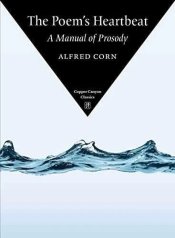
  • The Poem’s Heartbeat: A Manual of Prosody

    by
    Alfred Corn
    Published in 2008
    by Copper Canyon Press

    Written by prolific poet, novelist, and essayist Alfred Corn, this is an invaluable guide to the art and science of poetic meter—the very foundation of writing (and reading) poetry. In ten progressive chapters, Corn covers everything from metrical variation and phonic echo to the basics of line and stanza in this manual first published in 1997. “What’s really needed,” he writes in the preface, “is a study that assumes no knowledge of meter on the part of the reader but then provides accurate information.” Included in the book is an appendix of sample scansions, an index of terms, a bibliography, and exemplary poems illustrating a wide range of concepts, including iambic pentameter and slant rhyme. This guide provides information and inspiration for any poet or enthusiast of poetry.  

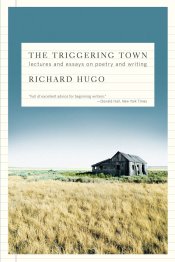
  • The Triggering Town: Lectures and Essays on Poetry and Writing

    by
    Richard Hugo
    Published in 2010
    by Norton

    Originally published in 1979, Richard Hugo’s The Triggering Town has become a classic guide for writers. The renowned poet and teacher has brought together a series of lectures, essays, and reflections, all “directed toward helping with that silly, absurd, maddening, futile, enormously rewarding activity: writing poems.” The book includes pieces on how to write “off the subject” and how poets make a living, with lessons intended to teach you “how to teach yourself how to write.” Poets and writers of any experience will benefit from Hugo’s insights into the mysteries of literary creation. As he writes in the introduction, “I don’t know why we do it. We must be crazy. Welcome, fellow poet.”  

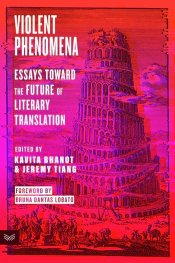
  • Violent Phenomena: Essays Toward the Future of Literary Translation

    by
    Kavita Bhanot and Jeremy Tiang, editors
    Published in 2026
    by HarperVia

    The twenty-two essays in this collection edited by Kavita Bhanot and Jeremy Tiang tackle the questions of who can and should translate, and what it means to decolonize literary translation. From Anton Hur on “The Mythical English Reader” to Sawad Hussain’s “Why Don’t You Translate Pakistanian?” to Madhu Kaza’s “Not a Good Fit,” each essay is a personal and powerful take on what it means to engage with a translator’s identity and voice. In the foreward, author and translator Bruna Dantas Lobato writes that in reading this anthology, she is “standing in the company of many doubles, a chorus of translators writing down their truths, demanding systemic change” and that “there are as many ways to be a translator as there are to be human.” 

  • The Practicing Poet: Writing Beyond the Basics

    by
    Diane Lockward, editor
    Published in 2018
    by Terrapin Books

    Each of the ten sections of this book of craft essays edited by poet Diane Lockward focuses on a poetic concept, covering topics such as diction, etymology, sound, tone, point of view, and revision. The thirty micro craft essays by acclaimed poets, including Natasha Sajé, Maggie Smith, and Diane Seuss, are each followed by prompts and model poems with the idea that “the craft of poetry can be taught and its best teacher is a good poem.” In addition, the Top Tips lists compiled by accomplished poets are filled with inspiring words of advice and wisdom. Throughout the book, the lessons provide a helpful review and challenge for any writer wishing to push beyond the basics.  

  • Good Writing: 36 Ways to Improve Your Sentences

    by
    Neal Allen and Anne Lamott
    Published in 2026
    by Avery

    Gathering a “kit bag of rules for good writing” from his experience as a journalist, an executive in publicity and marketing, and as a spiritual coach and author, Neal Allen walks through his thirty-six rules to craft better sentences. Each rule includes examples followed by a pair of essays written by Allen and his wife, Anne Lamott, the author of several novels and nonfiction books, including the acclaimed guidebook Bird by Bird: Some Instructions on Writing and Life. Some rules are straightforward (Use strong verbs. Don’t show off. Remove the boring stuff), while others are more provocative (Smell the roses. Give your sentence a finale. Write the hard stuff). Each rule is meant to encourage and challenge writers, and be considered as suggestions for how and what to communicate in a sentence. “This book is curious about what happens after you’ve got a sentence in mind, maybe even after you’ve finished your entire first draft,” writes Allen in the introduction. “The book embraces persuasion in its biggest sense—not to win an argument, but to be elegant; to convince a reader to continue on to the next sentence.” 

  • Three Six Five: Prompts, Acts, Divinations (an Inexhaustible Compendium for Writing)

    by
    Lucy Ives
    Published in 2026
    by Siglio Press

    From the author of three inventive novels, including Life Is Everywhere (Graywolf Press, 2022), as well as collections of poems, short stories, and essays, comes a unique book that is at once a compendium of intriguing writing exercises (“Write about a character who invents her own readers”), a collection of questions (“Who is writing this book?”), and a “diary of contemplation and imagination.” At home alongside Yoko Ono’s Grapefruit and Raymond Queneau’s Exercises in Style, Three Six Five presents fresh ways of thinking about writing and the endless possibilities it contains. “Locate the shadows nearest you,” Ives writes in No. 65 of an entire year’s worth of entries and encourages writers to describe them, first in terms of their qualities, then: “What do these shadows hide or reveal? What is inside them?” For writers with a love of play and a spirit of discovery, Three Six Five offers encouragement and inspiration for a year of literary exploration.  

  • Verb Your Enthusiasm: How to Master the Art of the Verb and Transform Your Writing

    by
    Sarah L. Kaufman
    by Penguin Press

    Drawing from her decades of experience as the Washington Post’s chief dance critic and senior arts reporter, Sarah L. Kaufman guides readers through the effective use of verbs and how to write with grace and clarity. The first section of the book titled “The Practical” includes a short review of grammar and lessons on how to avoid adverbs and weed out boring verbs, while the second section,“The Poetic,” goes deeper into the usage of verbs and the science behind the power of verbs. Sprinkled throughout the lessons are a range of helpful examples from news articles, works of literature, science texts, advertisements, and more. Each chapter ends with tips and quick exercises from the lessons learned in that section to help sharpen and deepen one’s writing and understanding of the dynamism of words. “Verbs ignite emotions, transform our thoughts, and stimulate our bodies,” writes Kaufman. “Verbs cue movement images in our minds, and writers who use verbs well access the reader’s imagination directly.” 

  • Chaos, Creativity, Completion: New Approaches to Writing and ADHD

    by
    Chloe Martinez and Lisa Van Orman Hadley, editors
    Published in 2026

    The fifteen essays collected in Chaos, Creativity, Completion are written by poets, novelists, memoirists, filmmakers, and other writers with ADHD. A range of styles are voiced in each essay with personal reflections and ways of finding writing practices that work with ADHD, exemplifying the array of experiences and expressions. Contributors include Robin Black, Allison Adelle Hedge Coke, Douglas Kearney, Jami Nakamura Lin, and Khadijah Queen. A writing prompt follows each essay, allowing readers to consider new ways of thinking and writing that often look different from traditional writing instruction. In the foreword to the book, Rebecca Makkai writes: “As the world recognizes more and more neurodivergences—and accepts them as vital, not as sad accidents of nature—we can surely find a way to make the world more ours. The contributors to this anthology are doing that, if only by writing about a reality that a reader might relate to strongly or might have never even imagined.” 

  • Unstuck: 101 Doorways Leading From the Blank Page to the Last Page

    by
    Ramona Ausubel
    Published in 2026
    by Tin House

    The author of three novels and two story collections, including the bestselling novel, The Last Animal (Riverhead Books, 2023), Ramona Ausubel guides writers on how to begin, get through, and finish a piece of writing in Unstuck. Dedicating the book to her students, the four sections include short chapters that walk through a problem and offer a key to a solution. Helpful writing exercises and tips end each chapter to encourage writers to keep moving forward. Ausubel poses the question: “What if instead of a slog or a sprint to the finish line, you could think of writing as a continual process of discovery?” The personal lessons and advice throughout the book aim to help writers at any stage in their writing stay excited, curious, productive, and hopeful. 

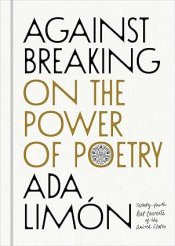
  • Against Breaking: On the Power of Poetry

    by
    Ada Limón
    Published in 2026
    by Scribner

    This thin book captures Ada Limón’s final lecture as the twenty-fourth U.S. poet laureate which she delivered at the Library of Congress at the end of her tenure in April 2025. Limón’s mission to make poetry approachable and accessible continues through this book as she describes her project You Are Here, which placed poetry installations in seven national parks, and the meaningful connections with people she met along the way while in her post. Included are excerpts of some of her favorite poems, including Emily Dickinsons’s “If I Can Stop One Heart From Breaking” and Alberto Riós’s “A House Called Tomorrow.” Through this book, Limón welcomes all to explore themselves through poetry and its ability to heal and connect people. “If you need to remember what makes us human, tender, brave, flawed, and worthy of love, you need poetry,” writes Limón. 

  • 13 Ways of Looking at the Novel

    by
    Jane Smiley
    Published in 2006
    by Anchor Books

    Through thirteen chapters, Pulitzer Prize–winning author Jane Smiley walks readers through her own struggles of novel-writing while exploring the history and impact of the form. In her journey to read a hundred novels, Smiley offers critique of classic novels, from Shikibu’s The Tale of the Genji to Jane Austen’s Persuasion to Jamaica Kincaid’s Annie John. A mix of literary criticism and history with personal reflections, there is a love and appreciation of the craft of literary fiction throughout the book. “If to live is to progress, if you are lucky, from foolishness to wisdom, then to write novels is to broadcast the various stages of your foolishness. This was true of me,” writes Smiley. 

Pages