A Sensory Scene

12.5.12

Write a scene about a very specific experience using only sensory imagery to describe what happened. For instance, if you’re writing about being in a car accident, describe the sounds of the glass shattering and the crunching metal, the smell of smoke as the airbag deploys, the feeling of your body being thrown back and forth. Try to avoid referring to the event explicitly or including any narrative buildup (“I was driving a Dodge Neon when the accident happened”). Focus instead on the moment itself, and on what you see, smell, hear, and feel in order to build the scene.

Rewriting a Myth

12.5.12

Write a story that is a retelling of a classic myth set in contemporary times. How do the characters change? What is the effect of a contemporary setting? Does the story end the same way? For inspiration, read Anne Carson's Autobiography of Red.


Ron Charles on E L James

The book critic at the Washington Post has a little fun with Publishers Weekly's recent annoucement that E L James, the author of the Fifty Shades trilogy of adult romance novels, is the Publishing Person of the Year.

Words We Rely On

12.4.12

Make a list of the ten to twenty words you rely on most often, those that make up your personal lexicon. Write a poem that incorporates these words but use them differently than you normally would or transform the words by replacing them with related ones or with their opposites. When you've finished the poem, freewrite about why you use these words so frequently. What is it about their meaning, their rhythm, and their sound that appeals to you?

Siri Hustvedt

Novelist, memoirist, and essayist Siri Hustvedt, whose most recent book is the essay collection Living, Thinking, Looking (Picador, 2012), talks here about "between space...the zone of action between people through which a third entity is created. Something like a third presence in the room."

Kevin Powers Wins Guardian First Book Award

American author Kevin Powers's debut novel, The Yellow Birds (Little, Brown, 2012), a fictional account of one man's experiences during the Iraq war, has received the 2012 Guardian First Book Award. Powers will receive ten thousand British pounds.

Inspired by Powers’s own experiences as a machine gunner in Iraq, The Yellow Birds takes its name from a marching song that Powers learned while serving in the army. Lisa Allardice, judging panel chair and editor of the Guardian Review, reported that Powers “utterly fulfilled the first book award criteria of promise, originality and raw talent.” Allardice was joined on a panel of judges by authors Ahdaf Soueif, Kate Summerscale, William Dalrymple, and Jeanette Winterson, and Guardian deputy editor Katharine Viner.

Powers was chosen from a shortlist that included two other debut novels, Scottish author Kerry Hudson's Tony Hogan Bought Me an Ice-cream Float Before He Stole My Ma (Chatto & Windus, 2012) and American novelist Chad Harbach's The Art of Fielding (Little, Brown, 2011), as well as two works of nonfiction—Lindsey Hilsum's account of the Libyan revolution, Sandstorm (Penguin Press, 2012) and Katherine Boo's Behind the Beautiful Forevers: Life, Death, and Hope in a Mumbai Undercity (Random House, 2012), which won the National Book Award in nonfiction in November.

Established in 1999 by the editors of the U.K.-based Guardian, the annual First Book Award is given for a debut work of poetry, fiction, or creative nonfiction published in the previous year. Powers joins an international cast of winners that includes Siddhartha Mukherjee, who received the award last year for The Emperor of All Maladies (Fourth Estate, 2011), as well as Philip Gourevitch, Yiyun Li, Jonathan Safran Foer, Zadie Smith, and Chris Ware.

For more information about the Guardian First Book Award, visit the website. To listen to a discussion from the judges about this year's shortlist and an interview with Kevin Powers about his winning novel, check out this podcast from the Guardian. 

Thomas Lux on Good Friends, Good Silences, and Good Days for Poetry

PW-funded Thomas Lux blogs about his readings at the Dodge Poetry Festival and with The Poetry Initiative in Santa Barbara, California. Lux is Bourne Professor of Poetry at the Georgia Institute of Technology in Atlanta, Georgia. He has two new books out this fall—the poetry collection Child Made of Sand (Houghton Mifflin Harcourt) and his nonfiction debut From the Southland (Marick Press).
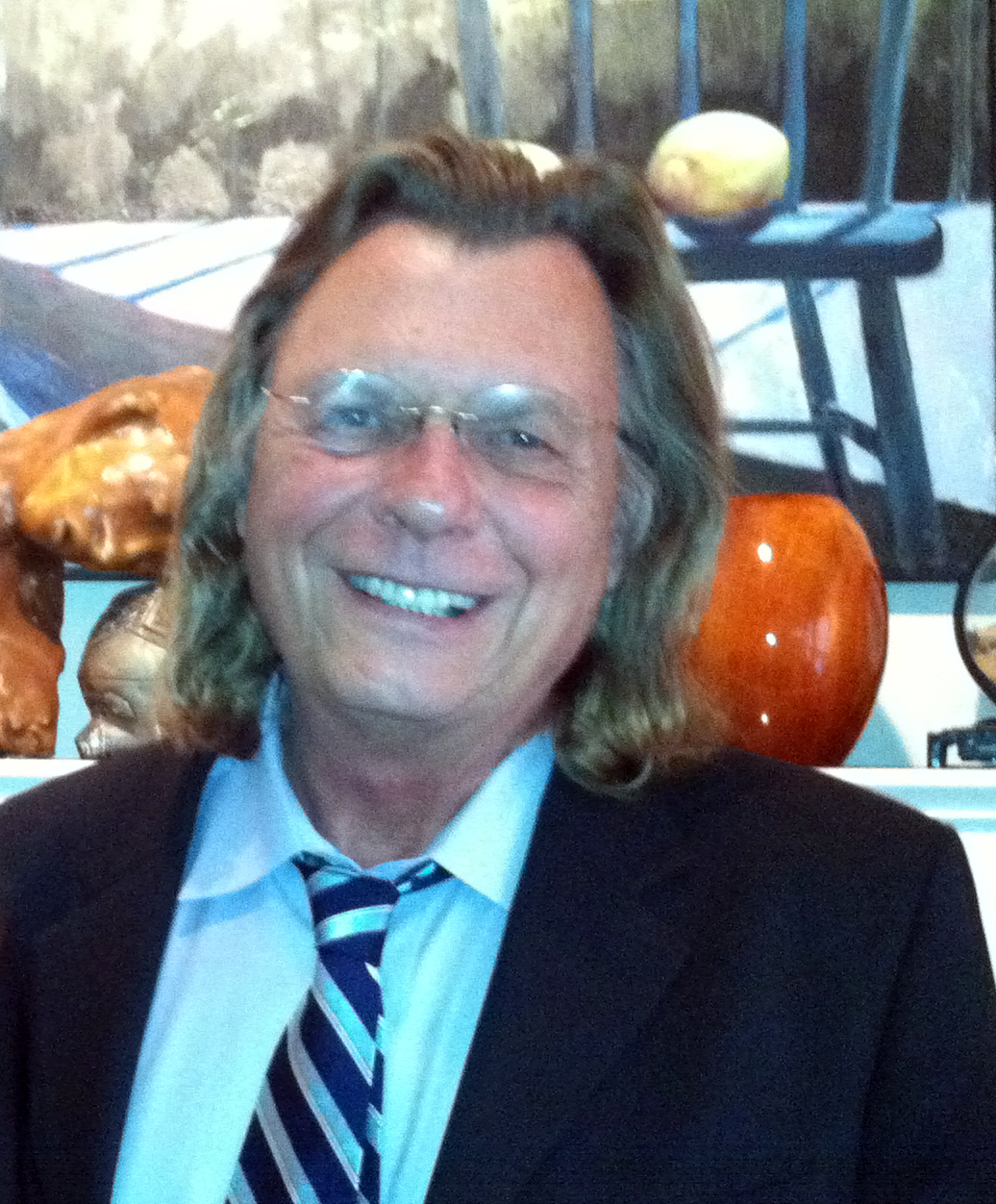
From October 11 to 14, about fifty other poets and I participated in the Dodge Poetry Festival in Newark, New Jersey. I’d been once before, in 2000. It’s held at the gleaming New Jersey Performing Arts Center and other venues close by. On Friday, October 12, High School Student Day, Prudential Hall was filled to capacity with 2,800 students and teachers, mostly from New Jersey and other nearby states. I did meet one couple, both teachers, who drove sixteen hours straight from Gainesville, Georgia, in a van with a bunch of their students. I feel special respect for teachers, especially public school teachers. They’re overworked, undervalued, and immensely important. The Georgia teachers were operating above and beyond the call of duty. A high school teacher once said to me after a reading at her school: “You performed a miracle.” I said: “How? Because the kids didn’t throw hockey pucks at me?” She said: “No, at one point you held the entire assembly totally silent for twenty-seven consecutive seconds.”

Well, during readings at Prudential Hall, with many poets reading, the entire audience (remember, mostly teenagers) was silent—when they weren’t cheering, applauding, laughing. Not a dead silence, not an eerie silence, but the silence of complete and rapt attention. I think it was Edward Hirsch who said: “The state of poetry would be better if every state had The Geraldine R. Dodge Poetry Festival.” May it live long. It’s held every other year (and has been since 1986), so you have time to start planning for 2014.

After a few days at home in Atlanta, my wife and I went to Santa Barbara, California, where I’d been invited to read and teach a workshop for a new community-based group called The Poetry Initiative. The reading was in El Presidio Chapel, part of a Spanish Mission that was restored to honor Santa Barbara’s heritage and history.

A terrific bonus was seeing my sweet friends, the poets Kurt Brown and Laure-Anne Bosselaar. Stanley Kunitz said somewhere: “I have a tribe, but we are scattered.” Kurt and Laure-Anne recently moved from New York City to Santa Barbara. I have known Brown since the ’70s (during our reprobate years), when he was director of the Aspen Writers Conference. I met Laure-Anne a decade or so later, when she was my student in the Warren Wilson MFA Program.

More and more, I love my friends, especially those with whom I can “trace the laughing days.” I saw many pals, old and newer, at the Dodge Festival, too. I hope it’s clear by this third blog (I hate that word by the way) that I feel there is a great deal of good poetry—many kinds, room for many kinds—being written and disseminated, spoken, throughout this country today and ditto in many others countries. For those who think: too much, too many, not good enough, etc.—relax. Time will do its work. And it’s a good time to be alive for those of the tribe. It’s an even better time to be a young poet of the tribe (which I’m not) and alive.

Photo: Thomas Lux. 

Support for Readings/Workshops events in Atlanta is provided by an endowment established with generous contributions from the Poets & Writers Board of Directors and others. Major support for Readings/Workshops in California is provided by The James Irvine Foundation. Additional support comes from the Friends of Poets & Writers. 

Nicola Barker

"I'm an acquired taste, I think," says the author of nine novels, including The Yips (Open Road, 2012). Barker has been compared to a maggot working into the corpse of fiction, a description that doesn't seem to bother her: "When something irritates you, often it's the most powerful thing," she says.

Pages

Subscribe to Poets & Writers RSS
