Tim Kahl is the author of Possessing Yourself (CW Books, 2009) and The Century of Travel (CW Books, 2012). His work has been published in the Notre Dame Review, Prairie Schooner, Mad Hatters' Review, Indiana Review, Metazen, Ninth Letter, Sein und Werden Review, the Really System, Konundrum Engine Literary Magazine, the Journal, the Volta, Parthenon West Review, and Caliban, among others. He appears as Victor Schnickelfritz at the poetry and poetics blog the Great American Pinup and the poetry video blog Linebreak Studios. Kahl is editor of Bald Trickster Press and Clade Song, and the vice president and events coordinator of the Sacramento Poetry Center. He has a public installation of his poetry in Sacramento, California called In Scarcity We Bare The Teeth. He currently houses his father's literary estate—one volume: Robert Gerstmann's book of photos of Chile, 1932.
What makes your organization and its programs unique?
The Sacramento Poetry Center is a community-based literary arts organization that has been in place for over thirty years. We provide Monday night readings on a weekly basis as well as specialized readings that are organized on a come-as-they-may basis (as we have for Sacramento’s Beer Week, or the poetry/jazz/visual arts reading at the Sacramento Fine Arts Center, or for UC Davis’s MIND Institute to support autism research). We also organize a number of outreach programs for youth literacy and guidance and counseling for youth. One night a week there is a workshop sponsored by the center geared towards making line edits. There are other privately-led workshop groups that use our space during weekday evenings.
The thing that makes Sacramento Poetry Center unique is that it provides readings with a different host every week so that the range of work varies significantly from week to week. For this reason, we are pretty much free of any ideological or aesthetic biases. As long as you have an inkling for how to read and perform your work, you will be considered for a feature and can always participate at the open mic that is generally part of the Monday night reading. We maintain our programming free of any educational institutional support, and our events are almost always free.
What recent project and/or program have you been especially proud of and why?
A special event that Sacramento Poetry Center sponsored was the West Coast premiere of Stephen Dunn’s book Lines of Defense. Over two hundred people packed the spacious entryway at the Sacramento County Public Library to hear Dunn and others give a reading.
Our annual conference in mid-April is an all-day affair that features workshops, lectures, and discussions by many prominent academics who come to lead these small group sessions. After the workshops in the morning and early afternoon, lunch is provided, and the main presenters give a combined short reading in the late afternoon. Energy and enthusiasm is always high for this event. It tends to sustain the energy of attendees for weeks.
The Tule Review is our semiannual literary magazine that features writers from across the country and has organized events to feature those readers in Los Angeles and San Francisco, as well as Sacramento.
What’s the craziest (or funniest or most moving or most memorable) thing that’s happened at an event you’ve hosted?
There was an evening when Kate Greenstreet came to perform her poems for her book The Last 4 Things. I didn’t realize that she likes to “get in character” for her readings and channel the voice that is speaking in the book. Often for books that are more conceptual, or at the very least not very narrative, I like to ask the author some questions about the overall project of the book—about craft and more—in order to help both writers and non-writers in the audience have a better understanding of the work. As I did this with Kate (unwittingly getting in the way of her channeled character), she started to shoot darts at me with her eyes. I didn’t quite understand why I was off-target with these kinds of questions. Other writers had gladly fielded them before.
After the reading, Kate informed me where she was coming from, and I apologized for my misunderstanding. The next time she came, for her book Young Tambling, I stayed out of the way and was treated to her mysterious manner of creating the live voice behind her work on the page. I was surprised by the different feel to her reading. There was a general feeling of her embroiling the audience in a circumstance of mysterious pronouncement. These were poems on the page in a book, but she had transformed the reading into a piece of theater that had provocatively aligned itself with the audience. The fourth wall had disappeared. I found myself riveted, entranced, and I wondered how that happened, how she did that.
How do you find and invite readers?
All kinds of ways. We are continually receiving solicitations from writers and poets throughout the country who are passing through town (Sacramento is a little over an hour away from San Francisco) or are setting up book tours in general. Also, there are thematic readings that occur from time to time that a host will put together. For these, the host will actively seek readers who might have something to offer for the theme of the night. Sometimes the readings are assembled in line with the release of a local literary magazine or publication.
How has literary presenting informed your own writing and/or life?
Often I write for the “stage” as much as I do for the page. Even when I do write specifically for the page, I am fully cognizant of how a piece might be read or performed. Works that I have written in the past that weren’t explicitly aware of themselves as spoken artifacts seem dry when I look at them today. As the old poetry adage says: Ya gotta make it sing. Sometimes this means literally as well as figuratively. Put another way, in Ken Babstock’s words, “Poetry is a vocal prosthetic for people who can’t sing.” And for people who can sing? That road is open, too.
What do you consider to be the value of literary programs for your community?
The organization serves as primarily a support group for both experienced and inexperienced writers in the area. It gives both of these groups an opportunity to interact freely without any inhibiting and uncomfortable formal social constraints or power relations getting in the way. It makes the literary arts approachable.
We also provide financial support to other local literary arts organizations. Other literary organizations use our Facebook page to promote their events so that the site becomes something of a local literary billboard.
Sacramento Poetry Center allows poets and writers to pursue their form of literary art in the purest sense without any status-conscious posturing that might occur at some institutions of higher education. It allows for comfort and camaraderie, and it permits artists to venture to extremes without worrying about stepping on any official toes.
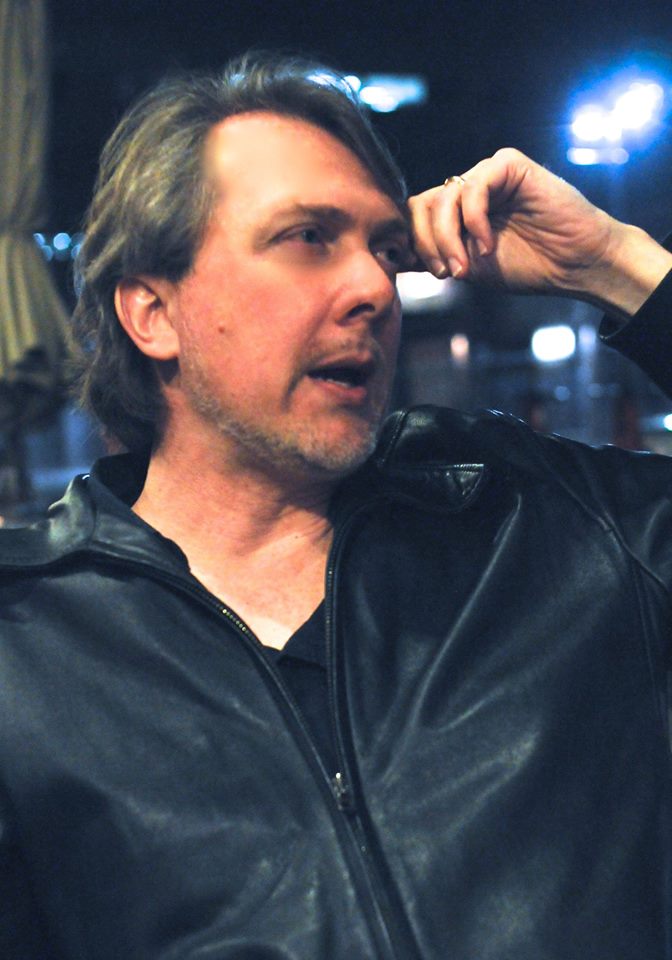
Photo: Tim Kahl Credit: Penny Kline
Major support for Readings & Workshops in California is provided by the James Irvine Foundation. Additional support comes from the Friends of Poets & Writers.



 Using the
