Steven Church is the author of The Guinness Book of Me: A Memoir of Record (Simon & Schuster, 2005), Theoretical Killings: Essays and Accidents (University of New Orleans Press, 2009), The Day After the Day After: My Atomic Angst (Soft Skull Press, 2010), and most recently, the collection Ultrasonic: Essays (Lavender Ink, 2014). A fifth nonfiction book will be released by Dzanc in 2016. He is a founding editor and nonfiction editor for The Normal School, and teaches in the MFA program at Fresno State.
 How do you prepare for a reading?
I’ve given a LOT of readings, but I still get nervous. I like to have read through out loud what I’m planning to read, at least a couple of times, just to get the timing right and catch any parts that are hard to read. And a beer or two helps take the edge off.
What’s the strangest comment you’ve received from an audience member?
Recently someone asked me if there were stories that I didn’t tell or things I wouldn’t write about—to which I responded, “Yes.” But then she looked at me as if I was then going to tell her these things. I did not. I also had someone ask me once why writers “write about depressing things,” and the only response I had was, “because it’s more interesting than happiness?”
What’s your crowd-pleaser, and why does it work?
If I have the time, I like to try and get a couple of laughs from the audience as a sort of “buy in” for what I’m reading and because it tends to relax me; so I’ll often start with a lighter, more humorous essay before hitting them with the more emotional material. Lately I’ve started reading other people’s work as a kind of ice breaker.
What’s the craziest (or funniest or most moving or most memorable) thing that’s happened at an event you’ve been part of?
During a reading at Fresno State once, the power went out in the building and the only light in the room was from the emergency exit signs. Fortunately my colleague had a headlamp flashlight, so I gave the entire reading in the dark, using the headlamp. That was fun.
How does giving a reading inform your writing and vice versa?
Reading my work aloud is very important, as it is the only way to really hear the essay or the book the way I want it to sound in a reader’s head. I always catch mistakes or make revisions after reading a piece out loud; it’s become part of my writing and revision process.
What you probably spent your R/W grant check on:
Groceries and beer.
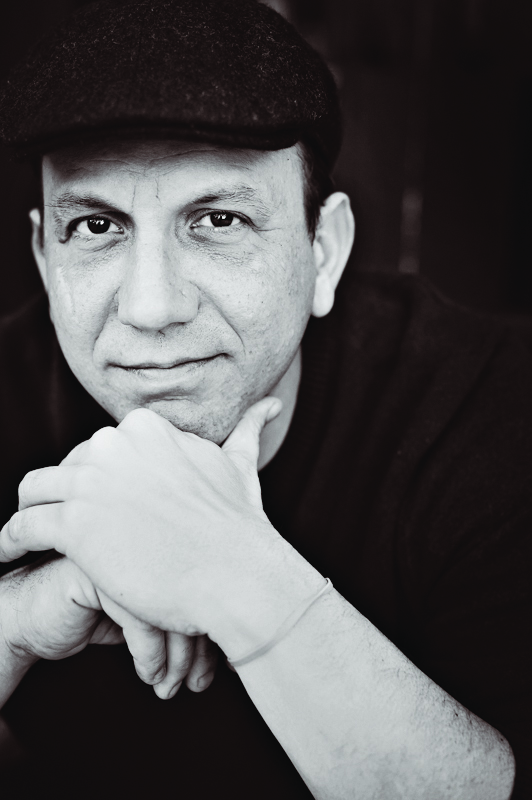
Photo: Steven Church Credit: Jocelyn Mettler
Major support for Readings & Workshops in California is provided by the James Irvine Foundation. Additional support comes from the Friends of Poets & Writers.





