



Hemingway Look-Alikes, Joan Didion’s Celebrity Status, and More
Banned books at Hong Kong’s book fair; Little Free Libraries “robbed”; authors recall memorable book tours; and other news.
Jump to navigation Skip to content
Banned books at Hong Kong’s book fair; Little Free Libraries “robbed”; authors recall memorable book tours; and other news.
"When you read it you realize that everything is constantly changing, and that that is, at least often, the key to a great story..." Ben Marcus, editor of the short fiction anthology New American Stories, published this week by Vintage, talks about one of his favorite things: Ovid's Metamorphoses.
This week, pick one thing you personally associate with summer: maybe it’s eating a particular flavor of ice cream on a sweltering night, the whirring sound of a ceiling fan as you fall asleep, or the smell of sunscreen. Write an essay inspired by your recollections—think back to your earliest memory of the activity and the people or places connected to it. Reflect on how your relationship to this one summer specific sensation might have evolved over the years, and why it remains so vivid.
Mark Stanford’s mark on American poetry; teenager heads successful book drive; college denies student’s protest of graphic novels; and other news.
"On the quiet days, the view out my window pops a hip." Angelique Palmer reads her poem "Naming Things" at the 2015 Women of the World Poetry Slam Finals in Albuquerque, New Mexico.
What happens when you’ve created and written a character who is so thoroughly realized that he or she is always, well, in character? This week, write a scene in which your character is caught doing or saying something shockingly out of character. What event or realization has caused this atypical behavior, and what is your character’s response to being confronted about it? Will the consequences be immediate and dramatic, or gradual and subtly psychological?
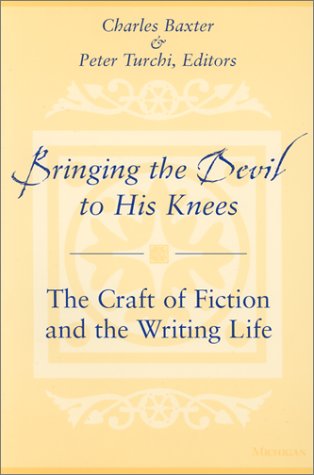
"The book that you hold in your hands does not contain a set of rules but something quite different—what we might call a set of approaches." In this collection of essays, seventeen authors, including Margot Livesey, Richard Russo, Jim Shepard, and Joan Silber, dispense insightful guidance and personal anecdotes to inspire writers at all stages of their craft.
Ernest Hemingway turns 116; Go Set a Watchman sells 1.1. million copies in one week; authors and critics confess their literary gaps; and other news.
"I think in old age, memory is extraordinarily interesting because there's an awful lot of it by now." Booker Prize-winning novelist Penelope Lively speaks about her fascination with the use of memory and evidence as tools to develop characters.
Poet and translator George Szirtes says: "Nobody reads a poem to find out what happens in the last line. They read the poem for the experience of travelling through it." This week, choose a short poem—it can be one of your own or someone else’s—and cross out the last line. Read it again now without its last line, and imagine how the poem might take a different turn at this juncture. Write a continuation of the poem, allowing it to travel to an entirely new conclusion.
