In our Craft Capsules series, authors reveal the personal and particular ways they approach the art of writing. This is no. 250.
The last two craft capsules have been about reading and writing queerly. In this final capsule, I explore what it means to queer language itself, and how this exhilarating process might inspire us as writers. Writing poetry has been a continual process of finding myself as a queer person, but instead of desiring a fixed or coherent identity, I am more interested in writing a queer self that is in a perpetual state of becoming. In the words of the poet Billy-Ray Belcourt: “Poetry is creaturely. It resists categorical capture. It is a shapeshifting, defiant force in the world.” I attempt to capture this “shapeshifting,” almost “creaturely” sense of queerness, in my poem “Wish”:
if you looked within me now, you’d see
that my languages are like roots
gnarled in soil, one and indivisible
except the world divides me endlessly
some days I dare not look at the trees
they are such hopeful creatures
if the legislators of our world
looked to their trees for guidance
would they reconsider everything?
I have long admired the natural world for its indifference to human standards and norms—we wouldn’t wish that an oak were instead a willow, for it is simply what it is. Alice Walker reminds us to “be more like nature…. I always think of myself as a tree, producing what it is that I produce.” Instead of accepting how “the world divides me endlessly,” I want to write towards a reconciliation of tongues in which I am not perfect, but rather, whole.
I am still discovering what it means to be queer in my mother tongue, Cantonese, which relies on the gender-neutral pronoun “佢” for all genders. To realize that another word for “nonbinary” has always existed in my mother tongue, one which places less emphasis on gendering as a mode for navigating the world, feels expansive and radical to me. As someone who is new to queer studies as a global discipline, I feel excited by the possibilities that exist for writing the queer self across different languages. Recently, a close friend sent me “The Pronoun” folio published by the Transpacific Literary Project. In her introduction, the translator Kaitlin Rees writes:
“…when charged with the complicating concerns of translation, The Pronoun takes on an even broader capacity to press on thinking’s vocabulary.... What subjectivities and legibilities exist outside of this particularly fraught frame (in English)? What spaces are there in [insert your language] for an existence to be possible?”
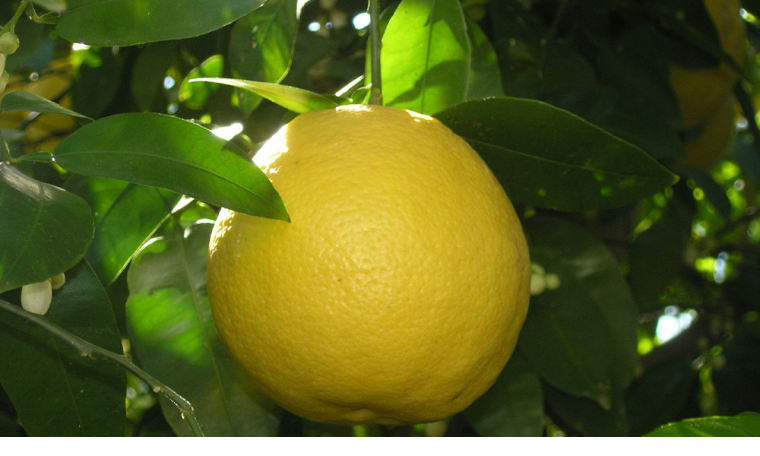
In the folio’s final entry, “Fruits of the Future,” the Vietnamese academic, translator, and artist Ly Thuy Nguyen writes movingly about a new pronoun that has come into being: “When asked about a nonbinary pronoun in Vietnamese, someone combined the two gendered words: chị + anh = chanh || sister + brother = lemon. Lemon, a fruit, fresh and sour, like queer resistance and disinheritance, inserting oneself into the origin tale.” Perhaps we are all trying to insert ourselves into the origin tale that was handed down to us to discover, in the words of Mary Oliver, “[our] place / in the family of things.”
As we search for our own place in the world we live in, how can we describe the world around us through the prism of other languages? Even if you don’t speak multiple languages, consider reading a poem in translation and noting down moments where language seems to be defamiliarized to you. Try to write a poem that draws from these newfound gems of language.
Mary Jean Chan is the author of Flèche (Faber & Faber, 2019), which won the Costa Book Award for Poetry. Bright Fear (Faber, 2023), Chan’s second book, was shortlisted for the Forward Prize for Best Collection, the Dylan Thomas Prize, and the Writer’s Prize. They coedited the anthology 100 Queer Poems (Vintage, 2022) with Andrew McMillan and served as a judge for the 2023 Booker Prize. Chan is currently a lecturer in poetry at the University of Oxford and a senior research fellow at Harris Manchester College in Oxford.
image credit: James Day