



Watchale Workshop: An Alternative Narrative for California’s Central Valley
Jamie Moore is the author of the novella, Our Small Faces (ELJ Publications, 2013). Her work has been published in magazines including TAYO Literary Magazine and the Nervous Breakdown. She is a professor at College of the Sequoias in Visalia, California, and executive director of the Watchale Workshop.
California’s Central Valley has a surprisingly rich literary history, and the Watchale Workshop team has learned a few things about our literary community. Firstly, it is a community centered around Fresno, the city hub of the Central Valley and location of the nearest MFA program, which makes many of the literary events inaccessible to community members in the south part of the region, particularly writing students at the College of the Sequoias, where I teach. Secondly, many events are focused on a single genre—poetry—perhaps as a result of the success of poets from the area. Lastly, and of greatest concern to us, many literary events are focused on and organized by men. Knowing the rich diversity of writers in our area, the Watchale Workshop aimed to showcase what more the Central Valley has to offer with our inaugural day-long event full of workshops and lectures that took place on April 6 at the College of the Sequoias.
The idea for Watchale started as a conversation between fellow writers over coffee. The four of us at Watchale were brought together by a desire to create opportunities for writers like us: POC, queer, emerging. After recruiting a student team in September 2018, Watchale was conceptualized, the name derived from Sandra Cisneros’s poem “Loose Woman.” We wanted to make a statement: Watch out! We’re coming for you! We’ve been here! We’re ready to be heard!
With our mission statement in mind—to create an alternative narrative of our literary community—we carefully curated a lineup of writers that put women and queer voices at the center of our literary conversation. We invited women writers who not only had Central Valley connections, but those we knew would help us create a space for our student writers to be included in the larger literary community. I wanted Watchale to complement the women-centered literary groups already doing work in Fresno, such as Fresno Women Read and Women Writers of Color Central Valley. This was our festival to shine.
And shine we did. In the morning, generative workshops in several genres led by P&W–supported writers Ife-Chudeni Oputa, Monique Quintana, and Wendy C. Ortiz encouraged participants to pick up their pens and get writing. Oputa’s workshop focused on the theme of “Ownership,” asking emerging poets to consider the duality of ownership, and what we owe to ourselves and our communities.
After a rousing reading with Sara Borjas and Wendy C. Ortiz, participants gathered for craft lectures on topics like community organizing, freedom and futurity, scene writing, poetry structure, and self-publishing. The evening reading celebrated both our student readers from the College of the Sequoias Quill Creative Writing Club and our featured writers of the workshop.
Students and community members were invigorated by a literary space that felt like us, of us, for us. I deeply believe we served that purpose and thus, Watchale became the literary event of my dreams. Watchale is a love letter to the Central Valley and to the writers who’ve been missing from the narrative thus far. We’re here now.
Support for Readings & Workshops in California is provided by the California Arts Council, a state agency, and the National Endowment for the Arts, a federal agency. Additional support comes from the Friends of Poets & Writers.
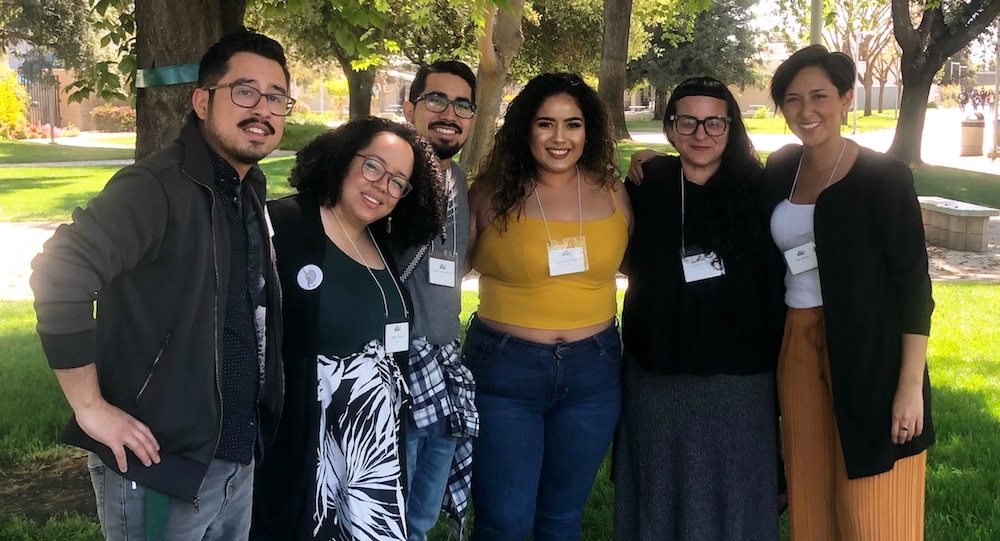
Photo: (from left to right) Marcus Moreno, Jamie Moore, Martin Velasco Ramos, Destina Hernandez, Wendy C. Ortiz, and Sara Borjas (Credit: Marcus Moreno).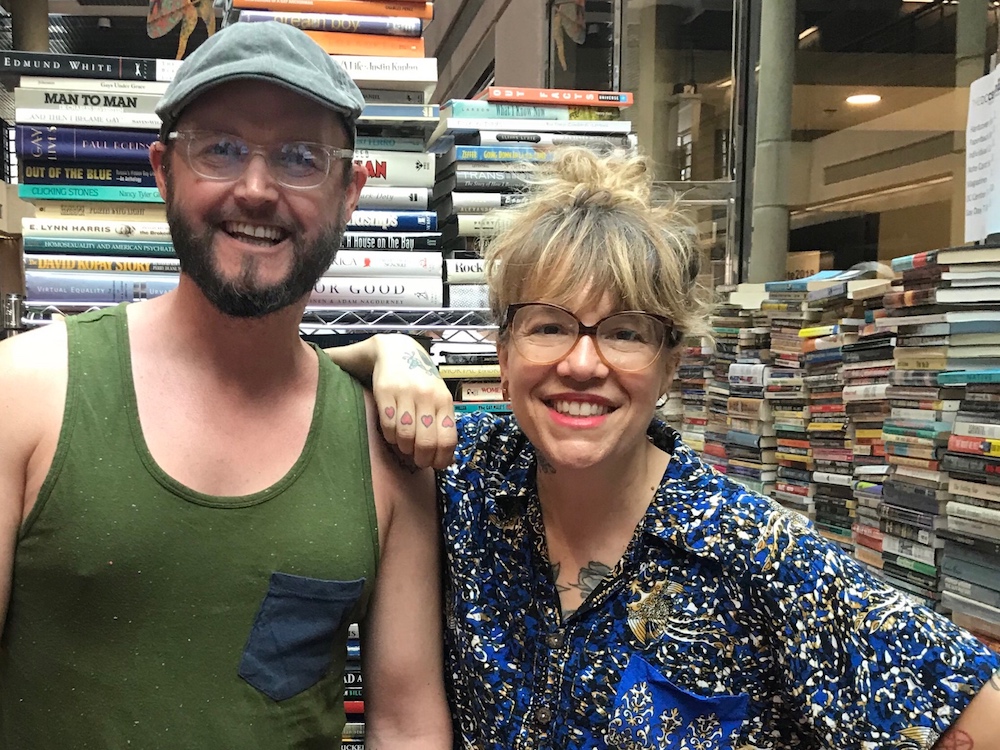 Currently I’m the community chair of the annual OutWrite LGBTQ literary festival, held annually on the first weekend in August in Washington, D.C. I inherited the position from Julie Enszer, the editor of
 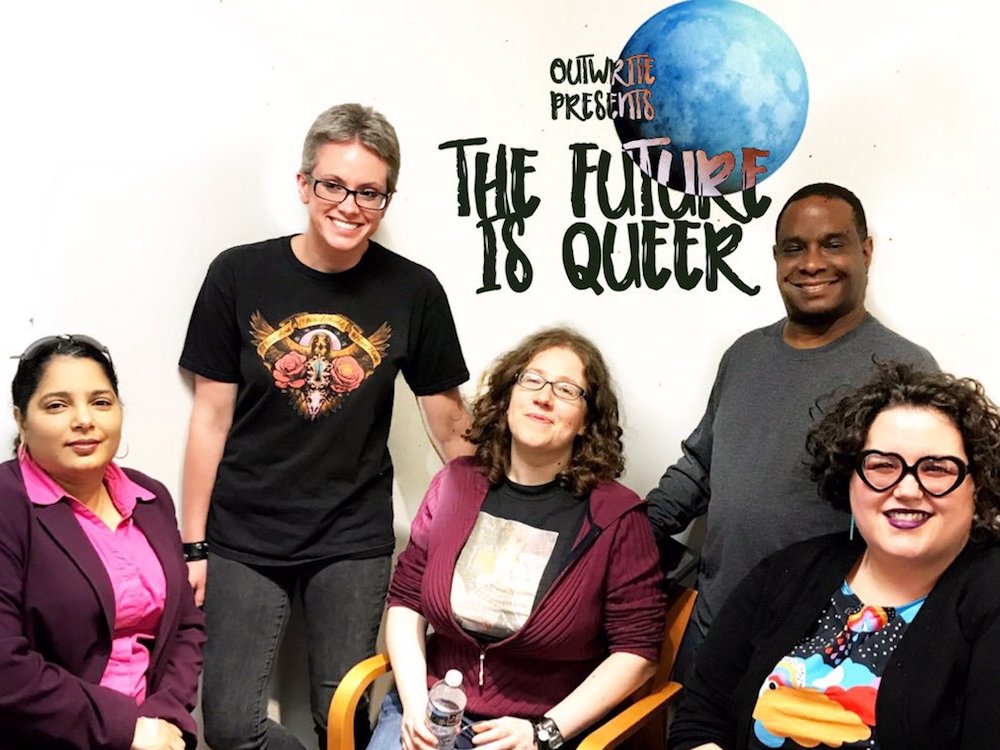 OutWrite events always remind me how beautiful and affirming representation is. Representation can become sanctuary in a reality that frequently erases, elides, or minimizes queer people’s existence, not only in relation to queerness, of course, but all the other identities that they carry with them. Honoring and showcasing those identities has been a gauntlet worth picking up.
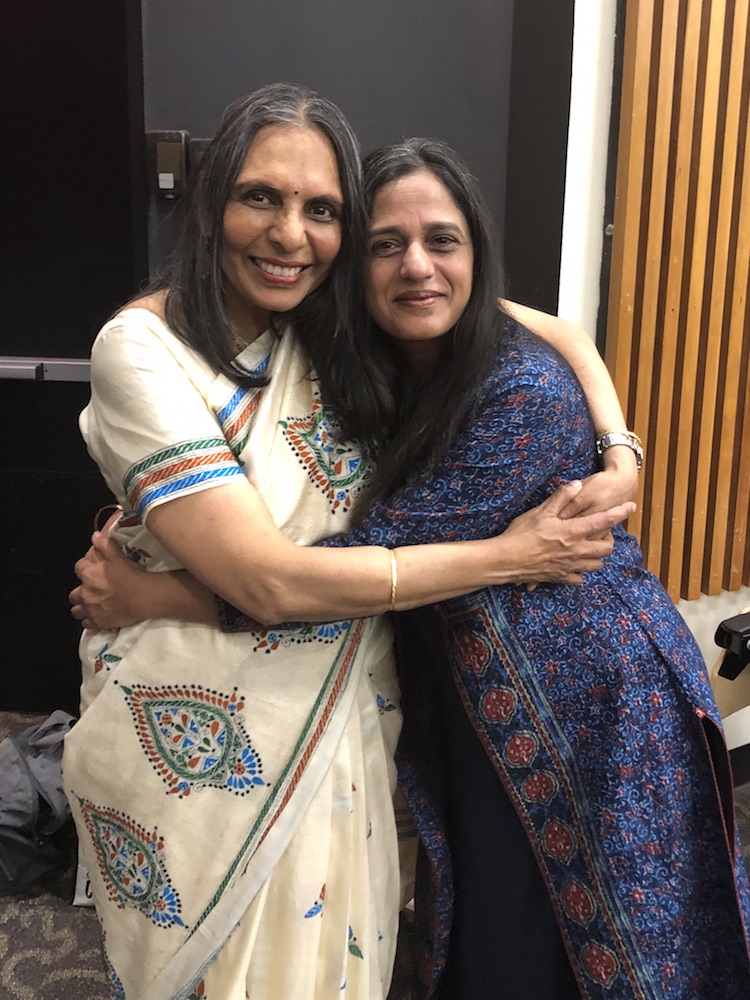 Walking toward the Red Room at the KGB Bar in the East Village for a Matwaala poetry reading, Sophie Naz and I spotted a sign with the words “Waste your money” in front of a restaurant and we burst out laughing. It’s these random things that punctuate one’s flowing experience of the tumult of New York City—and I’d say of Matwaala too. Things that are quirky, like little bolts of lightning in our pedestrian life. Like Salman Rushdie sauntering in at the opening of the Matwaala poetry festival at New York University. Like Yogesh Patel’s whale metaphor to capture the angst of immigration or Sophie Naz’s Russian hat, a prominent sartorial prop at the festival. Like the Matwaala mug, which acts as the physical award given to the poet-of-honor with their lines of poetry inscribed on it.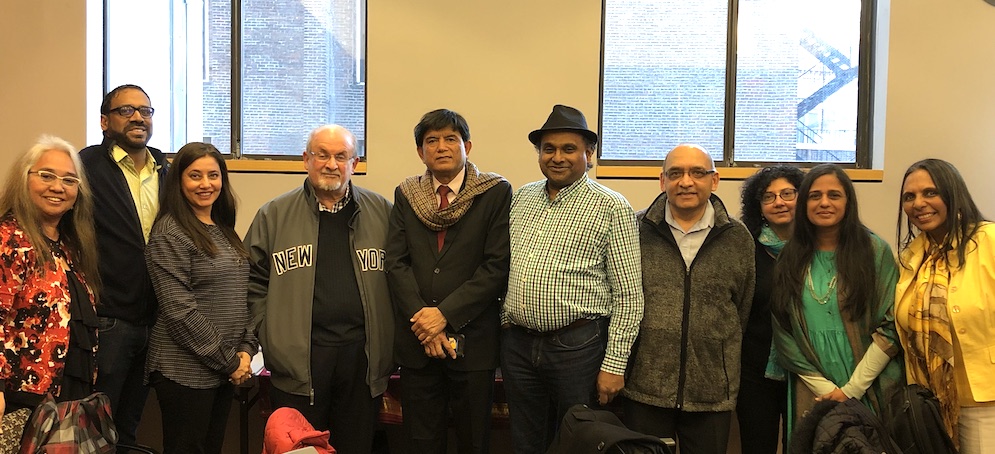
 When I entered the
 Over a year ago, I began attending the San Bernardino
 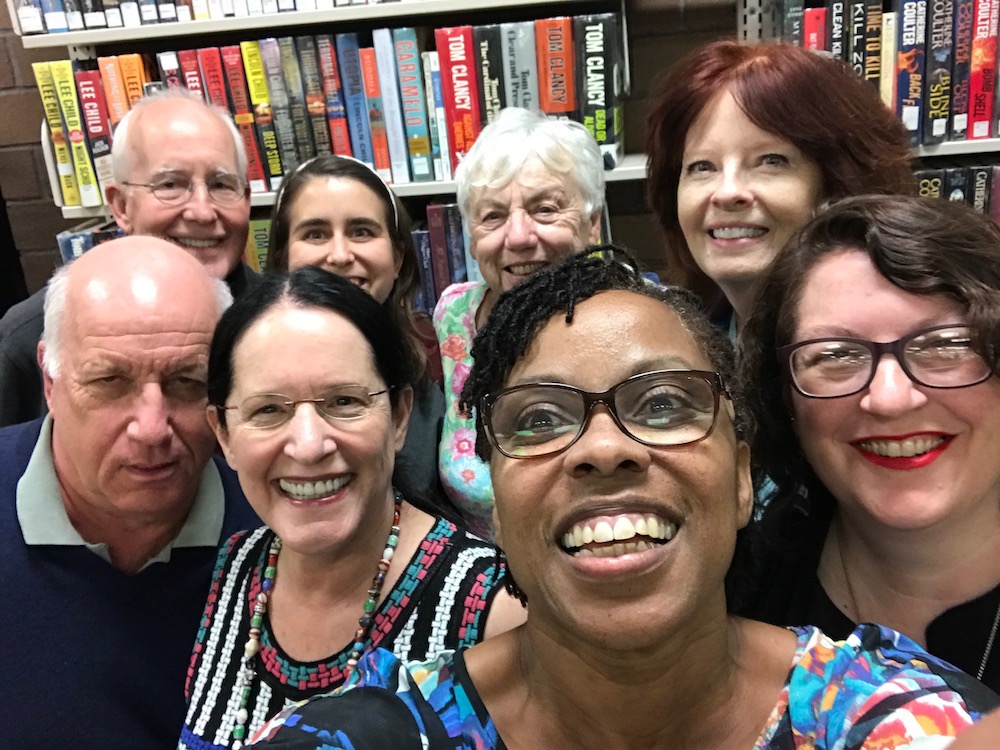 Our workshop participants range in age from mid-twenties to eighties, from college students to retirees. The octogenarian from Germany and the dancer in her twenties who works with at-risk youth have a mutual admiration for each other’s poetry and joie de vivre. The creative process, natural flow in fellowship, and mutual respect makes each meeting memorable.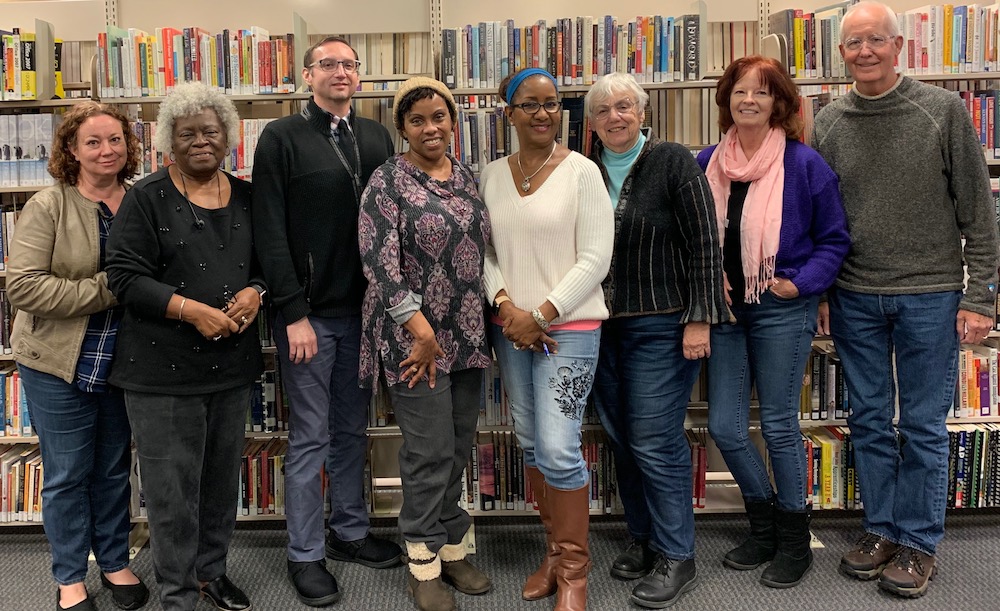
 I was listening to a talk and the speaker said, “Are your days masterpieces? Make every day a masterpiece.” I thought of my days, and my first reaction was, No, my days are not masterpieces. Then I had a flash of Wednesdays at the writing workshop! Those days—they are masterpieces.
 When I think of workshops, I think of them as discussions around a table a few hours every week until it’s time to showcase what we’ve learned. However, when I was asked to participate in New Settlement’s Silence Out Loud poetry workshop in the Bronx, I knew that the workshop would provide something more than just roundtable discussions. Poet and teacher Roya Marsh is no stranger to me. As the poet-in-residence at Urban Word NYC, she is the one responsible for bringing the female-identifying youths of the Bronx together to take part in these workshops.
 The mission of
  I didn’t know how badly I needed to be part of an Amherst Writers & Artists-method writing workshop until I’d begun cofacilitating one myself.
 Ms. Lodonia, a white-haired senior citizen, recites from memory a poem written by her mother. Ms. Charlotte comes with verses of a Halloween poem she’s penned and a meditation on her visit to India. Ms. Mary, Mr. Lloyd, and Ms. Quencell listen to lines of a ballad. Their faces brighten as they recall their youth, and Mr. Francis, who is blind, weighs every line, every lyric he hears. When he adeptly analyzes a verse, other workshop members nod in agreement. These were the participants who sat in my Friday workshop series last October and November at the
 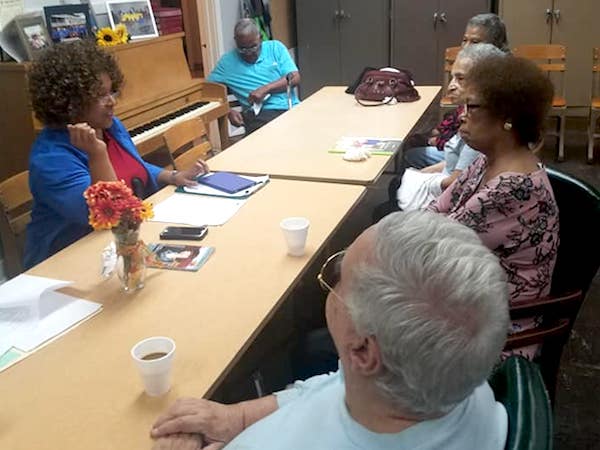 The first week, songs were narratives about fathers, the next week mothers, and by the last week, songs of political protest. Often, after a few bars, one or two seniors would start singing along, sometimes with great gusto which led to laughter and the sharing of life stories. Then I would introduce them to poems with the same themes as the song selections by both well-known and locally-known poets. Participants might observe a poem’s form or lack of form. Did they hear rhyme or feel a rhythm? What was the speaker’s attitude toward the subject, and did the poem move them? Seniors offered profound insight into darker poems as well as witty takes on lighter poems. I asked them to write a few lines of their own on the theme of the day or to try writing something in a similar style, blues for example.