Magazine » Writers Recommend
In this online exclusive we ask authors to share books, art, music, writing prompts, films—anything and everything—that has inspired them in their writing. We see this as a place for writers to turn to for ideas that will help feed their creative process.

posted 4.26.11
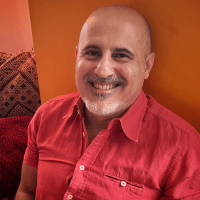
“The best reason to live in New York City is to discover the
endless hidden treasures in its many neighborhoods. Usually three times a week,
I drop by my local bookstore, St. Mark’s Bookshop, where I’ll visit old
inspirations and find new ones. My favorite walk, which I do about once
every two weeks, is a big crooked quadrangle. It spans three boroughs. I start in Manhattan, walking down First Avenue, making a left on
Delancey, and crossing over the Williamsburg Bridge into Brooklyn. Then it’s on
through Williamsburg and Greenpoint, over the Pulaski drawbridge to Long Island
City, and up to the Queensborough Bridge, then back home. I’ve done endless
variations of this: down over the Brooklyn Bridge through Brooklyn Heights,
or up to Astoria, Queens, over the Triborough Bridge and over Ward Island,
then south. I complete my walks in three or four hours with
a head full of ideas and relaxed enough to put them all down.”
—Arthur Nersesian, author of Mesopotamia (Akashic Books,
2010)

posted 4.20.11
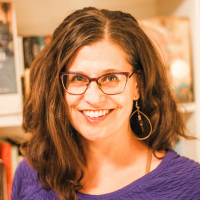
“Always tucked in a pocket of my purse is a Moleskine
journal. I try to write every day, no matter what, and I’ve pulled that
Moleskine out while waiting for my kids—doctor’s appointments, soccer
practices, piano lessons. In my Moleskine, I allow myself the freedom to write
anything. No matter the inanity—it has my full permission to go down
uncensored. I doodle. I make lists. I describe the waiting rooms, piano
lessons, parents in the stands. And if I lose my Moleskine, my name and phone
number are displayed, with a reward offered of one billion dollars.”
—Victoria Patterson, author of This Vacant Paradise (Counterpoint, 2011)

posted 4.13.11
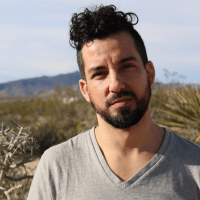
“As with most fiction writers, I
can be inspired by virtually anything: a song, a kiss, a cup of coffee, an
overheard conversation. And in writing three short story collections, those and
many other inspirations sparked a rather diverse number of plots and
characters. When I decided to move from writing short stories to a full-length
novel, I wanted to find an overarching (or thematic) inspiration that would
help me move forward in completing the manuscript and, at the same time,
allow me to revel in the creative joy I experience when writing a short story.
So, I first decided that I needed to examine who I was and what types of
stories I tended to write. My fiction often revolves around my multiple
identities as a Chicano (the grandson of Mexican immigrants), a former Roman
Catholic, a Jew-by-choice (I converted in 1988; my wife is the granddaughter of
Russian Jewish immigrants), a husband, father, and Los Angeles native. After a
few weeks of pondering, it came to me: My novel would be based on the Ten Commandments,
with each chapter inspired by a commandment. Once I decided upon this
structure, I felt liberated to create characters and plots that seemed to grow
naturally out of the commandments. Over the course of two years (in which I
also wrote short stories, poetry, essays, and book reviews), my novel grew
until I had ten chapters I really liked. After reading and editing it
several times, I decided to add a short prologue and epilogue. My novel
eventually found a home and received a very nice review in Publishers
Weekly. So, on March 24, 2011 (the
official release date), I became a novelist. If Moses only knew.…”
—Daniel A. Olivas, author of The
Book of Want (University of Arizona Press,
2011)

posted 4.06.11
“I walk around my apartment and read aloud from The
Norton Anthology of Poetry. There are a few
favorites: Michael Drayton’s “Sonnet 61”: “Since there’s no help, come let us kiss and part; / Nay, I have done,
you get no more of me”; John Donne’s “A Nocturnal upon St. Lucy’s Day, Being
the Shortest Day”: “Oft a flood / Have we two wept, and so / Drowned the whole
world, us two; oft did we grow / To be two chaoses, when we did show / Care to
aught else; and often absences / Withdrew our souls, and made us carcasses”;
and John Keats’s “This Living Hand”: “See here it is— / I hold it towards
you.” I’m a little like a character from a Whit Stillman movie when I do
this—remember the scene from Barcelona where the one guy puts on polka music (or something
similar) and dances around his apartment while he reads from the Bible?—but I know that a story isn’t too far
away when I reach for the Norton.”
—Hannah Pittard, author
of The Fates Will Find Their Way (HarperCollins, 2011)

posted 3.30.11
“I’ve spent six or seven years reading The Man Without
Qualities—sometimes I read it all the
way through and sometimes random excerpts of it. I’ve returned to it many
times. This book has proven to be an exercise in ambience applied to reading.
It exists, sporadically at times, in the various rooms that I read it in, at
different moments in my life. Each chapter resolves, if that is the word for
it, around an anecdote. This anecdote might be about the weather, the
occurrence of a love affair, a communications medium, or a note on factory
production, which is followed by a meditation or an essay. The essay is not an
interruption of the fictive armature because it is part of a work that treats
fiction as life.”
—Tan Lin,
author of Seven Controlled Vocabularies and Obituary 2004. The Joy of
Cooking
(Wesleyan University Press, 2010)

posted 3.23.11
“I devour
psychology books because they help me understand my characters; I’m fascinated
by the revolutionary ideas of social psychologist Philip Zimbardo. If I’m
having trouble writing a scene I examine scenes in novels I’ve read in the
past. It’s a confidence booster to see that a famous author faced similar
challenges and made good. I listen to poetry on my iPod; Dorothy Barresi is a
contemporary favorite of mine. I’m inspired by the poetics of hip-hop artists
like Mos Def and the Roots. But I can’t stick to any one writing routine or
ritual forever because if I get bored with the ritual, my writing gets bored
with me.”
—Margaux
Fragoso, author of Tiger, Tiger (Farrar, Straus and Giroux, 2011)

posted 3.16.11
“As a teenager, I spent hours dreaming up plots for books.
This was something I felt was cooler than going to the mall, but not so cool
that I was willing to waste daylight at a desk with a pencil and notepad. To
make it cooler still, I would burn dozens of CDs (iPods not being in existence
yet), soundtracks that would serve as musical stand-ins for what I felt I would
be writing: mishmashes of rock and roll, classical music, and show tunes that,
as assemblages, had no significance for anyone but me. When played, they would
immediately transport me into the world I was devising, and I would walk,
sometimes for miles, around and around the neighborhood, while my Discman
churned in an effort I believed to be inextricably bound to my writing. I
assumed, because I never actually wrote any of what I dreamed up, that this
exercise was a failure. Then, many years later, I found myself in grad school
and subject to a similar compulsion—except now I had a car, and
ostensibly a brain, because the plots were actually making their way onto the
page. I still can’t listen to music while
I’m writing—music is never just white noise to me. But I would say that
any writing time now begins with driving around under the influence of
carefully arranged playlists that call to mind characters, plot points, or even
the whole narrative arc of whatever it is I’m working on. I’m generally in
favor of anything that makes the world you’re trying to create more real and
accessible to you, so my advice is: Make a soundtrack for your book!”
—Téa Obreht,
author of The Tiger’s Wife (Random House, 2011)

posted 3.02.11
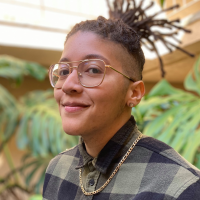
“When I was eight years old my mother found me beneath my
younger brother's crib in the fetal position and sweating. I was sick with a
terrible fever. But, as she reports, I was also smiling. I learned, in that
fever-rich moment, how to move through space and time—unafraid,
untethered—toward some kind of surprise. That dance with surprise is why
I write. And the fever of dedicated drift has taught me much about how to push
through my writing. Breathe—in and out—levitate, trust. Sometimes,
to get this moment back, I would ask Daddy if I could stretch out in the curved
back window of his silver Buick 225. While he smoked and hummed in the front
seat (and never drove over twenty miles per hour), his Buick moved
beneath oak and loblolly pine, and I would stare up and stretch into the fusion of
spirit and mind, reentering the sweet cave of my imagination. Today one of the
final acts of my revision process, when I can't seem to work it out at the
desk, is to grab my poem, timer, pad, and pencil and head for my car. I place
them in the passenger seat. I set the timer, then head for the highway—a
road not too big, not too small, something steady and even, where I never have
to think about stopping for lights or breaking for traffic. I drive for one
hour only. No music. Just the air outside and the sound of the poem rambling
about in my head, searching for balance, ascension, the break of the fever. The
forward movement of the car is meditative and my final act of faith. One hour
passes and the timer goes off. I turn the car around. Usually, before I get
back home, I have made some decision about a line, phrase, title, or epigraph
that I could not make while sitting still.”
—Nikky Finney, author of Head Off & Split (TriQuarterly Books/Northwestern University Press, 2011)

posted 2.23.11
“Every week, my mailbox explodes with magazines—National
Geographic, the New
Yorker, O, and People. My mental image of the characters in The
Weird Sisters came from an
advertisement for a bank. One of the story lines was sparked by a personal essay
on being pregnant and dating. When I start a new project, I read magazines,
folding down corners and tearing out pages. Flipping back through the clippings
reminds me of where my ideas came from, and encourages me to remain open to
inspiration no matter the source.”
—Eleanor Brown,
author of The Weird Sisters (Amy Einhorn Books, 2011)

posted 2.16.11
“Don't take notes. This is counterintuitive, but bear with me. You only get one shot at a first draft, and if you write yourself a note to look at later then that's what your first draft was—a shorthand, cryptic, half-baked fragment. When I am working full-time on a piece (story, novel, review—whatever), I find it excruciating to be out somewhere and have some relevant-seeming idea and not be able to add it to the manuscript right away. It is very hard not to reach for the notebook, but the discipline is a great teacher, and it quickly became a kind of game. I would spin out sentences and paragraphs—entire scenes and chapters—in my head, then just let them go. I learned that the important, useful stuff came back when I could sit down for a proper work session, and that what stayed gone was the junk I would have cut anyway. Whether it re-occurred to me or not became the first test of whether the idea was worth exploring. I think I read somewhere that Marilynne Robinson does this too, which, if it's true, is about as solid an endorsement as you could ask for."
—Justin Taylor, author of The Gospel of Anarchy (HarperPerennial, 2011)