Brian Evans-Jones immigrated to southern Maine from Hampshire, U.K. in 2014. He received his BA in English Literature and Creative Writing from the University of Warwick, U.K., and was poet laureate of Hampshire, U.K. from 2013 to 2014. He received his MFA from the University of New Hampshire in 2016. His poems have appeared or are forthcoming in Outlook Springs, Stoneboat Literary Journal, and the Cafe Review. Evans-Jones is a juried teaching artist in both Maine and New Hampshire, and teaches poetry and creative writing in schools, colleges, and community venues.
 You are a poet—or you think you are: perhaps you have never been sure. After all, you don’t have the four or five books to your name that you thought you’d have by now. A couple of competition wins, an award or two, yes, but no book. It seems so complicated, so difficult, this business of getting published. You live in a small town, in a rural state, far away from the publishing centers of America; the editors and poets who throng there seem so far above you.
But you try. You enter awards, send to magazines. The magazines all say no. In April, you get a missed call, a New York number—probably a scam. There is a voicemail, from “Bonnie.” It’s not a scam. You have won Poets & Writers’ Maureen Egen Writers Exchange Award—you are going to New York City.
Six months later, you arrive. The buildings are enormous, the streets teeming. You meet Bonnie Rose Marcus, director of Readings & Workshops (East) and the Writers Exchange, tiny and beaming, and go out for dinner with Joan Dempsey, the fiction winner, who fast becomes a good friend. Your nerves are tingling; you almost dread the thought of meeting your first guests tomorrow, these poets who have made it, who have books and books; these editors of famous magazines. What will you ask them, that won’t sound ridiculous? Will they look down on you, will they expect you to know all the poets and trends that you don’t?
Morning comes. Bonnie guides you; the streets seem less alien. The first meeting is with Patricia Carlin, poet and editor. You meet at a coffee shop, get a quiet table in the corner. You’re so nervous, you can’t remember what you said. It doesn’t matter. She’s gracious, interested, friendly. You talk about assembling collections, the benefits and downsides of small presses and regional presses, places to network. She asks if one of your winning poems is available for her magazine, and gives you her card.
Now you feel better. This is going to be okay—maybe even fun. In the next meetings, with agents and other fiction folk, you relax. From the sidelines, you see that all these people—big, important New York City people—are just people: interested in writers, passionate about literature, interested in you.
At dinner, editors from A Public Space, Four Way Books, and Hanging Loose Press discuss magazine life, small press life, poetry. You see that editors simply want their work to be thoughtfully read, the same as you do. Submissions, you realize, can be not a battle, but a communication—maybe even an offering. Someone will like your work—if you take the time to learn what they like first.
The days zoom by. Breakfast with a writer, coffee with an agent, lunch with another writer, tea with a publisher. You grow comfortable with the routine, with the city, with the important New York folk. You meet the president of Farrar, Straus and Giroux and feel entirely at your ease. You love hearing gossip about the Iowa Writers’ Workshop. Kate Angus tells you eight small presses she thinks would appreciate your aesthetic. The tour of the New Yorker offices is unforgettable.
Suddenly, it’s the end. You’re going home, to your small town, your green and quiet state. Nothing has changed there—but when you sit in your placid town library, New York feels close. You start work on your manuscript. You are a poet. You are ready.
The Maureen Egen Writers Exchange Award is generously supported by Maureen Egen, a member of the Poets & Writers Board of Directors.
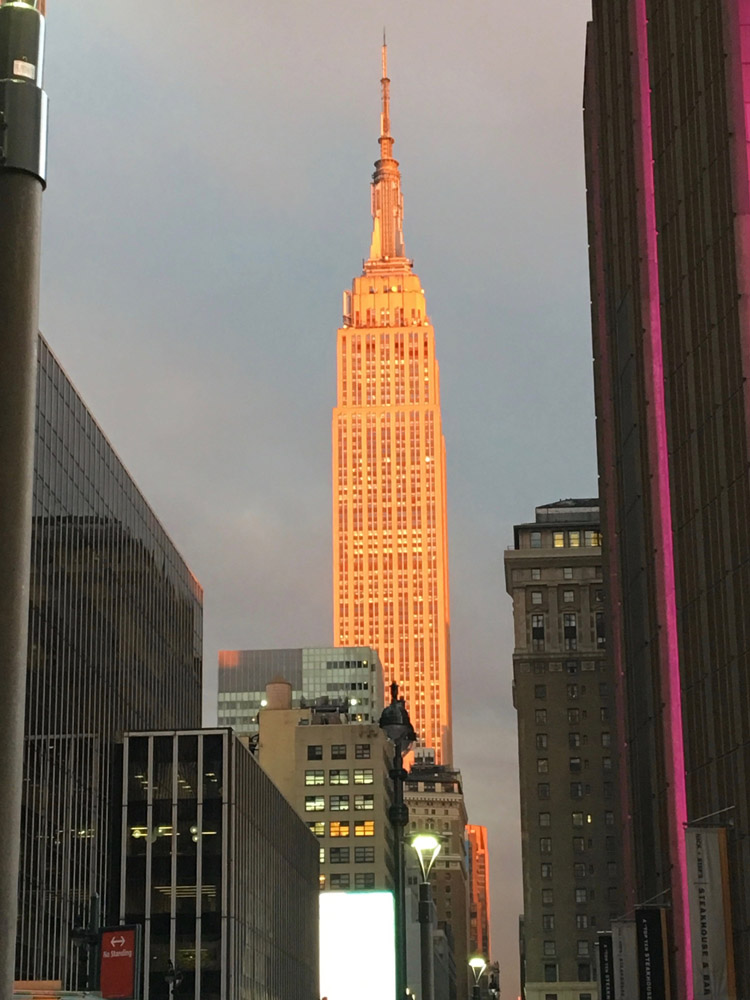
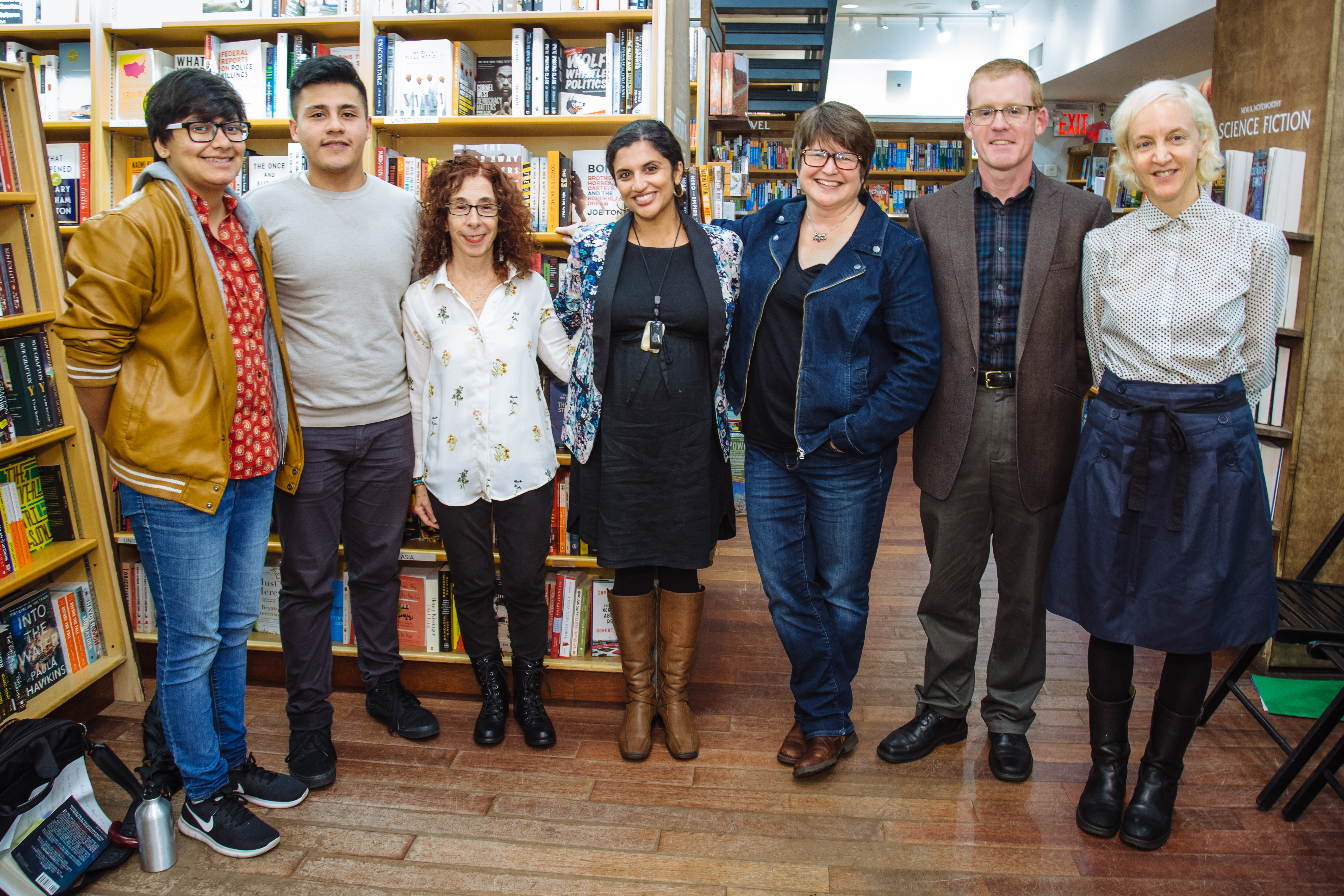
Photos: (top) New York City skyline (Credit: Brian Evans-Jones). (bottom, left to right) R&W fellow Sreshtha Sen, R&W program assistant Ricardo Hernandez, R&W (east) director Bonnie Rose Marcus, 2017 WEX fiction judge Tania James, Joan Dempsey, Brian Evans-Jones, and 2017 WEX poetry judge Cynthia Cruz (Credit: Margarita Corporan).